Caffrey Tara M, Button Emily B, Robert Jerome
Djavad Mowafaghian Center for Brain Health; Department of Pathology, University of British Columbia, Vancouver, BC, Canada.
Institute of Clinical Chemistry, University Hospital of Zurich, Zurich, Switzerland.
Neural Regen Res. 2021 Nov;16(11):2132-2140. doi: 10.4103/1673-5374.310671.
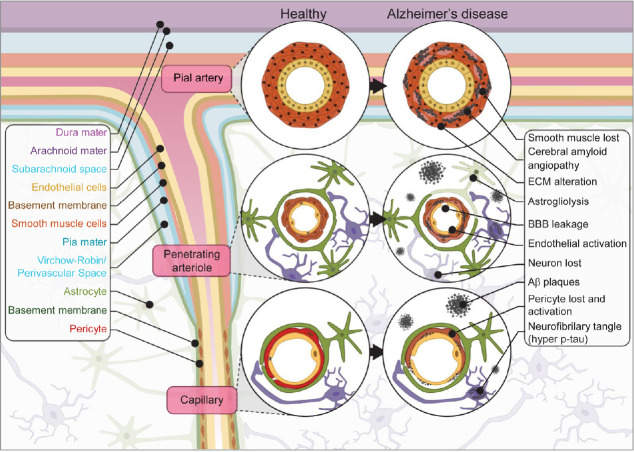
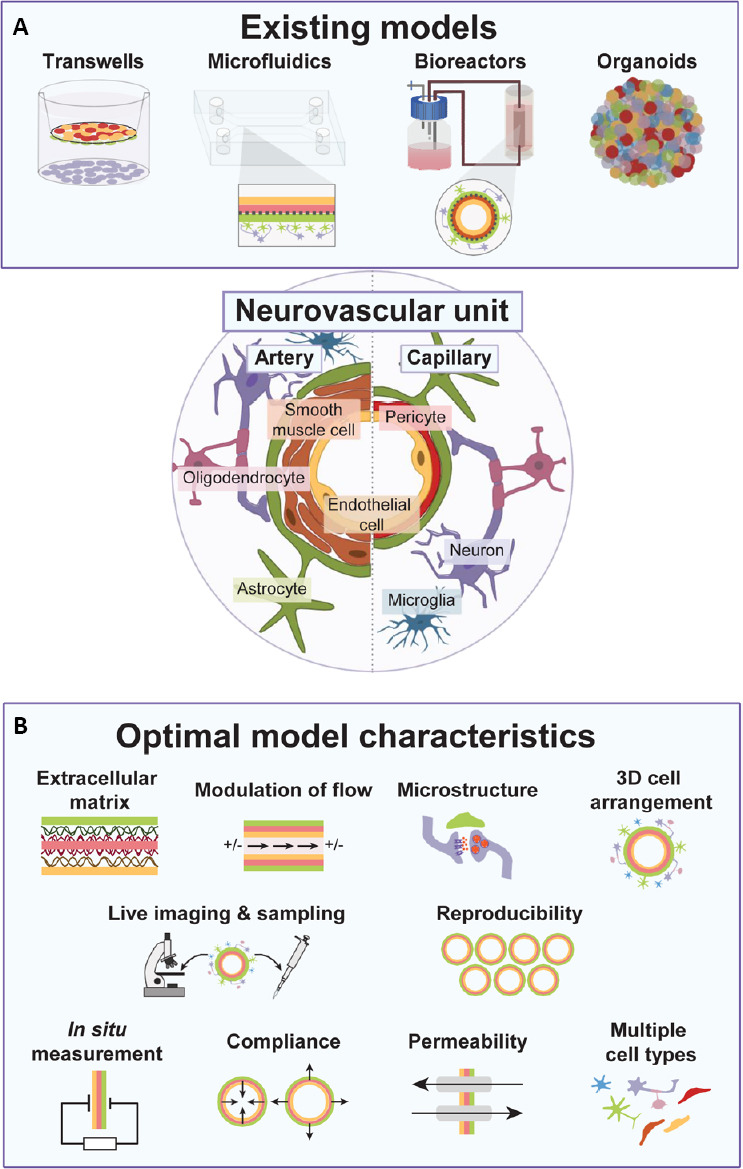
The high metabolic demands of the brain require an efficient vascular system to be coupled with neural activity to supply adequate nutrients and oxygen. This supply is coordinated by the action of neurons, glial and vascular cells, known collectively as the neurovascular unit, which temporally and spatially regulate local cerebral blood flow through a process known as neurovascular coupling. In many neurodegenerative diseases, changes in functions of the neurovascular unit not only impair neurovascular coupling but also permeability of the blood-brain barrier, cerebral blood flow and clearance of waste from the brain. In order to study disease mechanisms, we need improved physiologically-relevant human models of the neurovascular unit. Advances towards modeling the cellular complexity of the neurovascular unit in vitro have been made using stem-cell derived organoids and more recently, vascularized organoids, enabling intricate studies of non-cell autonomous processes. Engineering and design innovations in microfluidic devices and tissue engineering are progressing our ability to interrogate the cerebrovasculature. These advanced models are being used to gain a better understanding of neurodegenerative disease processes and potential therapeutics. Continued innovation is required to build more physiologically-relevant models of the neurovascular unit encompassing both the cellular complexity and designed features to interrogate neurovascular unit functionality.
大脑的高代谢需求需要一个高效的血管系统与神经活动相耦合,以供应足够的营养物质和氧气。这种供应是由神经元、神经胶质细胞和血管细胞的共同作用来协调的,这些细胞统称为神经血管单元,它们通过一个称为神经血管耦合的过程在时间和空间上调节局部脑血流。在许多神经退行性疾病中,神经血管单元功能的改变不仅会损害神经血管耦合,还会影响血脑屏障的通透性、脑血流以及大脑废物的清除。为了研究疾病机制,我们需要改进与生理相关的神经血管单元人类模型。利用干细胞衍生的类器官,以及最近的血管化类器官,在体外模拟神经血管单元的细胞复杂性方面取得了进展,从而能够对非细胞自主过程进行深入研究。微流控装置和组织工程中的工程与设计创新正在提升我们研究脑血管系统的能力。这些先进的模型正被用于更好地理解神经退行性疾病的过程和潜在的治疗方法。需要持续创新来构建更与生理相关的神经血管单元模型,该模型既要包含细胞复杂性,又要具备用于研究神经血管单元功能的设计特征。