Andrology Laboratory, West China Hospital, Sichuan University, Chengdu 610041, China.
Department of Urology, West China Hospital, Sichuan University, Chengdu 610041, China.
Asian J Androl. 2021 Nov-Dec;23(6):633-639. doi: 10.4103/aja.aja_12_21.
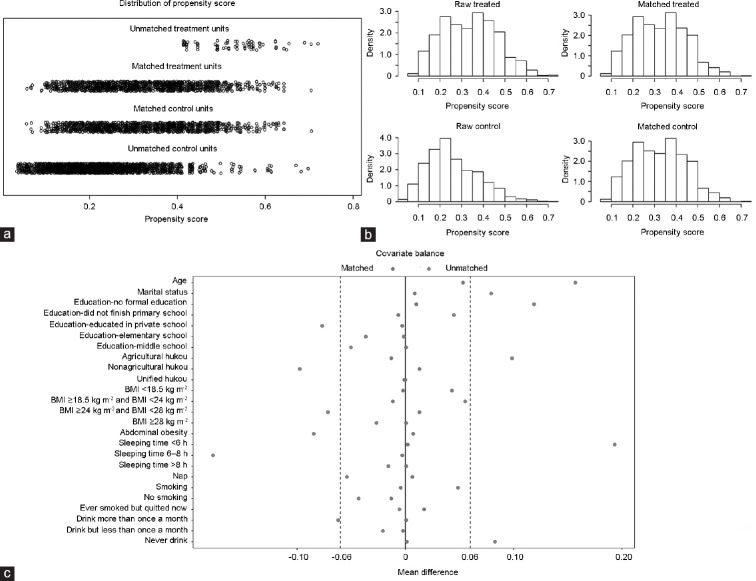
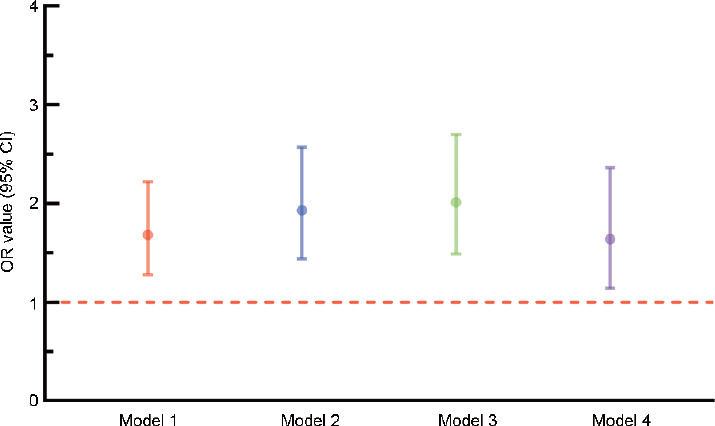
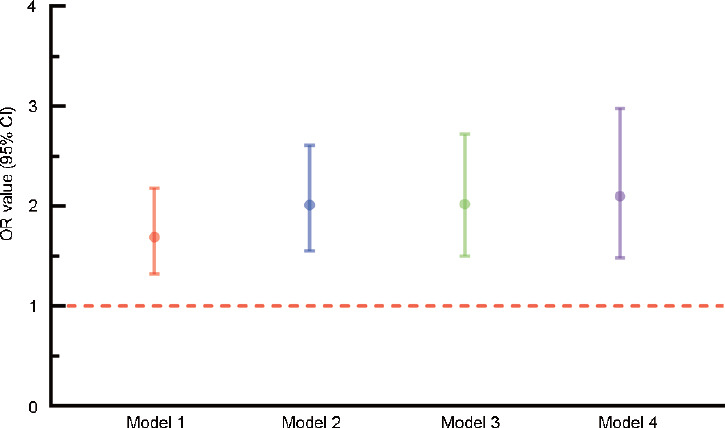
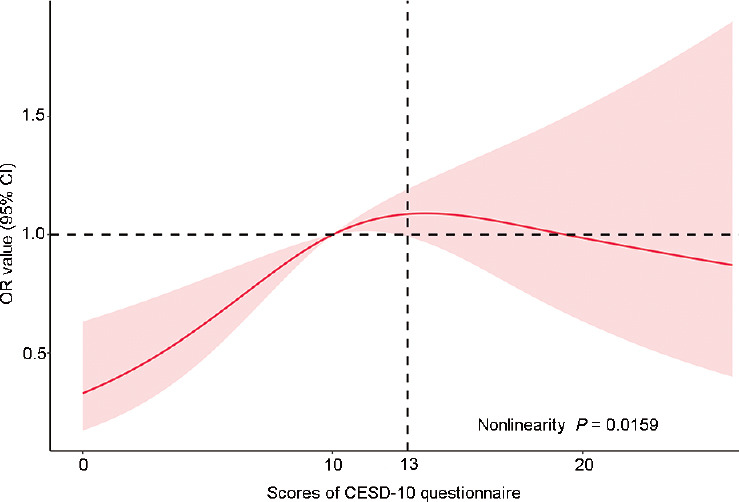
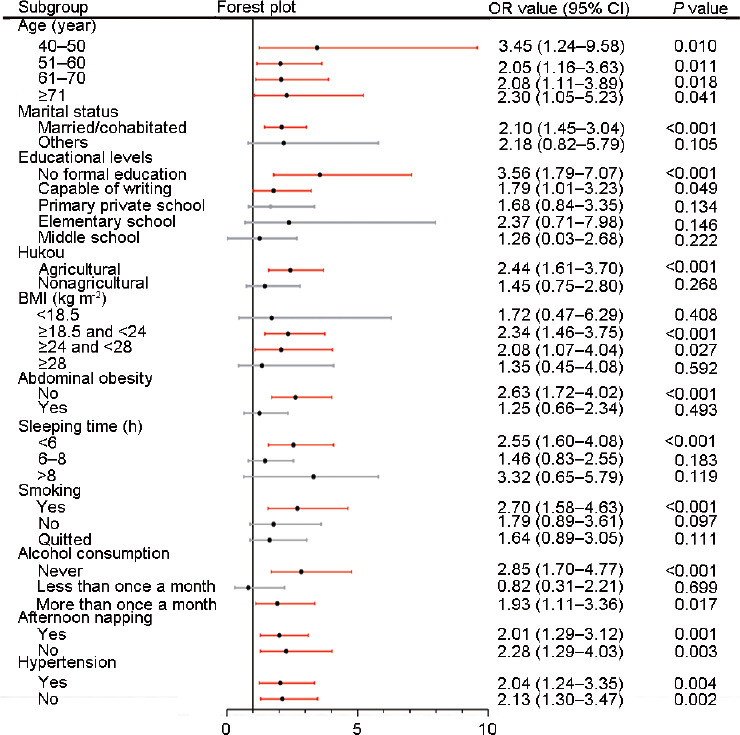
Lower urinary tract symptoms suggestive of benign prostate hyperplasia (LUTS/BPH) and depression are both increasing in Chinese aging males. However, the relationship still remains unknown. To explore their relationship, a retrospective cohort study based on propensity score matching (PSM) was conducted by analyzing the China Health and Retirement Longitudinal Study dataset. After data cleaning, a total of 5125 participants were enrolled and subjected to PSM; 1351 pairs were matched and followed for 2 years. Further logistic regression and restricted cubic spline (RCS) were performed to evaluate, model and visualize the relationship between depression and LUTS/BPH. Moreover, subgroup analyses and sensitivity analyses were adopted to verify the robustness of the conclusions. Before PSM, depressive patients showed higher odds of LUTS/BPH in all three models adjusting for different covariates (P < 0.001). After PSM, univariate logistic regression revealed that depressive patients had higher risks for LUTS/BPH than participants in the control group (odds ratio [OR] = 2.10, P < 0.001). The RCS results indicated a nonlinear (P < 0.05) and inverted U-shaped relationship between depression and LUTS/BPH. In the subgroup analyses, no increased risks were found among participants who were not married or cohabitating, received an education, had an abnormal body mass index (<18.5 kg m and ≥28 kg m), slept more than 6 h, did not smoke, and drank less than once a month (all P > 0.05). The results of sensitivity analyses indicated identical increased risks of LUTS/BPH in all four models (all P < 0.001). In conclusion, depression enhances the risks of LUTS/BPH in aging males.
下尿路症状提示良性前列腺增生症(LUTS/BPH)和抑郁在我国老年男性中均呈上升趋势。然而,它们之间的关系尚不清楚。为了探讨它们之间的关系,我们通过对中国健康与退休纵向研究数据集进行倾向评分匹配(PSM)的回顾性队列研究。经过数据清理,共纳入 5125 名参与者进行 PSM;匹配并随访 2 年共 1351 对。进一步进行逻辑回归和限制性立方样条(RCS)分析,以评估、拟合和可视化抑郁与 LUTS/BPH 之间的关系。此外,还进行了亚组分析和敏感性分析,以验证结论的稳健性。PSM 前,在调整不同协变量的三个模型中,抑郁患者的 LUTS/BPH 发生几率均较高(P<0.001)。PSM 后,单变量逻辑回归显示,抑郁患者发生 LUTS/BPH 的风险高于对照组(比值比[OR]=2.10,P<0.001)。RCS 结果表明抑郁与 LUTS/BPH 之间存在非线性(P<0.05)和倒 U 型关系。在亚组分析中,未发现未婚或同居、受过教育、体质量指数异常(<18.5 kg/m2 和≥28 kg/m2)、睡眠多于 6 小时、不吸烟和每月饮酒少于一次的参与者中存在风险增加(均 P>0.05)。敏感性分析的结果表明,在所有四个模型中,发生 LUTS/BPH 的风险均增加(均 P<0.001)。综上所述,抑郁增加了老年男性发生 LUTS/BPH 的风险。