Department of Biochemistry and Molecular Biology, The Pennsylvania State University, University Park, PA, United States of America.
Department of Biology, Boston College, Chestnut Hill, MA, United States of America.
PLoS Genet. 2021 Apr 5;17(4):e1009112. doi: 10.1371/journal.pgen.1009112. eCollection 2021 Apr.
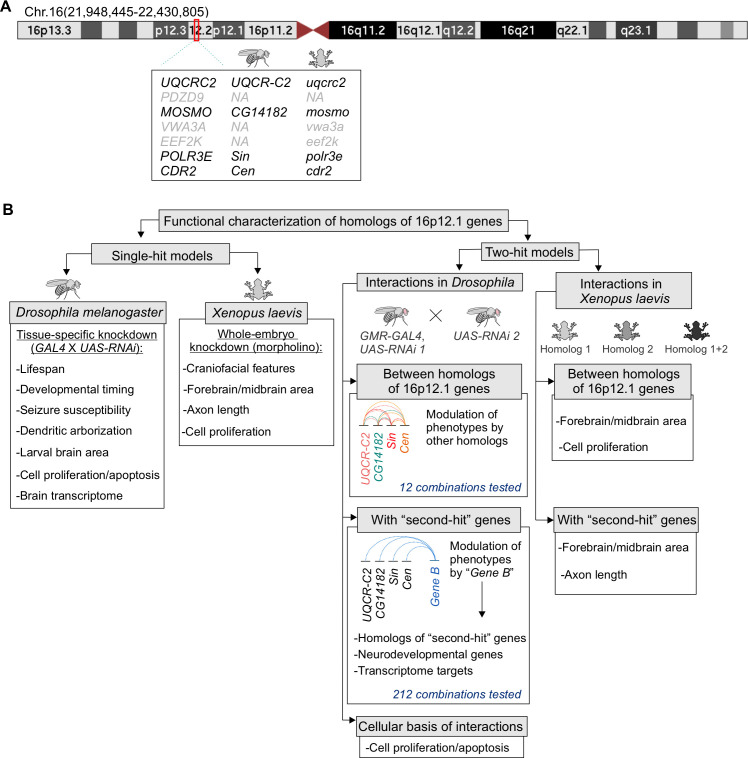
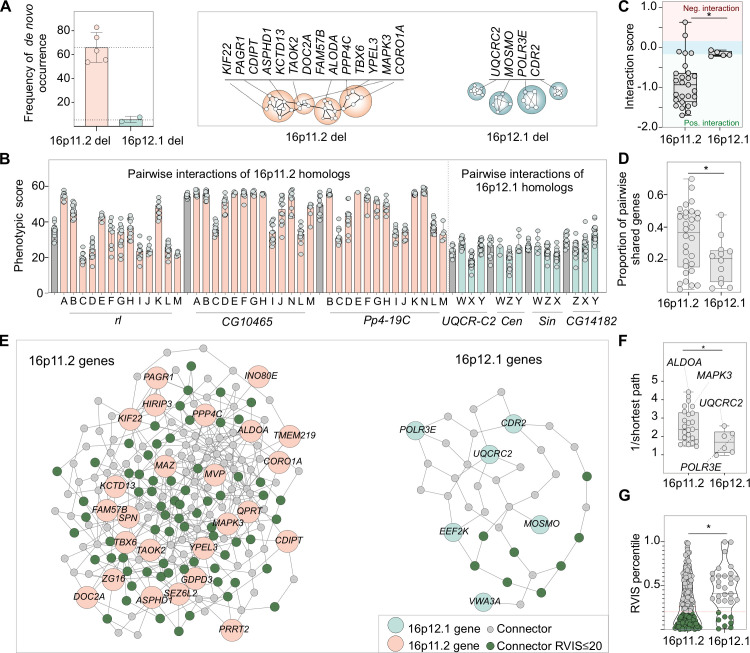
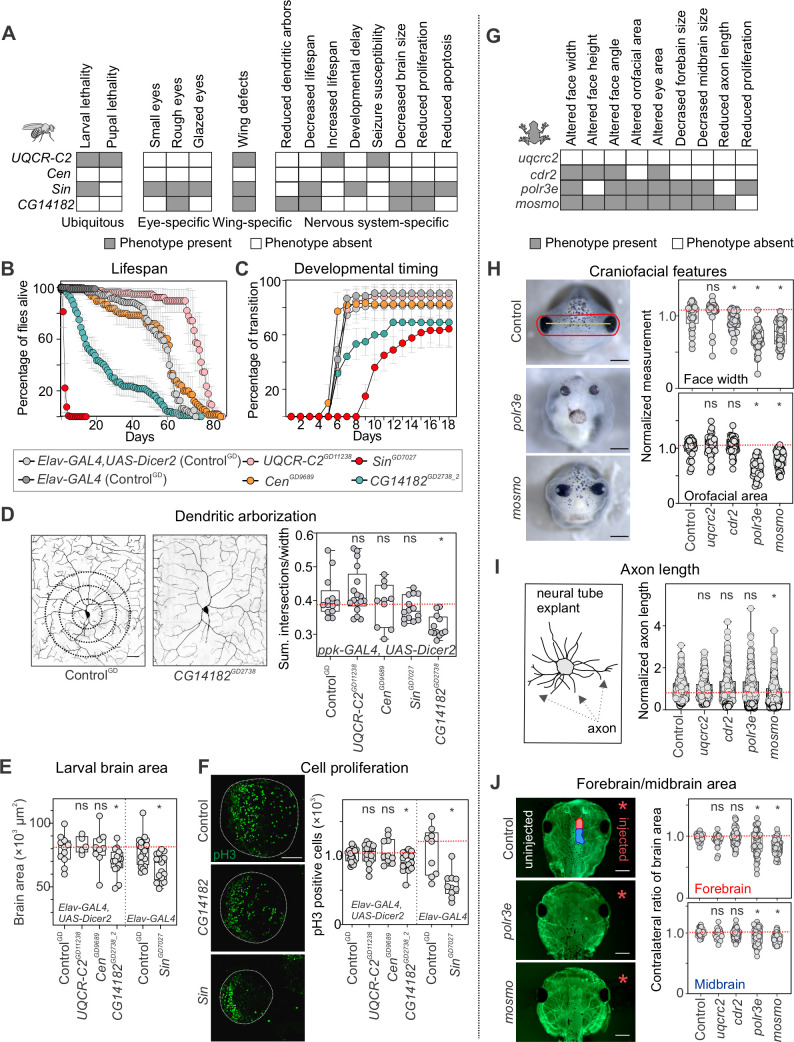
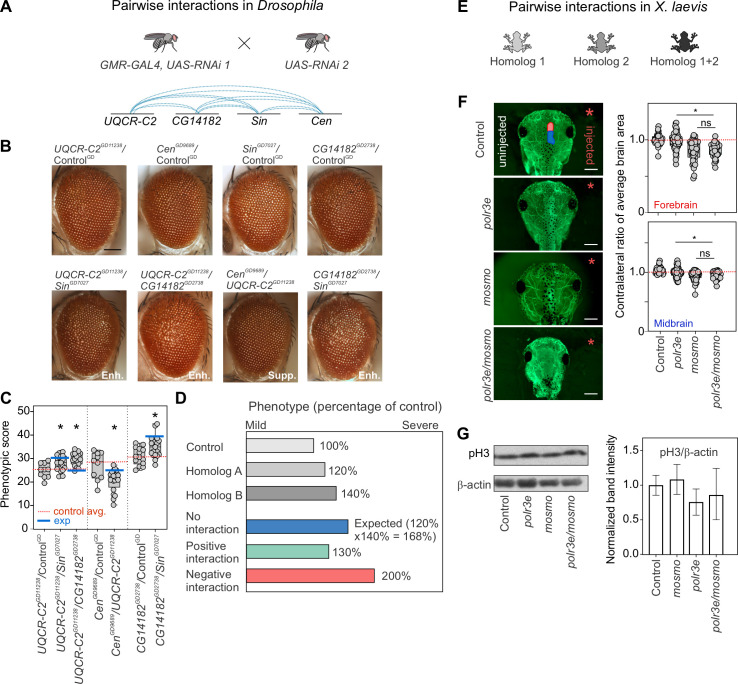
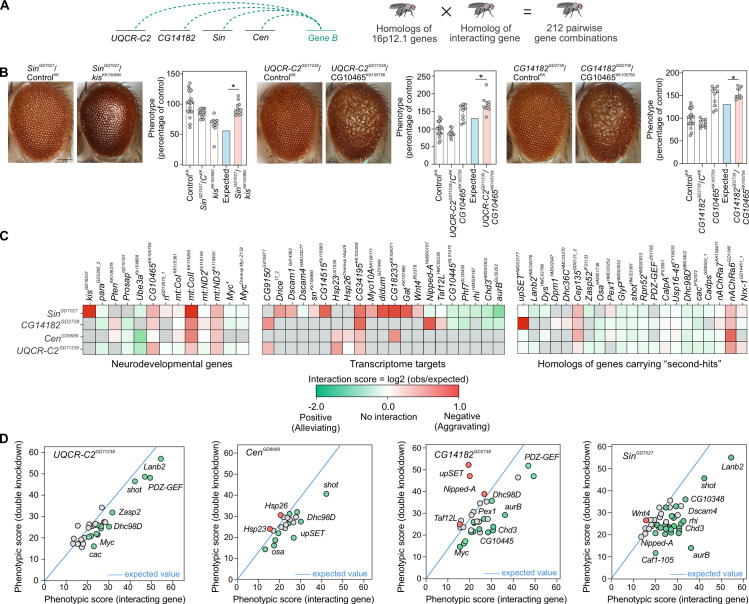
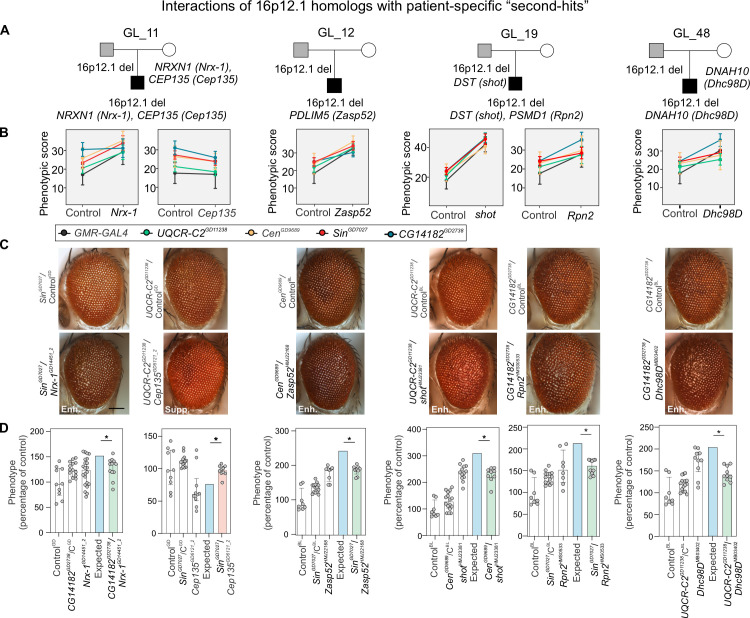
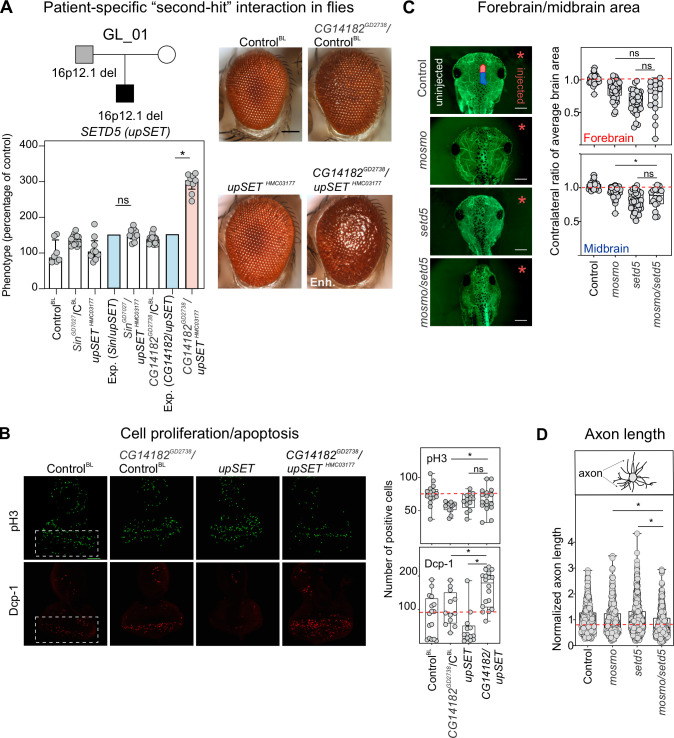
We previously identified a deletion on chromosome 16p12.1 that is mostly inherited and associated with multiple neurodevelopmental outcomes, where severely affected probands carried an excess of rare pathogenic variants compared to mildly affected carrier parents. We hypothesized that the 16p12.1 deletion sensitizes the genome for disease, while "second-hits" in the genetic background modulate the phenotypic trajectory. To test this model, we examined how neurodevelopmental defects conferred by knockdown of individual 16p12.1 homologs are modulated by simultaneous knockdown of homologs of "second-hit" genes in Drosophila melanogaster and Xenopus laevis. We observed that knockdown of 16p12.1 homologs affect multiple phenotypic domains, leading to delayed developmental timing, seizure susceptibility, brain alterations, abnormal dendrite and axonal morphology, and cellular proliferation defects. Compared to genes within the 16p11.2 deletion, which has higher de novo occurrence, 16p12.1 homologs were less likely to interact with each other in Drosophila models or a human brain-specific interaction network, suggesting that interactions with "second-hit" genes may confer higher impact towards neurodevelopmental phenotypes. Assessment of 212 pairwise interactions in Drosophila between 16p12.1 homologs and 76 homologs of patient-specific "second-hit" genes (such as ARID1B and CACNA1A), genes within neurodevelopmental pathways (such as PTEN and UBE3A), and transcriptomic targets (such as DSCAM and TRRAP) identified genetic interactions in 63% of the tested pairs. In 11 out of 15 families, patient-specific "second-hits" enhanced or suppressed the phenotypic effects of one or many 16p12.1 homologs in 32/96 pairwise combinations tested. In fact, homologs of SETD5 synergistically interacted with homologs of MOSMO in both Drosophila and X. laevis, leading to modified cellular and brain phenotypes, as well as axon outgrowth defects that were not observed with knockdown of either individual homolog. Our results suggest that several 16p12.1 genes sensitize the genome towards neurodevelopmental defects, and complex interactions with "second-hit" genes determine the ultimate phenotypic manifestation.
我们之前在 16p12.1 染色体上发现了一个主要遗传的缺失,该缺失与多种神经发育结果相关,其中严重受影响的先证者携带的罕见致病性变异比轻度受影响的携带者父母多。我们假设 16p12.1 缺失使基因组对疾病敏感,而遗传背景中的“二次打击”调节表型轨迹。为了验证该模型,我们在果蝇和非洲爪蟾中研究了 16p12.1 同源物的敲低如何调制单个神经发育缺陷,同时敲低“二次打击”基因的同源物。我们观察到,16p12.1 同源物的敲低影响多个表型领域,导致发育时间延迟、癫痫易感性、大脑改变、异常树突和轴突形态以及细胞增殖缺陷。与 16p11.2 缺失(其新生发生率更高)中的基因相比,16p12.1 同源物在果蝇模型或人脑特异性相互作用网络中彼此之间不太可能相互作用,这表明与“二次打击”基因的相互作用可能对神经发育表型产生更高的影响。在果蝇中,我们评估了 16p12.1 同源物与 76 个患者特异性“二次打击”基因(如 ARID1B 和 CACNA1A)、神经发育途径中的基因(如 PTEN 和 UBE3A)以及转录组靶标(如 DSCAM 和 TRRAP)之间的 212 对相互作用,在测试的 63%的对中发现了遗传相互作用。在 15 个家庭中的 11 个家庭中,患者特异性“二次打击”在 32/96 对测试组合中增强或抑制了一个或多个 16p12.1 同源物的表型效应。事实上,在果蝇和非洲爪蟾中,SETD5 的同源物与 MOSMO 的同源物协同相互作用,导致细胞和大脑表型发生改变,以及轴突生长缺陷,而单独敲低任何一个同源物都不会观察到这些表型。我们的结果表明,几个 16p12.1 基因使基因组对神经发育缺陷敏感,并且与“二次打击”基因的复杂相互作用决定了最终的表型表现。