Northern Arizona University, Phoenix, AZ, USA.
George Washington University, Washington, DC, USA.
J Hand Ther. 2022 Oct-Dec;35(4):523-536. doi: 10.1016/j.jht.2021.01.007. Epub 2021 Feb 1.
Hand therapists and health care providers across the spectrum have been profoundly impacted by COVID-19. Greater insight and information regarding how practitioners have been affected by this unparalleled pandemic is important.
Survey research was performed to examine the impact of the COVID-19 pandemic on hand therapy practice.
Online survey research.
Four constructs guided the development of the survey: psychosocial and financial impact; safety practice patterns; changes in current practice patterns; use of telehealth. The survey was distributed to members of the American Society of Hand Therapists from April 14, 2020 through May 4, 2020. Descriptive demographic data were obtained. Frequencies were examined using ChiSquare, correlations were examined using Spearman Correlation Coefficient, and means were compared via independent t-test.
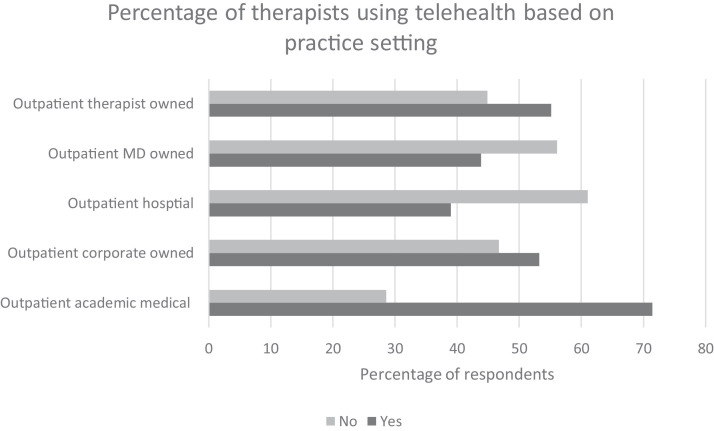
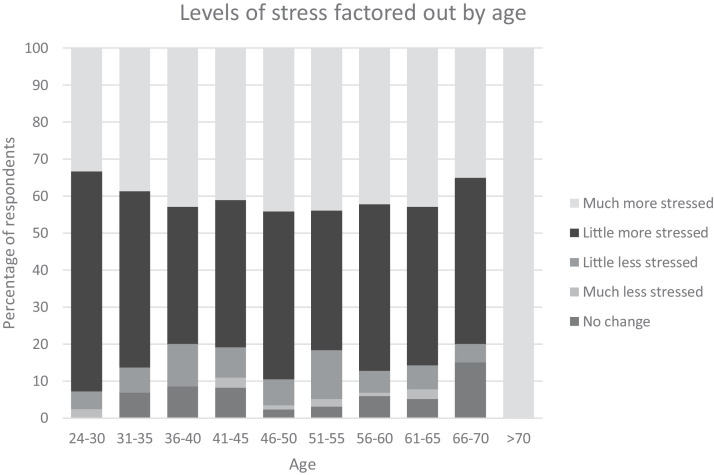
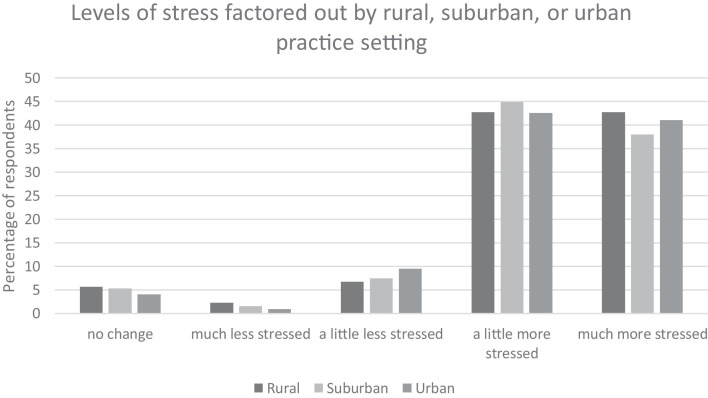
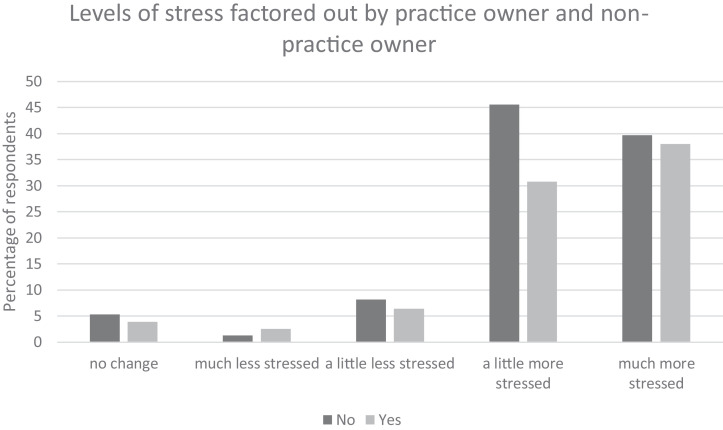
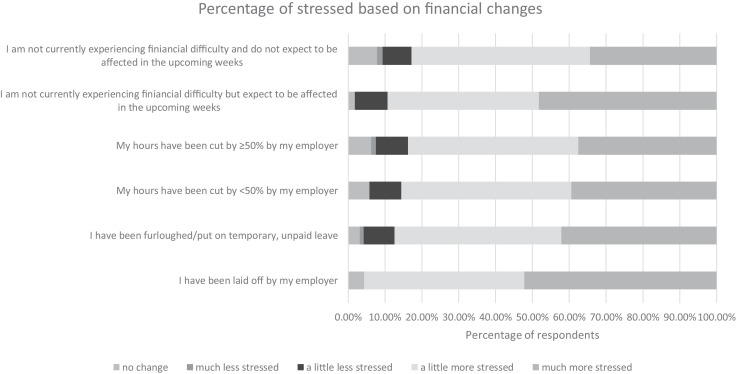
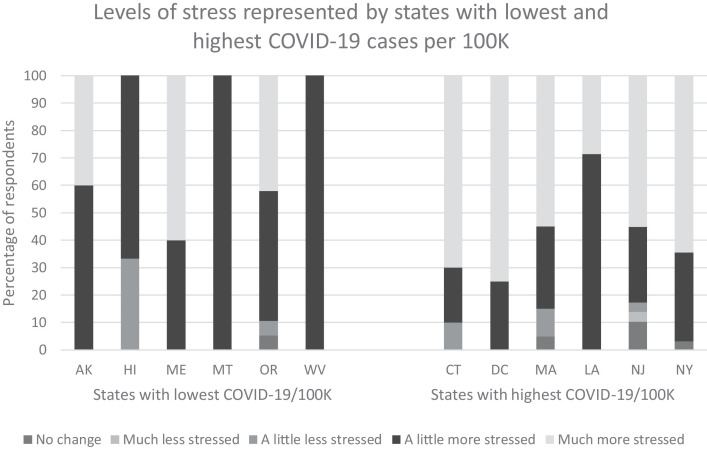
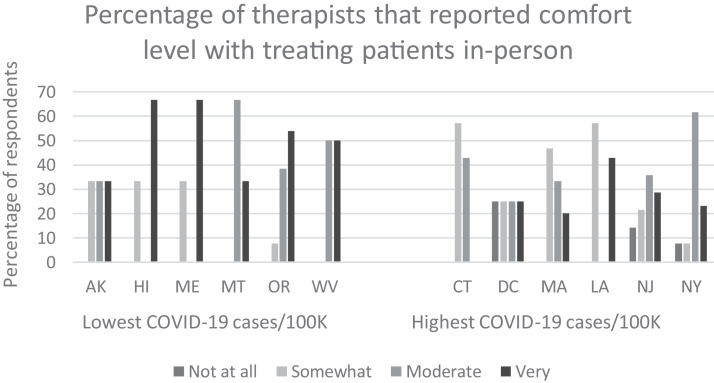
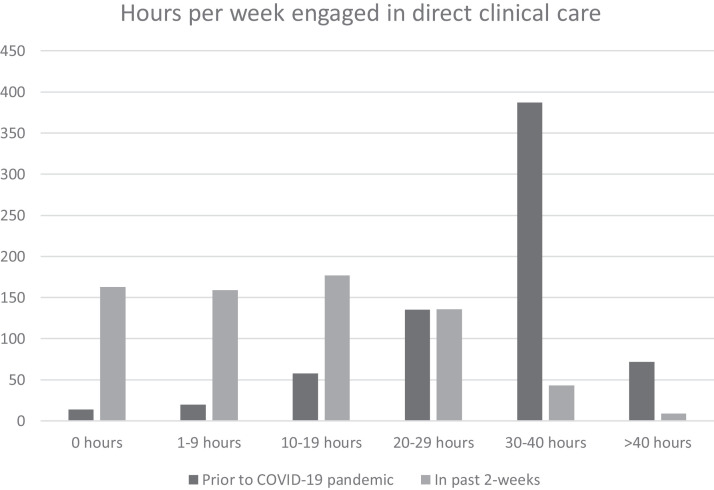
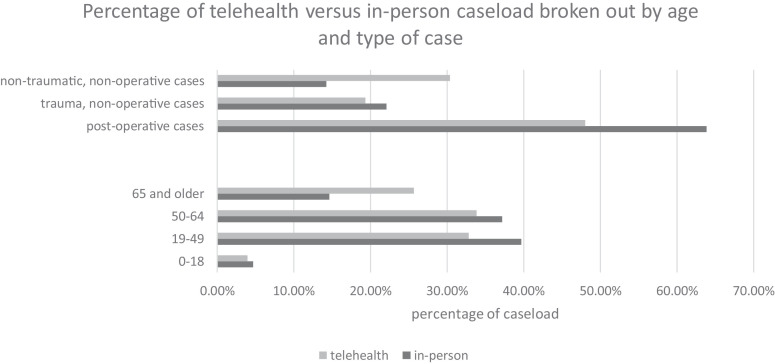
A total of 719 members responded to the survey. Eighty-six percent of therapists reported feeling more stress than they did prior to the COVID-19 pandemic. This level of stress was similar across ages, practice settings, financial stability or instability, and geographical settings. Older therapists (r = 0.04) and those that practiced longer (r = 0.009) felt more comfortable with in-person treatment. Ninety-eight percent of therapists reported a decrease in caseload. Postoperative cases (P= .0001) and patients ages 19-49 were more likely to receive in-person treatment (P= .002). 46% of therapists reported providing telehealth services. Nontraumatic, nonoperative cases (P= .0001) and patients aged 65 or older were more likely to receive telehealth services (P= .0001). Younger therapists (r = 0.03) and therapists working in outpatient therapist owned, outpatient corporate owned, and outpatient academic medical centers (X [4, N = 637] = 15.9463, P= .003) were more likely to utilize telehealth.
Stress was felt globally among hand therapy clinicians regardless of financial security or insecurity, age, practice area, or geographical setting. Therapists saw a drastic decrease in caseloads. In-person caseloads shifted primarily to postoperative cases.
Web based survey.
手治疗师和医疗保健提供者都受到了 COVID-19 的深刻影响。了解从业者如何受到这场前所未有的大流行的影响,更多的洞察力和信息是很重要的。
进行调查研究,以检查 COVID-19 大流行对手疗实践的影响。
在线调查研究。
四个结构指导了调查的发展:心理社会和财务影响;安全实践模式;当前实践模式的变化;远程医疗的使用。该调查于 2020 年 4 月 14 日至 5 月 4 日分发给美国手治疗师协会的成员。获得描述性人口统计学数据。使用卡方检验检查频率,使用斯皮尔曼相关系数检查相关性,使用独立 t 检验比较平均值。
共有 719 名成员对调查做出了回应。86%的治疗师报告说,他们在 COVID-19 大流行之前感到的压力更大。这种压力在年龄、实践环境、财务稳定或不稳定以及地理位置方面都很相似。年长的治疗师(r=0.04)和从业时间较长的治疗师(r=0.009)对面对面治疗更有信心。98%的治疗师报告说工作量减少了。术后病例(P=.0001)和 19-49 岁的患者更有可能接受面对面治疗(P=.002)。46%的治疗师报告提供远程医疗服务。非创伤性、非手术病例(P=.0001)和 65 岁或以上的患者更有可能接受远程医疗服务(P=.0001)。年轻的治疗师(r=0.03)和在门诊治疗师所有、门诊公司所有和门诊学术医疗中心工作的治疗师(X[4,N=637]=15.9463,P=.003)更有可能使用远程医疗。
无论财务安全与否、年龄、实践领域或地理位置如何,手治疗师临床医生都感到了全球性的压力。治疗师的工作量大幅减少。面对面的工作量主要转移到了术后病例上。
基于网络的调查。