Department of Hematology, The First Affiliated Hospital, Zhejiang University School of Medicine, Hangzhou, Zhejiang, China.
Key Laboratory of Hematologic Malignancies, Diagnosis and Treatment, Hangzhou, Zhejiang, China.
Aging (Albany NY). 2021 Apr 4;13(7):10468-10489. doi: 10.18632/aging.202809.
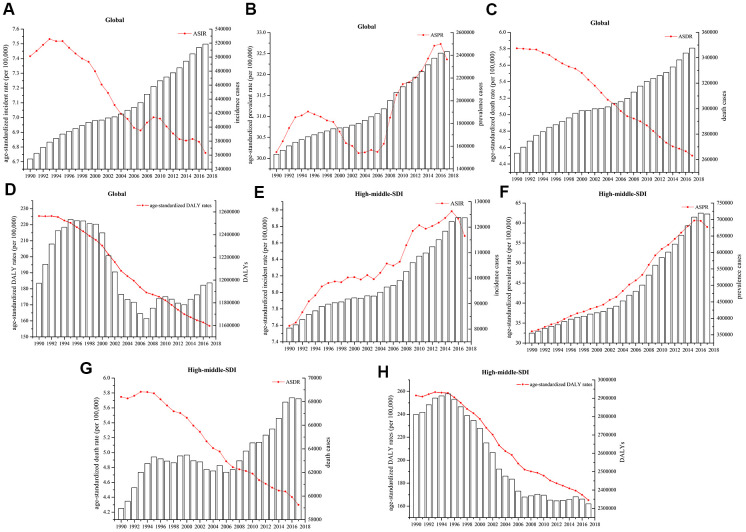
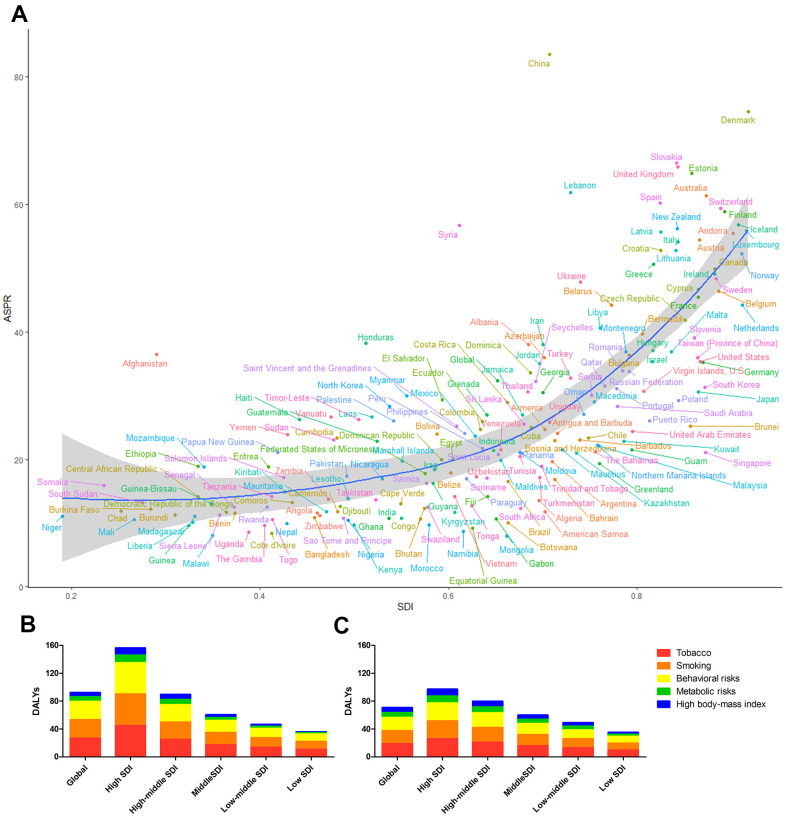
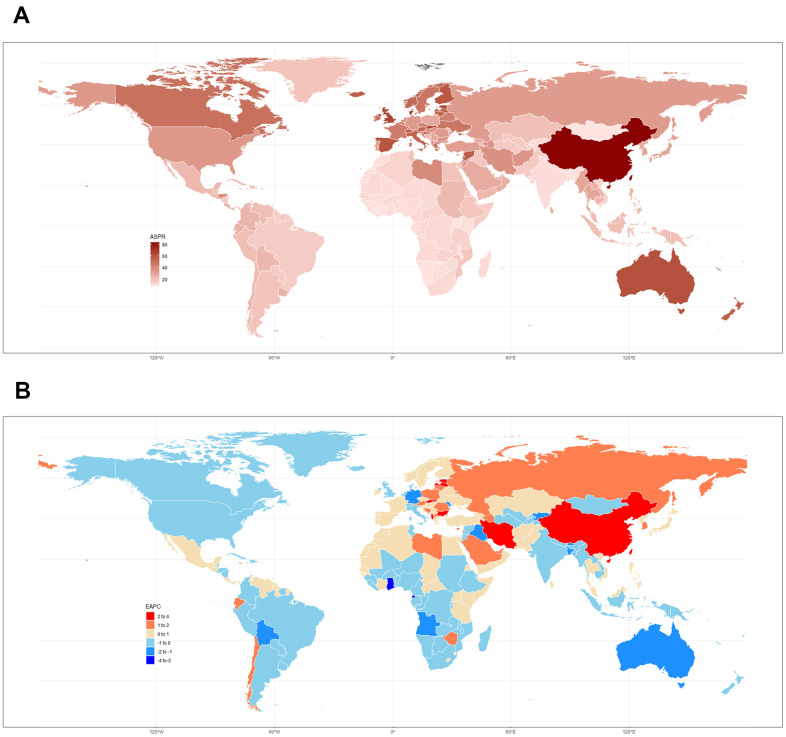
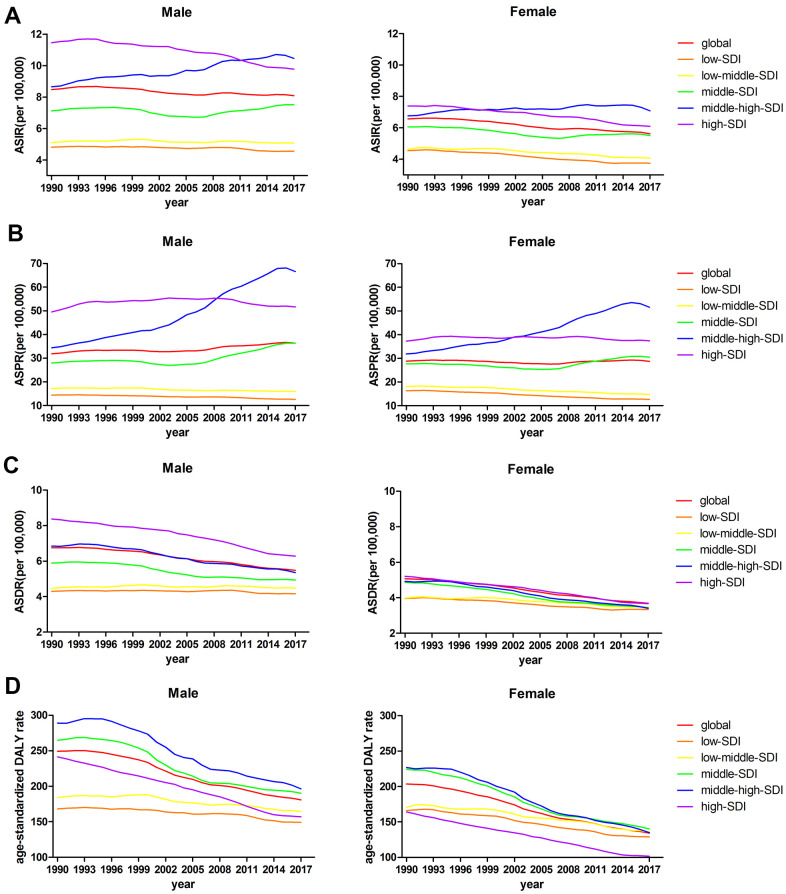
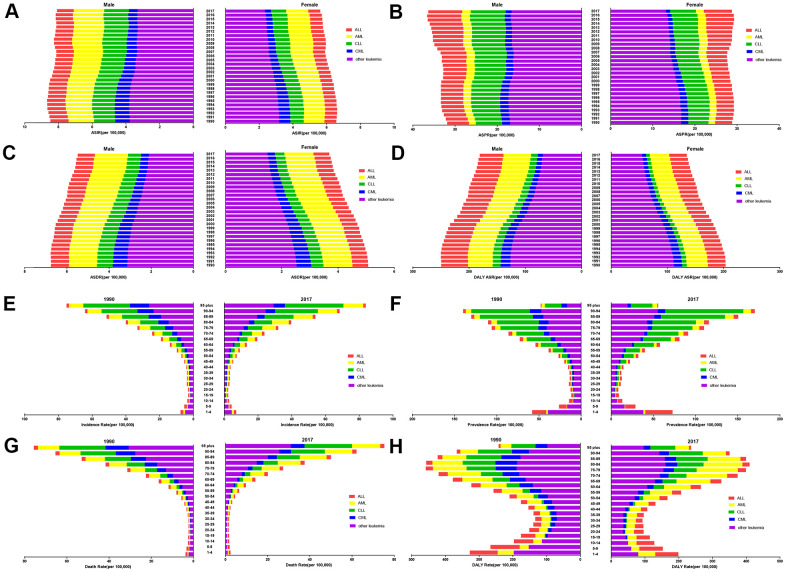
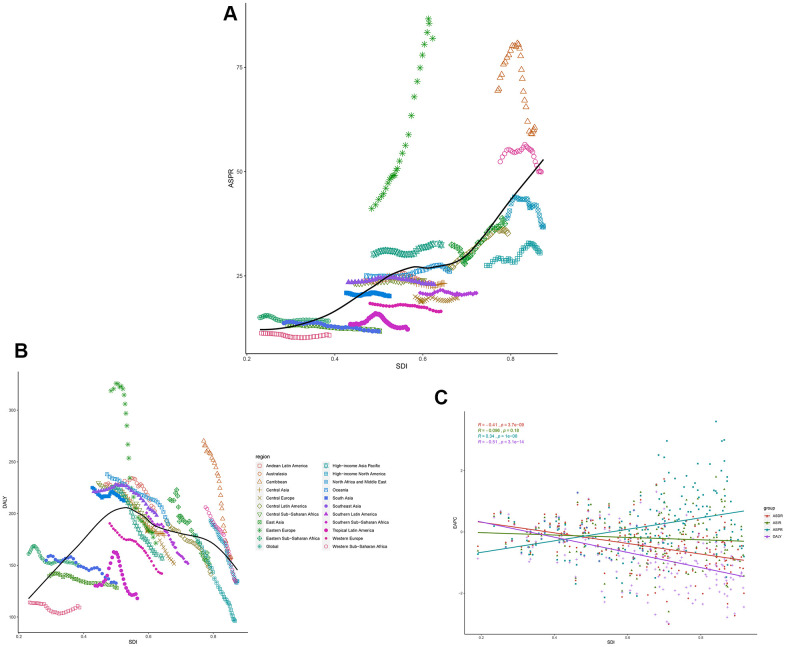
We described the spatial and temporal trends of the annual leukemia incidence, prevalence, mortality, and disability-adjusted life years (DALYs) from 1990 to 2017. Leukemia case numbers and age-standardized rates (ASRs) were extracted from the Global Burden of Disease (GBD) study 2017. The estimated annual percentage change (EAPC) in the ASR was calculated using a generalized linear model with a Gaussian distribution. The risk factors for death and DALYs due to leukemia were estimated within the comparative risk assessment framework of the GBD study. Globally, the prevalence, age-standardized prevalence rate (ASPR), and EAPC in leukemia cases in 2017 were 2.43 (95% uncertainty interval (UI) 2.19 to 2.59) million, 32.26 (95% UI 29.02 to 34.61), and 0.22% (95% CI 0.13 to 0.31, P<0.01), respectively, during 1990-2017. The trends of the age-standardized incidence, deaths, and DALY rate all significantly decreased globally. The burden of leukemia was higher in males than in female. An increasing leukemia burden was found in high-middle-sociodemographic index (SDI) countries and territories. The burden of leukemia tended to be lower in high-SDI regions than that in lower SDI regions. The rapid increases in the prevalent cases and prevalence rate of leukemia is urgent to be solved in the future.
我们描述了 1990 年至 2017 年期间白血病发病率、患病率、死亡率和伤残调整生命年(DALY)的时空趋势。白血病病例数和年龄标准化率(ASR)从全球疾病负担(GBD)研究 2017 年中提取。使用具有正态分布的广义线性模型计算 ASR 的年估计百分比变化(EAPC)。使用 GBD 研究的比较风险评估框架估计了白血病死亡和 DALY 的风险因素。在全球范围内,2017 年白血病的患病率、年龄标准化患病率(ASPR)和 EAPC 分别为 243 万(95%不确定区间(UI)为 219 万至 259 万)、322.6 (95% UI 为 290.2 至 346.1)和 0.22%(95%CI 为 0.13 至 0.31,P<0.01),1990-2017 年期间呈上升趋势。全球年龄标准化发病率、死亡率和 DALY 率的趋势均显著下降。白血病的负担在男性中高于女性。中高社会人口指数(SDI)国家和地区的白血病负担呈上升趋势。高 SDI 地区的白血病负担呈下降趋势,而低 SDI 地区的白血病负担呈上升趋势。未来需要迫切解决白血病患者人数和患病率的快速增长问题。