Department of Ultrasound, Shanghai General Hospital, Shanghai Jiaotong University School of Medicine, Shanghai, China.
Department of Neurosurgery, Affiliated Xinhua Hospital, Shanghai Jiaotong University School of Medicine, Shanghai, China.
Oncogene. 2021 Apr;40(17):3164-3179. doi: 10.1038/s41388-021-01762-0. Epub 2021 Apr 6.
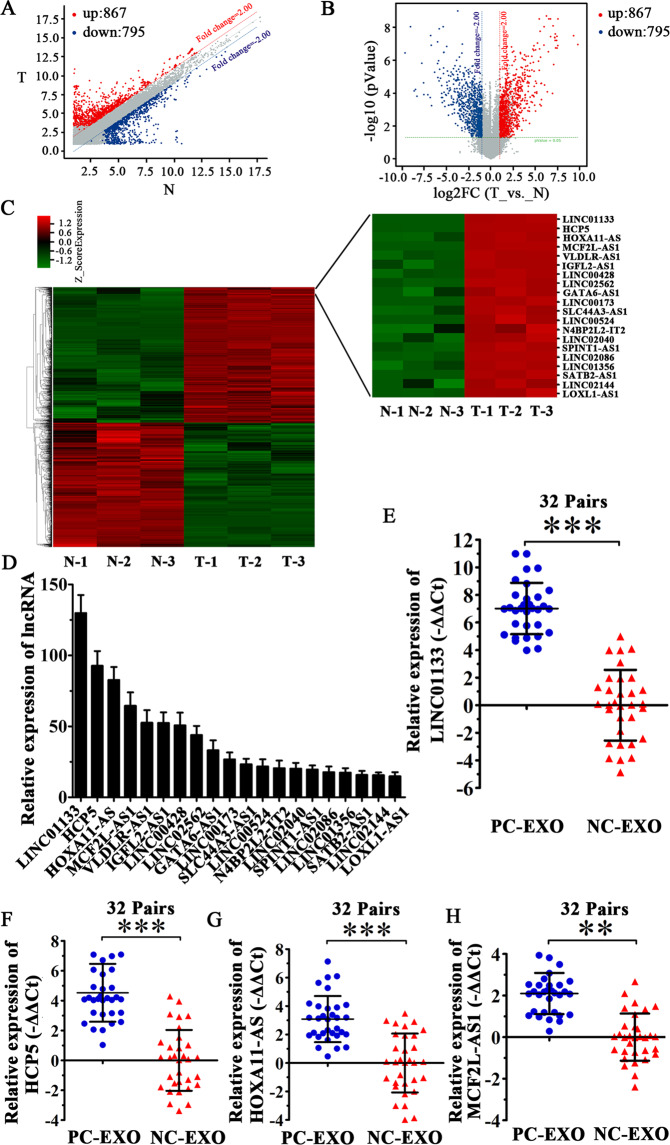
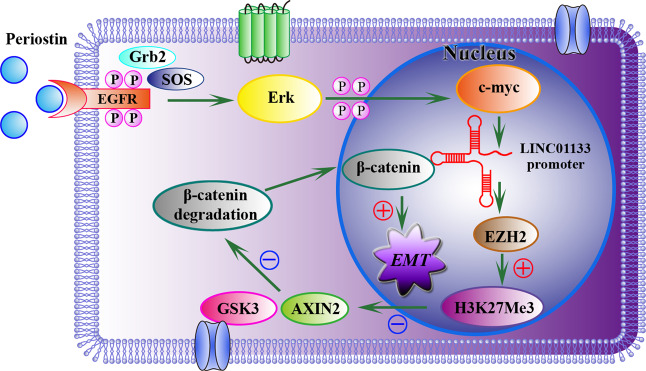
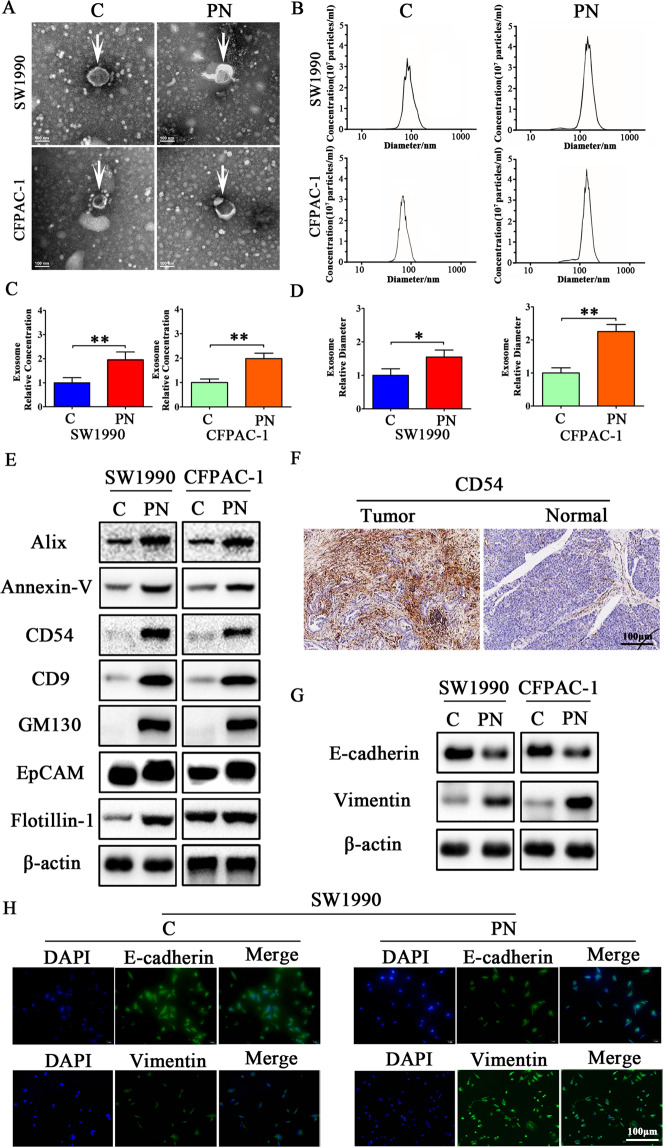
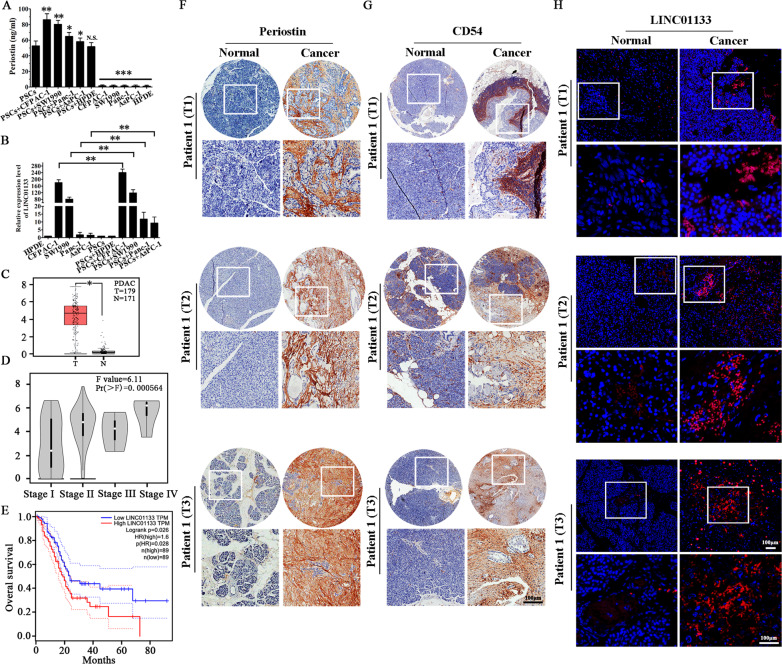
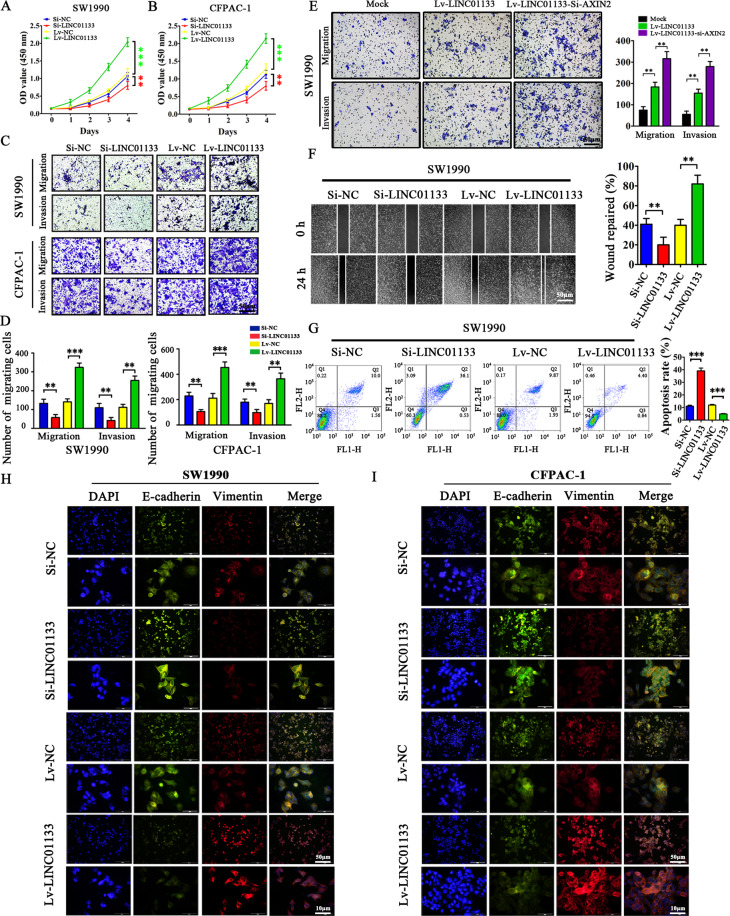
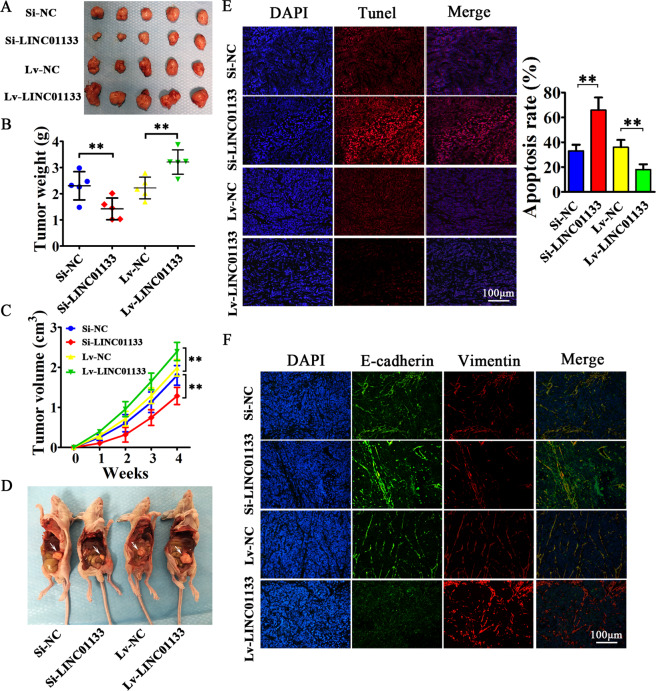
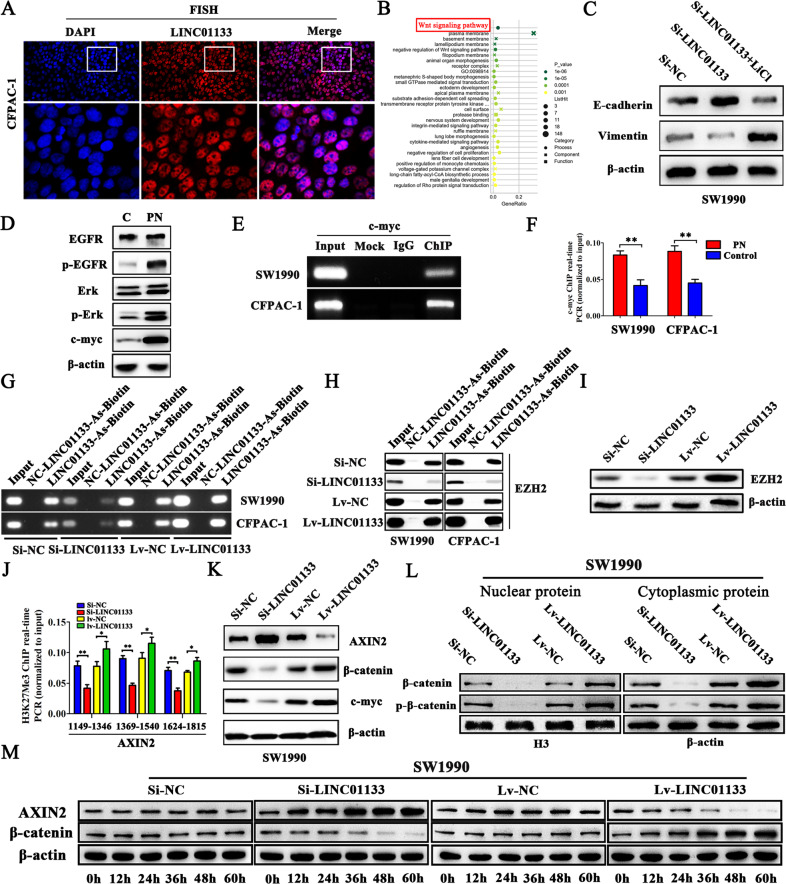
Pancreatic ductal adenocarcinoma (PDAC) is one of the most fatal malignancies and rapidly progressive diseases. Exosomes and long noncoding RNAs (lncRNAs) are emerging as vital mediators in tumor cells and their microenvironment. However, the detailed roles and mechanisms of exosomal lncRNAs in PDAC progression remain unknown. Here, we aimed to clarify the clinical significance and mechanisms of exosomal lncRNA 01133 (LINC01133) in PDAC. We analyzed the expression of LINC01133 in PDAC and found that exosomal LINC01133 expression was high and positively correlated with higher TNM stage and poor overall survival rate of PDAC patients. Further research demonstrated that Periostin could increase exosome secretion and then enhance LINC01133 expression. In addition, Periostin increased p-EGFR, p-Erk, and c-myc expression, and c-myc could bind to the LINC01133 promoter region. These findings suggested that LINC01133 can be regulated by Periostin via EGFR pathway activity. We also observed that LINC01133 promoted the proliferation, migration, invasion, and epithelial-mesenchymal transition (EMT) of pancreatic cancer cells. We subsequently evaluated the effect of LINC01133 on the Wnt/β-catenin pathway and confirmed that LINC01133 can interact with Enhancer Of Zeste Homolog 2 (EZH2) and then promote H3K27 trimethylation. This can further silence AXIN2 and suppress GSK3 activity, ultimately activating β-catenin. Collectively, these data indicate that exosomal LINC01133 plays an important role in pancreatic tumor progression, and targeting LINC01133 may provide a potential treatment strategy for PDAC.
胰腺导管腺癌 (PDAC) 是最致命的恶性肿瘤和快速进展性疾病之一。外泌体和长链非编码 RNA (lncRNA) 作为肿瘤细胞及其微环境中的重要介质而出现。然而,外泌体 lncRNA 在 PDAC 进展中的详细作用和机制仍不清楚。在这里,我们旨在阐明 PDAC 中外泌体 lncRNA 01133 (LINC01133) 的临床意义和机制。我们分析了 PDAC 中 LINC01133 的表达,发现外泌体 LINC01133 的表达较高,与较高的 TNM 分期和 PDAC 患者的总生存率降低呈正相关。进一步的研究表明,骨桥蛋白可以增加外泌体的分泌,从而增强 LINC01133 的表达。此外,骨桥蛋白增加了 p-EGFR、p-Erk 和 c-myc 的表达,而 c-myc 可以结合到 LINC01133 的启动子区域。这些发现表明,LINC01133 可以通过骨桥蛋白通过 EGFR 通路活性进行调节。我们还观察到 LINC01133 促进了胰腺癌细胞的增殖、迁移、侵袭和上皮-间充质转化 (EMT)。随后,我们评估了 LINC01133 对 Wnt/β-catenin 通路的影响,并证实 LINC01133 可以与 Enhancer Of Zeste Homolog 2 (EZH2) 相互作用,然后促进 H3K27 三甲基化。这可以进一步沉默 AXIN2 并抑制 GSK3 活性,最终激活 β-catenin。总之,这些数据表明外泌体 LINC01133 在胰腺肿瘤进展中发挥重要作用,靶向 LINC01133 可能为 PDAC 提供一种潜在的治疗策略。