Department of Biochemistry and Forensic Science, University School of Sciences, Gujarat University, Ahmedabad, 380009, Gujarat, India.
Department of Microbiology and Biotechnology, University School of Sciences, Gujarat University, Ahmedabad, 380009, Gujarat, India.
Mol Divers. 2022 Feb;26(1):309-329. doi: 10.1007/s11030-021-10220-8. Epub 2021 Apr 6.
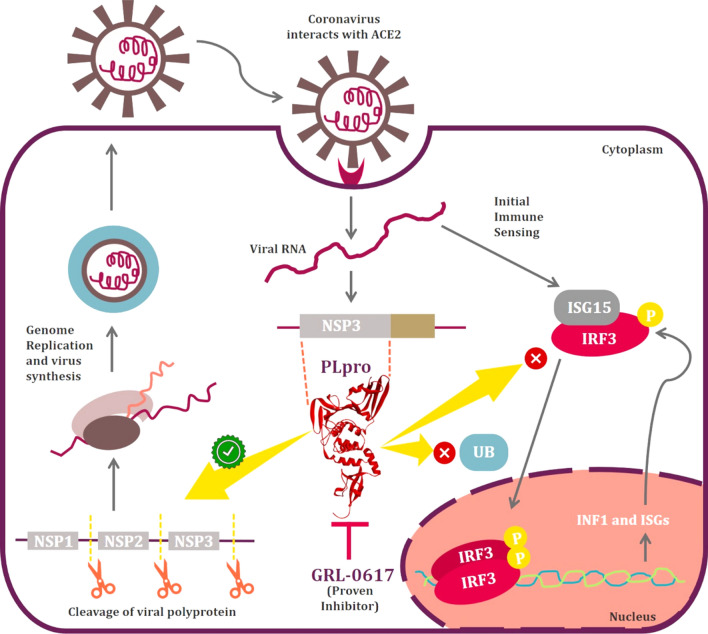
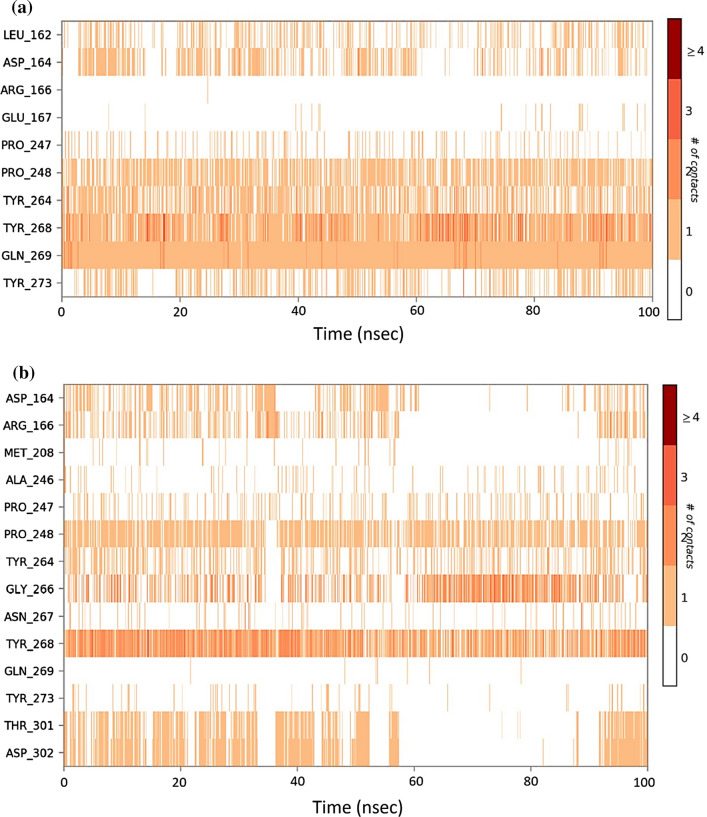
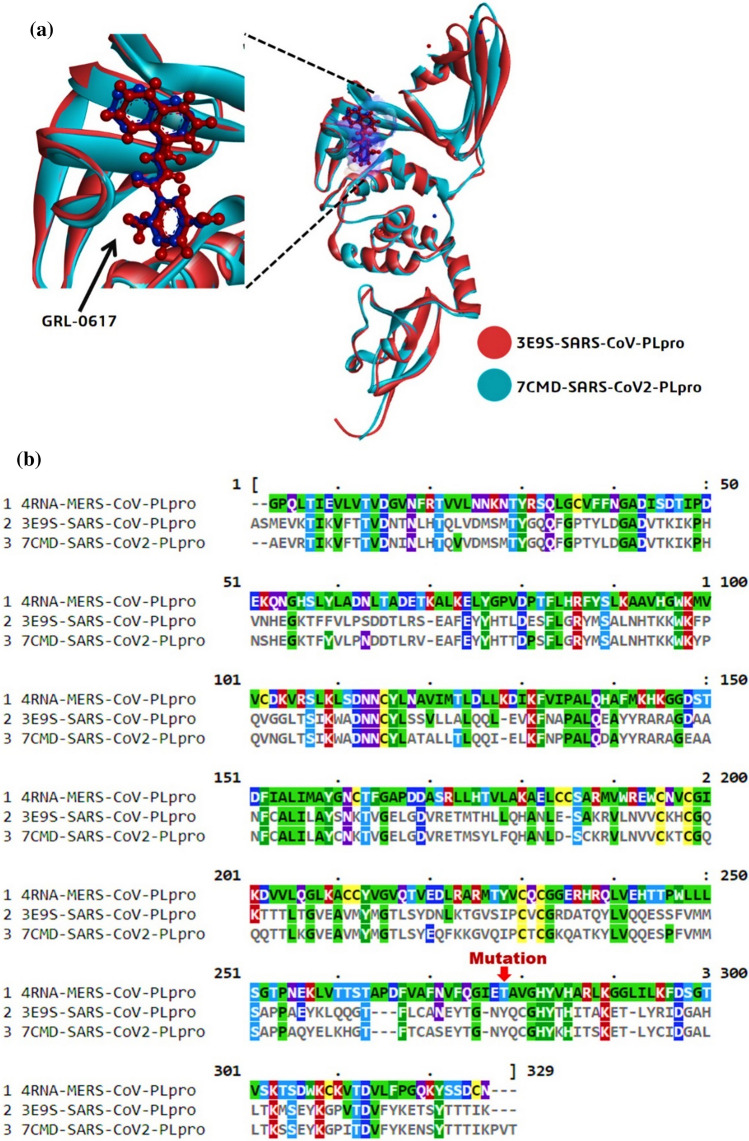
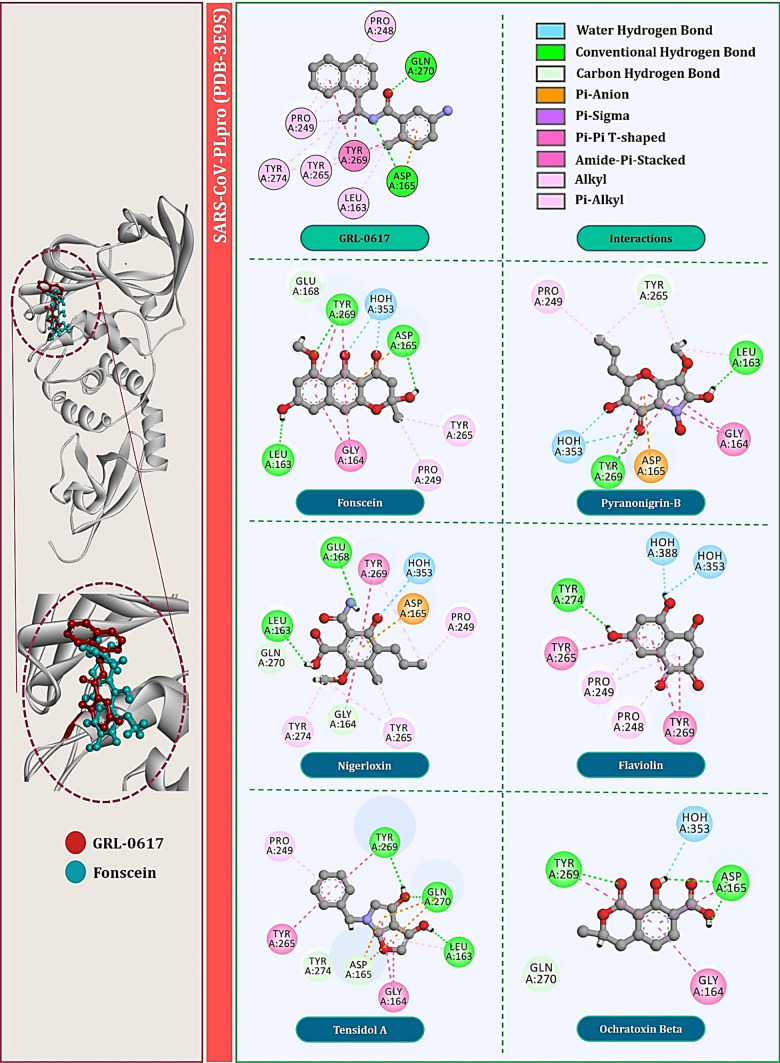
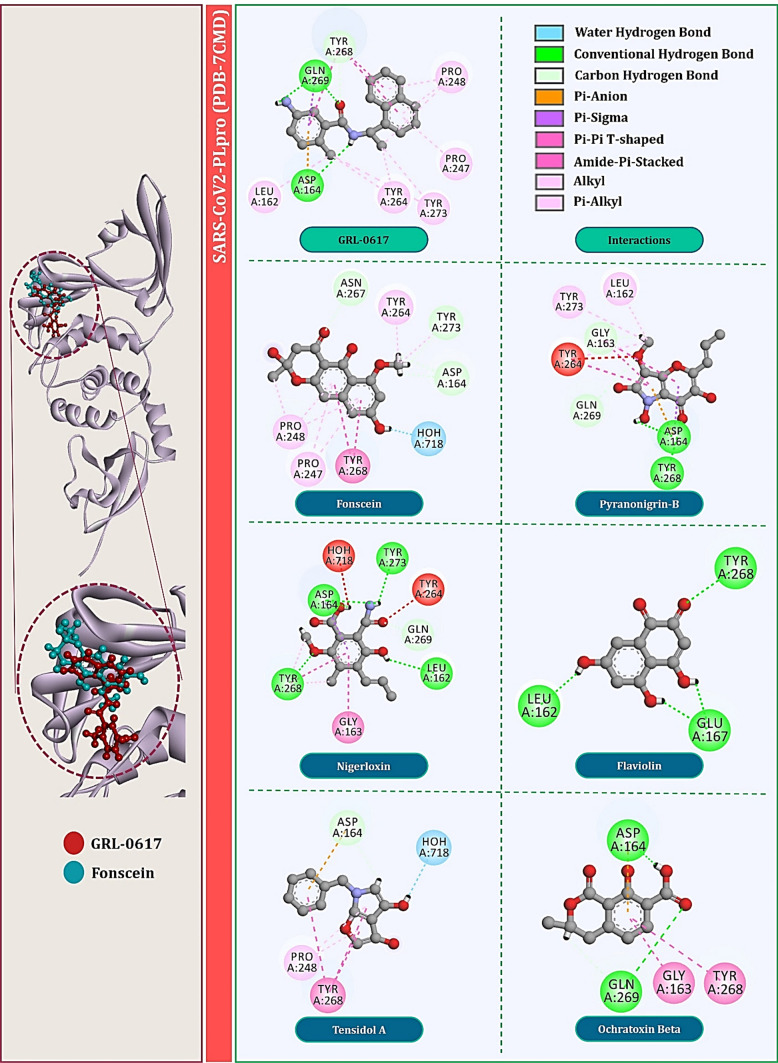
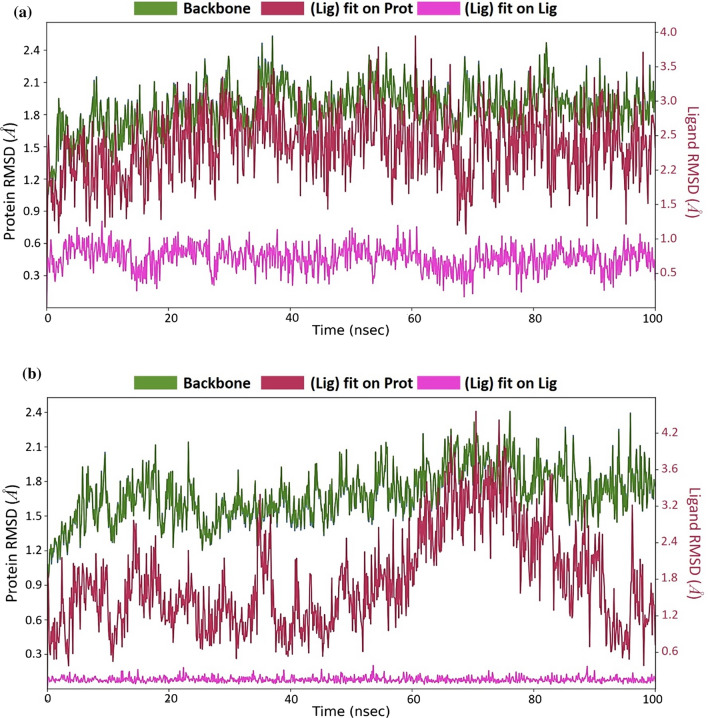
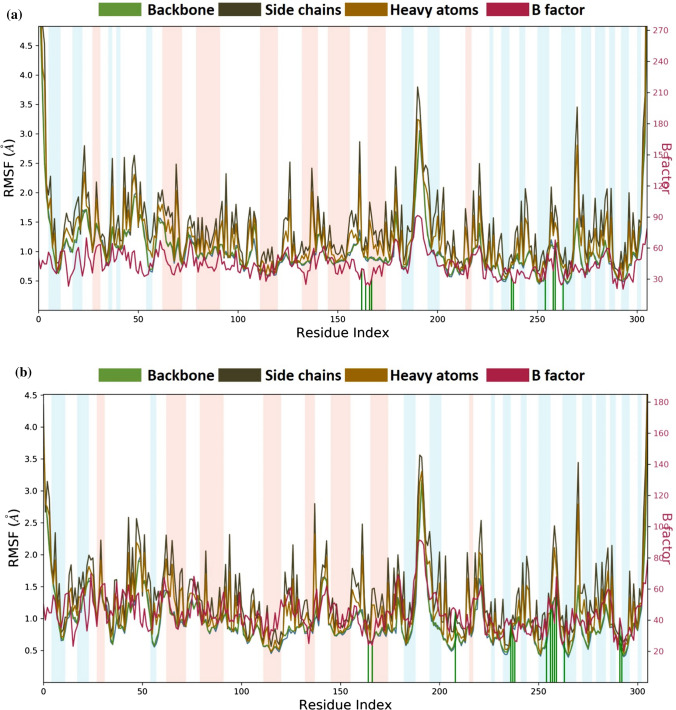
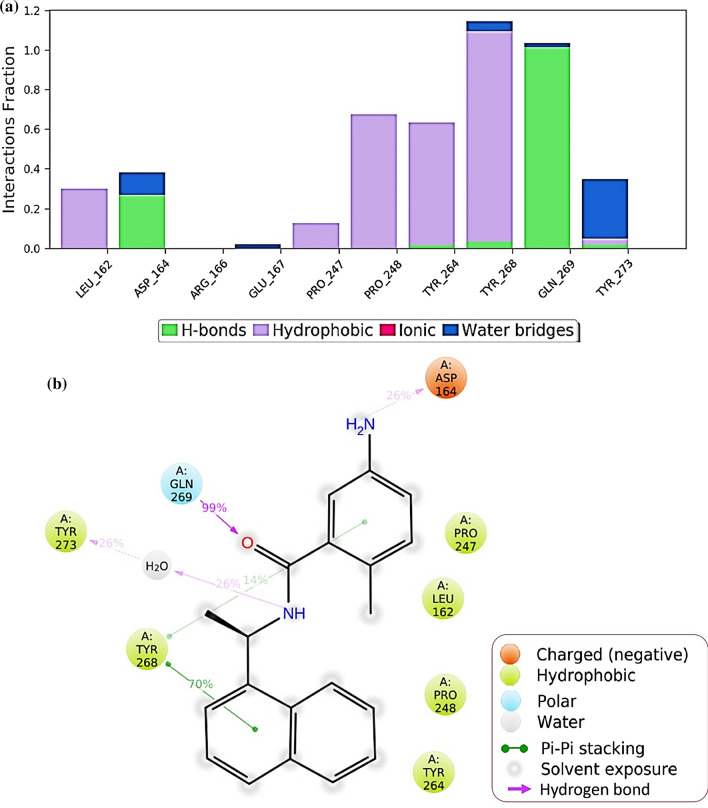
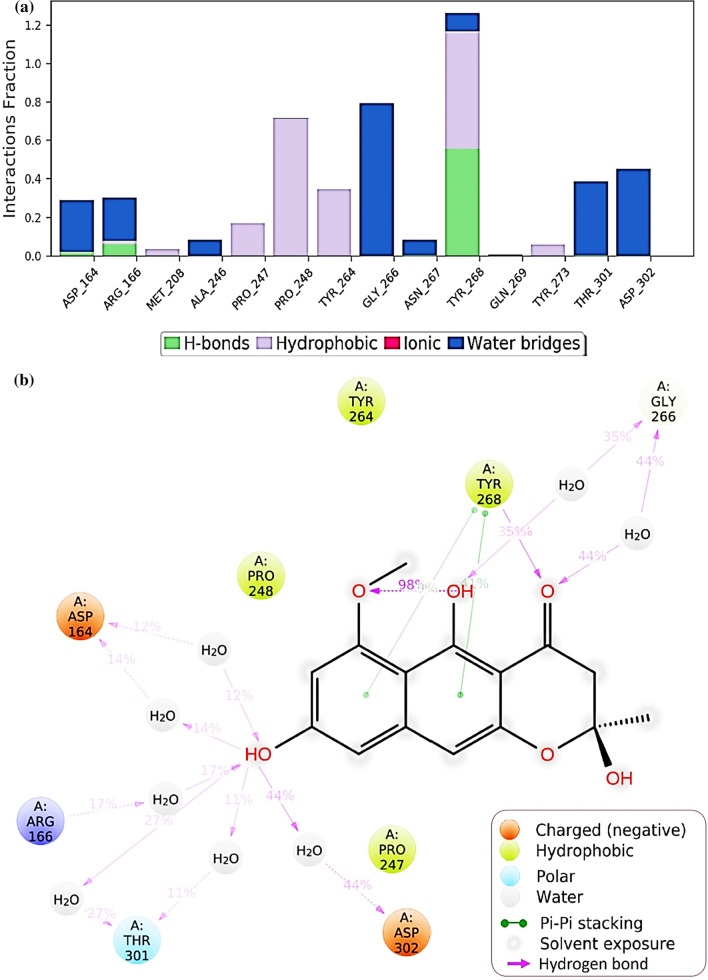
The non-structural protein (nsp)-3 of SARS-CoV2 coronavirus is sought to be an essential target protein which is also named as papain-like protease (PLpro). This protease cleaves the viral polyprotein, but importantly in human host it also removes ubiquitin-like interferon-stimulated gene 15 protein (ISG15) from interferon responsive factor 3 (IRF3) protein which ultimately downregulates the production of type I interferon leading to weakening of immune response. GRL0617 is the most potent known inhibitor for PLpro that was initially developed for SARS outbreak of 2003. The PLpro of SARS-CoV and CoV2 share 83% sequence identity but interestingly have several identical conserved amino acids that suggests GRL0617 to be an effective inhibitor for PLpro of SARS-CoV2. GRL0617 is a naphthalene-based molecule and interacts with Tyr268 of SARS-CoV2-PLpro (and Tyr269 of SARS-CoV-PLpro). To identify PLpro inhibitors, we prepared a library of secondary metabolites from fungi with aromatic nature and docked them with PLpro of SARS-CoV and SARS-CoV2. We found six hits which interacts with Tyr268 of SARS-CoV2-PLpro (and Tyr269 of SARS-CoV-PLpro). More surprisingly the top hit, Fonsecin, has naphthalene moiety in its structure, which recruits Tyr268 of SARS-CoV2-PLpro (and Tyr269 of SARS-CoV-PLpro) and has binding energy at par with control (GRL0617). Molecular dynamics (MD) simulation showed Fonsecin to interact with Tyr268 of SARS-CoV2-PLpro more efficiently than control (GRL0617) and interacting with a greater number of amino acids in the binding cleft of PLpro.
新型冠状病毒(SARS-CoV-2)的非结构蛋白(nsp)-3 被认为是一种重要的靶蛋白,也被称为木瓜蛋白酶样蛋白酶(PLpro)。这种蛋白酶切割病毒多蛋白,但重要的是,在人类宿主中,它还从干扰素反应因子 3(IRF3)蛋白中去除泛素样干扰素刺激基因 15 蛋白(ISG15),从而最终下调 I 型干扰素的产生,导致免疫反应减弱。GRL0617 是最初为 2003 年 SARS 爆发开发的已知最有效的 PLpro 抑制剂。SARS-CoV 和 CoV2 的 PLpro 具有 83%的序列同一性,但有趣的是,它们具有几个相同的保守氨基酸,这表明 GRL0617 是 SARS-CoV2-PLpro 的有效抑制剂。GRL0617 是一种萘基分子,与 SARS-CoV2-PLpro 的 Tyr268(和 SARS-CoV-PLpro 的 Tyr269)相互作用。为了鉴定 PLpro 抑制剂,我们从具有芳香性质的真菌中制备了次级代谢产物文库,并将其与 SARS-CoV 和 SARS-CoV2 的 PLpro 对接。我们发现了六个与 SARS-CoV2-PLpro 的 Tyr268(和 SARS-CoV-PLpro 的 Tyr269)相互作用的化合物。更令人惊讶的是,排名第一的化合物 Fonsecin,其结构中含有萘基部分,可招募 SARS-CoV2-PLpro 的 Tyr268(和 SARS-CoV-PLpro 的 Tyr269),与对照(GRL0617)的结合能相当。分子动力学(MD)模拟表明,Fonsecin 与 SARS-CoV2-PLpro 的 Tyr268 相互作用比对照(GRL0617)更有效,并且与 PLpro 结合腔内的更多氨基酸相互作用。