Florentino Pilar T V, Mendes Davi, Vitorino Francisca Nathalia L, Martins Davi J, Cunha Julia P C, Mortara Renato A, Menck Carlos F M
Department of Microbiology, Institute of Biomedical Sciences, University of São Paulo, São Paulo, Brazil.
Special Laboratory of Cell Cycle, Butantan Institute, São Paulo, Brazil.
PLoS Pathog. 2021 Apr 7;17(4):e1009502. doi: 10.1371/journal.ppat.1009502. eCollection 2021 Apr.
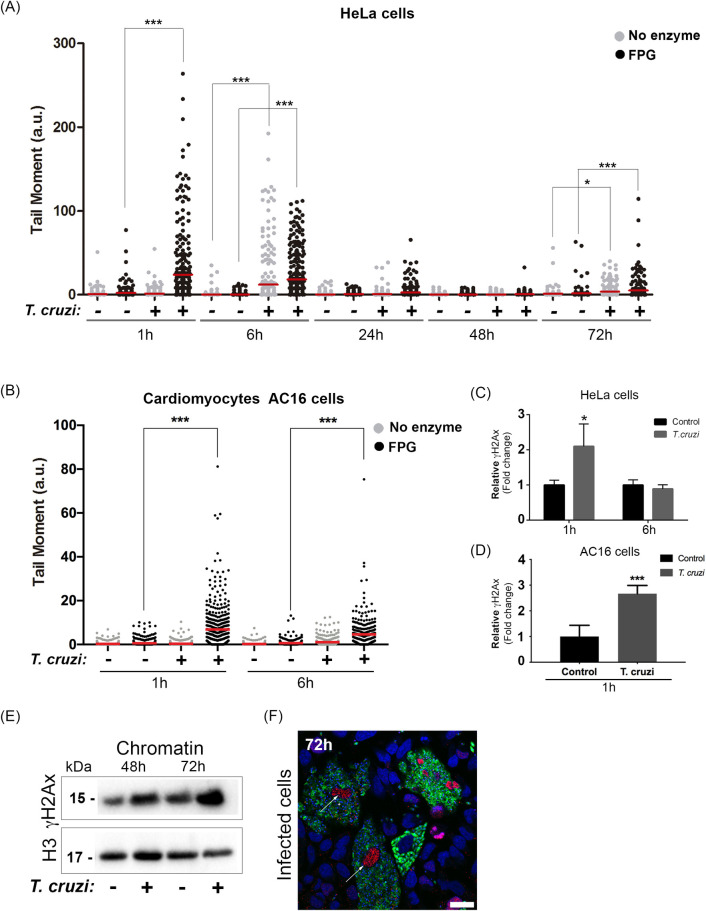
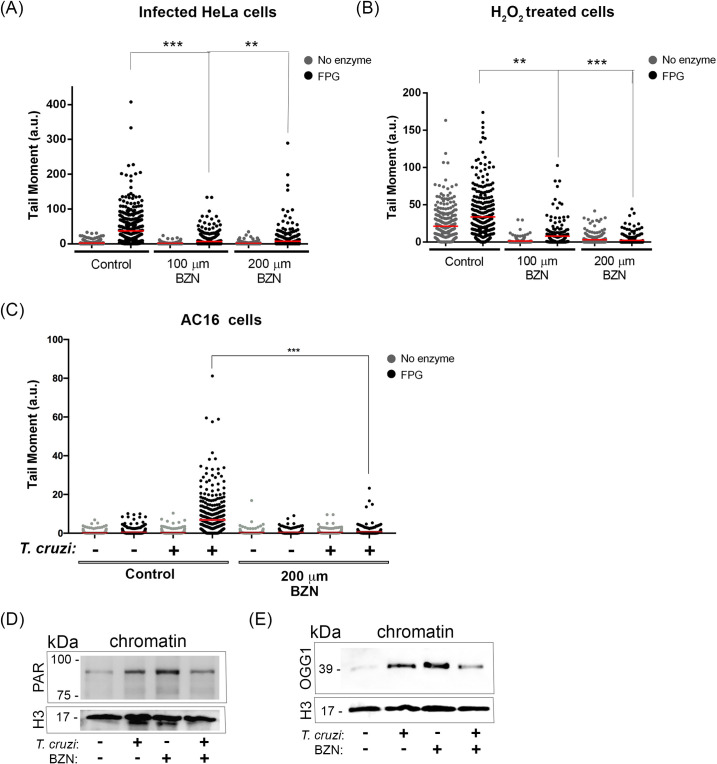
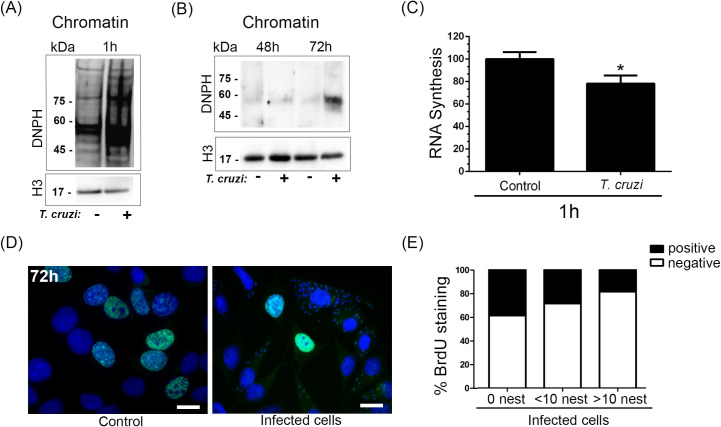
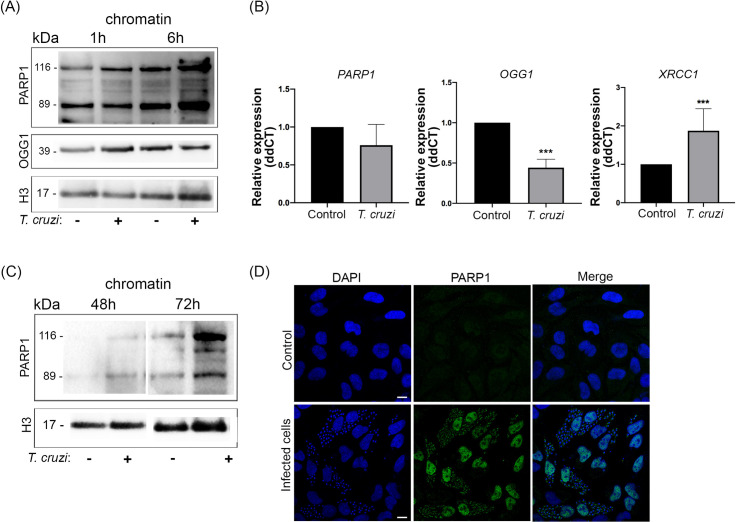
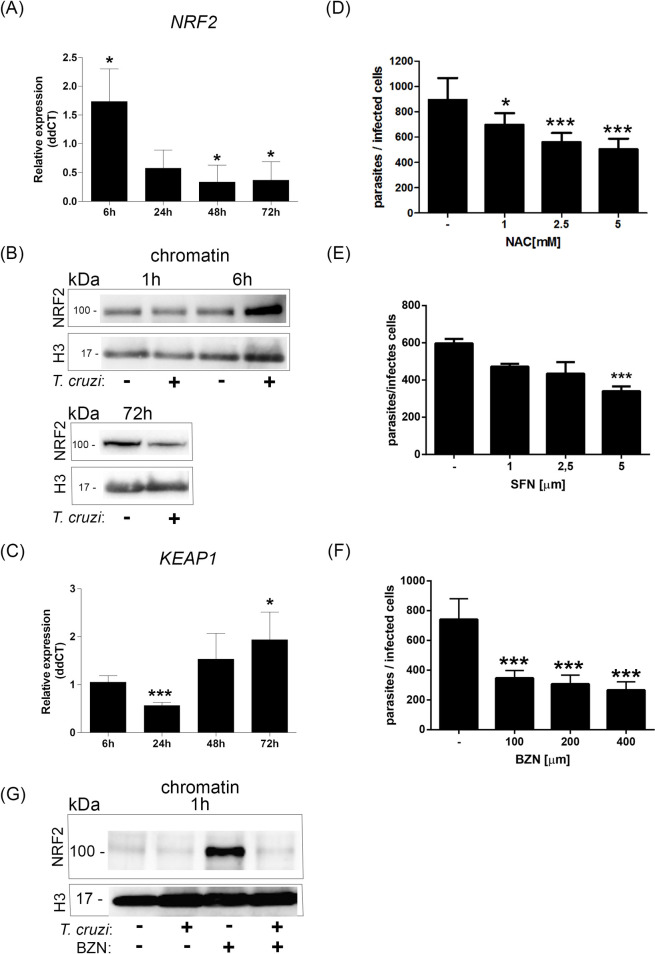
Trypanosoma cruzi is the etiologic agent of Chagas' disease. Infected cells with T. cruzi activate several responses that promote unbalance of reactive oxygen species (ROS) that may cause DNA damage that activate cellular responses including DNA repair processes. In this work, HeLa cells and AC16 human cardiomyocyte cell line were infected with T. cruzi to investigate host cell responses at genome level during parasites intracellular life cycle. In fact, alkaline sensitive sites and oxidized DNA bases were detected in the host cell genetic material particularly in early stages of infection. These DNA lesions were accompanied by phosphorylation of the histone H2Ax, inducing γH2Ax, a marker of genotoxic stress. Moreover, Poly [ADP-ribose] polymerase-1 (PARP1) and 8-oxoguanine glycosylase (OGG1) are recruited to host cell nuclei, indicating activation of the DNA repair process. In infected cells, chromatin-associated proteins are carbonylated, as a possible consequence of oxidative stress and the nuclear factor erythroid 2-related factor 2 (NRF2) is induced early after infection, suggesting that the host cell antioxidant defenses are activated. However, at late stages of infection, NRF2 is downregulated. Interestingly, host cells treated with glutathione precursor, N-acetyl cysteine, NRF2 activator (Sulforaphane), and also Benznidonazol (BNZ) reduce parasite burst significantly, and DNA damage. These data indicate that the balance of oxidative stress and DNA damage induction in host cells may play a role during the process of infection itself, and interference in these processes may hamper T. cruzi infection, revealing potential target pathways for the therapy support.
克氏锥虫是恰加斯病的病原体。感染克氏锥虫的细胞会激活多种反应,这些反应会促进活性氧(ROS)失衡,进而可能导致DNA损伤,从而激活包括DNA修复过程在内的细胞反应。在这项研究中,用克氏锥虫感染了HeLa细胞和AC16人心肌细胞系,以研究寄生虫细胞内生命周期中宿主细胞在基因组水平的反应。事实上,在宿主细胞遗传物质中检测到了碱性敏感位点和氧化的DNA碱基,尤其是在感染的早期阶段。这些DNA损伤伴随着组蛋白H2Ax的磷酸化,诱导产生γH2Ax,这是遗传毒性应激的一个标志物。此外,聚[ADP-核糖]聚合酶-1(PARP1)和8-氧鸟嘌呤糖基化酶(OGG1)被招募到宿主细胞核中,表明DNA修复过程被激活。在受感染的细胞中,与染色质相关的蛋白质被羰基化,这可能是氧化应激的结果,并且在感染后早期诱导核因子红细胞2相关因子2(NRF2),这表明宿主细胞的抗氧化防御被激活。然而,在感染后期,NRF2被下调。有趣的是,用谷胱甘肽前体、N-乙酰半胱氨酸、NRF2激活剂(萝卜硫素)以及苯并硝唑(BNZ)处理宿主细胞可显著减少寄生虫爆发和DNA损伤。这些数据表明,宿主细胞中氧化应激和DNA损伤诱导的平衡可能在感染过程本身中起作用,并且对这些过程的干扰可能会阻碍克氏锥虫感染,揭示了治疗支持的潜在靶标途径。