Ceylan Melis, Hayran Ceren
Faculty of Business Administration, Bilkent University, Ankara, Turkey.
School of Business, Ozyegin University, Istanbul, Turkey.
Front Psychol. 2021 Mar 22;12:579164. doi: 10.3389/fpsyg.2021.579164. eCollection 2021.
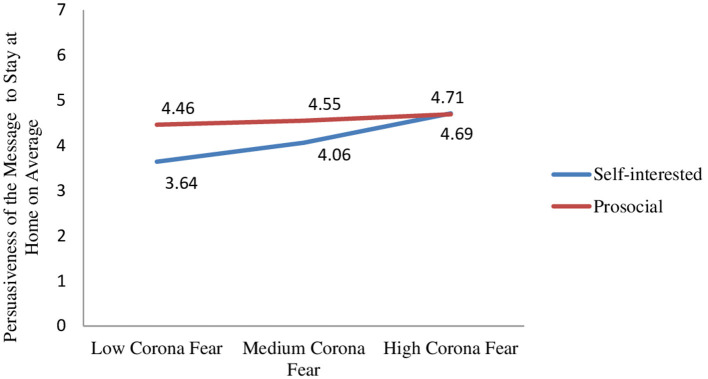
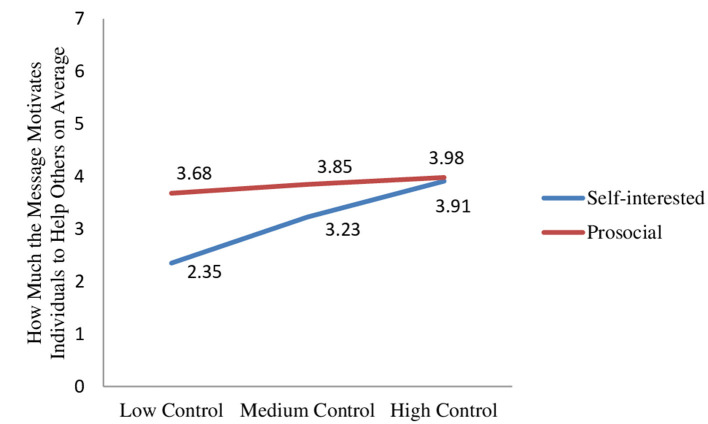
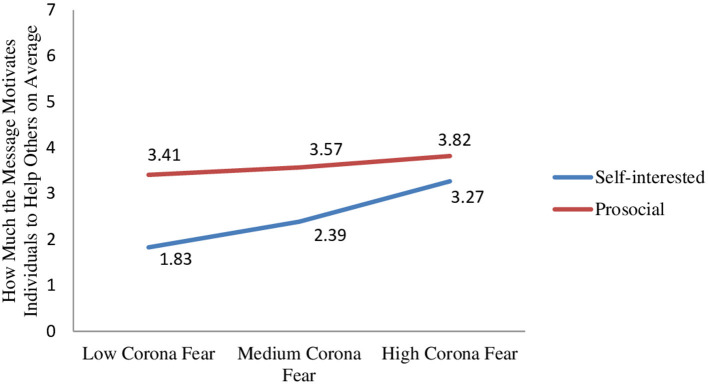
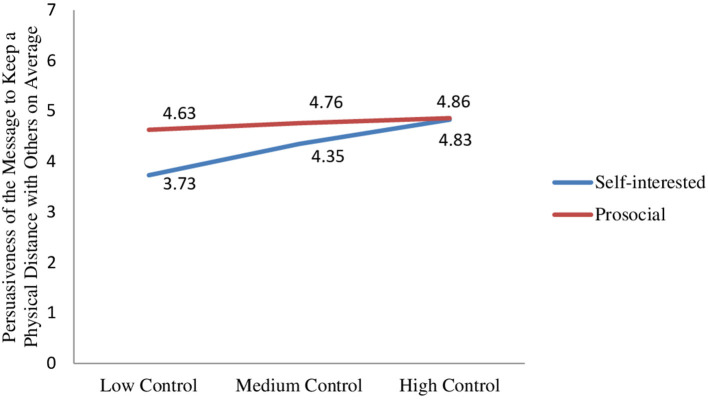
This research responds to urgent calls to fill knowledge gaps on COVID-19 (new coronavirus) in communicating social distancing messages to the public in the most convincing ways. The authors explore the effectiveness of framing social distancing messages around prosocial vs. self-interested appeals in driving message compliance and helping behavior. The results show that when a message emphasizes benefits for everyone in society, rather than solely for the individual, citizens find the message more persuasive to engage in social distancing, and also more motivating to help others. The results further demonstrate that the proposed effects are higher for individuals who have a lower locus of control and lower fear of coronavirus as prosocial messages lead them to feel a joint responsibility in protecting from the pandemic. Theoretical and practical implications of the results are discussed.
这项研究回应了紧迫呼吁,即填补在以最具说服力的方式向公众传达社交距离信息方面关于新冠病毒(新型冠状病毒)的知识空白。作者探讨了围绕亲社会诉求与利己诉求来构建社交距离信息在推动信息依从和帮助行为方面的有效性。结果表明,当一条信息强调对社会中每个人的益处,而非仅仅对个人的益处时,公民会觉得该信息在促使人们保持社交距离方面更具说服力,并且在帮助他人方面也更有动力。结果还进一步表明,对于内控点较低且对冠状病毒恐惧较低的个体而言,所提出的效果更为显著,因为亲社会信息会使他们在防范疫情方面产生共同责任感。文中讨论了这些结果的理论和实际意义。