Li Meng, Taylor Eric G, Atkins Katherine E, Chapman Gretchen B, Galvani Alison P
Department of Health and Behavioral Sciences, University of Colorado Denver, Denver, Colorado, United States of America.
Center for Infectious Disease Modeling and Analysis, Yale School of Public Health, New Haven, Connecticut, United States of America.
PLoS One. 2016 Jul 26;11(7):e0159780. doi: 10.1371/journal.pone.0159780. eCollection 2016.
Americans do not vaccinate nearly enough against Influenza (flu) infection, despite severe health and economic burden of influenza. Younger people are disproportionately responsible for transmission, but do not suffer severely from the flu. Thus, to achieve herd immunity, prosocial motivation needs to be a partial driver of vaccination decisions. Past research has not established the causal role of prosociality in flu vaccination, and the current research evaluates such causal relationship by experimentally eliciting prosociality through messages about flu victims.
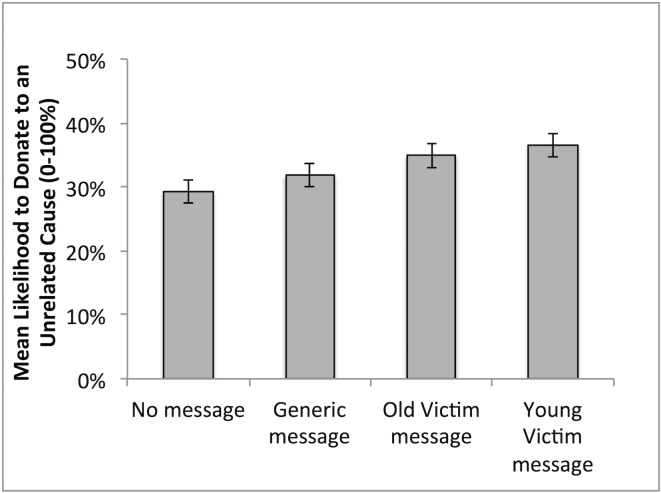
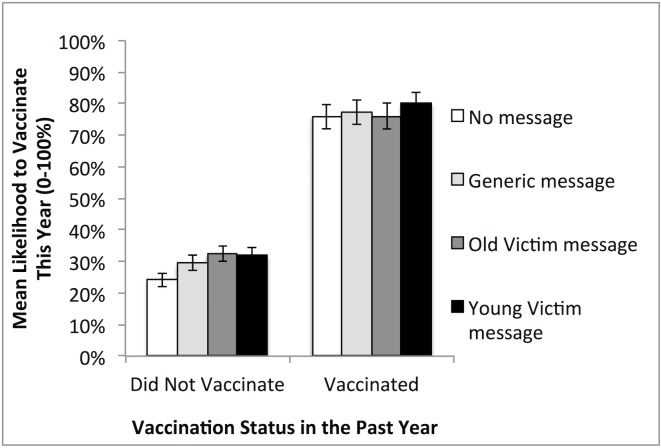
In an experimental study, we described potential flu victims who would suffer from the decision of others to not vaccinate to 3952 Internet participants across eight countries. We measured sympathy, general prosociality, and vaccination intentions. The study included two identifiable victim conditions (one with an elderly victim and another with a young victim), an unidentified victim condition, and a no message condition.
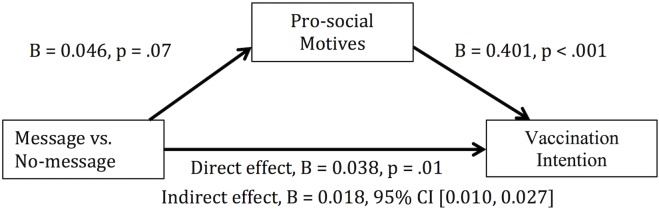
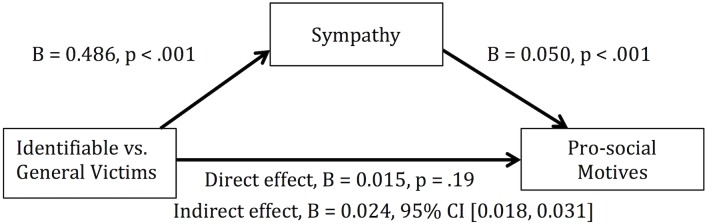
We found that any of the three messages increased flu vaccination intentions. Moreover, this effect was mediated by enhanced prosocial motives, and was stronger among people who were historical non-vaccinators. In addition, younger victim elicited greater sympathy, and describing identifiable victims increased general sympathy and prosocial motives.
These findings provide direct experimental evidence on the causal role of prosocial motives in flu vaccination, by showing that people can be prompted to vaccinate for the sake of benefiting others.
尽管流感会带来严重的健康和经济负担,但美国人对流感感染的疫苗接种率仍远远不足。年轻人在传播流感方面的责任 disproportionately,但他们患流感的症状并不严重。因此,为了实现群体免疫,亲社会动机需要成为疫苗接种决策的部分驱动因素。过去的研究尚未确定亲社会行为在流感疫苗接种中的因果作用,而当前的研究通过有关流感受害者的信息实验性地激发亲社会行为来评估这种因果关系。
在一项实验研究中,我们向八个国家的 3952 名互联网参与者描述了可能因他人不接种疫苗的决定而遭受痛苦的潜在流感受害者。我们测量了同情心、一般亲社会行为和疫苗接种意愿。该研究包括两种可识别受害者情况(一种是老年受害者,另一种是年轻受害者)、一种不可识别受害者情况和一种无信息情况。
我们发现这三条信息中的任何一条都增加了流感疫苗接种意愿。此外,这种效果是由增强的亲社会动机介导的,并且在过去未接种疫苗的人群中更强。此外,年轻受害者引发了更大的同情心,描述可识别的受害者增加了总体同情心和亲社会动机。
这些发现通过表明人们可以为了他人的利益而被促使接种疫苗,为亲社会动机在流感疫苗接种中的因果作用提供了直接的实验证据。