van der Pol Tom P A, Li Junyu, van Gorkom Bas T, Colberts Fallon J M, Wienk Martijn M, Janssen René A J
Molecular Materials and Nanosystems & Institute for Complex Molecular Systems, Eindhoven University of Technology, Eindhoven 5600 MB, The Netherlands.
Energy Engineering, Zuyd University of Applied Sciences, Nieuw Eyckholt 300, Heerlen 6419 DJ, The Netherlands.
J Phys Chem C Nanomater Interfaces. 2021 Mar 18;125(10):5505-5517. doi: 10.1021/acs.jpcc.0c11377. Epub 2021 Mar 4.
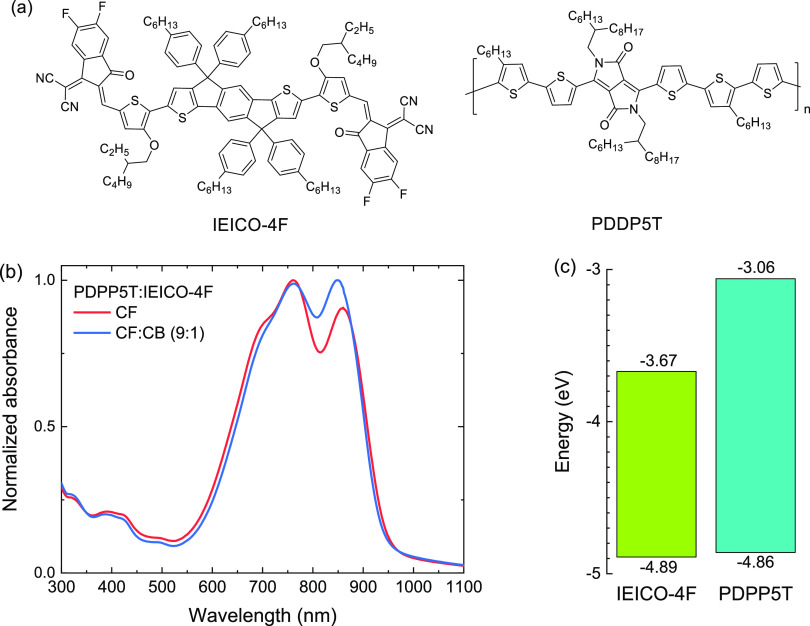
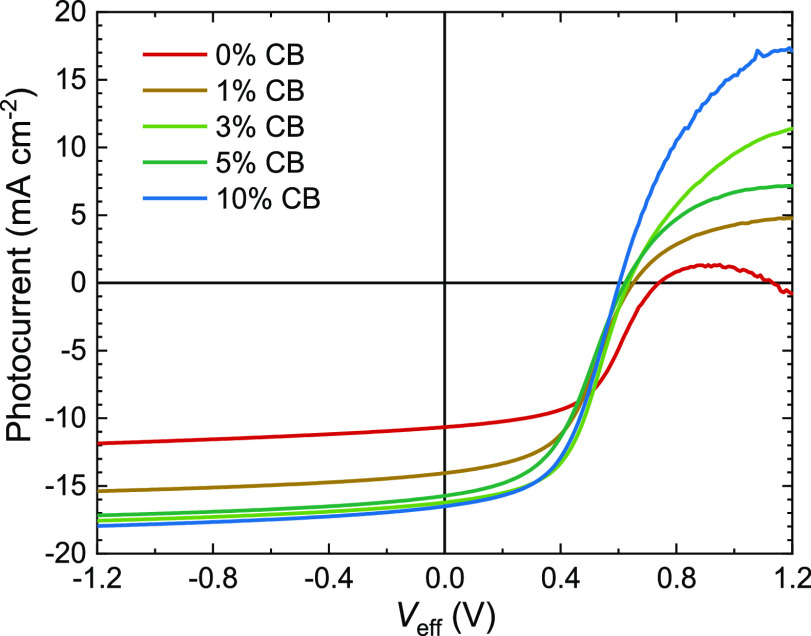
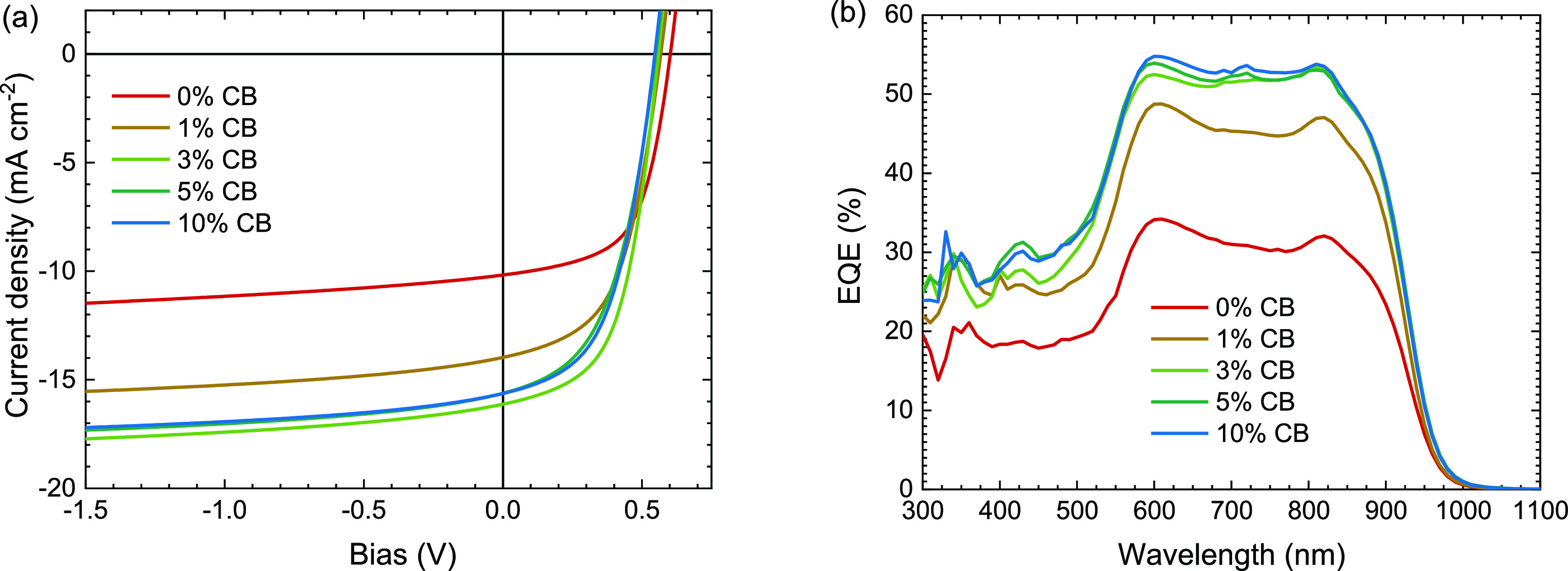
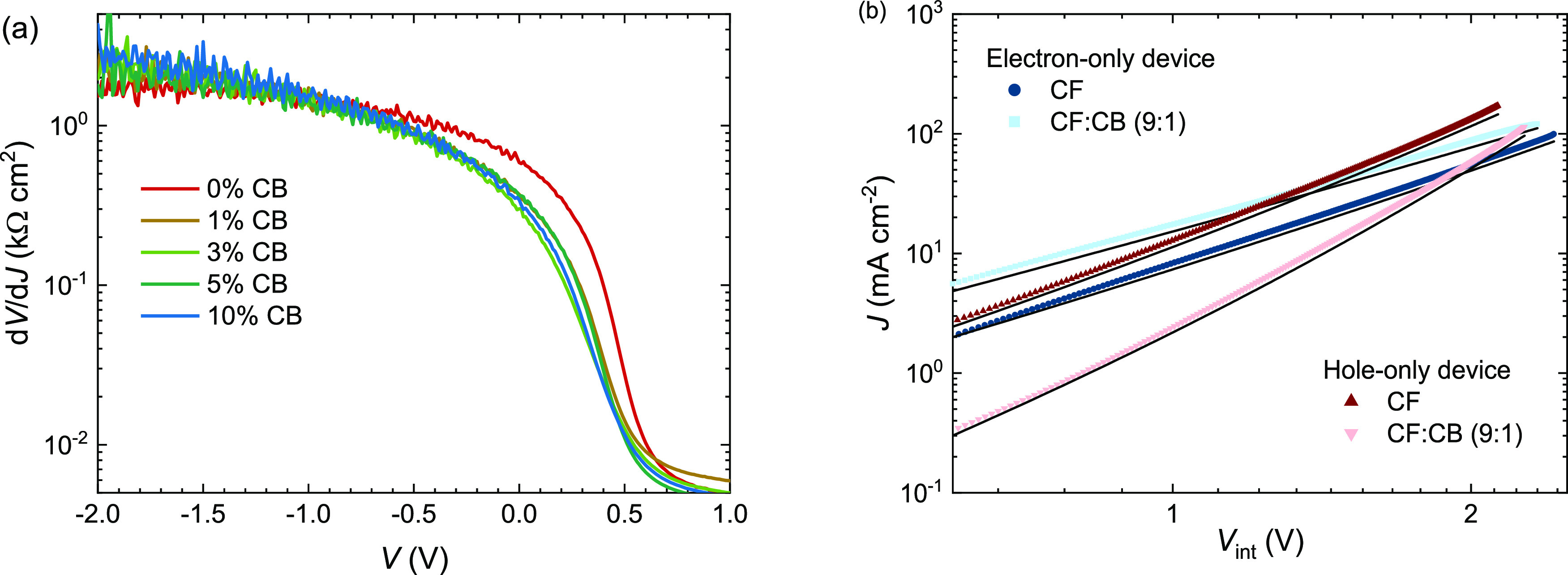
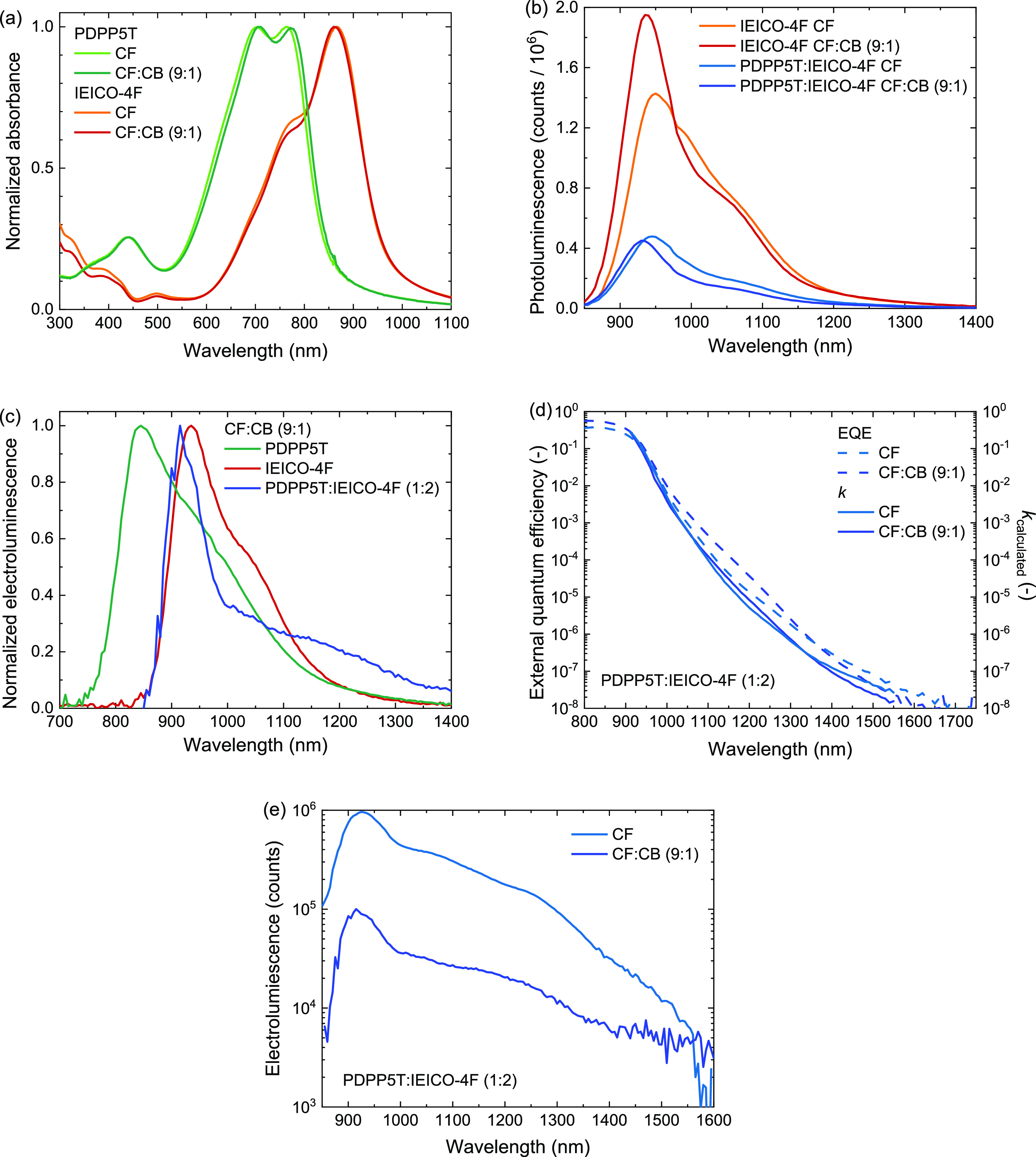
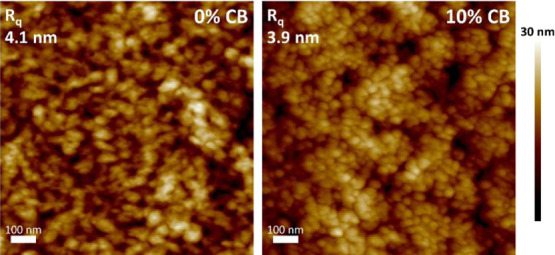
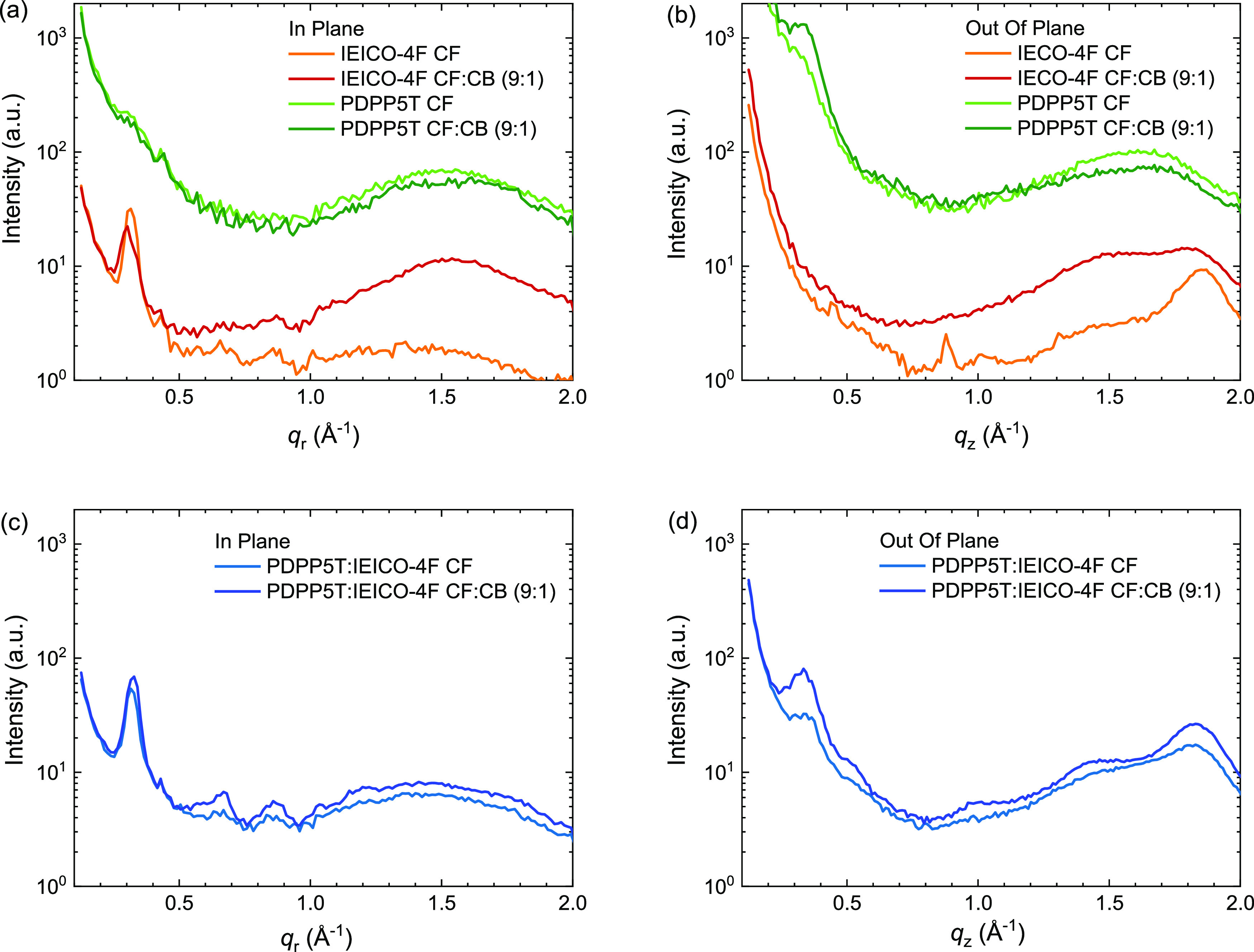
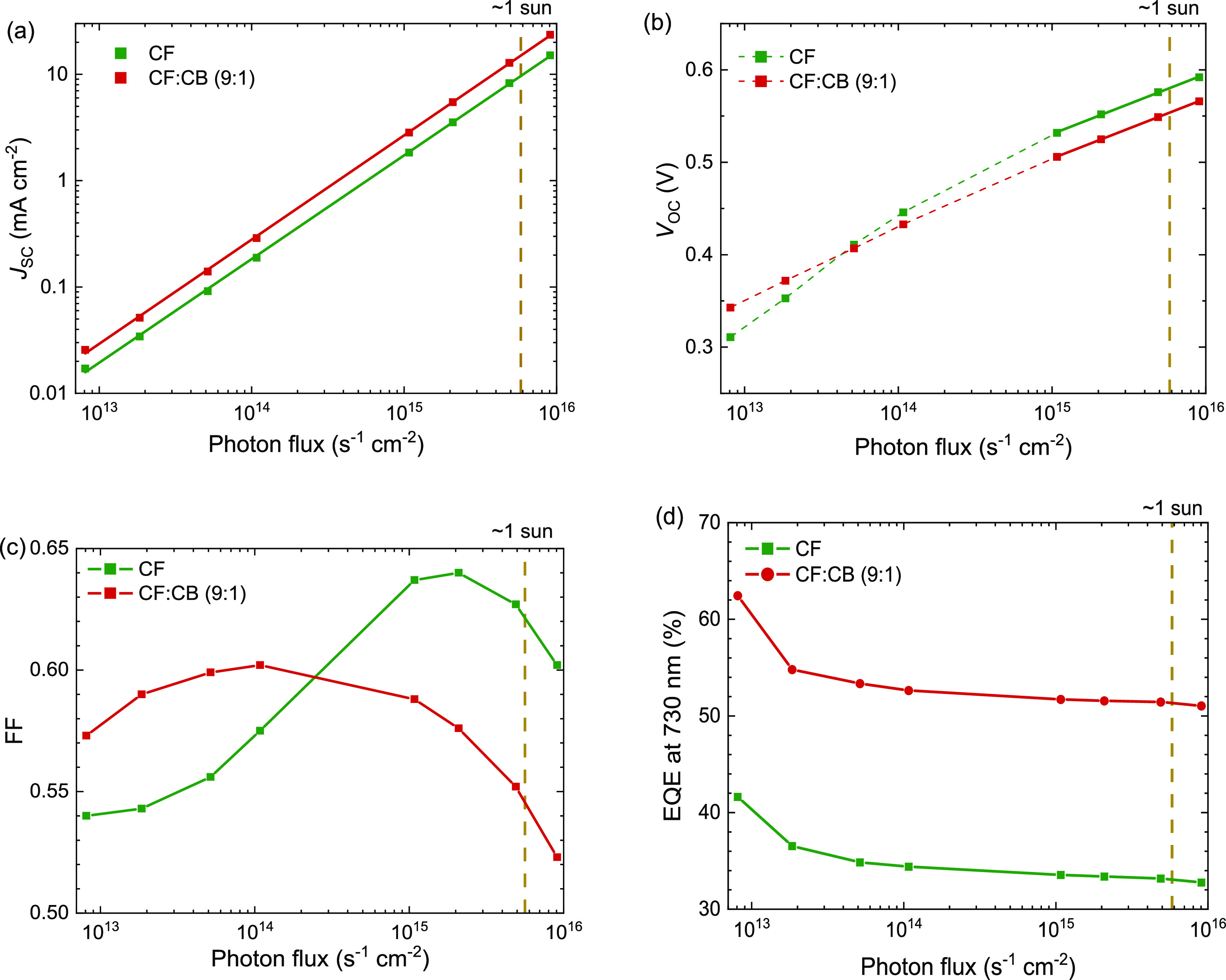
The combination of narrow-bandgap diketopyrrolopyrrole (DPP) polymers and nonfullerene acceptors (NFAs) seems well-matched for solar cells that exclusively absorb in the near infrared but they rarely provide high efficiency. One reason is that processing of the active layer is complicated by the fact that DPP-based polymers are generally only sufficiently soluble in chloroform (CF), while NFAs are preferably processed from halogenated aromatic solvents. By using a ternary solvent system consisting of CF, 1,8-diiodooctane (DIO), and chlorobenzene (CB), the short-circuit current density is increased by 50% in solar cells based on a DPP polymer (PDPP5T) and a NFA (IEICO-4F) compared to the use of CF with DIO only. However, the open-circuit voltage and fill factor are reduced. As a result, the efficiency improves from 3.4 to 4.8% only. The use of CB results in stronger aggregation of IEICO-4F as inferred from two-dimensional grazing-incidence wide-angle X-ray diffraction. Photo- and electroluminescence and mobility measurements indicate that the changes in performance can be ascribed to a more aggregated blend film in which charge generation is increased but nonradiative recombination is enhanced because of reduced hole mobility. Hence, while CB is essential to obtain well-ordered domains of IEICO-4F in blends with PDPP5T, the morphology and resulting hole mobility of PDPP5T domains remain suboptimal. The results identify the challenges in processing organic solar cells based on DPP polymers and NFAs as near-infrared absorbing photoactive layers.
窄带隙二酮吡咯并吡咯(DPP)聚合物与非富勒烯受体(NFA)的组合似乎非常适合仅在近红外区域吸收的太阳能电池,但它们很少能提供高效率。一个原因是,由于基于DPP的聚合物通常仅能充分溶解于氯仿(CF)中,而NFA最好从卤代芳烃溶剂中进行加工,这使得活性层的加工变得复杂。通过使用由CF、1,8-二碘辛烷(DIO)和氯苯(CB)组成的三元溶剂体系,与仅使用CF和DIO相比,基于DPP聚合物(PDPP5T)和NFA(IEICO-4F)的太阳能电池的短路电流密度提高了50%。然而,开路电压和填充因子降低了。结果,效率仅从3.4%提高到了4.8%。从二维掠入射广角X射线衍射推断,CB的使用导致IEICO-4F的聚集更强。光致发光、电致发光和迁移率测量表明,性能的变化可归因于混合膜中聚集程度更高,其中电荷产生增加,但由于空穴迁移率降低,非辐射复合增强。因此,虽然CB对于在与PDPP5T的混合物中获得有序的IEICO-4F域至关重要,但PDPP5T域的形态和由此产生的空穴迁移率仍然不理想。这些结果确定了将基于DPP聚合物和NFA的有机太阳能电池加工成近红外吸收光活性层所面临的挑战。