Gesper Maren, Nonnast Alena B H, Kumowski Nina, Stoehr Robert, Schuett Katharina, Marx Nikolaus, Kappel Ben A
Department of Internal Medicine 1, University Hospital Aachen, Rheinisch-Westfälische Technische Hochschule (RWTH) Aachen University, Aachen, Germany.
Front Med (Lausanne). 2021 Mar 22;8:648259. doi: 10.3389/fmed.2021.648259. eCollection 2021.
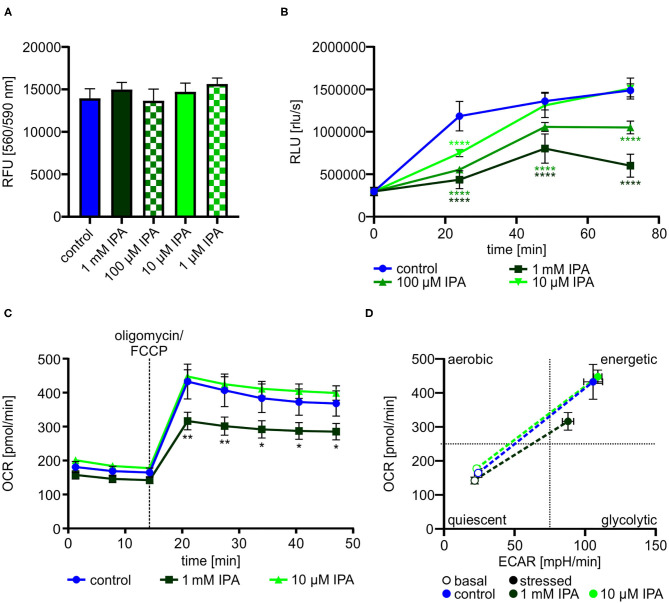
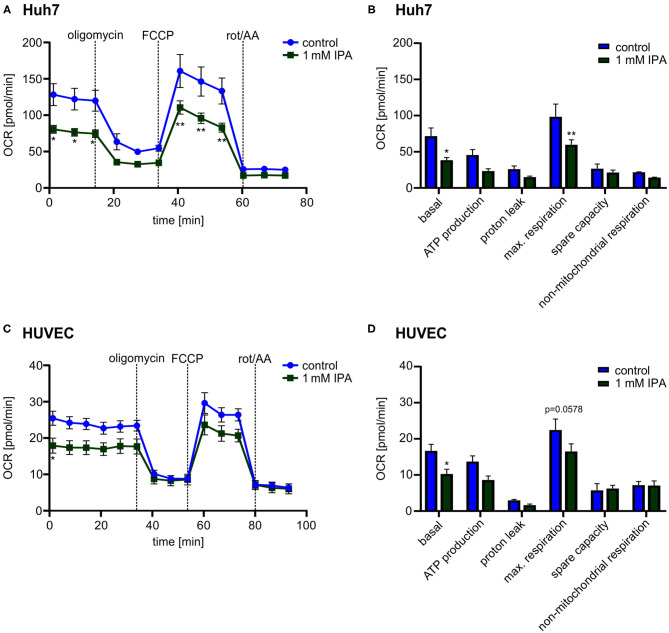
The gut microbiome has been linked to the onset of cardiometabolic diseases, in part facilitated through gut microbiota-dependent metabolites such as trimethylamine--oxide. However, molecular pathways associated to heart failure mediated by microbial metabolites remain largely elusive. Mitochondria play a pivotal role in cellular energy metabolism and mitochondrial dysfunction has been associated to heart failure pathogenesis. Aim of the current study was to evaluate the impact of gut-derived metabolites on mitochondrial function in cardiomyocytes via an screening approach. Based on a systematic Medline research, 25 microbial metabolites were identified and screened for their metabolic impact with a focus on mitochondrial respiration in HL-1 cardiomyocytes. Oxygen consumption rate in response to different modulators of the respiratory chain were measured by a live-cell metabolic assay platform. For one of the identified metabolites, indole-3-propionic acid, studies on specific mitochondrial complexes, cytochrome c, fatty acid oxidation, mitochondrial membrane potential, and reactive oxygen species production were performed. Mitochondrial function in response to this metabolite was further tested in human hepatic and endothelial cells. Additionally, the effect of indole-3-propionic acid on cardiac function was studied in isolated perfused hearts of C57BL/6J mice. Among the metabolites examined, microbial tryptophan derivative indole-3-propionic acid could be identified as a modulator of mitochondrial function in cardiomyocytes. While acute treatment induced enhancement of maximal mitochondrial respiration (+21.5 ± 7.8%, < 0.05), chronic exposure led to mitochondrial dysfunction (-18.9 ± 9.1%; < 0.001) in cardiomyocytes. The latter effect of indole-3-propionic acids could also be observed in human hepatic and endothelial cells. In isolated perfused mouse hearts, indole-3-propionic acid was dose-dependently able to improve cardiac contractility from +26.8 ± 11.6% ( < 0.05) at 1 μM up to +93.6 ± 14.4% ( < 0.001) at 100 μM. Our mechanistic studies on indole-3-propionic acids suggest potential involvement of fatty acid oxidation in HL-1 cardiomyocytes. Our data indicate a direct impact of microbial metabolites on cardiac physiology. Gut-derived metabolite indole-3-propionic acid was identified as mitochondrial modulator in cardiomyocytes and altered cardiac function in an mouse model.
肠道微生物群与心脏代谢疾病的发生有关,部分原因是通过肠道微生物群依赖的代谢产物,如氧化三甲胺。然而,由微生物代谢产物介导的与心力衰竭相关的分子途径在很大程度上仍不清楚。线粒体在细胞能量代谢中起关键作用,线粒体功能障碍与心力衰竭的发病机制有关。本研究的目的是通过筛选方法评估肠道衍生代谢产物对心肌细胞线粒体功能的影响。基于系统的医学文献检索,鉴定并筛选了25种微生物代谢产物,重点关注其对HL-1心肌细胞线粒体呼吸的代谢影响。通过活细胞代谢分析平台测量了对呼吸链不同调节剂的氧消耗率。对于鉴定出的一种代谢产物吲哚-3-丙酸,进行了关于特定线粒体复合物、细胞色素c、脂肪酸氧化、线粒体膜电位和活性氧产生的研究。在人肝细胞和内皮细胞中进一步测试了该代谢产物对线粒体功能的影响。此外,在C57BL/6J小鼠的离体灌注心脏中研究了吲哚-3-丙酸对心脏功能的影响。在所检测的代谢产物中,微生物色氨酸衍生物吲哚-3-丙酸可被鉴定为心肌细胞线粒体功能的调节剂。急性处理可使心肌细胞的最大线粒体呼吸增强(+21.5±7.8%,P<0.05),而长期暴露则导致线粒体功能障碍(-18.9±9.1%;P<0.001)。吲哚-3-丙酸的后一种作用在人肝细胞和内皮细胞中也可观察到。在离体灌注的小鼠心脏中,吲哚-3-丙酸能够剂量依赖性地改善心脏收缩力,从1μM时的+26.8±11.6%(P<0.05)提高到100μM时的+93.6±14.4%(P<0.001)。我们对吲哚-3-丙酸的机制研究表明,脂肪酸氧化可能参与HL-1心肌细胞的作用。我们的数据表明微生物代谢产物对心脏生理有直接影响。肠道衍生代谢产物吲哚-3-丙酸被鉴定为心肌细胞中的线粒体调节剂,并在小鼠模型中改变了心脏功能。