Reisz Berthold, Belova Valentina, Duva Giuliano, Zeiser Clemens, Hodas Martin, Hagara Jakub, Šiffalovič Peter, Pithan Linus, Hosokai Takuya, Hinderhofer Alexander, Gerlach Alexander, Schreiber Frank
Institute for Applied Physics, University of Tübingen, Auf der Morgenstelle 10, 72076 Tübingen, Germany.
Institute of Physics, Slovak Academy of Sciences, Dúbravská cesta 9, 845 11 Bratislava 45, Slovak Republic.
J Appl Crystallogr. 2021 Feb 1;54(Pt 1):203-210. doi: 10.1107/S1600576720015472.
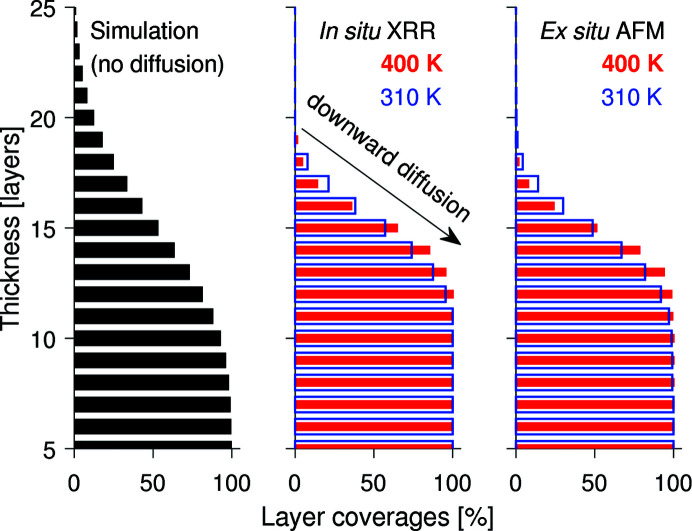
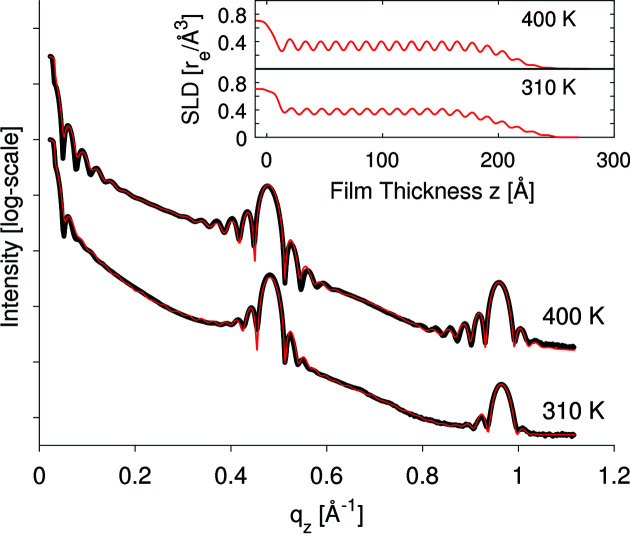
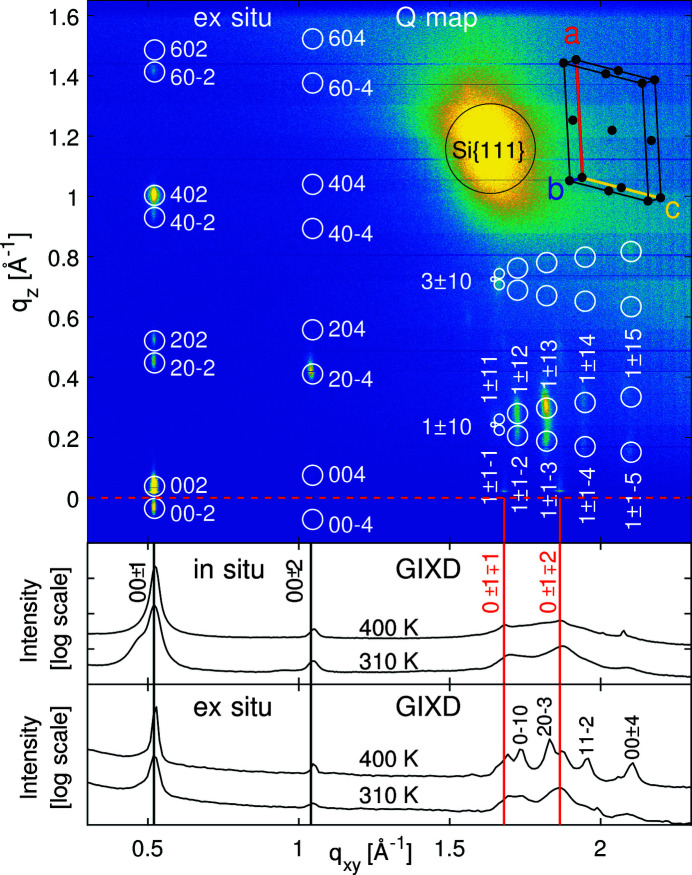
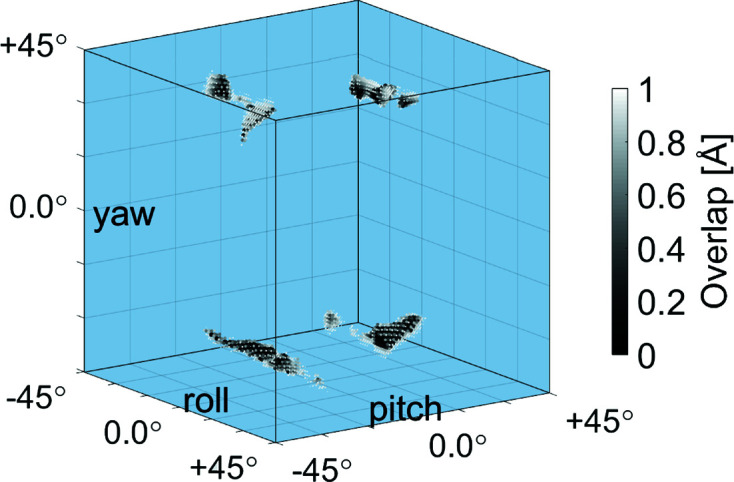
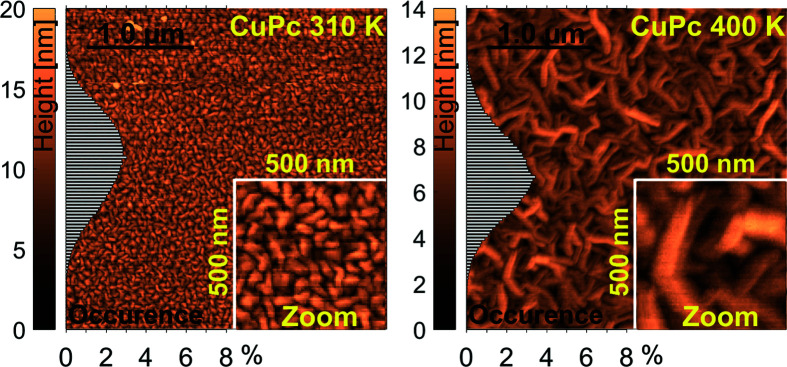
Many polymorphic crystal structures of copper phthalocyanine (CuPc) have been reported over the past few decades, but despite its manifold applicability, the structure of the frequently mentioned α polymorph remained unclear. The base-centered unit cell (space group 2/) suggested in 1966 was ruled out in 2003 and was replaced by a primitive triclinic unit cell (space group 1). This study proves unequivocally that both α structures coexist in vacuum-deposited CuPc thin films on native silicon oxide by reciprocal space mapping using synchrotron radiation in grazing incidence. The unit-cell parameters and the space group were determined by kinematic scattering theory and provide possible molecular arrangements within the unit cell of the 2/ structure by excluded-volume considerations. X-ray diffraction experiments and atomic force microscopy complement the experimental data further and provide insight into the formation of a smooth thin film by a temperature-driven downward diffusion of CuPc molecules during growth.
在过去几十年里,已经报道了许多铜酞菁(CuPc)的多晶型晶体结构,但尽管其具有多种适用性,常被提及的α多晶型的结构仍不清楚。1966年提出的底心晶胞(空间群2/)在2003年被排除,取而代之的是原始三斜晶胞(空间群1)。本研究通过掠入射时使用同步辐射的倒易空间映射,明确证明了这两种α结构在天然氧化硅上的真空沉积CuPc薄膜中共存。通过运动学散射理论确定了晶胞参数和空间群,并通过排除体积考虑提供了2/结构晶胞内可能的分子排列。X射线衍射实验和原子力显微镜进一步补充了实验数据,并深入了解了生长过程中CuPc分子通过温度驱动的向下扩散形成光滑薄膜的情况。