Department of Biochemistry and Molecular Biology, School of Basic Medical Sciences, Institute of Molecular and Translational Medicine (IMTM), Xi'an Jiaotong University Health Science Center, Xi'an, China.
Key Laboratory of Environment and Genes Related to Diseases (Xi'an Jiaotong University), Ministry of Education, Xi'an, China.
Front Immunol. 2021 Mar 26;12:619392. doi: 10.3389/fimmu.2021.619392. eCollection 2021.
Mounting evidence has demonstrated that microRNAs (miRNAs) participate in rheumatoid arthritis (RA). The role of highly conserved miR-15/107 family in RA has not been clarified yet, and hence investigated in this study.
Reverse transcription-quantitative polymerase chain reaction (RT-qPCR) was used to evaluate the expression of miRNAs and genes. Cell counting kit 8 (CCK-8) and FACS were used to detect proliferation and apoptosis. Protein expression was detected by using Western blotting. mRNA deep sequencing and cytokine antibody array were used to analyze differentially expressed genes, signaling pathways and cytokines.
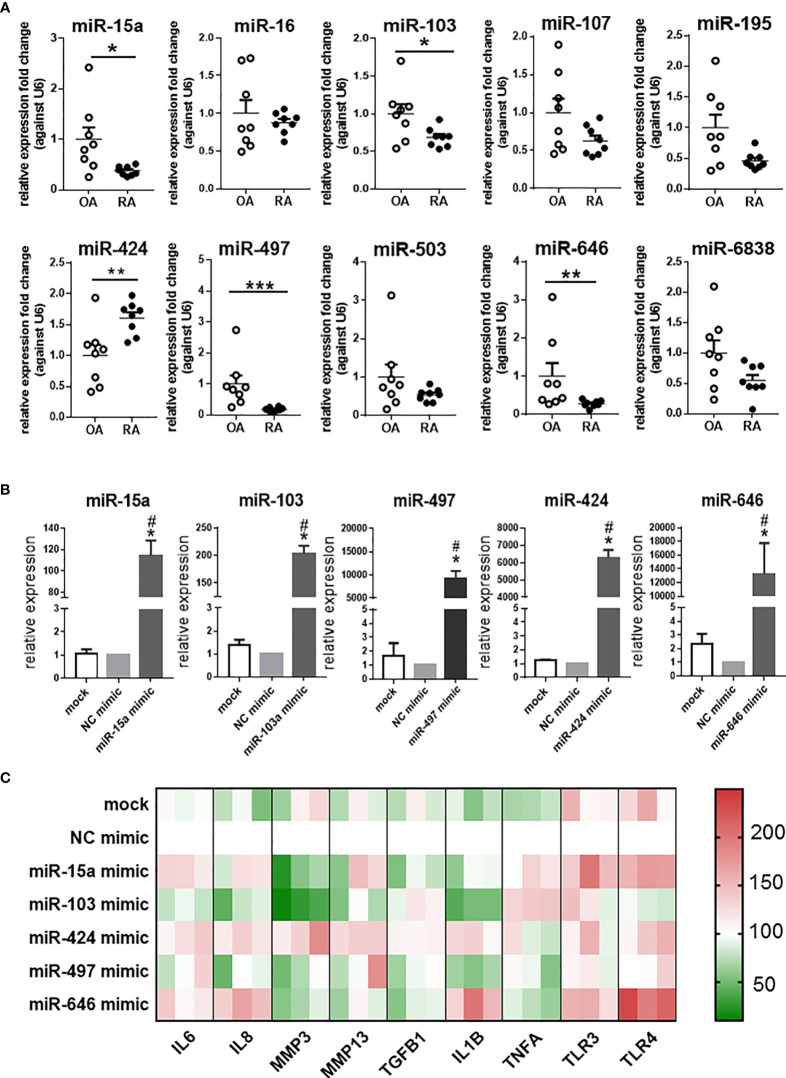
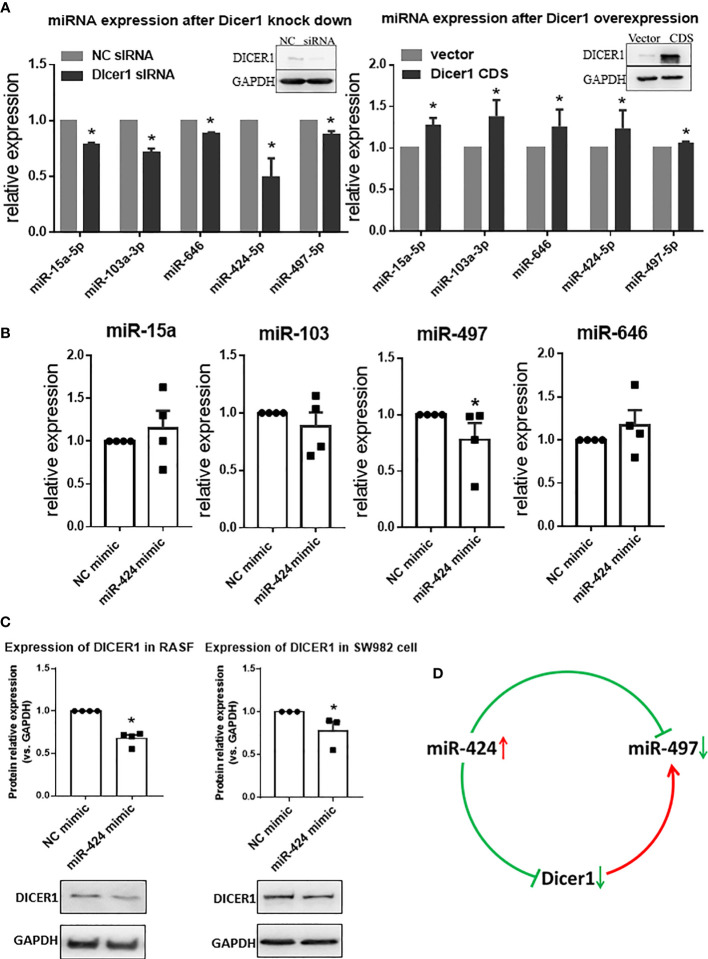
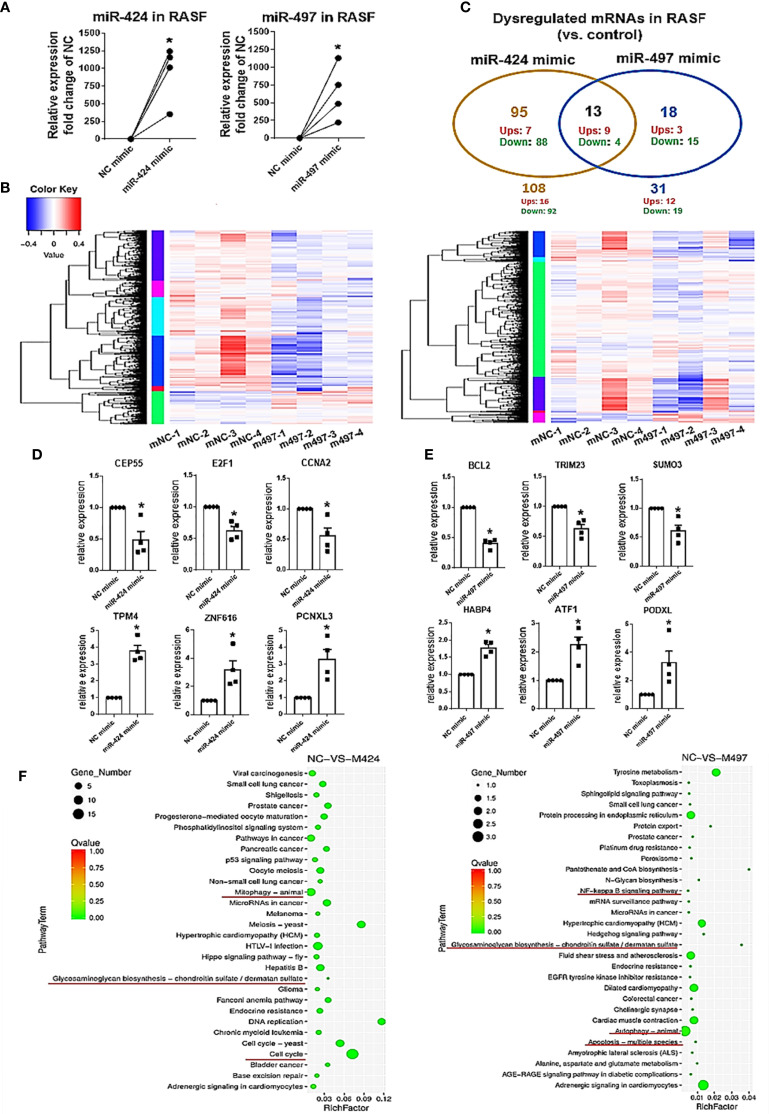
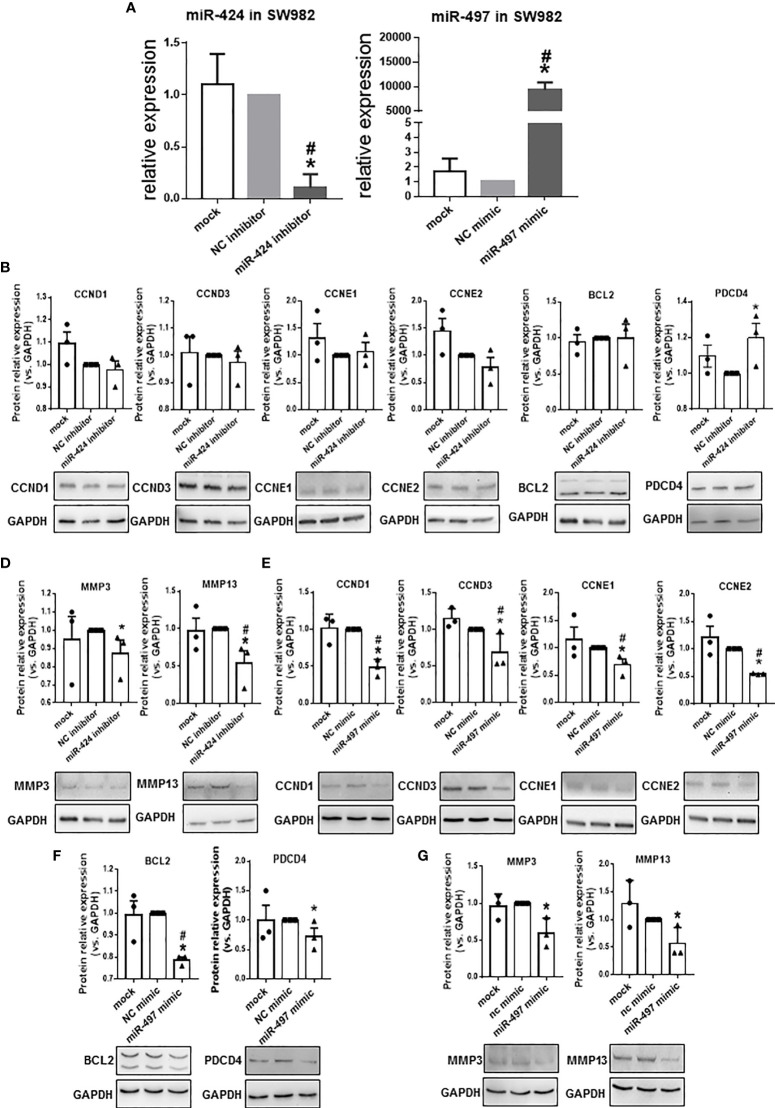
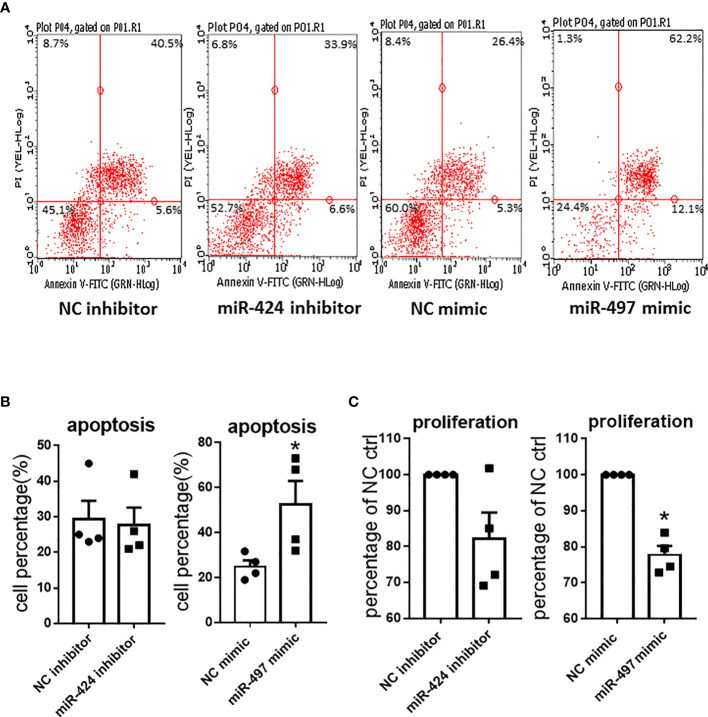
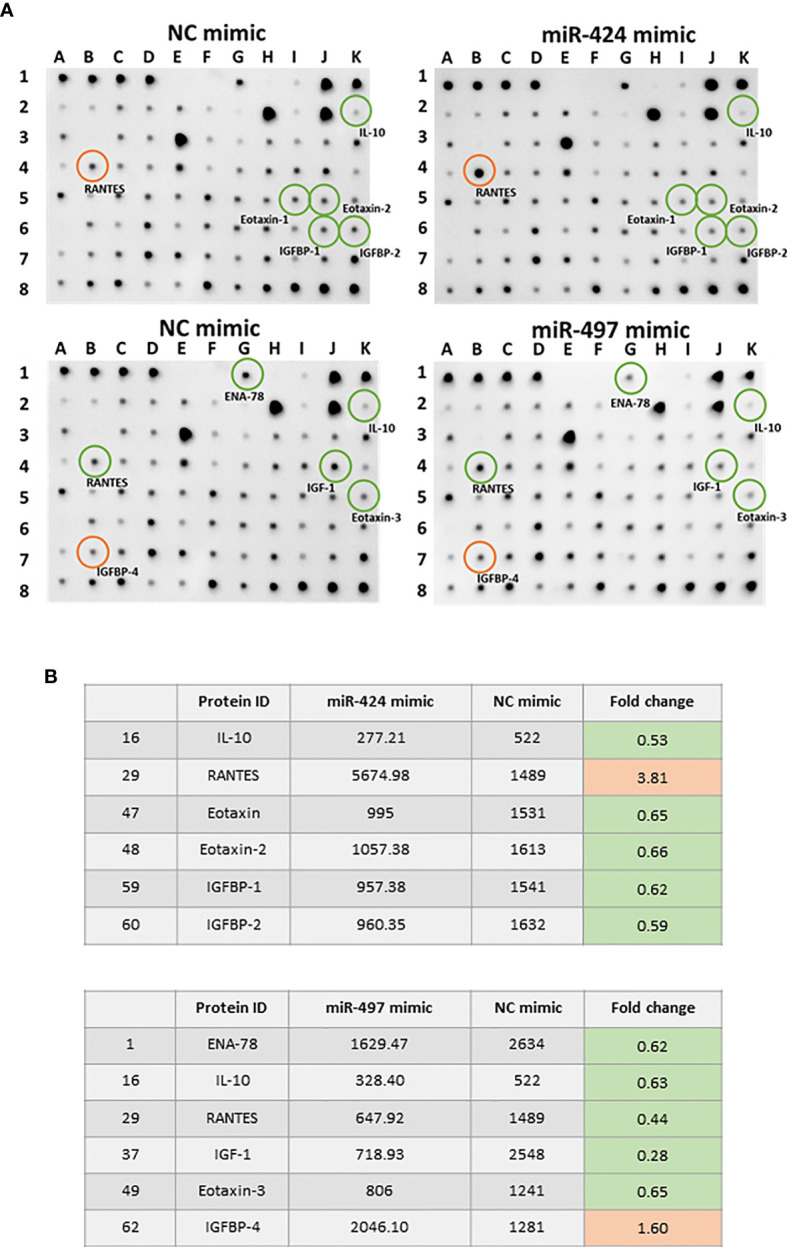
The expression of miR-15a, miR-103, miR-497, and miR-646 was found decreased, while miR-424 increased in RA patients. MiR-424 and miR-497 were further investigated and the results showed that they could regulate the expression of multiple genes in rheumatoid arthritis synovial fibroblast (RASF) and affect signaling pathways. At the protein level, miR-497 mimic altered all the selected inflammation-related genes while miR-424 inhibitor only affected part of genes. MiR-497 mimic, rather than miR-424 inhibitor, had significant effects on proliferation and apoptosis of RASF. DICER1 was found to positively regulate the expression of miR-424 and miR-497, while DICER1 was also negatively regulated by miR-424. The increase of miR-424 could reduce miR-497 expression, thus forming a loop, which facilitated explaining the dysregulated miR-424 and miR-497 in RA.
The miR-424 and miR-497 of miR-15/107 family affect cell proliferation and apoptosis in RA, and the proposed miR-424-DICER1-miR-497 feedback loop provides a novel insight into regulating miRNA expression and a candidate target for controlling RA.
越来越多的证据表明 microRNAs(miRNAs)参与了类风湿关节炎(RA)的发生。高度保守的 miR-15/107 家族在 RA 中的作用尚未阐明,因此本研究对此进行了探讨。
采用逆转录定量聚合酶链反应(RT-qPCR)检测 miRNA 和基因的表达。细胞计数试剂盒 8(CCK-8)和流式细胞术检测细胞增殖和凋亡。采用 Western blot 检测蛋白表达。采用 mRNA 深度测序和细胞因子抗体阵列分析差异表达基因、信号通路和细胞因子。
发现 RA 患者 miR-15a、miR-103、miR-497 和 miR-646 的表达降低,而 miR-424 表达增加。进一步研究 miR-424 和 miR-497 后发现,它们可以调节类风湿关节炎滑膜成纤维细胞(RASF)中多个基因的表达,并影响信号通路。在蛋白质水平上,miR-497 模拟物改变了所有选定的炎症相关基因,而 miR-424 抑制剂仅影响部分基因。miR-497 模拟物而非 miR-424 抑制剂对 RASF 的增殖和凋亡有显著影响。发现 DICER1 正向调节 miR-424 和 miR-497 的表达,而 miR-424 也负向调节 DICER1。miR-424 的增加可以降低 miR-497 的表达,从而形成一个反馈环,这有助于解释 RA 中 miR-424 和 miR-497 的失调。
miR-15/107 家族的 miR-424 和 miR-497 影响 RA 中的细胞增殖和凋亡,提出的 miR-424-DICER1-miR-497 反馈环为调节 miRNA 表达提供了新的见解,并为控制 RA 提供了候选靶点。