Ebert Jay R, Du Preez Luke, Furzer Bonnie, Edwards Peter, Joss Brendan
University of Western Australia; HFRC.
University of Western Australia.
Int J Sports Phys Ther. 2021 Apr 1;16(2):393-403. doi: 10.26603/001c.21140.
Hop tests are commonly employed to evaluate functional limb symmetry after anterior cruciate ligament reconstruction (ACLR).
To investigate the ability of eight hop tests to identify functional limb asymmetry in patients after ACLR.
Prospective cohort.
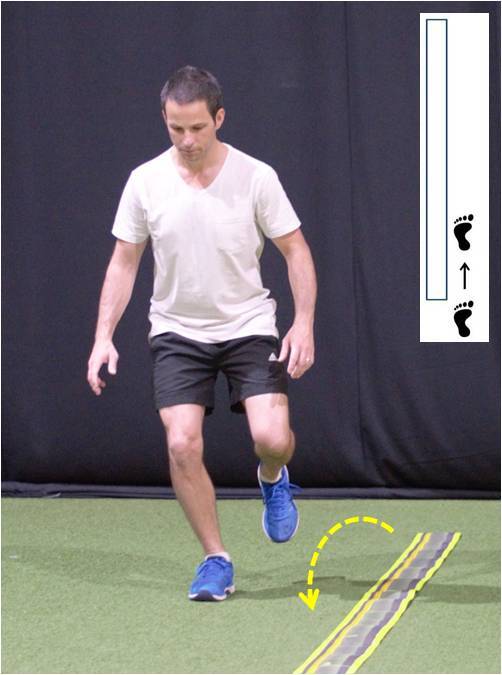
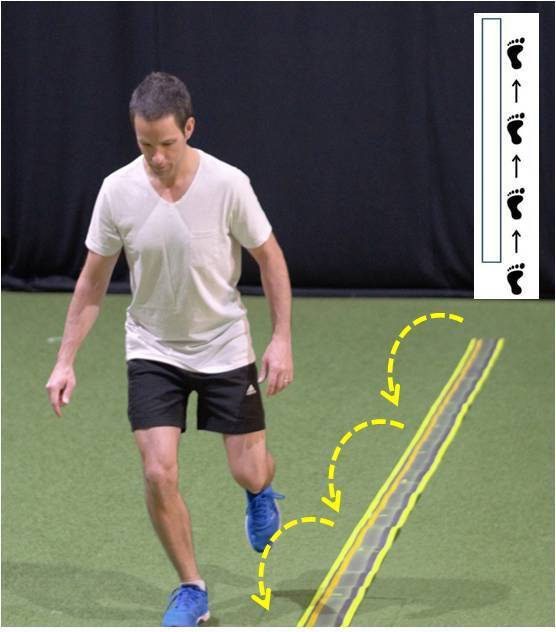
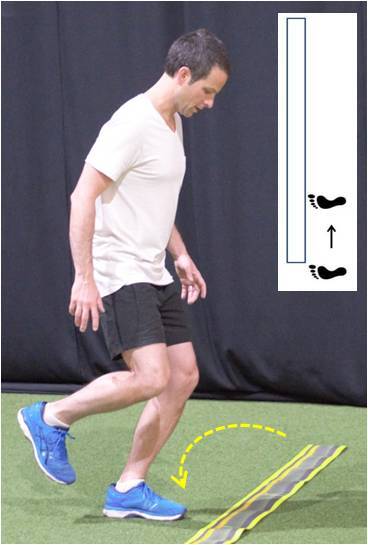
Fifty patients were assessed 9-12 months following ACLR. Functional performance on both the operated and non-operated limb was assessed via eight hop tests, assessed in a randomised order. These included the: single (SHD), triple (THD) and triple crossover (TCHD) hop for distance, 6m timed hop (6MTH), single medial (MHD) and single lateral (LHD) hop for distance, single countermovement jump (SLCMJ) and timed speedy hop (TSHT). Differences in Limb Symmetry Indices (LSIs) across hop tests were compared, while Pearson's correlations were undertaken to investigate the significance and strength of the association between hop test LSIs.
Significant differences were observed across hop LSIs (p<0.0001). Mean LSIs for the SHD (95.0%), 6MTH (95.0%), THD (96.1%) and TCHD (95.3%) were ≥90% and significantly greater (p<0.05) than the MHD (87.3%), LHD (87.5%), SLCMJ (83.4%) and TSHT (86.5%), which were all <90%. The LSI for the SLCMJ was significantly lower (p<0.05) than all other hop tests. While significant correlations existed across the majority of hop LSIs, the strongest correlations existed between the SHD, THD and TCHD (r=0.70-0.80), and lowest correlations between the TSHT and the other hop tests (r=0.26-0.49).
The LHD, MHD and TSHT, as well as the SLCMJ in particular, were best able to demonstrate functional limb asymmetry in patients following ACLR. These hop measures should be incorporated into hop test batteries, if the purpose is to detect the presence of lingering functional deficits.
Level 3.
单腿跳测试常用于评估前交叉韧带重建(ACLR)术后肢体功能对称性。
研究八项单腿跳测试识别ACLR术后患者肢体功能不对称的能力。
前瞻性队列研究。
对50例ACLR术后9至12个月的患者进行评估。通过八项单腿跳测试对手术侧和非手术侧肢体的功能表现进行评估,测试顺序随机。这些测试包括:单腿跳远距离(SHD)、双腿跳远距离(THD)和双腿交叉跳远距离(TCHD)、6米定时单腿跳(6MTH)、单腿内侧跳远距离(MHD)、单腿外侧跳远距离(LHD)、单腿反向纵跳(SLCMJ)和定时快速单腿跳(TSHT)。比较各项单腿跳测试的肢体对称指数(LSIs)差异,同时采用Pearson相关性分析来研究单腿跳测试LSIs之间关联的显著性和强度。
各项单腿跳LSIs之间存在显著差异(p<0.0001)。SHD(95.0%)、6MTH(95.0%)、THD(96.1%)和TCHD(95.3%)的平均LSIs≥90%,且显著高于MHD(87.3%)、LHD(87.5%)、SLCMJ(83.4%)和TSHT(86.5%),后四项均<90%。SLCMJ的LSI显著低于所有其他单腿跳测试(p<0.05)。虽然大多数单腿跳LSIs之间存在显著相关性,但SHD、THD和TCHD之间的相关性最强(r=0.70 - 0.80),TSHT与其他单腿跳测试之间的相关性最低(r=0.26 - 0.49)。
LHD、MHD和TSHT,尤其是SLCMJ,最能显示ACLR术后患者的肢体功能不对称。如果目的是检测持续存在的功能缺陷,这些单腿跳测量方法应纳入单腿跳测试组合中。
3级。