Dong Shuwen, Wang Zheng, Shen Kunwei, Chen Xiaosong
Department of General Surgery, Comprehensive Breast Health Center, Ruijin Hospital, Shanghai Jiao Tong University School of Medicine, Shanghai, China.
Front Oncol. 2021 Mar 25;11:629666. doi: 10.3389/fonc.2021.629666. eCollection 2021.
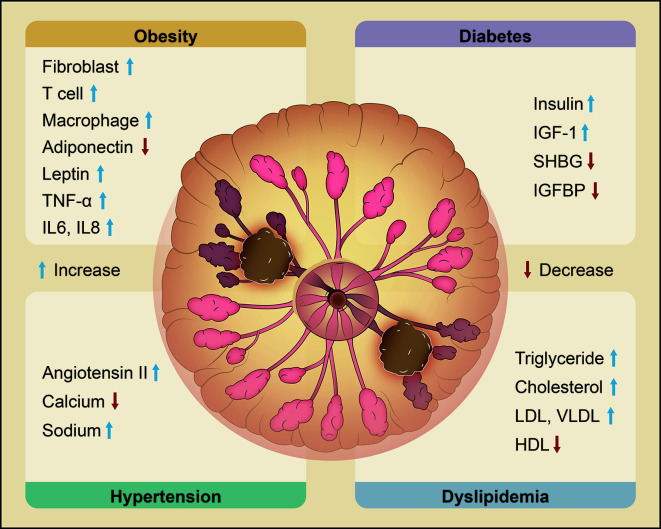
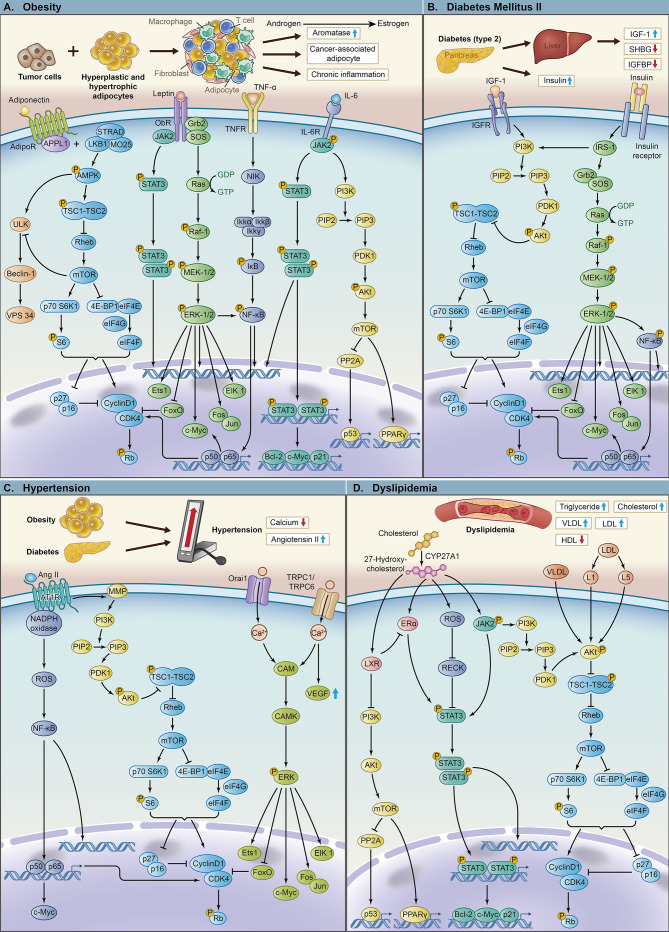
Metabolic syndrome is a type of multifactorial metabolic disease with the presence of at least three factors: obesity, diabetes mellitus, low high-density lipoprotein, hypertriglyceridemia, and hypertension. Recent studies have shown that metabolic syndrome and its related components exert a significant impact on the initiation, progression, treatment response, and prognosis of breast cancer. Metabolic abnormalities not only increase the disease risk and aggravate tumor progression but also lead to unfavorable treatment responses and more treatment side effects. Moreover, biochemical reactions caused by the imbalance of these metabolic components affect both the host general state and organ-specific tumor microenvironment, resulting in increased rates of recurrence and mortality. Therefore, this review discusses the recent advances in the association of metabolic syndrome and breast cancer, providing potential novel therapeutic targets and intervention strategies to improve breast cancer outcome.
代谢综合征是一种多因素代谢疾病,至少存在以下三个因素:肥胖、糖尿病、低高密度脂蛋白、高甘油三酯血症和高血压。最近的研究表明,代谢综合征及其相关成分对乳腺癌的发生、发展、治疗反应和预后有重大影响。代谢异常不仅增加疾病风险、加重肿瘤进展,还会导致不良的治疗反应和更多的治疗副作用。此外,这些代谢成分失衡引起的生化反应会影响宿主的整体状态和器官特异性肿瘤微环境,导致复发率和死亡率增加。因此,本综述讨论了代谢综合征与乳腺癌关联的最新进展,提供了潜在的新型治疗靶点和干预策略,以改善乳腺癌的治疗效果。