School of Applied Biosciences, Kyungpook National University, Daegu, 41566, Republic of Korea.
Natural and Medical Plants Research center, University of Nizwa, 616, Nizwa, Oman.
BMC Plant Biol. 2021 Apr 12;21(1):176. doi: 10.1186/s12870-021-02937-3.
Salinity is a major threat to the agriculture industry due to the negative impact of salinity stress on crop productivity. In the present study, we isolated rhizobacteria and evaluated their capacities to promote crop growth under salt stress conditions.
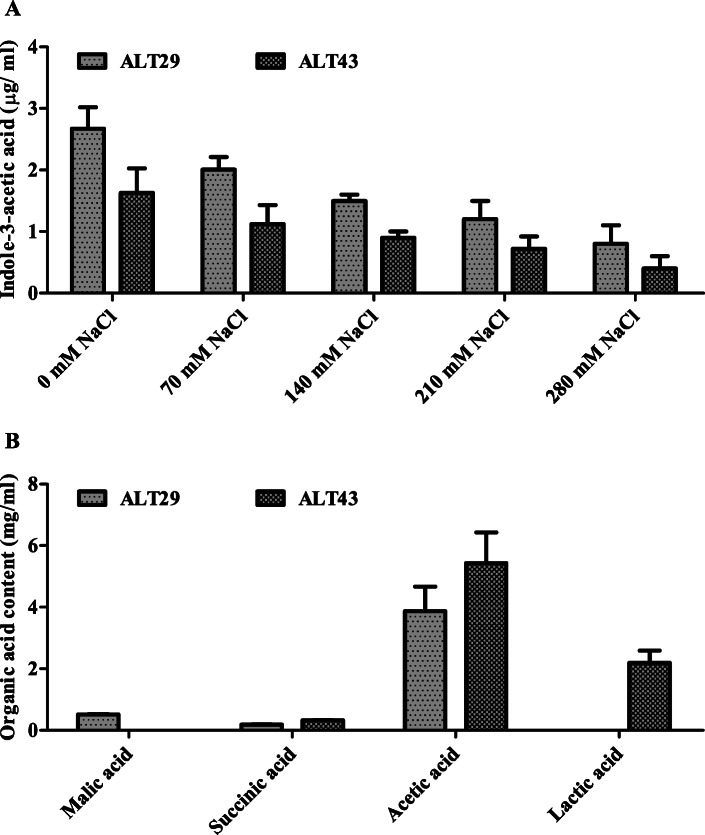
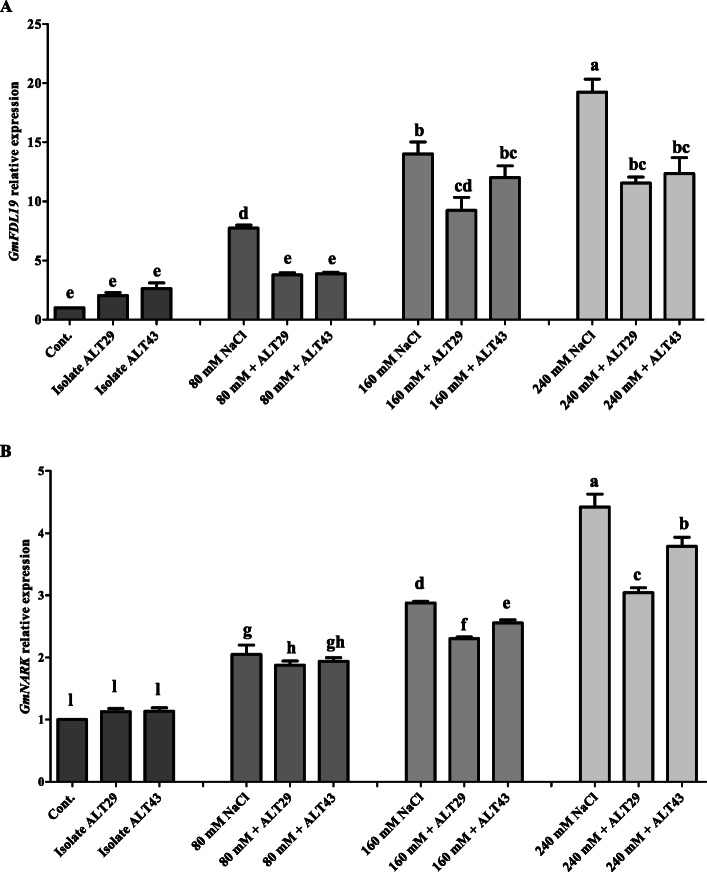
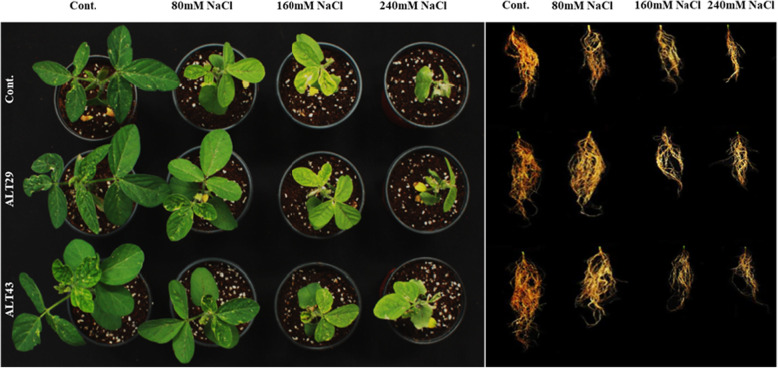
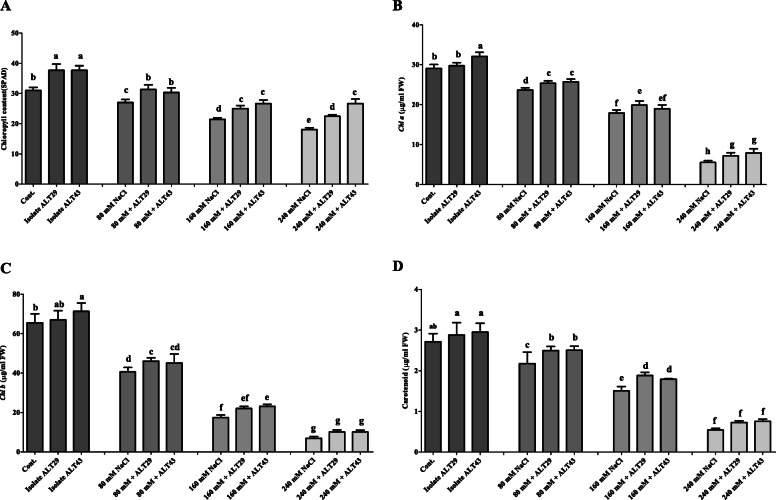
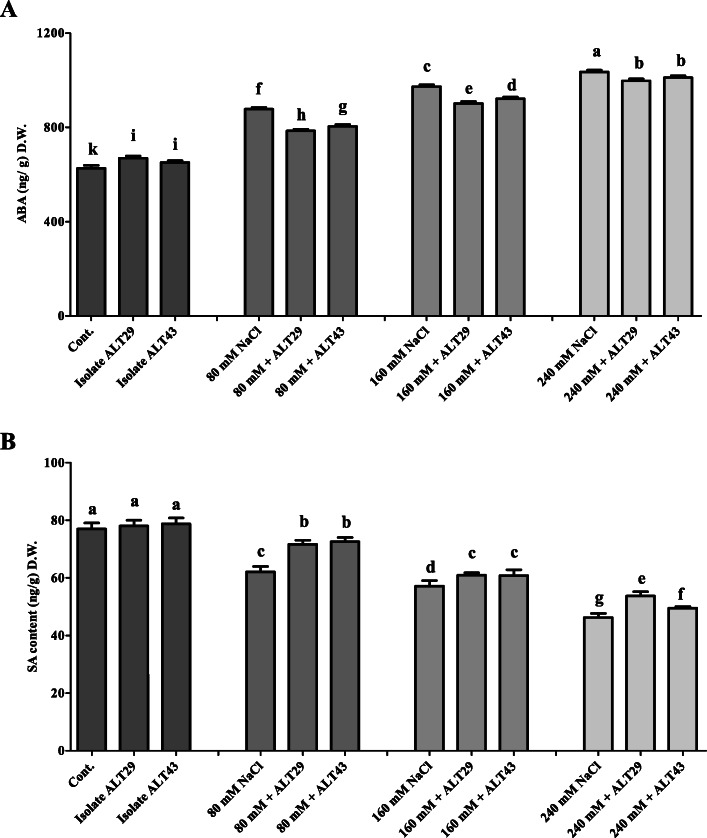
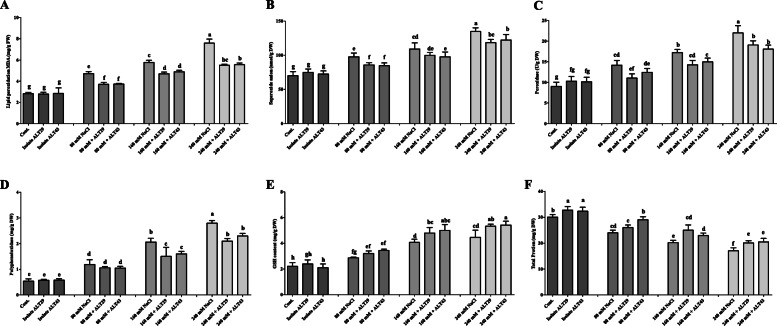
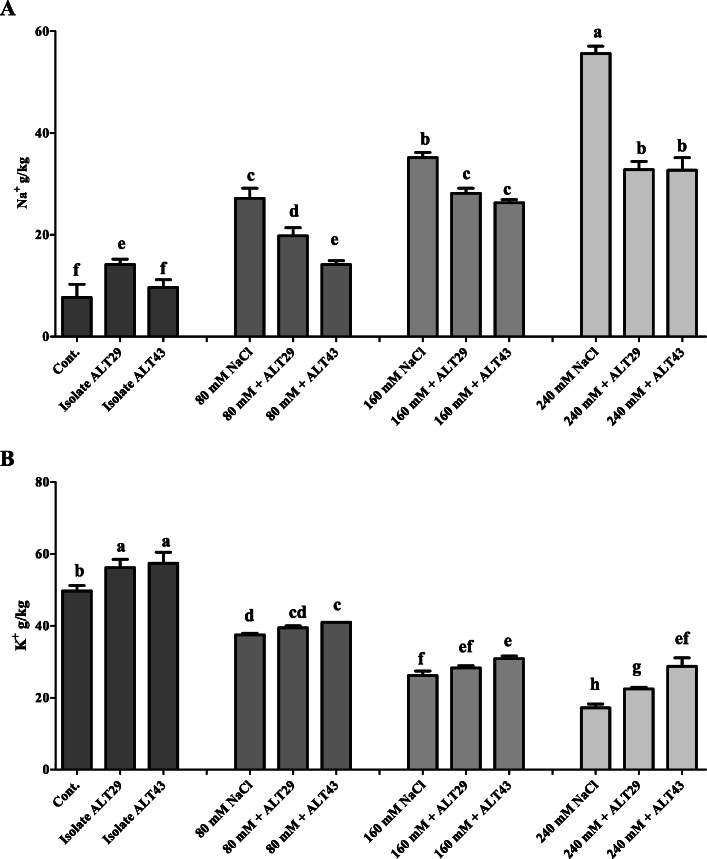
We isolated rhizospheric bacteria from sand dune flora of Pohang beach, Korea, and screened them for plant growth-promoting (PGP) traits. Among 55 bacterial isolates, 14 produced indole-3-acetic acid (IAA), 10 produced siderophores, and 12 produced extracellular polymeric and phosphate solubilization. Based on these PGP traits, we selected 11 isolates to assess for salinity tolerance. Among them, ALT29 and ALT43 showed the highest tolerance to salinity stress. Next, we tested the culture filtrate of isolates ALT29 and ALT43 for IAA and organic acids to confirm the presence of these PGP products. To investigate the effects of ALT29 and ALT43 on salt tolerance in soybean, we grew seedlings in 0 mM, 80 mM, 160 mM, and 240 mM NaCl treatments, inoculating half with the bacterial isolates. Inoculation with ALT29 and ALT43 significantly increased shoot length (13%), root length (21%), shoot fresh and dry weight (44 and 35%), root fresh and dry weight (9%), chlorophyll content (16-24%), Chl a (8-43%), Chl b (13-46%), and carotenoid (14-39%) content of soybean grown under salt stress. Inoculation with ALT29 and ALT43 also significantly decreased endogenous ABA levels (0.77-fold) and increased endogenous SA contents (6-16%), increased total protein (10-20%) and glutathione contents, and reduced lipid peroxidation (0.8-5-fold), superoxide anion (21-68%), peroxidase (12.14-17.97%), and polyphenol oxidase (11.76-27.06%) contents in soybean under salinity stress. In addition, soybean treated with ALT29 and ALT43 exhibited higher K uptake (9.34-67.03%) and reduced Na content (2-4.5-fold). Genes involved in salt tolerance, GmFLD19 and GmNARK, were upregulated under NaCl stress; however, significant decreases in GmFLD19 (3-12-fold) and GmNARK (1.8-3.7-fold) expression were observed in bacterial inoculated plants.
In conclusion, bacterial isolates ALT29 and ALT43 can mitigate salinity stress and increase plant growth, providing an eco-friendly approach for addressing saline conditions in agricultural production systems.
由于盐分胁迫对作物生产力的负面影响,盐分是农业的主要威胁。在本研究中,我们从韩国保宁市的沙丘植物中分离出根际细菌,并评估了它们在盐胁迫条件下促进作物生长的能力。
我们从韩国保宁市的沙丘植物中分离出根际细菌,并筛选出具有植物促生长(PGP)特性的细菌。在 55 个细菌分离物中,有 14 个产生吲哚-3-乙酸(IAA),10 个产生铁载体,12 个产生胞外聚合物和磷酸盐溶解。基于这些 PGP 特性,我们选择了 11 个分离物来评估其耐盐性。其中,ALT29 和 ALT43 对盐胁迫的耐受性最高。接下来,我们测试了分离物 ALT29 和 ALT43 的培养滤液中的 IAA 和有机酸,以确认这些 PGP 产物的存在。为了研究 ALT29 和 ALT43 对大豆耐盐性的影响,我们在 0 mM、80 mM、160 mM 和 240 mM NaCl 处理下种植幼苗,并将一半幼苗接种细菌分离物。接种 ALT29 和 ALT43 显著增加了盐胁迫下大豆的苗高(13%)、根长(21%)、苗鲜重和干重(44%和 35%)、根鲜重和干重(9%)、叶绿素含量(16-24%)、Chl a(8-43%)、Chl b(13-46%)和类胡萝卜素(14-39%)。接种 ALT29 和 ALT43 还显著降低了内源 ABA 水平(0.77 倍),增加了内源 SA 含量(6-16%),增加了总蛋白(10-20%)和谷胱甘肽含量,降低了脂质过氧化(0.8-5 倍)、超氧阴离子(21-68%)、过氧化物酶(12.14-17.97%)和多酚氧化酶(11.76-27.06%)在盐胁迫下的含量。此外,用 ALT29 和 ALT43 处理的大豆表现出更高的 K 吸收(9.34-67.03%)和减少 Na 含量(2-4.5 倍)。在 NaCl 胁迫下,参与耐盐性的基因 GmFLD19 和 GmNARK 上调;然而,在细菌接种植物中,GmFLD19(3-12 倍)和 GmNARK(1.8-3.7 倍)的表达显著降低。
综上所述,细菌分离物 ALT29 和 ALT43 可以减轻盐胁迫并促进植物生长,为解决农业生产系统中的盐渍条件提供了一种环保的方法。