Department of Biosciences, COMSATS University Islamabad (CUI), Islamabad Campus, Islamabad, Pakistan.
PLoS One. 2020 Apr 16;15(4):e0231348. doi: 10.1371/journal.pone.0231348. eCollection 2020.
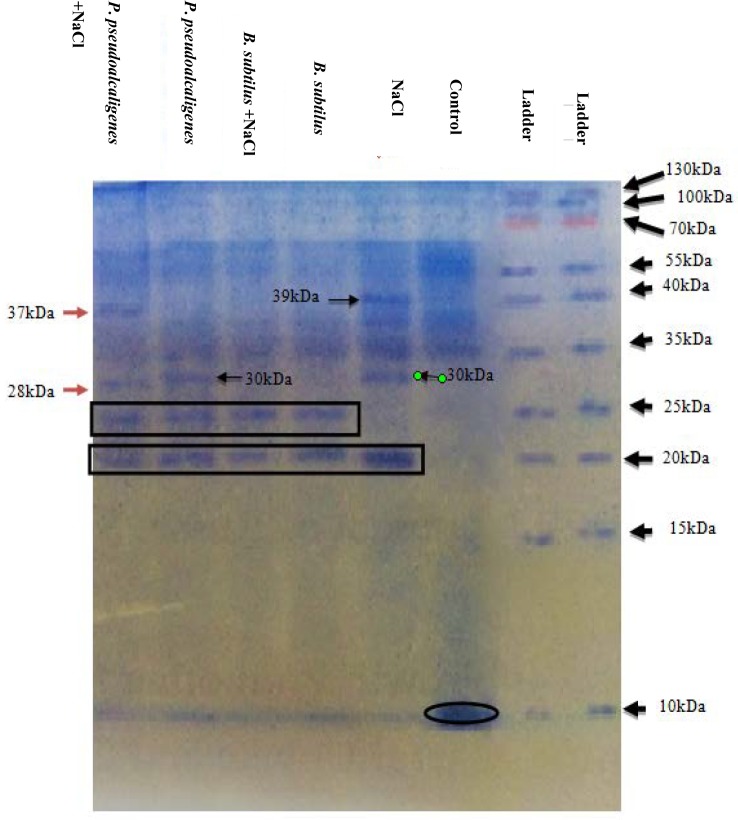
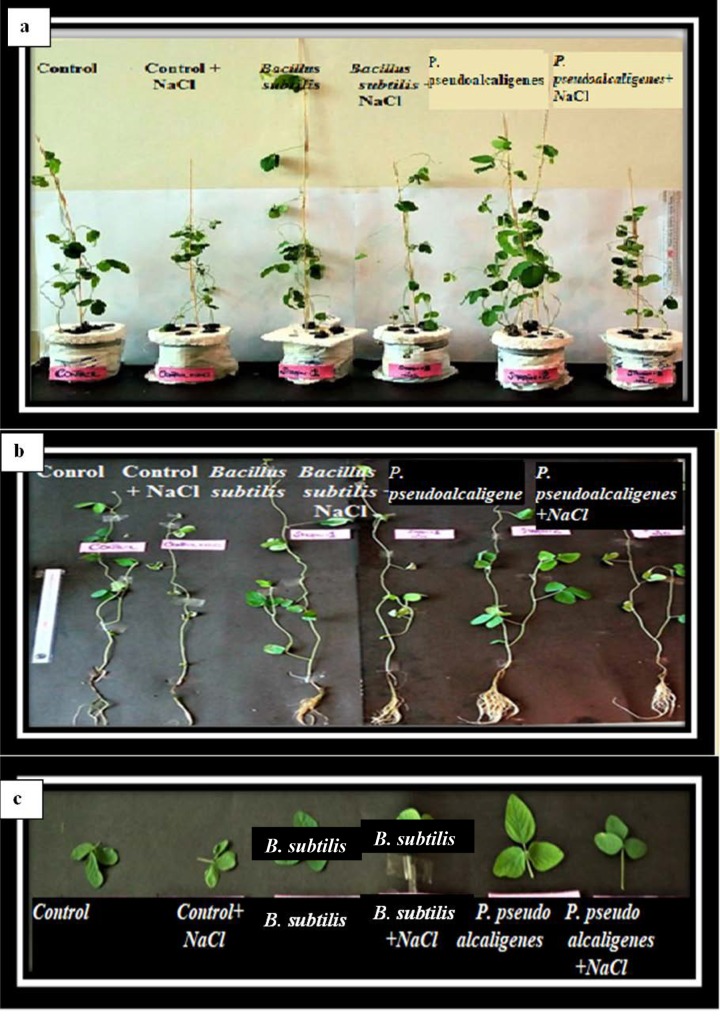
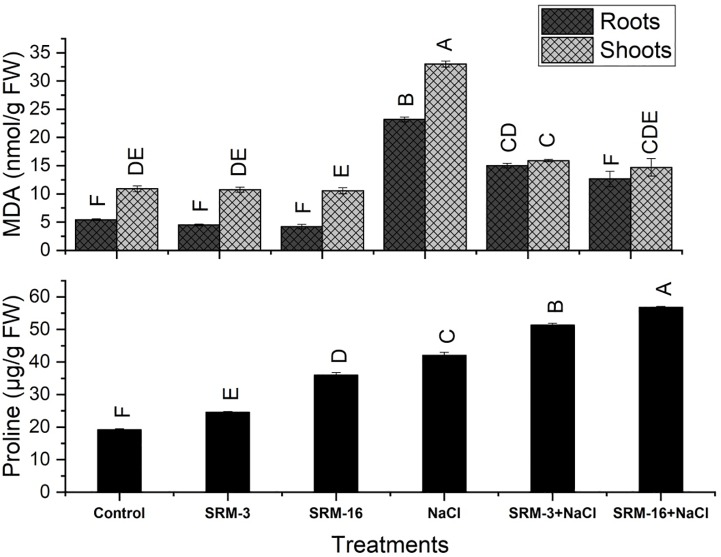
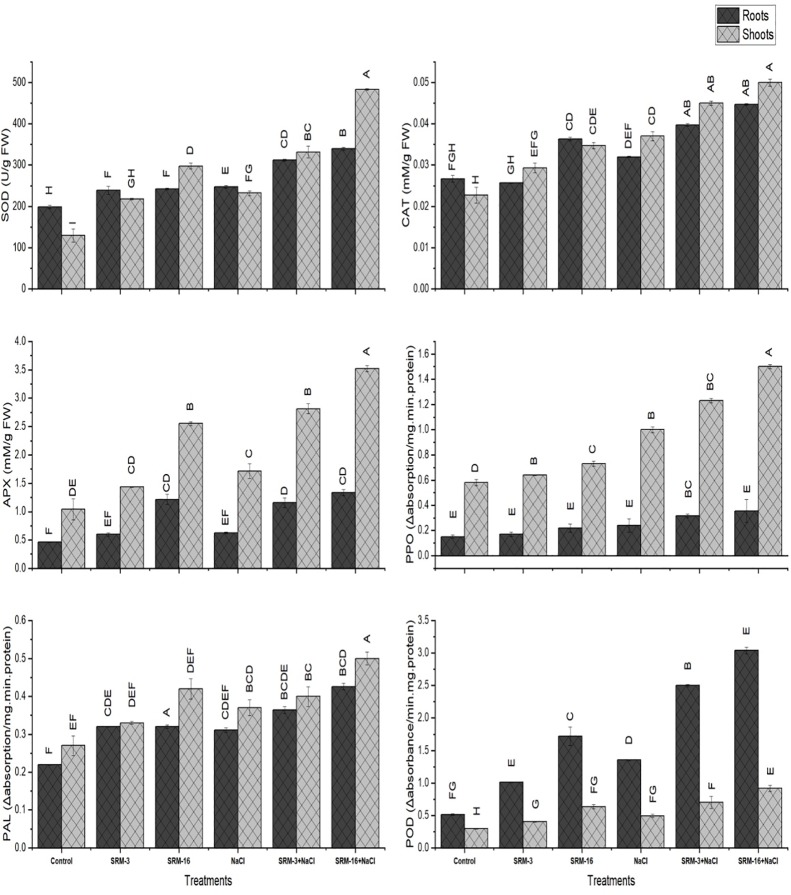
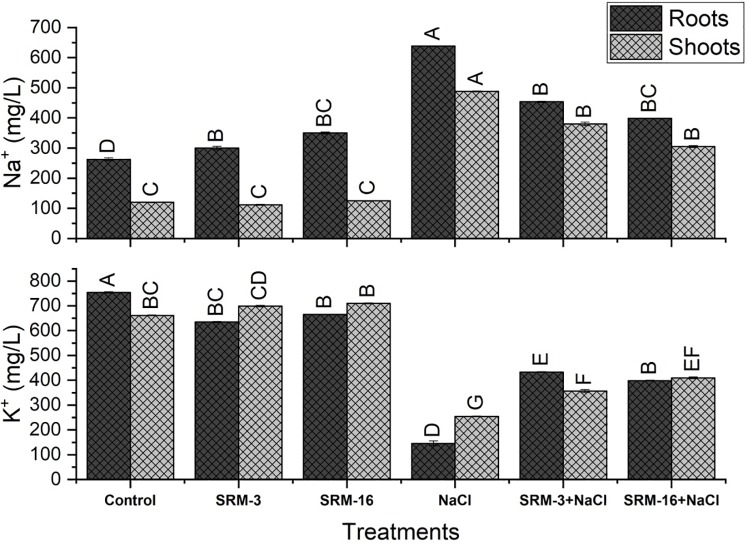
Salt stress is one of the devastating factors that hampers growth and productivity of soybean. Use of Pseudomonas pseudoalcaligenes to improve salt tolerance in soybean has not been thoroughly explored yet. Therefore, we observed the response of hydroponically grown soybean plants, inoculated with halotolerant P. pseudoalcaligenes (SRM-16) and Bacillus subtilis (SRM-3) under salt stress. In vitro testing of 44 bacterial isolates revealed that four isolates showed high salt tolerance. Among them, B. subtilis and P. pseudoalcaligenes showed ACC deaminase activity, siderophore and indole acetic acid (IAA) production and were selected for the current study. We determined that 106 cells/mL of B. subtilis and P. pseudoalcaligenes was sufficient to induce tolerance in soybean against salinity stress (100 mM NaCl) in hydroponics by enhancing plant biomass, relative water content and osmolytes. Upon exposure of salinity stress, P. pseudoalcaligenes inoculated soybean plants showed tolerance by the increased activities of defense related system such as ion transport, antioxidant enzymes, proline and MDA content in shoots and roots. The Na+ concentration in the soybean plants was increased in the salt stress; while, bacterial priming significantly reduced the Na+ concentration in the salt stressed soybean plants. However, the antagonistic results were observed for K+ concentration. Additionally, soybean primed with P. pseudoalcaligenes and exposed to 100 mM NaCl showed a new protein band of 28 kDa suggesting that P. pseudoalcaligenes effectively reduced salt stress. Our results showed that salinity tolerance was more pronounced in P. pseudoalcaligenes as compared to B. subtilis. However, a detailed study at molecular level to interpret the mechanism by which P. pseudoalcaligenes alleviates salt stress in soybean plants need to be explored.
盐胁迫是抑制大豆生长和生产力的破坏性因素之一。利用假单胞菌 Pseudomonas pseudoalcaligenes 来提高大豆的耐盐性尚未得到充分探索。因此,我们观察了在盐胁迫下,用水培法种植的大豆植株接种耐盐假单胞菌(SRM-16)和枯草芽孢杆菌(SRM-3)的反应。对 44 个细菌分离株的体外测试表明,有 4 个分离株表现出高耐盐性。其中,枯草芽孢杆菌和假单胞菌显示出 ACC 脱氨酶活性、铁载体和吲哚乙酸(IAA)的产生,并被选用于本研究。我们确定,枯草芽孢杆菌和假单胞菌的 106 个细胞/mL 足以通过增强植物生物量、相对水含量和渗透物来诱导大豆对水培盐胁迫(100mM NaCl)的耐受性。在暴露于盐胁迫下,接种假单胞菌的大豆植株通过增加离子转运、抗氧化酶、脯氨酸和 MDA 含量等防御相关系统的活性来表现出耐受性。在盐胁迫下,大豆植株中的 Na+浓度增加;而细菌引发显著降低了盐胁迫下大豆植株中的 Na+浓度。然而,K+浓度的拮抗结果观察到。此外,用假单胞菌引发并暴露于 100mM NaCl 的大豆显示出 28kDa 的新蛋白质带,表明假单胞菌有效地减轻了盐胁迫。我们的结果表明,与枯草芽孢杆菌相比,假单胞菌的耐盐性更为明显。然而,需要在分子水平上进行详细研究,以解释假单胞菌减轻大豆植株盐胁迫的机制。