Department of Medical, Oral, and Biotechnology Science, University "G. d'Annunzio" Chieti-Pescara, Chieti, Italy.
Center for Advanced Studies and Technology (CAST), University "G. d'Annunzio" Chieti-Pescara, Chieti, Italy.
J Exp Clin Cancer Res. 2021 Apr 12;40(1):129. doi: 10.1186/s13046-021-01937-3.
Innovative therapies to target tumor-associated neutrophils (PMN) are of clinical interest, since these cells are centrally involved in cancer inflammation and tumor progression. Resolvin D1 (RvD1) is a lipid autacoid that promotes resolution of inflammation by regulating the activity of distinct immune and non-immune cells. Here, using human papilloma virus (HPV) tumorigenesis as a model, we investigated whether RvD1 modulates PMN to reduce tumor progression.
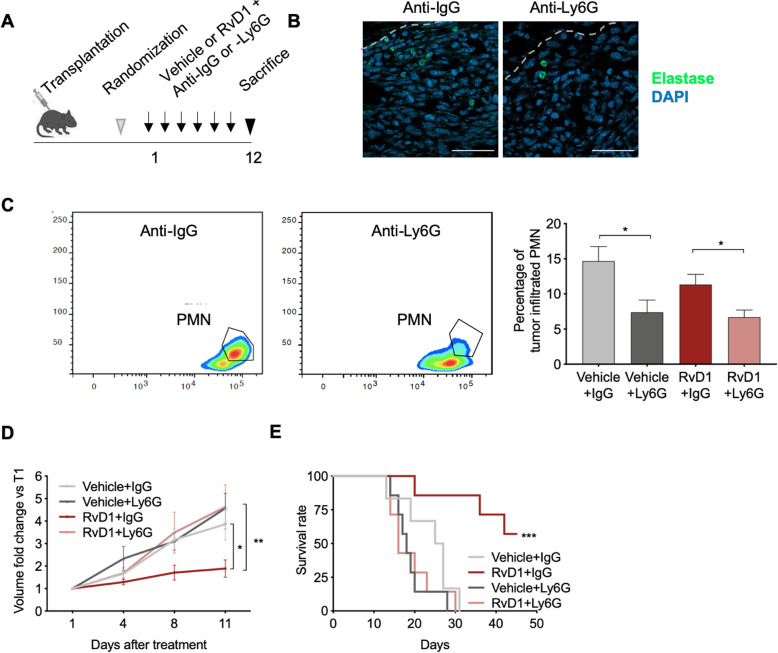
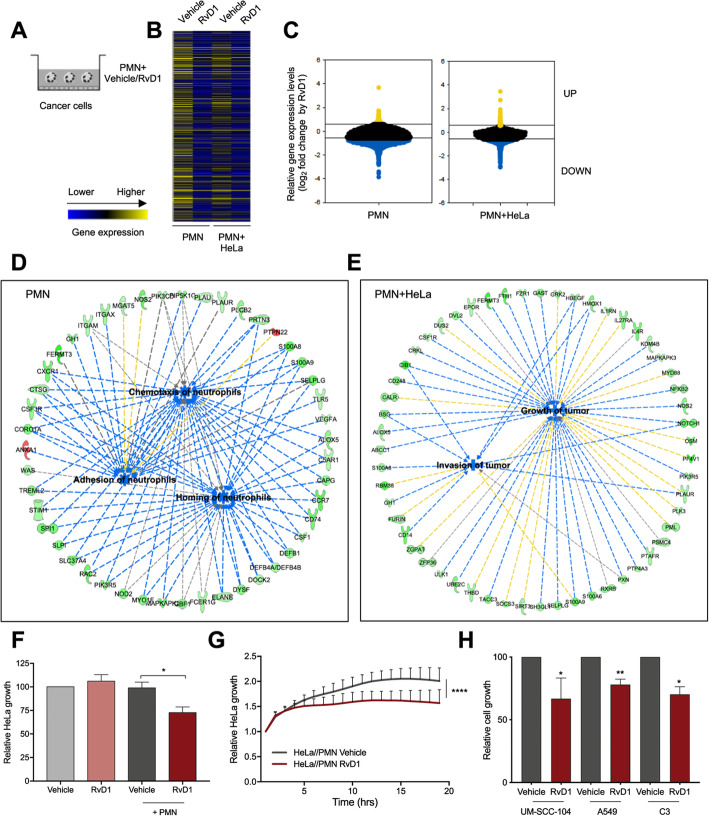
Growth-curve assays with multiple cell lines and in vivo grafting of two distinct HPV-positive cells in syngeneic mice were used to determine if RvD1 reduced cancer growth. To investigate if and how RvD1 modulates PMN activities, RNA sequencing and multiplex cytokine ELISA of human PMN in co-culture with HPV-positive cells, coupled with pharmacological depletion of PMN in vivo, were performed. The mouse intratumoral immune cell composition was evaluated through FACS analysis. Growth-curve assays and in vivo pharmacological depletion were used to evaluate anti-tumor activities of human and mouse monocytes, respectively. Bioinformatic analysis of The Cancer Genome Atlas (TCGA) database was exploited to validate experimental findings in patients.
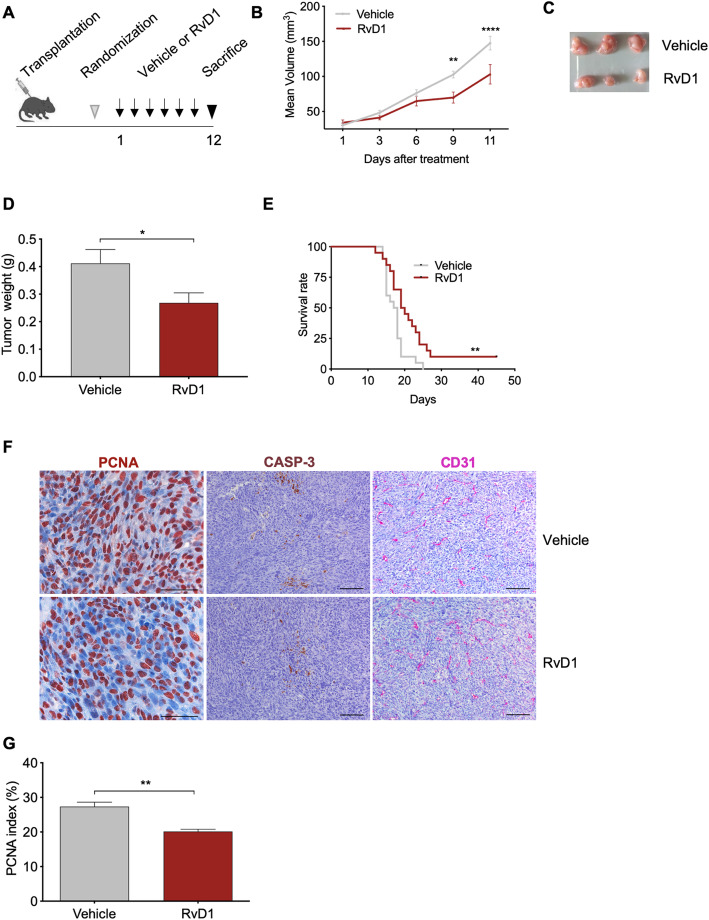
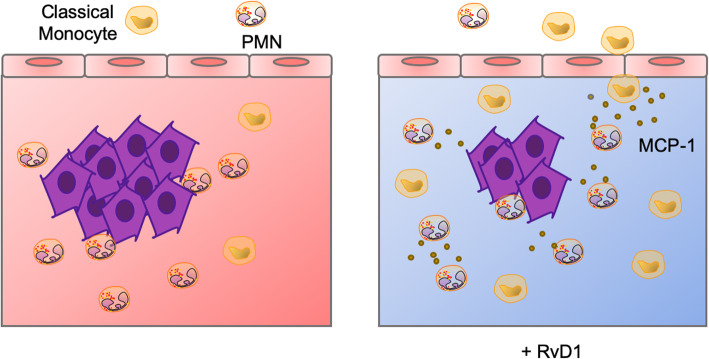
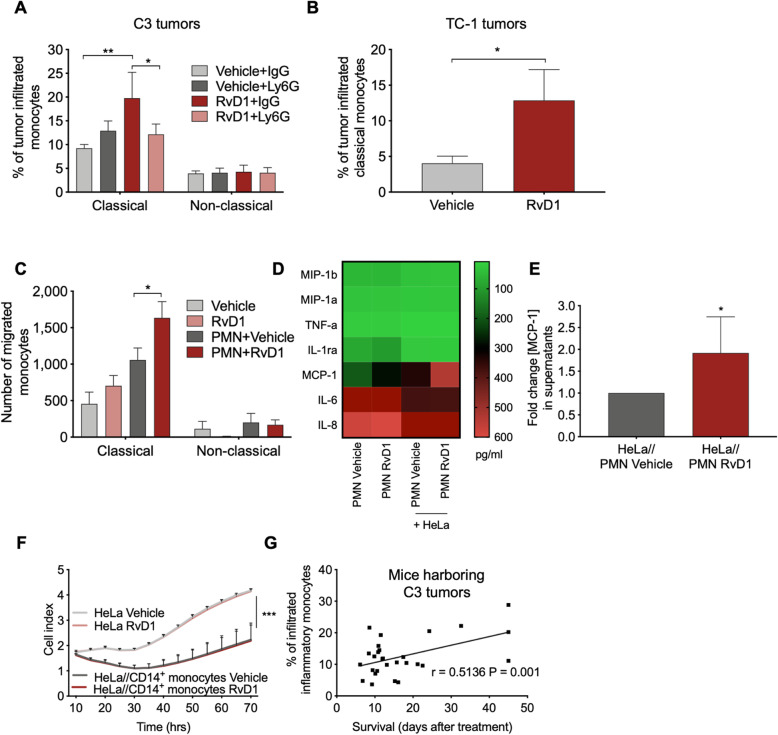
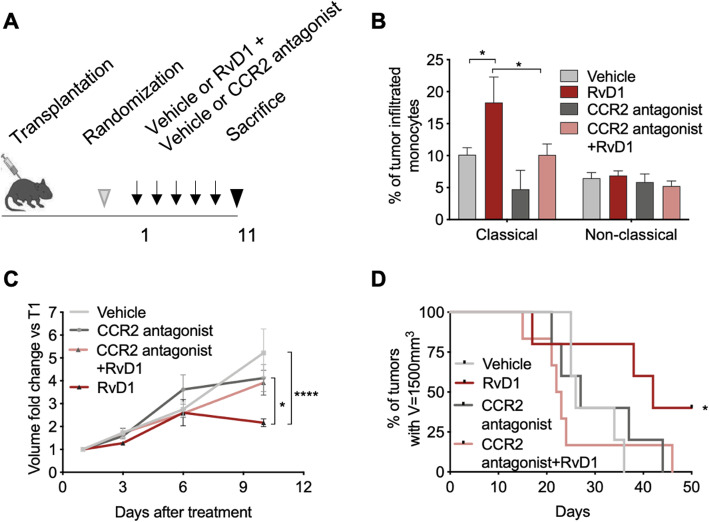
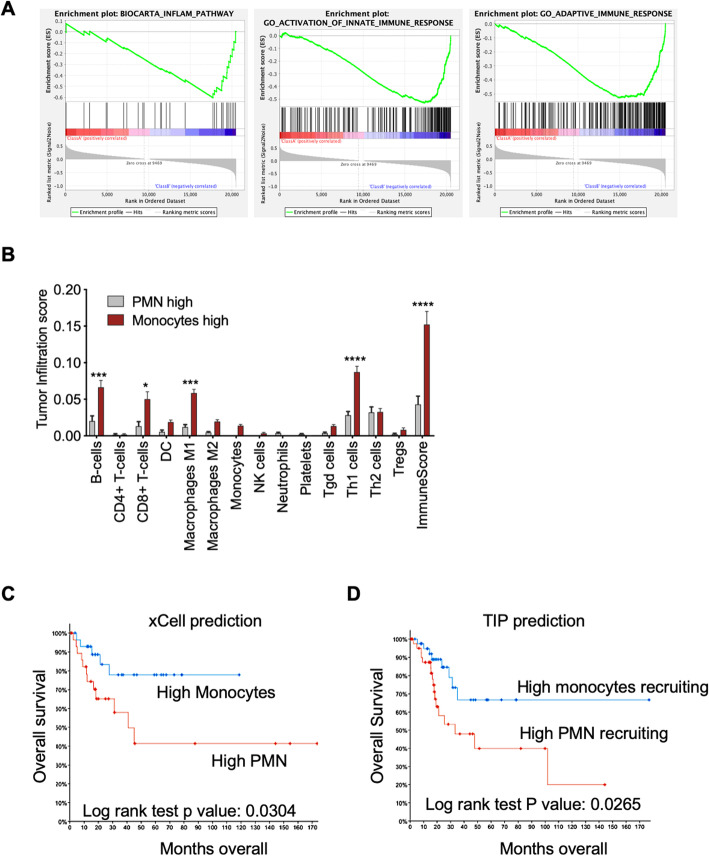
RvD1 decreased in vitro and in vivo proliferation of human and mouse HPV-positive cancer cells through stimulation of PMN anti-tumor activities. In addition, RvD1 stimulated a PMN-dependent recruitment of classical monocytes as key determinant to reduce tumor growth in vivo. In human in vitro systems, exposure of PMN to RvD1 increased the production of the monocyte chemoattractant protein-1 (MCP-1), and enhanced transmigration of classical monocytes, with potent anti-tumor actions, toward HPV-positive cancer cells. Consistently, mining of immune cells infiltration levels in cervical cancer patients from the TCGA database evidenced an enhanced immune reaction and better clinical outcomes in patients with higher intratumoral monocytes as compared to patients with higher PMN infiltration.
RvD1 reduces cancer growth by activating PMN anti-cancer activities and encouraging a protective PMN-dependent recruitment of anti-tumor monocytes. These findings demonstrate efficacy of RvD1 as an innovative therapeutic able to stimulate PMN reprogramming to an anti-cancer phenotype that restrains tumor growth.
靶向肿瘤相关中性粒细胞(PMN)的创新疗法具有临床意义,因为这些细胞在癌症炎症和肿瘤进展中起着核心作用。解析素 D1(RvD1)是一种脂质自体药,通过调节不同免疫和非免疫细胞的活性来促进炎症的解决。在这里,我们使用人乳头瘤病毒(HPV)肿瘤发生作为模型,研究了 RvD1 是否调节 PMN 以减少肿瘤进展。
使用多种细胞系进行生长曲线测定,并在同种异体小鼠中移植两种不同的 HPV 阳性细胞,以确定 RvD1 是否减少癌症生长。为了研究 RvD1 是否以及如何调节 PMN 活性,我们进行了人类 PMN 与 HPV 阳性细胞共培养的 RNA 测序和多重细胞因子 ELISA,以及体内 PMN 的药理学耗竭,并通过 FACS 分析评估了小鼠肿瘤内免疫细胞组成。使用生长曲线测定和体内药理学耗竭分别评估人单核细胞和小鼠单核细胞的抗肿瘤活性。利用癌症基因组图谱(TCGA)数据库的生物信息学分析验证了患者的实验结果。
RvD1 通过刺激 PMN 的抗肿瘤活性,减少了体外和体内人类和小鼠 HPV 阳性癌细胞的增殖。此外,RvD1 刺激 PMN 依赖性募集经典单核细胞,作为减少体内肿瘤生长的关键决定因素。在人类体外系统中,PMN 暴露于 RvD1 会增加单核细胞趋化蛋白-1(MCP-1)的产生,并增强具有强大抗肿瘤作用的经典单核细胞向 HPV 阳性癌细胞的迁移。一致地,从 TCGA 数据库挖掘宫颈癌患者免疫细胞浸润水平的证据表明,与 PMN 浸润较高的患者相比,肿瘤内单核细胞较高的患者具有增强的免疫反应和更好的临床结局。
RvD1 通过激活 PMN 的抗癌活性并鼓励保护性的 PMN 依赖性募集抗肿瘤单核细胞来减少癌症生长。这些发现表明 RvD1 作为一种创新疗法具有疗效,能够刺激 PMN 重编程为抑制肿瘤生长的抗癌表型。