Division of Dermatology, Department of Medicine, Washington University School of Medicine, Saint Louis, MO 63110.
Section of Stem Cell Biology, Division of Oncology, Department of Medicine, Washington University School of Medicine, Saint Louis, MO 63110.
Proc Natl Acad Sci U S A. 2021 Apr 20;118(16). doi: 10.1073/pnas.2022760118.
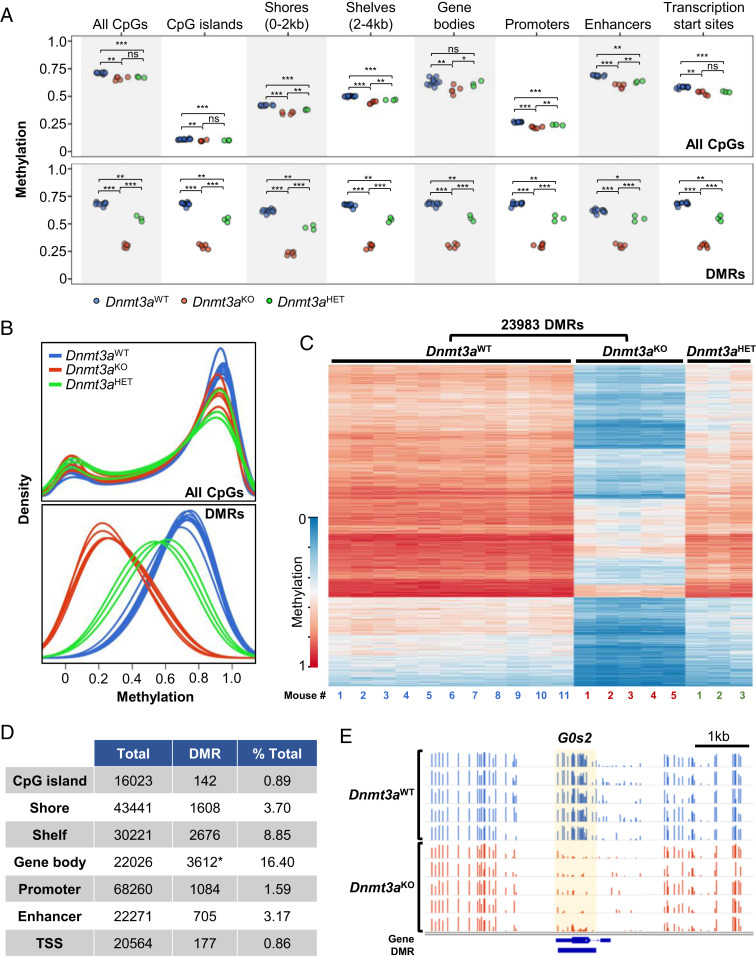
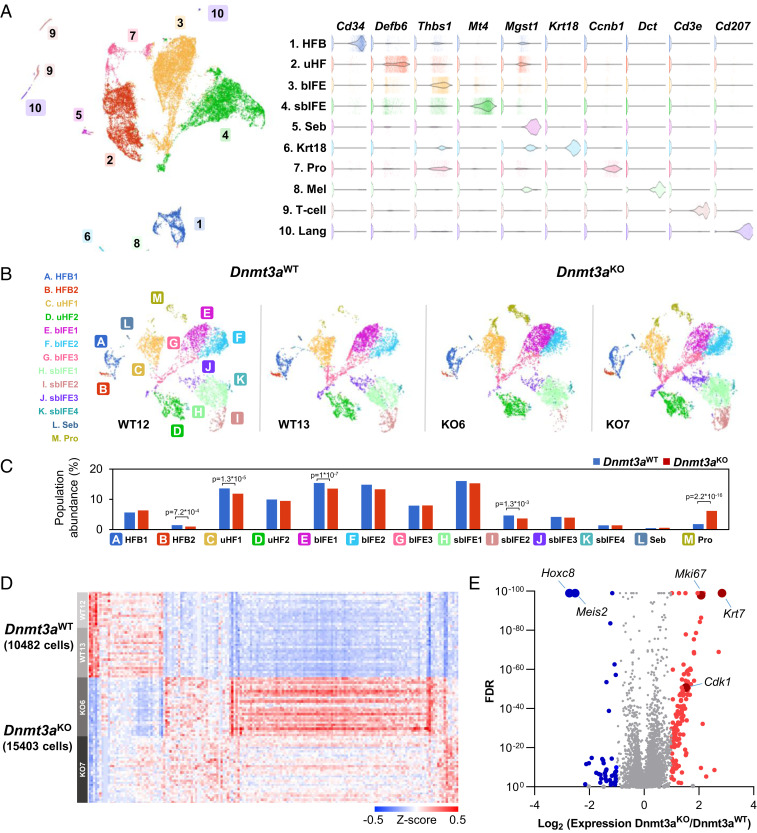
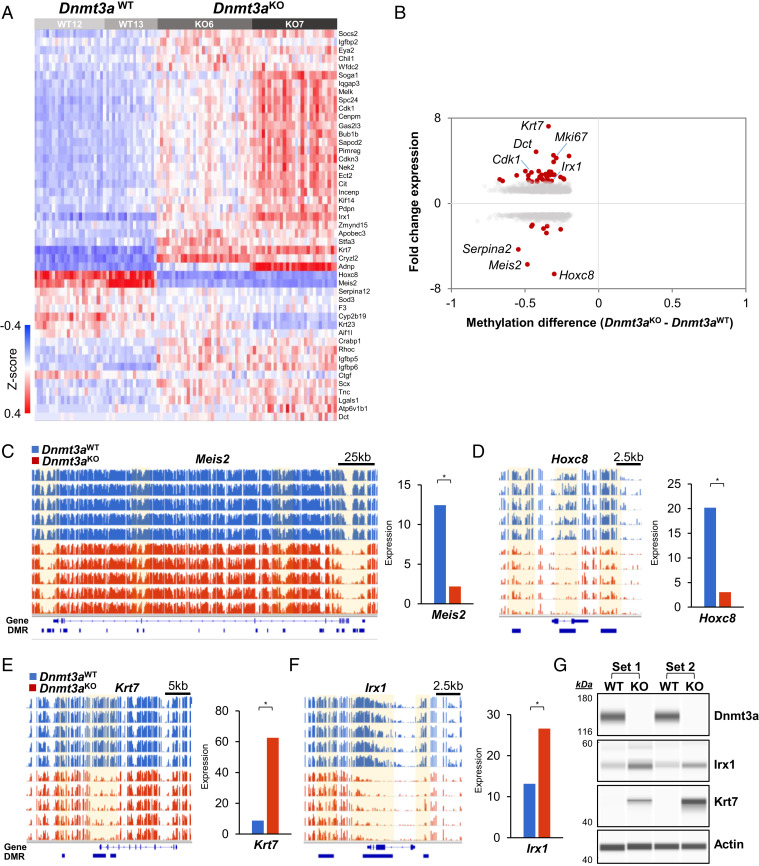
DNA hypomethylation is a feature of epidermal cells from aged and sun-exposed skin, but the mechanisms responsible for this methylation loss are not known. Dnmt3a is the dominant de novo DNA methyltransferase in the skin; while epidermal Dnmt3a deficiency creates a premalignant state in which keratinocytes are more easily transformed by topical mutagens, the conditions responsible for this increased susceptibility to transformation are not well understood. Using whole genome bisulfite sequencing, we identified a focal, canonical DNA hypomethylation phenotype in the epidermal cells of Dnmt3a-deficient mice. Single-cell transcriptomic analysis revealed an increased proportion of cells with a proliferative gene expression signature, while other populations in the skin were relatively unchanged. Although total DNMT3A deficiency has not been described in human disease states, rare patients with an overgrowth syndrome associated with behavioral abnormalities and an increased risk of cancer often have heterozygous, germline mutations in that reduce its function (Tatton-Brown Rahman syndrome [TBRS]). We evaluated the DNA methylation phenotype of the skin from a TBRS patient with a germline mutation, which encodes a dominant-negative protein that reduces its methyltransferase function by ∼80%. We detected a focal, canonical hypomethylation phenotype that revealed considerable overlap with hypomethylated regions found in Dnmt3a-deficient mouse skin. Together, these data suggest that DNMT3A loss creates a premalignant epigenetic state associated with a hyperproliferative phenotype in the skin and further suggest that DNMT3A acts as a tumor suppressor in the skin.
DNA 低甲基化是老年和暴露于阳光的皮肤表皮细胞的特征,但导致这种甲基化丢失的机制尚不清楚。Dnmt3a 是皮肤中主要的从头 DNA 甲基转移酶;尽管表皮 Dnmt3a 缺乏会导致癌前状态,使角质形成细胞更容易被局部诱变剂转化,但导致这种转化易感性增加的条件尚不清楚。通过全基因组亚硫酸氢盐测序,我们在 Dnmt3a 缺陷小鼠的表皮细胞中鉴定出一种焦点性、典型性 DNA 低甲基化表型。单细胞转录组分析显示,具有增殖基因表达特征的细胞比例增加,而皮肤中的其他细胞群则相对不变。尽管人类疾病状态中尚未描述总 DNMT3A 缺乏,但与行为异常和癌症风险增加相关的过度生长综合征的罕见患者通常具有种系突变,其功能降低(Tatton-Brown Rahman 综合征 [TBRS])。我们评估了具有种系突变的 TBRS 患者皮肤的 DNA 甲基化表型,该突变编码一种显性负性蛋白,其甲基转移酶功能降低约 80%。我们检测到一种焦点性、典型性低甲基化表型,与 Dnmt3a 缺陷小鼠皮肤中发现的低甲基化区域有很大重叠。这些数据表明,DNMT3A 的缺失会导致皮肤中与过度增殖表型相关的癌前表观遗传状态,并进一步表明 DNMT3A 在皮肤中作为肿瘤抑制因子发挥作用。