Robert H. Lurie Comprehensive Cancer Center of Northwestern University, Chicago, IL, USA.
Division of Hematology-Oncology, Department of Medicine, Feinberg School of Medicine, Northwestern University, Chicago, IL, USA.
Oncogene. 2021 May;40(18):3273-3286. doi: 10.1038/s41388-021-01761-1. Epub 2021 Apr 12.
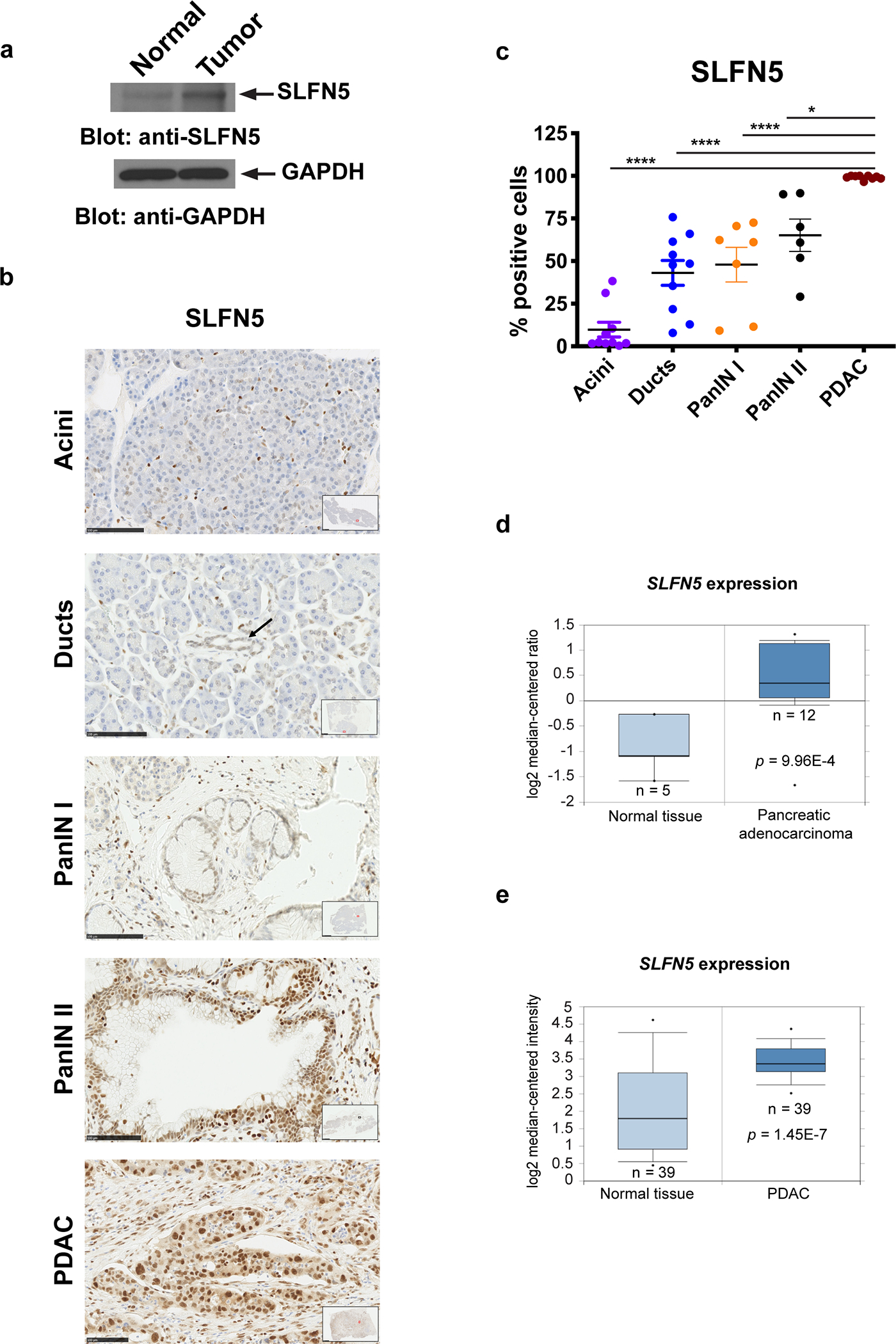
We provide evidence that a member of the human Schlafen (SLFN) family of proteins, SLFN5, is overexpressed in human pancreatic ductal adenocarcinoma (PDAC). Targeted deletion of SLFN5 results in decreased PDAC cell proliferation and suppresses PDAC tumorigenesis in in vivo PDAC models. Importantly, high expression levels of SLFN5 correlate with worse outcomes in PDAC patients, implicating SLFN5 in the pathophysiology of PDAC that leads to poor outcomes. Our studies establish novel regulatory effects of SLFN5 on cell cycle progression through binding/blocking of the transcriptional repressor E2F7, promoting transcription of key genes that stimulate S phase progression. Together, our studies suggest an essential role for SLFN5 in PDAC and support the potential for developing new therapeutic approaches for the treatment of pancreatic cancer through SLFN5 targeting.
我们提供的证据表明,人类 Schlafen(SLFN)蛋白家族的一个成员 SLFN5 在人胰腺导管腺癌(PDAC)中过表达。SLFN5 的靶向缺失导致 PDAC 细胞增殖减少,并抑制体内 PDAC 模型中的 PDAC 肿瘤发生。重要的是,SLFN5 的高表达水平与 PDAC 患者的不良预后相关,提示 SLFN5 参与导致不良预后的 PDAC 病理生理学。我们的研究通过结合/阻断转录抑制因子 E2F7,建立了 SLFN5 对细胞周期进程的新型调节作用,从而促进刺激 S 期进程的关键基因的转录。总之,我们的研究表明 SLFN5 在 PDAC 中的重要作用,并支持通过靶向 SLFN5 开发治疗胰腺癌的新治疗方法的潜力。