• 文献检索
  • 文档翻译
  • 深度研究
  • 学术资讯
  • Suppr Zotero 插件Zotero 插件
  • 邀请有礼
  • 套餐&价格
  • 历史记录
应用&插件
Suppr Zotero 插件Zotero 插件浏览器插件Mac 客户端Windows 客户端微信小程序
定价
高级版会员购买积分包购买API积分包
服务
文献检索文档翻译深度研究API 文档MCP 服务
关于我们
关于 Suppr公司介绍联系我们用户协议隐私条款
关注我们

Suppr 超能文献

核心技术专利:CN118964589B侵权必究
粤ICP备2023148730 号-1Suppr @ 2026

文献检索

告别复杂PubMed语法,用中文像聊天一样搜索,搜遍4000万医学文献。AI智能推荐,让科研检索更轻松。

立即免费搜索

文件翻译

保留排版,准确专业,支持PDF/Word/PPT等文件格式,支持 12+语言互译。

免费翻译文档

深度研究

AI帮你快速写综述,25分钟生成高质量综述,智能提取关键信息,辅助科研写作。

立即免费体验

一款用于乳腺癌全程个性化康复的模块化移动健康应用程序:开发研究

A Modular Mobile Health App for Personalized Rehabilitation Throughout the Breast Cancer Care Continuum: Development Study.

作者信息

Lim Ji Young, Kim Jong Kwang, Kim Yoon, Ahn So-Yeon, Yu Jonghan, Hwang Ji Hye

机构信息

Department of Physical Therapy, General Graduate School of Medical Sciences, Konyang University, Daejeon, Republic of Korea.

Medi Plus Solution, Seoul, Republic of Korea.

出版信息

JMIR Form Res. 2021 Apr 13;5(4):e23304. doi: 10.2196/23304.

DOI:10.2196/23304
PMID:33847589
原文链接:https://pmc.ncbi.nlm.nih.gov/articles/PMC8080147/
Abstract

BACKGROUND

Although many mobile health (mHealth) apps have evolved as support tools for self-management of breast cancer, limited studies have developed a comprehensive app and described the algorithms for personalized rehabilitation throughout the breast cancer care continuum.

OBJECTIVE

This study aimed to develop a comprehensive mobile app and to describe an algorithm that adjusts personalized content to facilitate self-management throughout the breast cancer care continuum.

METHODS

The development process of the modular mHealth app included the following 4 steps: (1) organizing expert teams, (2) defining evidence-based fundamental content and modules, (3) classifying user information for algorithms to personalize the content, and (4) creating the app platform and connectivity to digital health care devices.

RESULTS

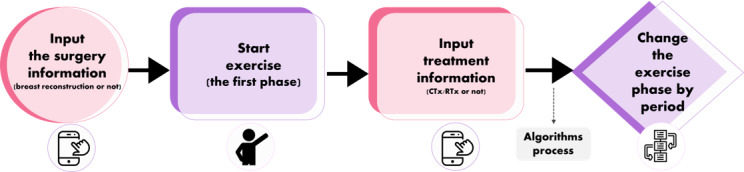
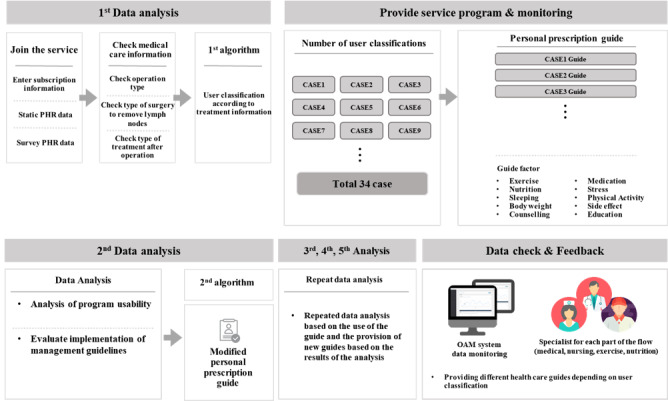
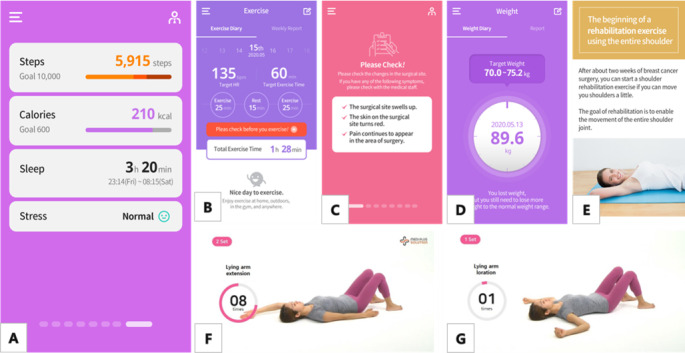
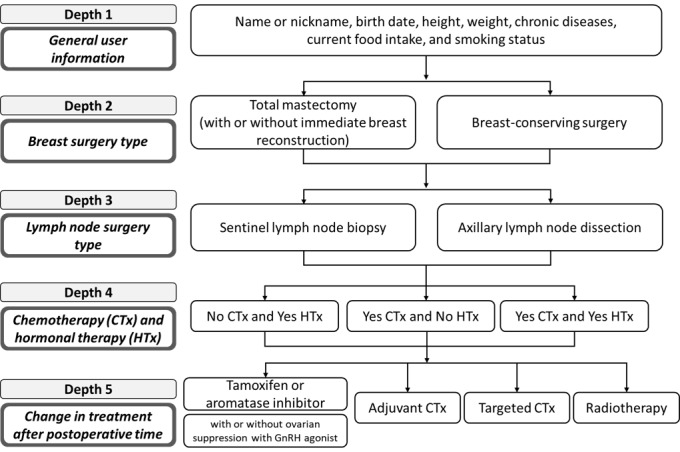
We developed a modular mHealth app service, which took 18 months, including a review of related literature and guidelines and the development of the app and connectivity to digital health care devices. A total of 11 functionalities were defined in the app with weekly analysis. The user information classification was formulated for personalized rehabilitation according to 5 key criteria: general user information, breast operation type, lymph node surgery type, chemotherapy and hormonal therapy use, and change in treatment after surgery. The main modules for personalized content included a self-monitoring screen, personalized health information, personalized exercise, and diet management.

CONCLUSIONS

The strength of this study was the development of a comprehensive mHealth app and algorithms to adjust content based on user medical information for personalized rehabilitation during the breast cancer care continuum.

摘要

背景

尽管许多移动健康(mHealth)应用程序已发展成为乳腺癌自我管理的支持工具,但开展综合性应用程序并描述贯穿乳腺癌护理全过程的个性化康复算法的研究却很有限。

目的

本研究旨在开发一款综合性移动应用程序,并描述一种可调整个性化内容以促进乳腺癌护理全过程自我管理的算法。

方法

模块化移动健康应用程序的开发过程包括以下4个步骤:(1)组建专家团队;(2)定义基于证据的基本内容和模块;(3)对用户信息进行分类以便算法对内容进行个性化设置;(4)创建应用程序平台并与数字医疗设备建立连接。

结果

我们开发了一款模块化移动健康应用程序服务,耗时18个月,包括对相关文献和指南的审查以及应用程序的开发和与数字医疗设备的连接。该应用程序通过每周分析共定义了11项功能。根据5个关键标准制定了用于个性化康复的用户信息分类:一般用户信息、乳房手术类型、淋巴结手术类型、化疗和激素治疗的使用情况以及术后治疗变化。个性化内容的主要模块包括自我监测屏幕、个性化健康信息、个性化运动和饮食管理。

结论

本研究的优势在于开发了一款综合性移动健康应用程序以及用于在乳腺癌护理全过程中根据用户医疗信息调整内容以实现个性化康复的算法。
https://cdn.ncbi.nlm.nih.gov/pmc/blobs/8fcd/8080147/8a030f8b4071/formative_v5i4e23304_fig4.jpg
https://cdn.ncbi.nlm.nih.gov/pmc/blobs/8fcd/8080147/3e72096115b9/formative_v5i4e23304_fig1.jpg
https://cdn.ncbi.nlm.nih.gov/pmc/blobs/8fcd/8080147/ec3c5c80f320/formative_v5i4e23304_fig2.jpg
https://cdn.ncbi.nlm.nih.gov/pmc/blobs/8fcd/8080147/466bb9cee1ed/formative_v5i4e23304_fig3.jpg
https://cdn.ncbi.nlm.nih.gov/pmc/blobs/8fcd/8080147/8a030f8b4071/formative_v5i4e23304_fig4.jpg
https://cdn.ncbi.nlm.nih.gov/pmc/blobs/8fcd/8080147/3e72096115b9/formative_v5i4e23304_fig1.jpg
https://cdn.ncbi.nlm.nih.gov/pmc/blobs/8fcd/8080147/ec3c5c80f320/formative_v5i4e23304_fig2.jpg
https://cdn.ncbi.nlm.nih.gov/pmc/blobs/8fcd/8080147/466bb9cee1ed/formative_v5i4e23304_fig3.jpg
https://cdn.ncbi.nlm.nih.gov/pmc/blobs/8fcd/8080147/8a030f8b4071/formative_v5i4e23304_fig4.jpg

相似文献

1
A Modular Mobile Health App for Personalized Rehabilitation Throughout the Breast Cancer Care Continuum: Development Study.一款用于乳腺癌全程个性化康复的模块化移动健康应用程序:开发研究
JMIR Form Res. 2021 Apr 13;5(4):e23304. doi: 10.2196/23304.
2
The Development of a Mobile Health App for Breast Cancer Self-Management Support in Taiwan: Design Thinking Approach.开发一款用于支持台湾地区乳腺癌自我管理的移动健康应用:设计思维方法。
JMIR Mhealth Uhealth. 2020 Apr 30;8(4):e15780. doi: 10.2196/15780.
3
A Personalized Physical Activity Coaching App for Breast Cancer Survivors: Design Process and Early Prototype Testing.针对乳腺癌幸存者的个性化体力活动指导应用程序:设计过程与早期原型测试。
JMIR Mhealth Uhealth. 2020 Jul 15;8(7):e17552. doi: 10.2196/17552.
4
Use of Evidence-Based Best Practices and Behavior Change Techniques in Breast Cancer Apps: Systematic Analysis.基于证据的最佳实践和行为改变技术在乳腺癌应用中的应用:系统分析。
JMIR Mhealth Uhealth. 2020 Jan 24;8(1):e14082. doi: 10.2196/14082.
5
Breast Cancer Survivors' Perspectives on Motivational and Personalization Strategies in Mobile App-Based Physical Activity Coaching Interventions: Qualitative Study.基于移动应用的身体活动教练干预中乳腺癌幸存者对动机和个性化策略的观点:定性研究。
JMIR Mhealth Uhealth. 2020 Sep 21;8(9):e18867. doi: 10.2196/18867.
6
Mobile Apps for Medication Management: Review and Analysis.移动医疗应用程序在药物管理中的应用:综述与分析。
JMIR Mhealth Uhealth. 2019 Sep 11;7(9):e13608. doi: 10.2196/13608.
7
MedFit App, a Behavior-Changing, Theoretically Informed Mobile App for Patient Self-Management of Cardiovascular Disease: User-Centered Development.MedFit应用程序,一款用于心血管疾病患者自我管理的、具有行为改变功能且基于理论的移动应用程序:以用户为中心的开发。
JMIR Form Res. 2018 Apr 27;2(1):e8. doi: 10.2196/formative.9550.
8
Mobile Health Divide Between Clinicians and Patients in Cancer Care: Results From a Cross-Sectional International Survey.癌症护理中临床医生与患者之间的移动医疗鸿沟:一项跨国际横断面调查的结果。
JMIR Mhealth Uhealth. 2019 Sep 6;7(9):e13584. doi: 10.2196/13584.
9
A user-centred approach to developing bWell, a mobile app for arm and shoulder exercises after breast cancer treatment.一种以用户为中心的方法来开发bWell,一款用于乳腺癌治疗后手臂和肩部锻炼的移动应用程序。
J Cancer Surviv. 2017 Dec;11(6):732-742. doi: 10.1007/s11764-017-0630-3. Epub 2017 Jul 24.
10
Commercially Available Smartphone Apps to Support Postoperative Pain Self-Management: Scoping Review.支持术后疼痛自我管理的商用智能手机应用程序:范围综述
JMIR Mhealth Uhealth. 2017 Oct 23;5(10):e162. doi: 10.2196/mhealth.8230.

引用本文的文献

1
Distinguishing threshold shoulder range of motion measures collected by a breast cancer smartphone application: Assessment in healthy adults.一款乳腺癌智能手机应用程序收集的区分阈值肩部活动范围测量:对健康成年人的评估。
Digit Health. 2025 Mar 13;11:20552076251325954. doi: 10.1177/20552076251325954. eCollection 2025 Jan-Dec.
2
Mobile Applications in Breast Cancer Postoperative Care: A Scoping Review.乳腺癌术后护理中的移动应用:一项范围综述。
Cancer Med. 2024 Dec;13(24):e70444. doi: 10.1002/cam4.70444.
3
Developing and validating a content quality evaluation tool for cancer mobile applications.

本文引用的文献

1
The Development of a Mobile Health App for Breast Cancer Self-Management Support in Taiwan: Design Thinking Approach.开发一款用于支持台湾地区乳腺癌自我管理的移动健康应用:设计思维方法。
JMIR Mhealth Uhealth. 2020 Apr 30;8(4):e15780. doi: 10.2196/15780.
2
Feasibility and Health Benefits of an Individualized Physical Activity Intervention in Women With Metastatic Breast Cancer: Intervention Study.个体化体力活动干预在转移性乳腺癌女性中的可行性和健康益处:干预研究。
JMIR Mhealth Uhealth. 2020 Jan 28;8(1):e12306. doi: 10.2196/12306.
3
Early Rehabilitation after Total Mastectomy and Immediate Reconstruction with Tissue Expander Insertion in Breast Cancer Patients: A Retrospective Case-control Study.
开发并验证一款癌症移动应用的内容质量评估工具。
BMC Cancer. 2024 Dec 5;24(1):1494. doi: 10.1186/s12885-024-13112-w.
4
Assessing the Views and Needs of People at High Risk of Gestational Diabetes Mellitus for the Development of Mobile Health Apps: Descriptive Qualitative Study.评估妊娠期糖尿病高危人群对移动健康应用程序开发的看法和需求:描述性定性研究
JMIR Form Res. 2022 Jul 8;6(7):e36392. doi: 10.2196/36392.
乳腺癌患者全乳切除并即刻植入组织扩张器重建术后的早期康复:一项回顾性病例对照研究
J Breast Cancer. 2019 Sep;22(3):472-483. doi: 10.4048/jbc.2019.22.e40.
4
Evidence on the Use of Mobile Apps During the Treatment of Breast Cancer: Systematic Review.关于在乳腺癌治疗期间使用移动应用程序的证据:系统评价。
JMIR Mhealth Uhealth. 2019 Aug 27;7(8):e13245. doi: 10.2196/13245.
5
2018 Korean Society of Hypertension Guidelines for the management of hypertension: part II-diagnosis and treatment of hypertension.2018年韩国高血压学会高血压管理指南:第二部分——高血压的诊断与治疗
Clin Hypertens. 2019 Aug 1;25:20. doi: 10.1186/s40885-019-0124-x. eCollection 2019.
6
Preferences for mHealth physical activity interventions during chemotherapy for breast cancer: a qualitative evaluation.乳腺癌化疗期间对移动医疗身体活动干预的偏好:定性评估。
Support Care Cancer. 2020 Apr;28(4):1919-1928. doi: 10.1007/s00520-019-05002-w. Epub 2019 Jul 31.
7
Use of Mental Health Apps by Breast Cancer Patients and Their Caregivers in the United States: Protocol for a Pilot Pre-Post Study.美国乳腺癌患者及其护理人员对心理健康应用程序的使用:一项试点前后研究的方案
JMIR Res Protoc. 2019 Jan 14;8(1):e11452. doi: 10.2196/11452.
8
2018 Korean Society for the Study of Obesity Guideline for the Management of Obesity in Korea.2018年韩国肥胖研究学会韩国肥胖管理指南
J Obes Metab Syndr. 2019 Mar;28(1):40-45. doi: 10.7570/jomes.2019.28.1.40. Epub 2019 Mar 30.
9
Cancer Statistics in Korea: Incidence, Mortality, Survival, and Prevalence in 2016.《韩国癌症统计:2016 年发病率、死亡率、生存率和流行率》
Cancer Res Treat. 2019 Apr;51(2):417-430. doi: 10.4143/crt.2019.138. Epub 2019 Mar 18.
10
Prediction of Cancer Incidence and Mortality in Korea, 2019.2019 年韩国癌症发病率和死亡率预测。
Cancer Res Treat. 2019 Apr;51(2):431-437. doi: 10.4143/crt.2019.139. Epub 2019 Mar 18.