Division of Pediatric Hematology/Oncology, UCSF, San Francisco, CA 94143, USA.
Department of Pharmaceutical Chemistry, UCSF, San Francisco, CA 94143, USA; Department of Physics, University of Florida, Gainesville, FL 32611, USA.
Cell. 2021 May 13;184(10):2649-2664.e18. doi: 10.1016/j.cell.2021.03.031. Epub 2021 Apr 12.
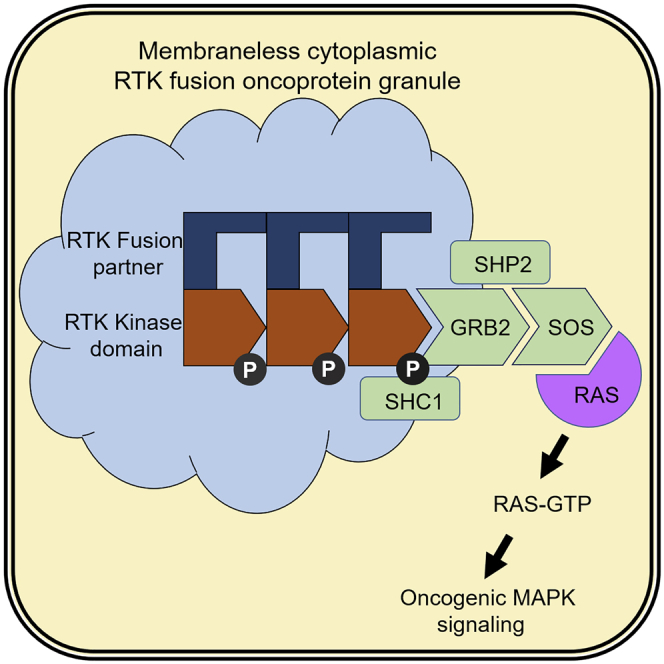
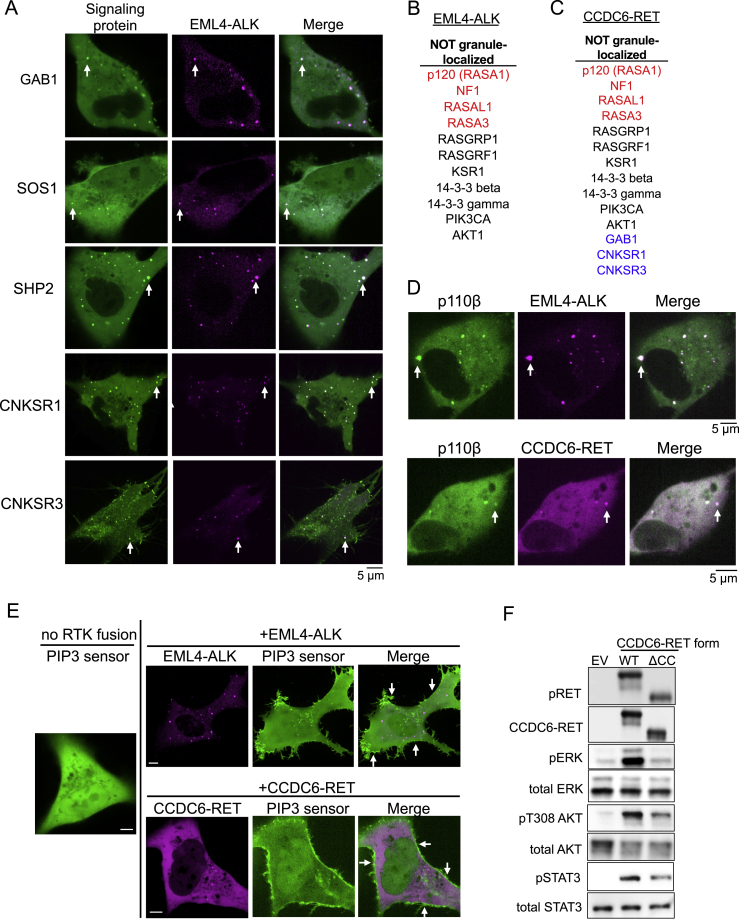
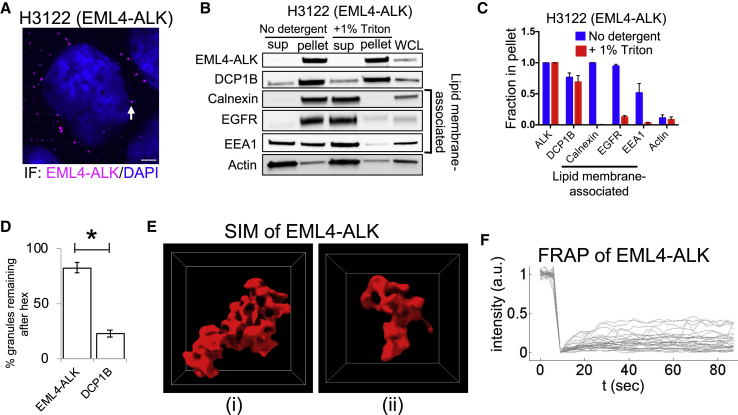
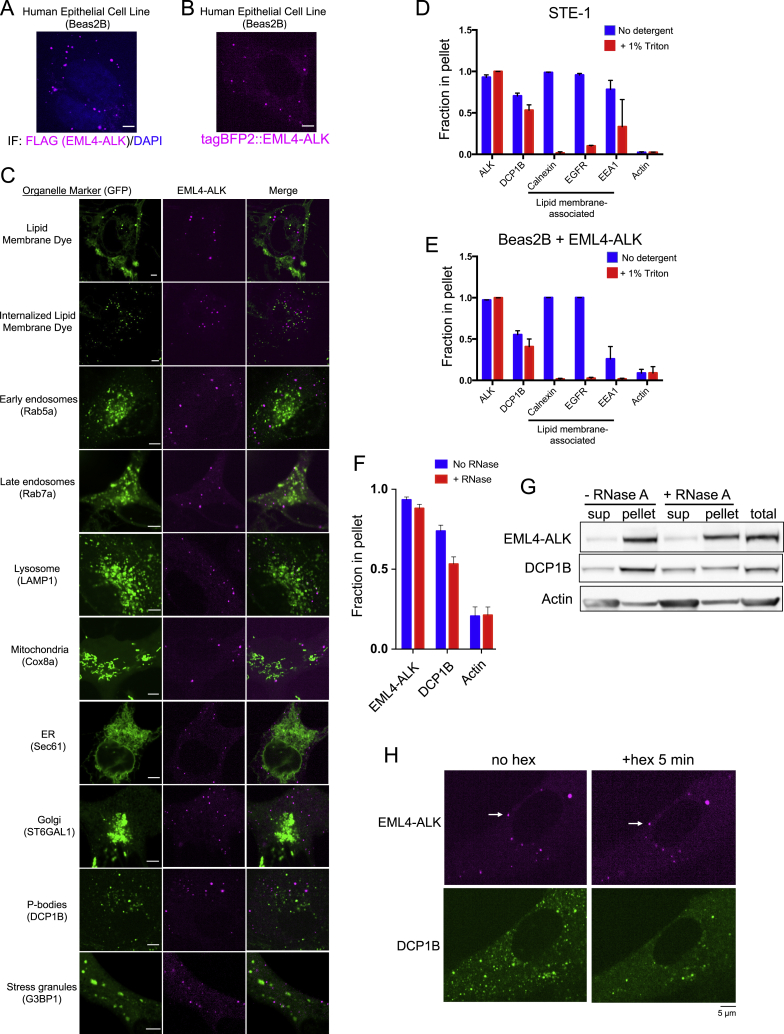
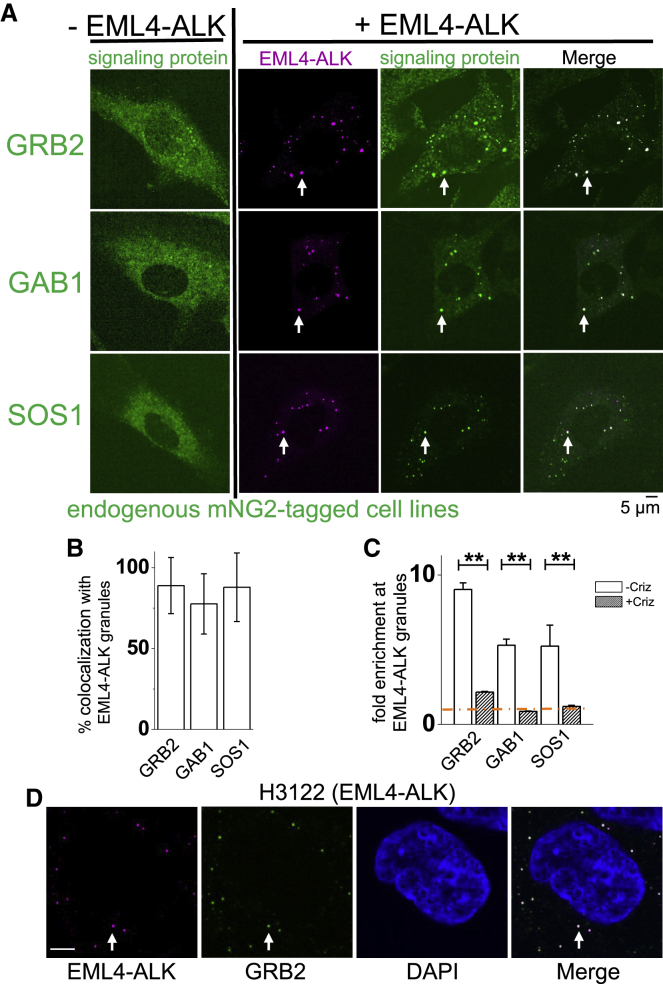
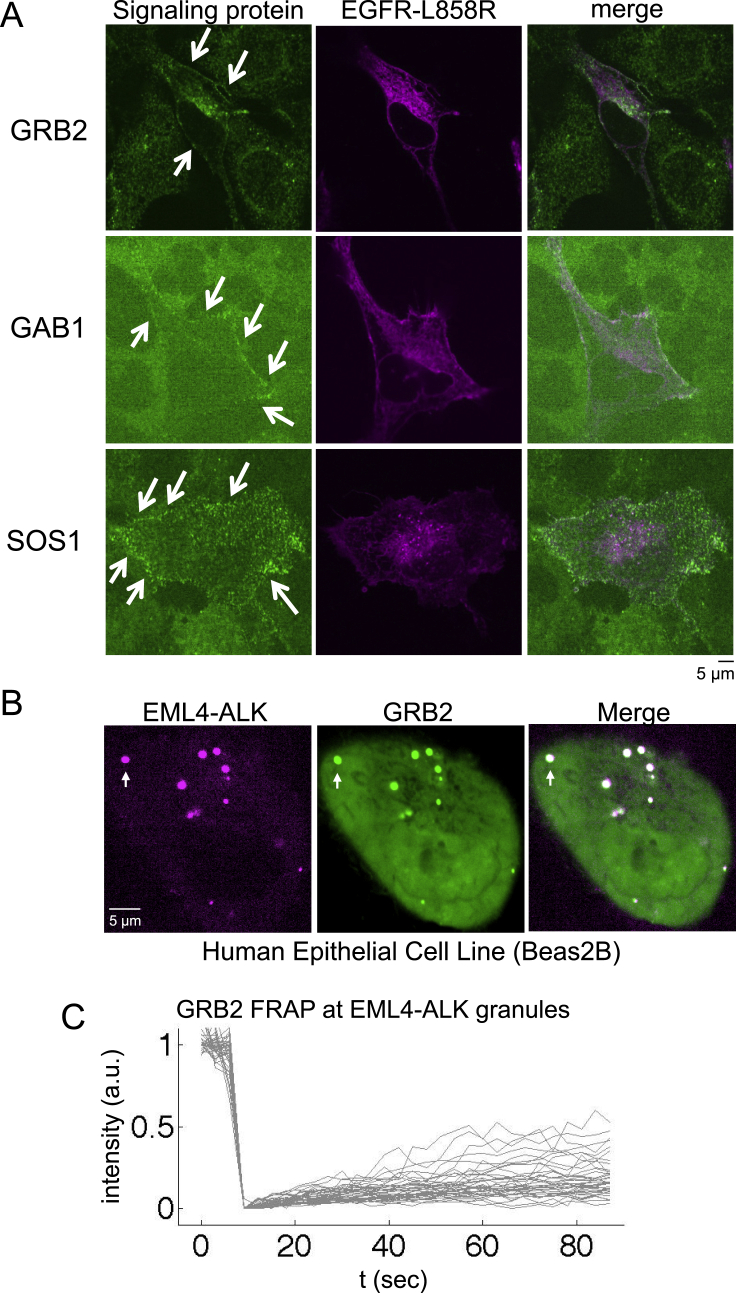
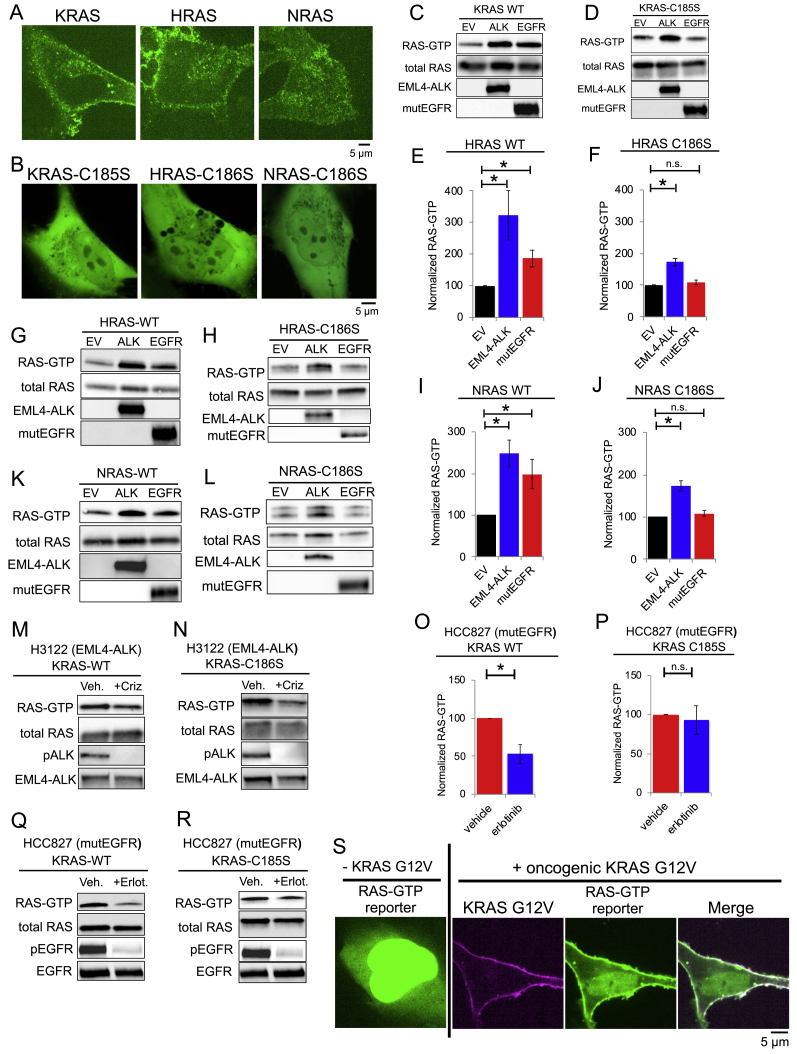
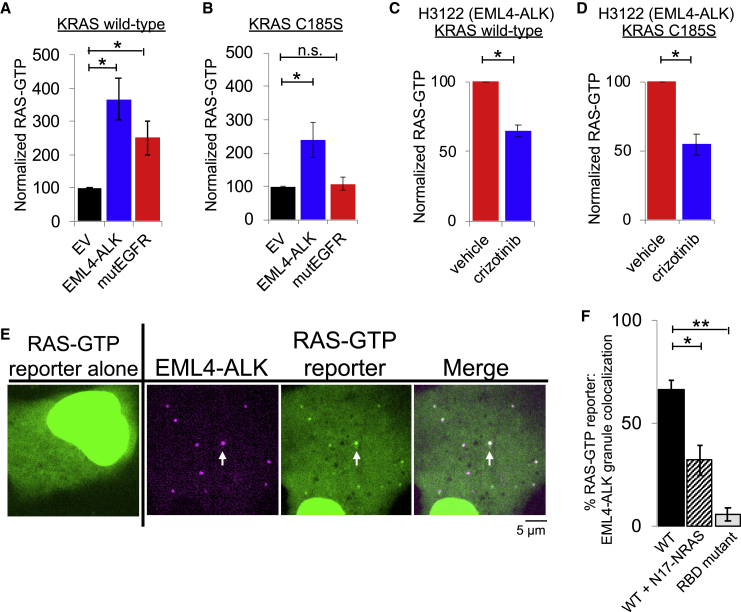
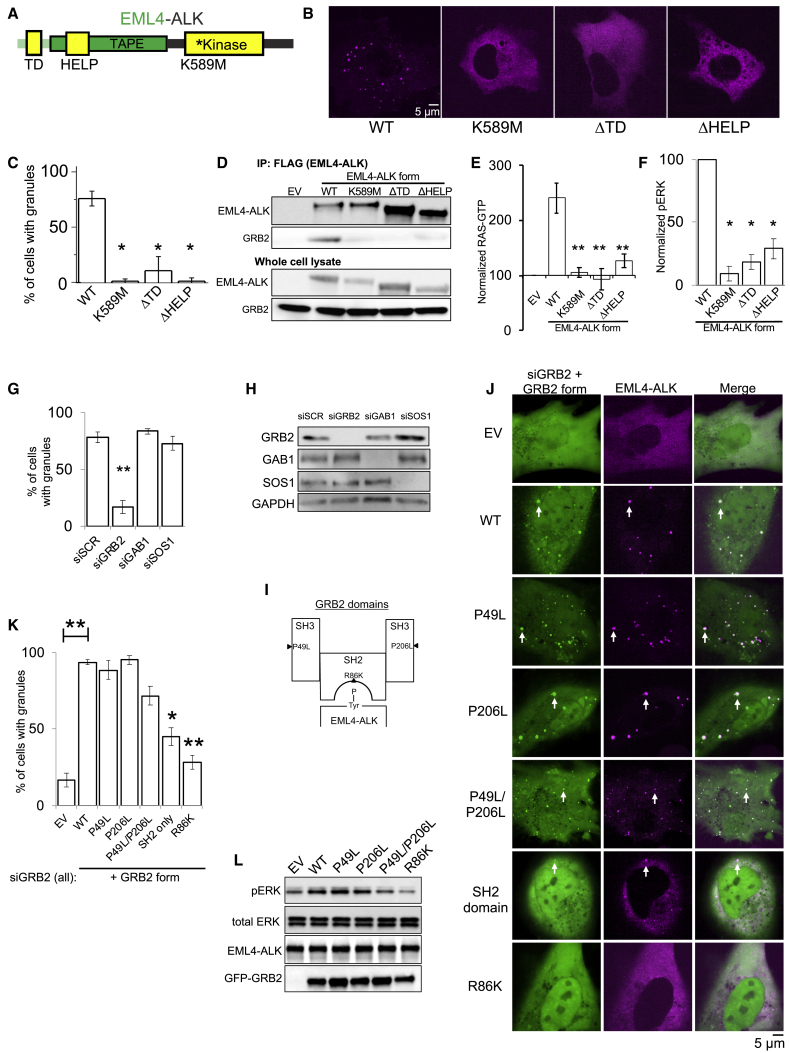
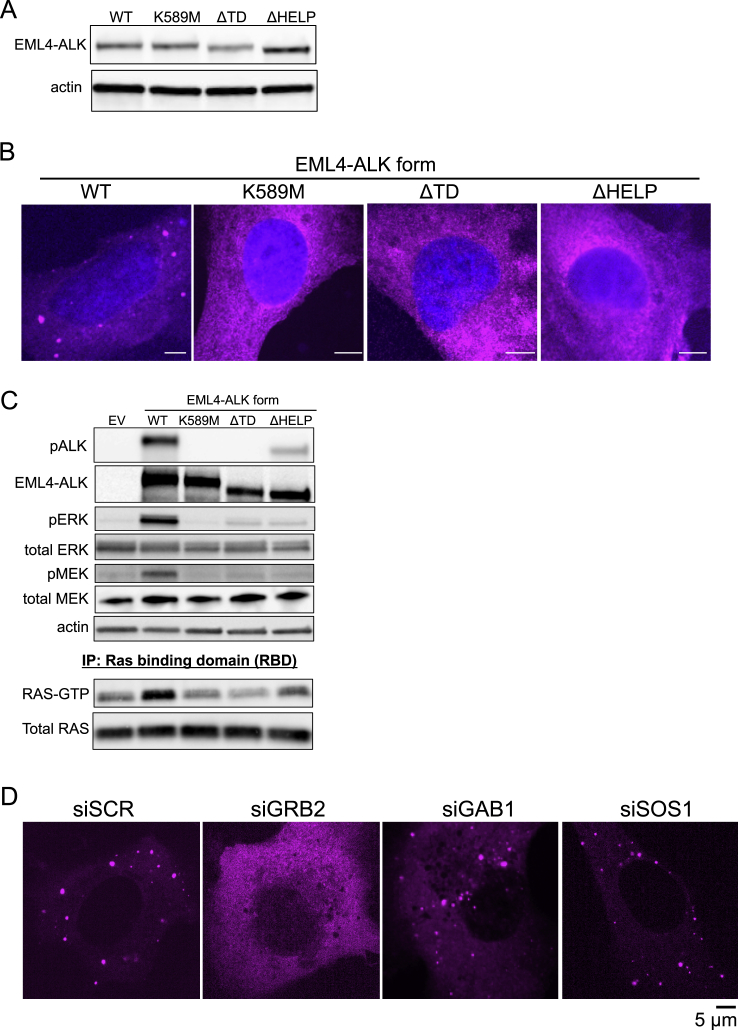
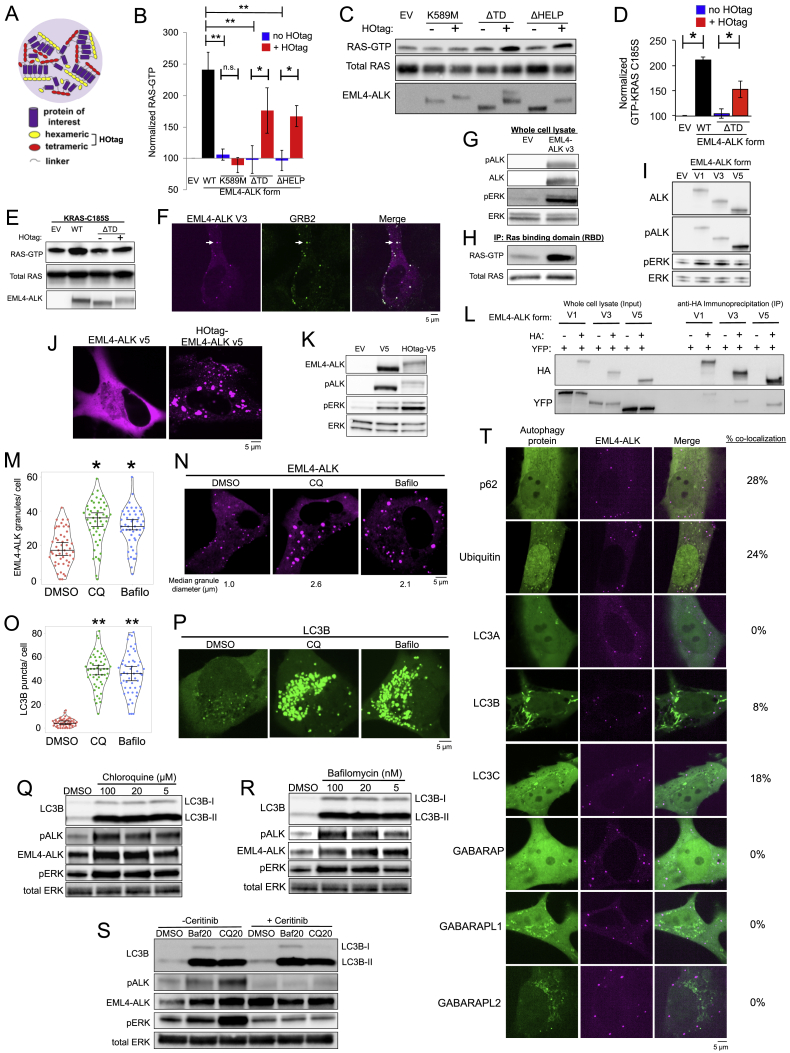
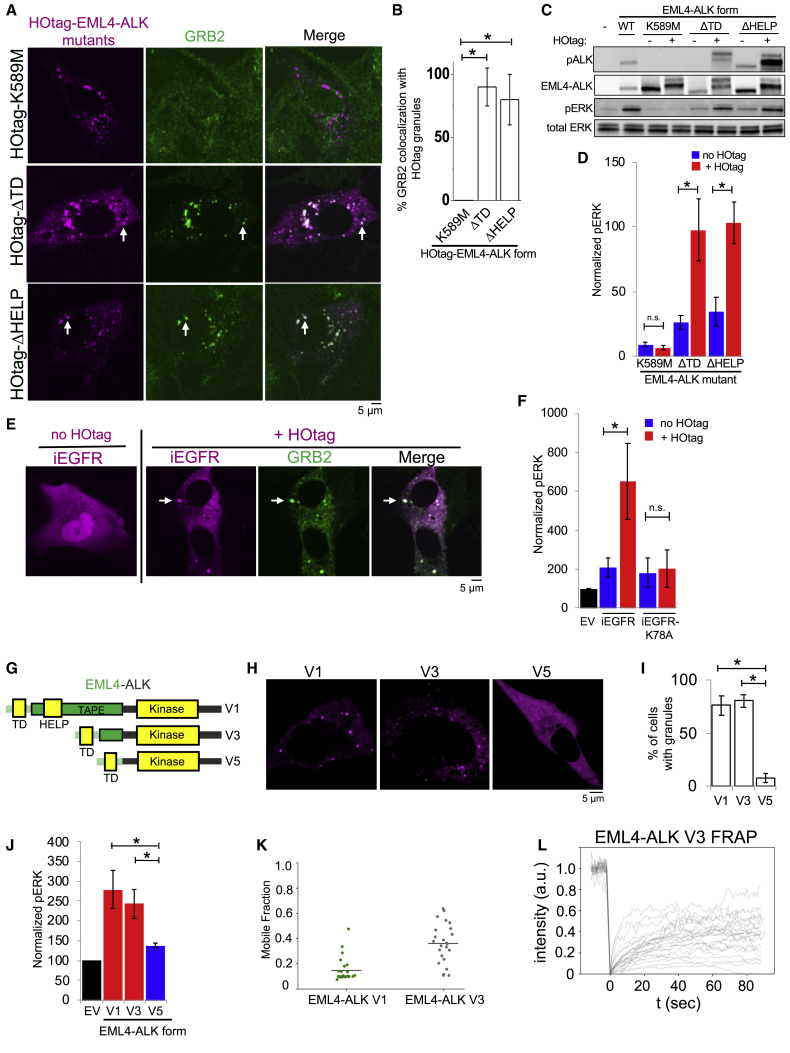
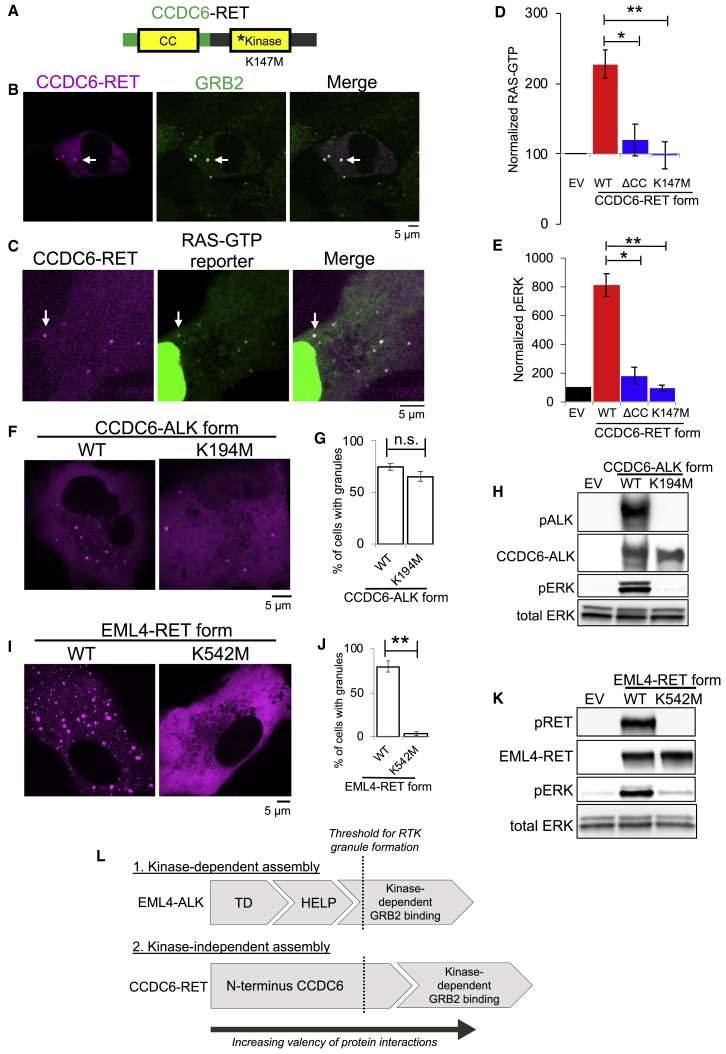
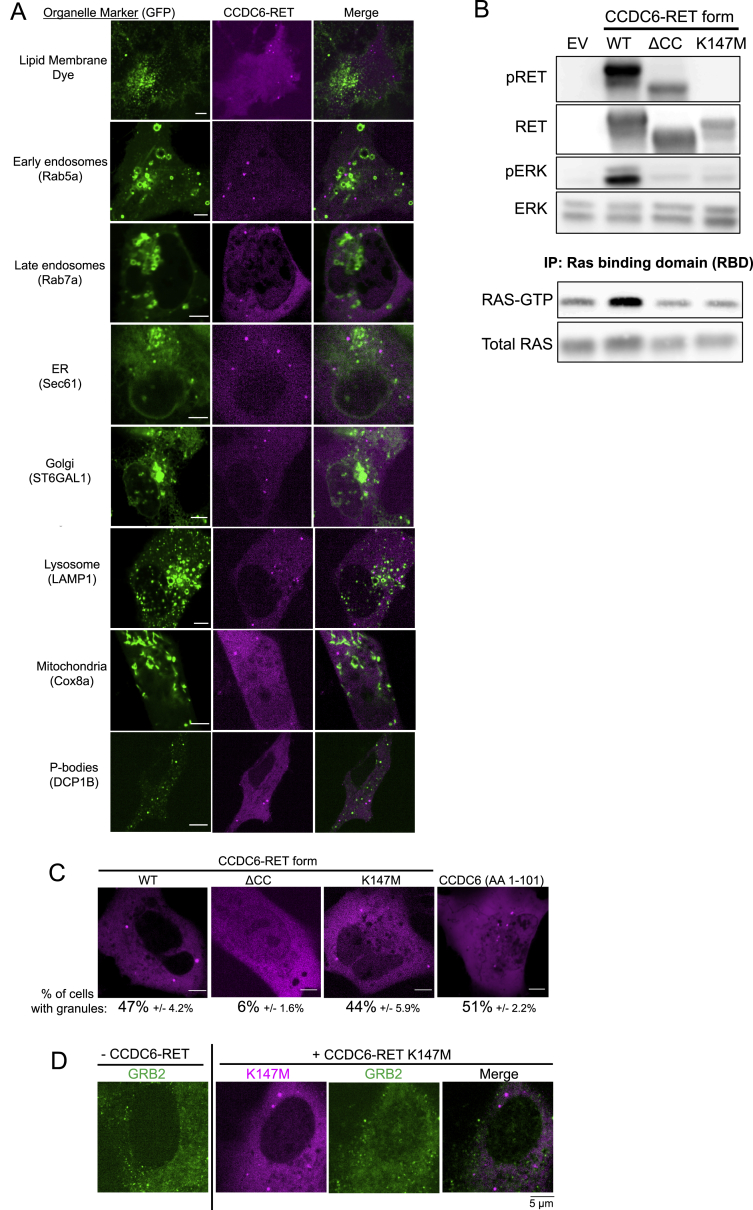
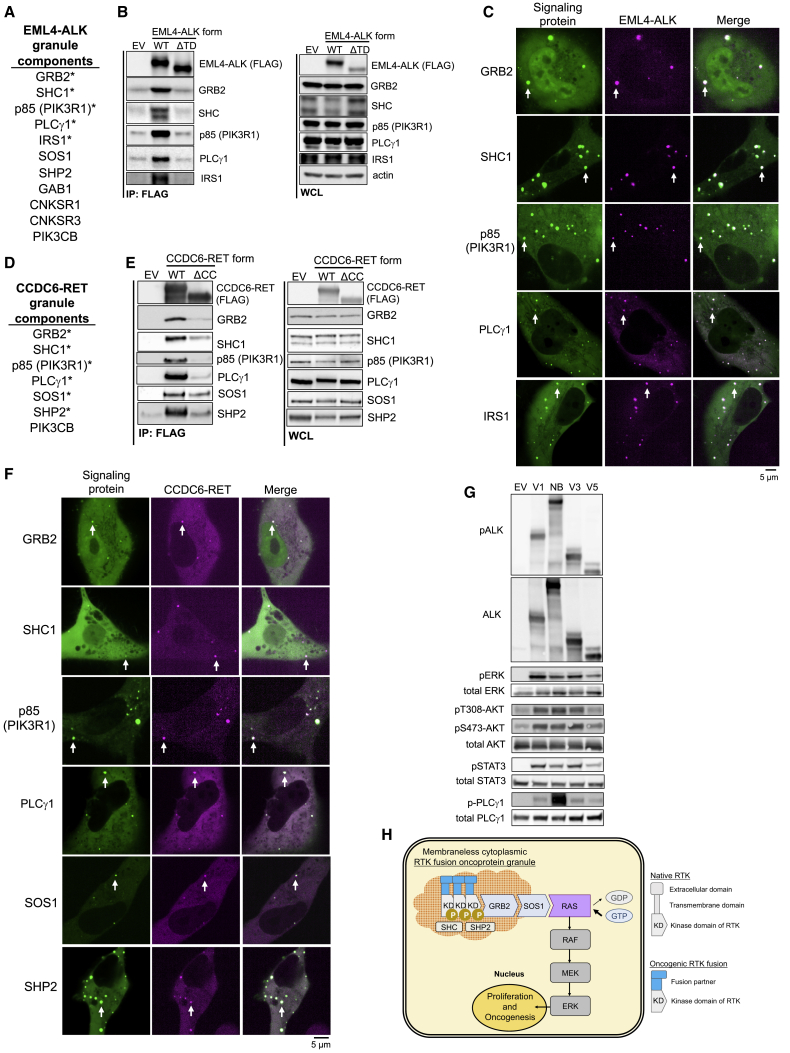
Receptor tyrosine kinase (RTK)-mediated activation of downstream effector pathways such as the RAS GTPase/MAP kinase (MAPK) signaling cascade is thought to occur exclusively from lipid membrane compartments in mammalian cells. Here, we uncover a membraneless, protein granule-based subcellular structure that can organize RTK/RAS/MAPK signaling in cancer. Chimeric (fusion) oncoproteins involving certain RTKs including ALK and RET undergo de novo higher-order assembly into membraneless cytoplasmic protein granules that actively signal. These pathogenic biomolecular condensates locally concentrate the RAS activating complex GRB2/SOS1 and activate RAS in a lipid membrane-independent manner. RTK protein granule formation is critical for oncogenic RAS/MAPK signaling output in these cells. We identify a set of protein granule components and establish structural rules that define the formation of membraneless protein granules by RTK oncoproteins. Our findings reveal membraneless, higher-order cytoplasmic protein assembly as a distinct subcellular platform for organizing oncogenic RTK and RAS signaling.
受体酪氨酸激酶 (RTK) 介导的下游效应因子途径的激活,如 RAS GTP 酶/MAP 激酶 (MAPK) 信号级联,被认为仅发生在哺乳动物细胞的脂膜隔室中。在这里,我们揭示了一种无膜的、基于蛋白质颗粒的亚细胞结构,它可以在癌症中组织 RTK/RAS/MAPK 信号。涉及某些 RTK(包括 ALK 和 RET)的嵌合(融合)癌蛋白会从头组装成无膜的细胞质蛋白质颗粒,这些颗粒会主动发出信号。这些致病生物分子凝聚体局部浓缩 RAS 激活复合物 GRB2/SOS1,并以脂质膜非依赖性方式激活 RAS。RTK 蛋白颗粒的形成对于这些细胞中致癌性 RAS/MAPK 信号输出至关重要。我们鉴定了一组蛋白质颗粒成分,并建立了结构规则,定义了 RTK 癌蛋白无膜蛋白质颗粒的形成。我们的发现揭示了无膜的、更高阶的细胞质蛋白质组装作为一个独特的亚细胞平台,用于组织致癌性 RTK 和 RAS 信号。