Department of Anesthesiology, University of Michigan Medical School, Ann Arbor, MI 48109, USA; Center for Consciousness Science, University of Michigan Medical School, Ann Arbor, MI 48109, USA.
Department of Anesthesiology, University of Michigan Medical School, Ann Arbor, MI 48109, USA; Center for Consciousness Science, University of Michigan Medical School, Ann Arbor, MI 48109, USA.
Neuroimage. 2021 Aug 1;236:118042. doi: 10.1016/j.neuroimage.2021.118042. Epub 2021 Apr 10.
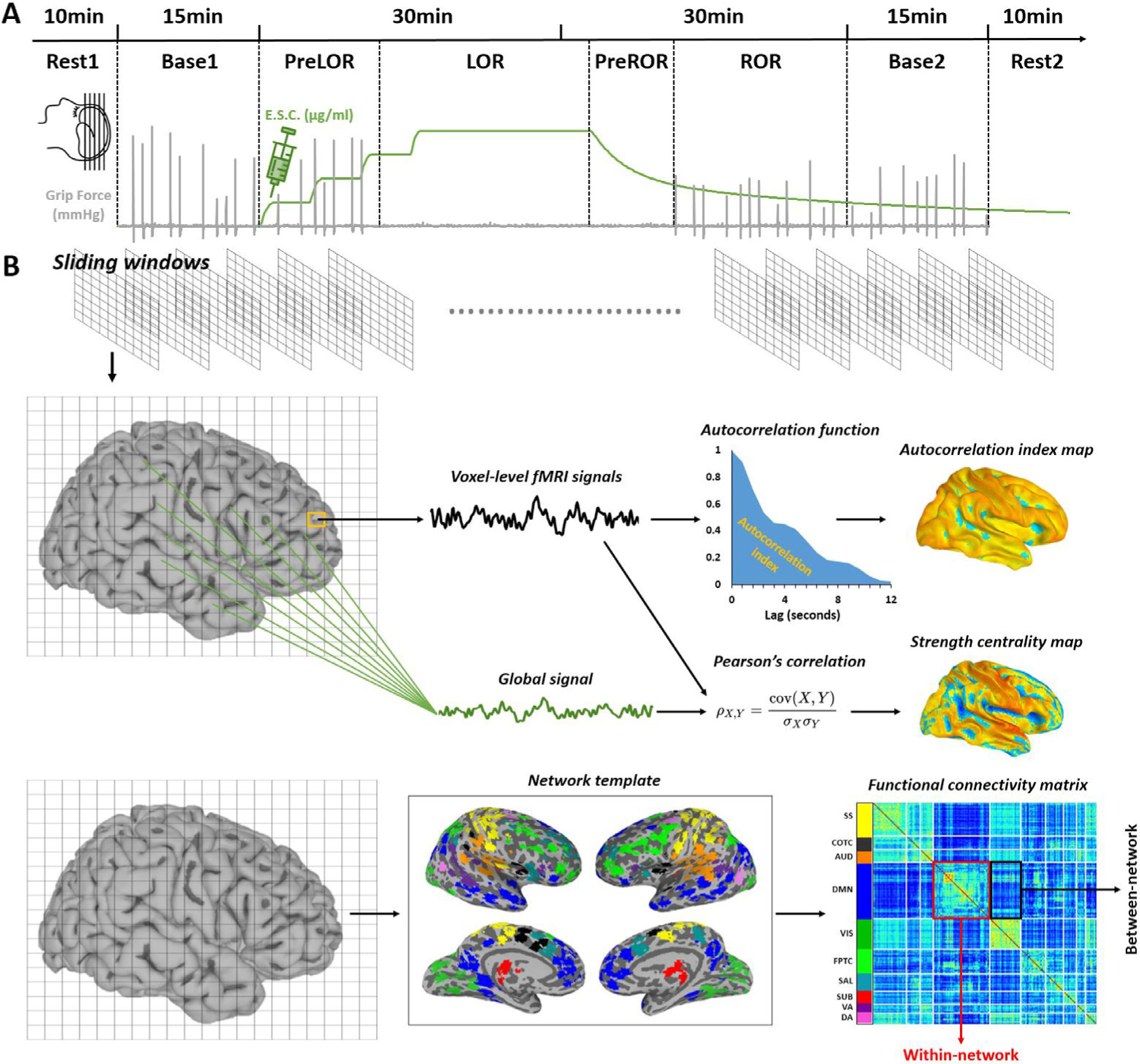
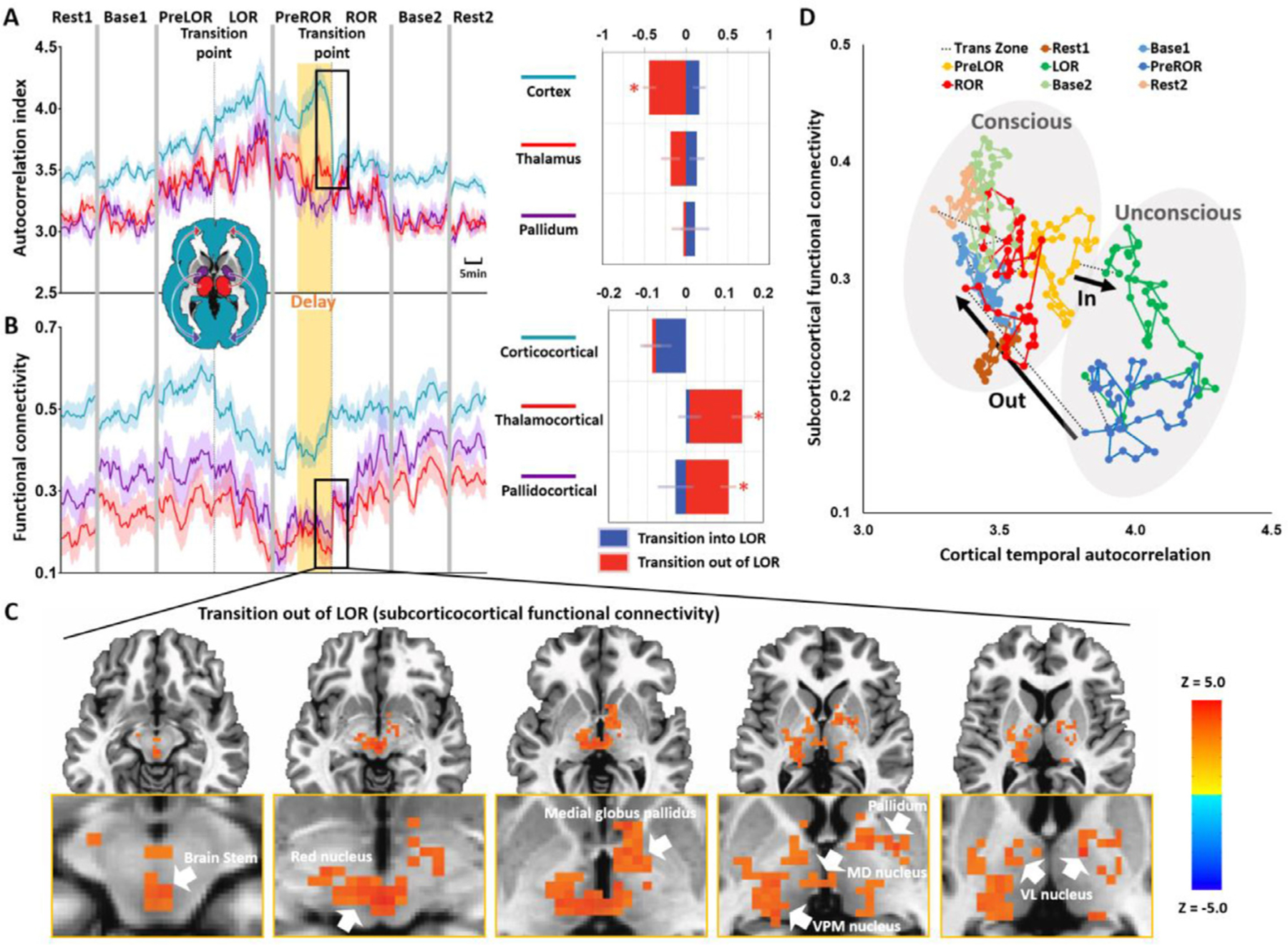
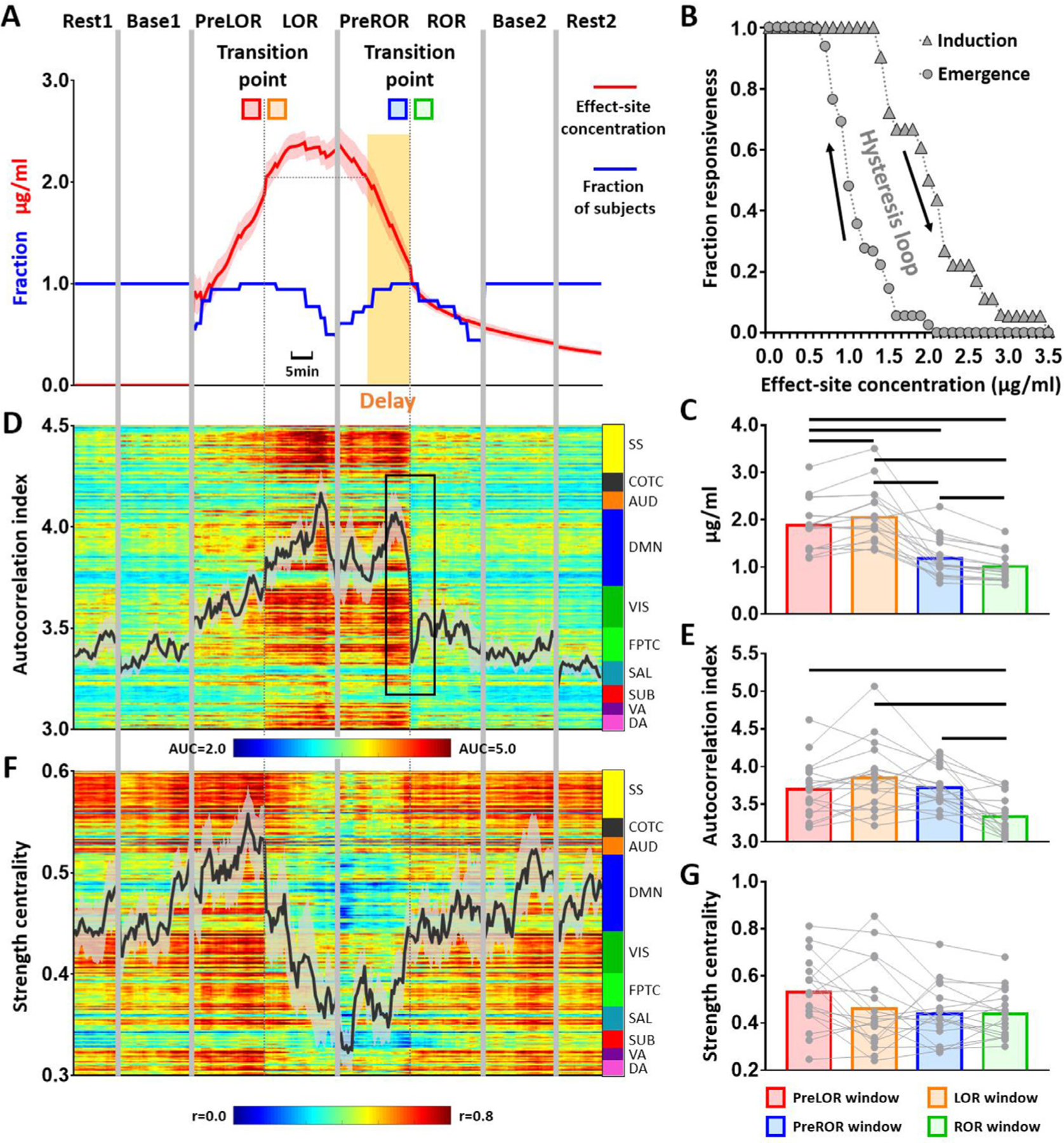
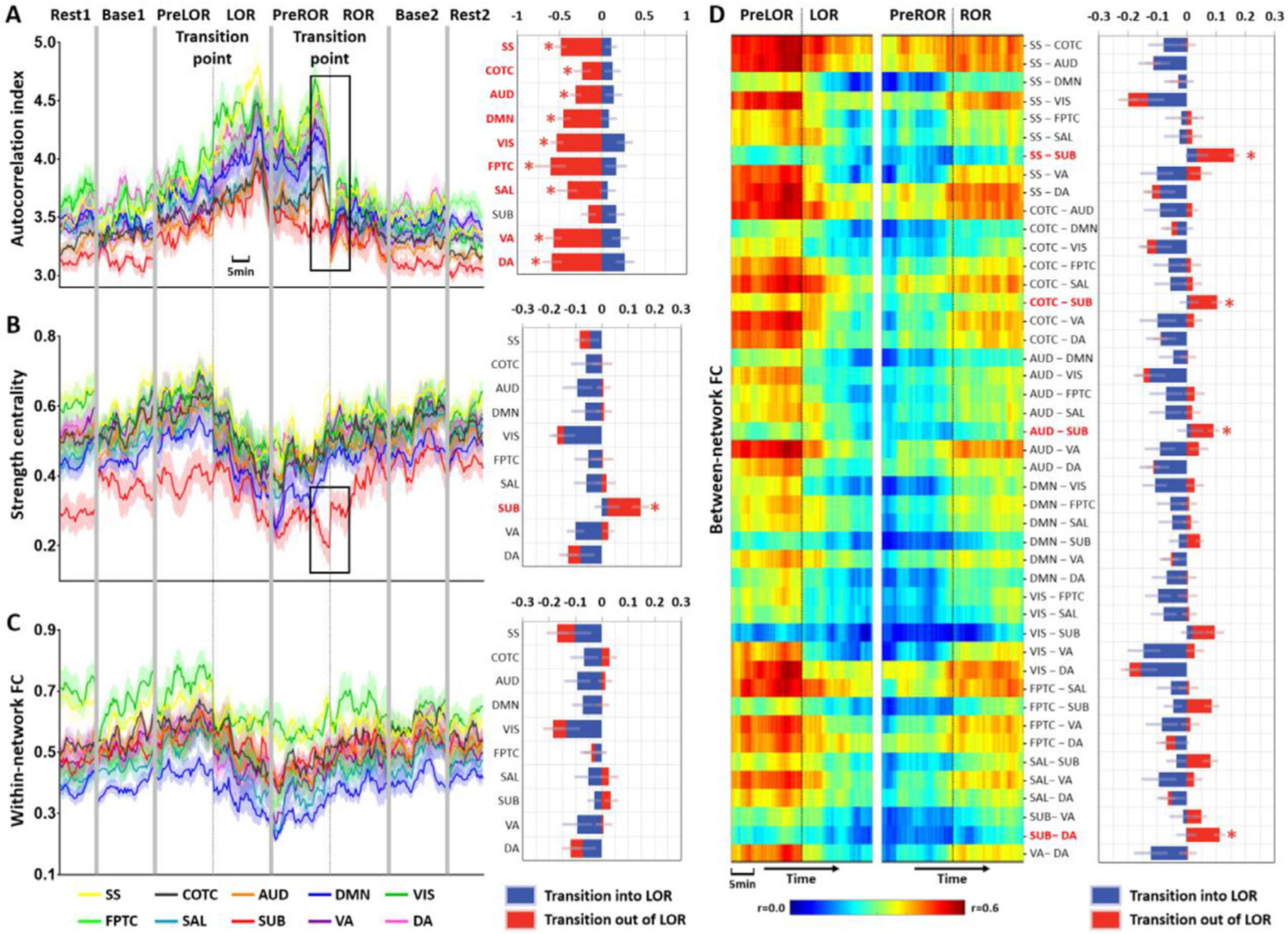
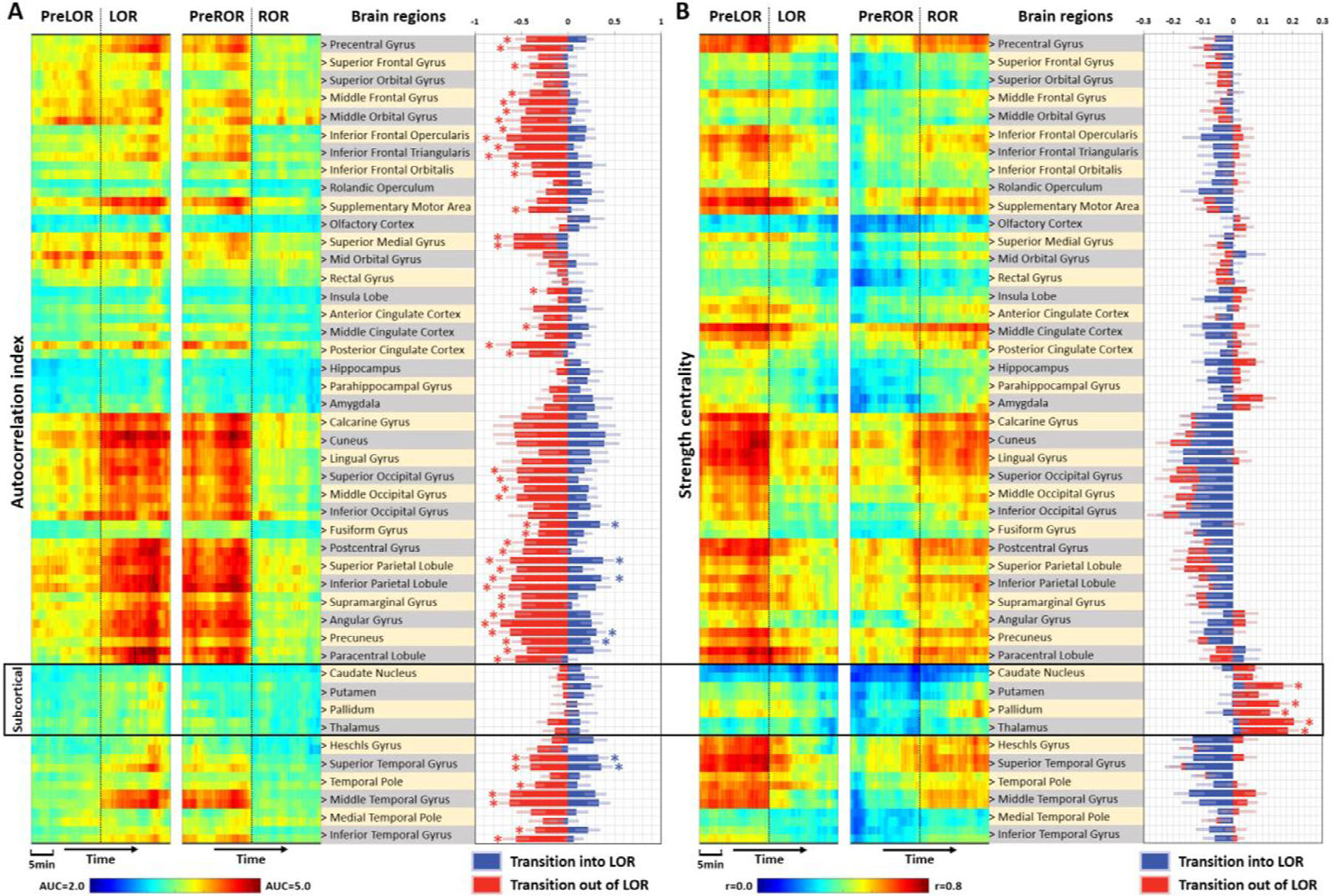
Anesthetics are known to disrupt neural interactions in cortical and subcortical brain circuits. While the effect of anesthetic drugs on consciousness is reversible, the neural mechanism mediating induction and recovery may be different. Insight into these distinct mechanisms can be gained from a systematic comparison of neural dynamics during slow induction of and emergence from anesthesia. To this end, we used functional magnetic resonance imaging (fMRI) data obtained in healthy volunteers before, during, and after the administration of propofol at incrementally adjusted target concentrations. We analyzed functional connectivity of corticocortical and subcorticocortical networks and the temporal autocorrelation of fMRI signal as an index of neural processing timescales. We found that en route to unconsciousness, temporal autocorrelation across the entire brain gradually increased, whereas functional connectivity gradually decreased. In contrast, regaining consciousness was associated with an abrupt restoration of cortical but not subcortical temporal autocorrelation and an abrupt boost of subcorticocortical functional connectivity. Pharmacokinetic effects could not account for the difference in neural dynamics between induction and emergence. We conclude that the induction and recovery phases of anesthesia follow asymmetric neural dynamics. A rapid increase in the speed of cortical neural processing and subcorticocortical neural interactions may be a mechanism that reboots consciousness.
麻醉剂已知会破坏皮质和皮质下脑回路中的神经相互作用。虽然麻醉药物对意识的影响是可逆的,但介导诱导和恢复的神经机制可能不同。从麻醉诱导和苏醒过程中神经动力学的系统比较中,可以深入了解这些不同的机制。为此,我们使用了在健康志愿者中在给予异丙酚时获得的功能磁共振成像(fMRI)数据,在递增调整的目标浓度之前、期间和之后。我们分析了皮质间和皮质下网络的功能连接以及 fMRI 信号的时间自相关作为神经处理时间尺度的指标。我们发现,在无意识的过程中,整个大脑的时间自相关逐渐增加,而功能连接逐渐减少。相比之下,恢复意识与皮质但不是皮质下的时间自相关的突然恢复以及皮质下皮质间功能连接的突然增强有关。药代动力学效应不能解释诱导和苏醒之间神经动力学的差异。我们得出结论,麻醉的诱导和恢复阶段遵循不对称的神经动力学。皮质神经处理速度和皮质下神经相互作用的快速增加可能是重新启动意识的一种机制。