Giesbrecht Gerald F, Bagshawe Mercedes, van Sloten Melinda, MacKinnon Anna L, Dhillon Ashley, van de Wouw Marcel, Vaghef-Mehrabany Elnaz, Rojas Laura, Cattani Danielle, Lebel Catherine, Tomfohr-Madsen Lianne
Department of Pediatrics, University of Calgary, Calgary, AB, Canada.
Alberta Children's Hospital Research Institute, Calgary, AB, Canada.
JMIR Res Protoc. 2021 Apr 28;10(4):e25407. doi: 10.2196/25407.
The COVID-19 pandemic and countermeasures implemented by governments around the world have led to dramatically increased symptoms of depression and anxiety. Pregnant individuals may be particularly vulnerable to the negative psychological effects of COVID-19 public health measures because they represent a demographic that is most affected by disasters and because pregnancy itself entails significant life changes that require major psychosocial and emotional adjustments.
The PdP study was designed to investigate the associations among exposure to objective hardship caused by the pandemic, perceived stress and psychological distress in pregnant individuals, and developmental outcomes in their offspring.
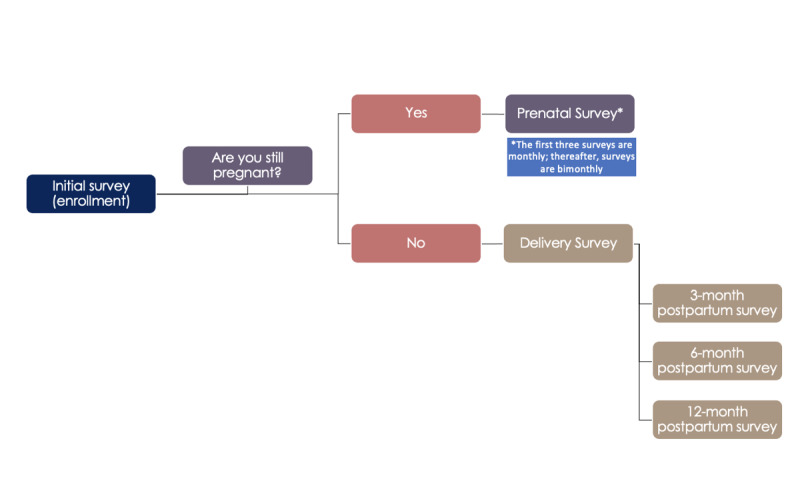
The PdP study comprises a prospective longitudinal cohort of individuals who were pregnant at enrollment, with repeated follow-ups during pregnancy and the postpartum period. Participants were eligible if they were pregnant, ≥17 years old, at ≤35 weeks of gestation at study enrollment, living in Canada, and able to read and write in English or French. At enrollment, participants completed an initial survey that assessed demographic and socioeconomic characteristics, previous pregnancies and births, prepregnancy health, health conditions during pregnancy, medications, psychological distress, social support, and hardships experienced because of the COVID-19 pandemic (eg, lost employment or a loved one dying). For the first three months following the initial survey, participants received a monthly email link to complete a follow-up survey that asked about their experiences since the previous survey. After three months, follow-up surveys were sent every other month to reduce participant burden. For each of these surveys, participants were first asked if they were still pregnant and then routed either to the next prenatal survey or to the delivery survey. In the postpartum period, surveys were sent at 3, 6, and 12 months of infant age to assess maternal stress, psychological distress, and infant development.
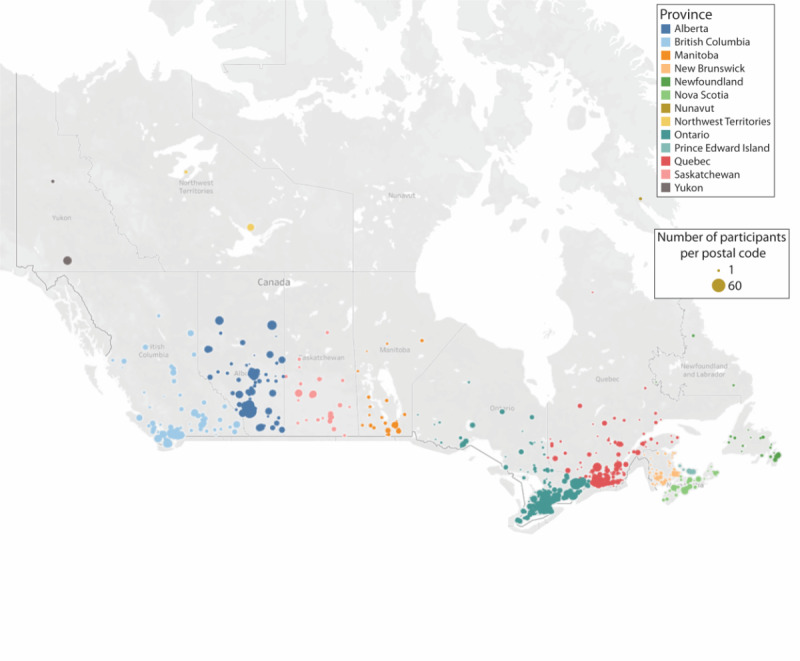
Participant recruitment via social media (Facebook and Instagram) began on April 5, 2020, and is ongoing. As of April 2021, more than 11,000 individuals have started the initial survey. Follow-up data collection is ongoing.
This longitudinal investigation seeks to elucidate the associations among hardships, maternal psychological distress, child development during the COVID-19 pandemic, and risk and resilience factors that amplify or ameliorate these associations. The findings of this study are intended to generate knowledge about the psychological consequences of pandemics on pregnant individuals and point toward prevention and intervention targets.
INTERNATIONAL REGISTERED REPORT IDENTIFIER (IRRID): DERR1-10.2196/25407.
新冠疫情以及世界各国政府采取的应对措施导致抑郁和焦虑症状大幅增加。孕妇可能特别容易受到新冠疫情公共卫生措施的负面心理影响,因为她们是受灾难影响最大的人群,而且怀孕本身会带来重大的生活变化,需要进行重大的心理社会和情绪调整。
孕期压力与发育项目(PdP)研究旨在调查孕妇因疫情面临的客观困难、感知到的压力和心理困扰之间的关联,以及这些因素对其后代发育结果的影响。
孕期压力与发育项目研究包括一个前瞻性纵向队列,研究对象为入组时已怀孕的个体,在孕期和产后进行多次随访。参与者需满足以下条件:怀孕、年龄≥17岁、研究入组时妊娠≤35周、居住在加拿大、能够用英语或法语读写。入组时,参与者完成一份初始调查问卷,评估人口统计学和社会经济特征、既往妊娠和分娩情况、孕前健康状况、孕期健康状况、用药情况、心理困扰、社会支持以及因新冠疫情经历的困难(如失业或亲人死亡)。在初始调查后的前三个月,参与者每月会收到一封电子邮件链接,用于完成一份随访调查问卷,询问自上次调查以来的经历。三个月后,每隔一个月发送一次随访调查问卷,以减轻参与者负担。对于每份调查问卷,首先询问参与者是否仍怀孕,然后根据情况引导其进行下一次产前调查或分娩调查。在产后阶段,分别在婴儿3个月、6个月和12个月时发送调查问卷,以评估母亲的压力、心理困扰和婴儿发育情况。
通过社交媒体(脸书和照片墙)招募参与者于2020年4月5日开始,目前仍在进行。截至2021年4月,已有超过11,000人开始进行初始调查。随访数据收集工作正在进行中。
这项纵向调查旨在阐明新冠疫情期间困难、母亲心理困扰、儿童发育之间的关联,以及放大或改善这些关联的风险和复原力因素。本研究结果旨在生成有关疫情对孕妇心理影响的知识,并指明预防和干预目标。
国际注册报告识别码(IRRID):DERR1-10.2196/25407