Lu Jiayu, Gong Ying, Wei Xinhong, Yao Zhenyu, Yang Rui, Xin Jinxing, Gao Ling, Shao Shanshan
Department of Endocrinology, Shandong Provincial Hospital Affiliated to Shandong First Medical University, 544, Jing 4 Rd., Jinan, 250021, Shandong, China.
Shandong Provincial Key Laboratory of Endocrinology and Lipid Metabolism, Jinan, 250021, Shandong, China.
Nutr Metab (Lond). 2021 Apr 13;18(1):40. doi: 10.1186/s12986-021-00570-3.
To meet the needs of foetal growth and development, marked changes in lipid profiles occur during pregnancy. Abnormal lipid metabolism is often accompanied by adverse pregnancy outcomes, which seriously affect maternal and infant health. Further understanding of the mechanism of lipid metabolism during pregnancy would be helpful to reduce the incidence of adverse pregnancy outcomes.
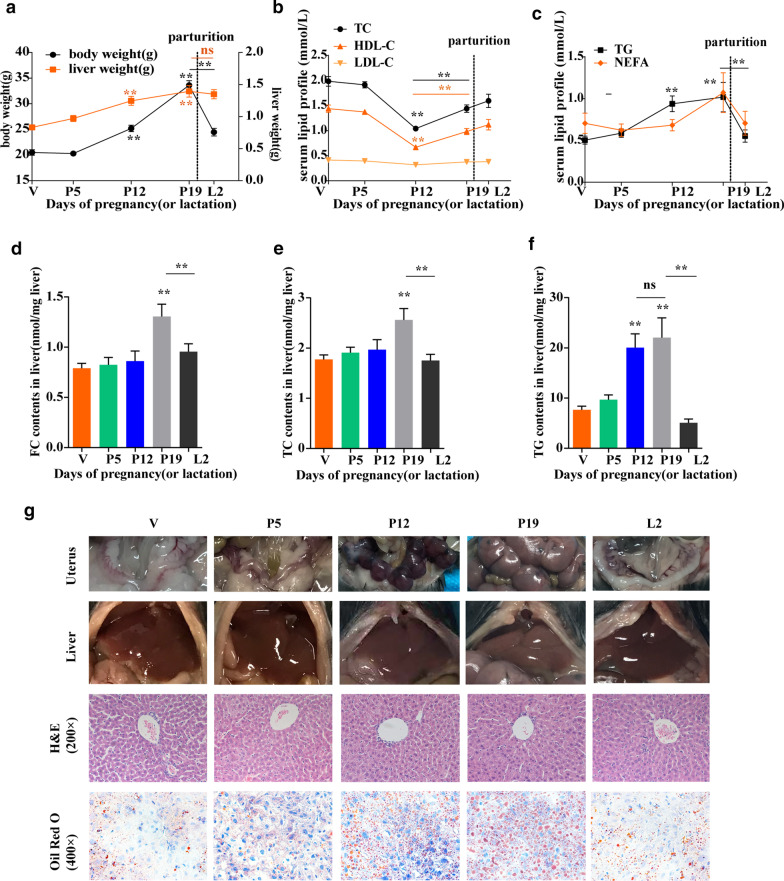
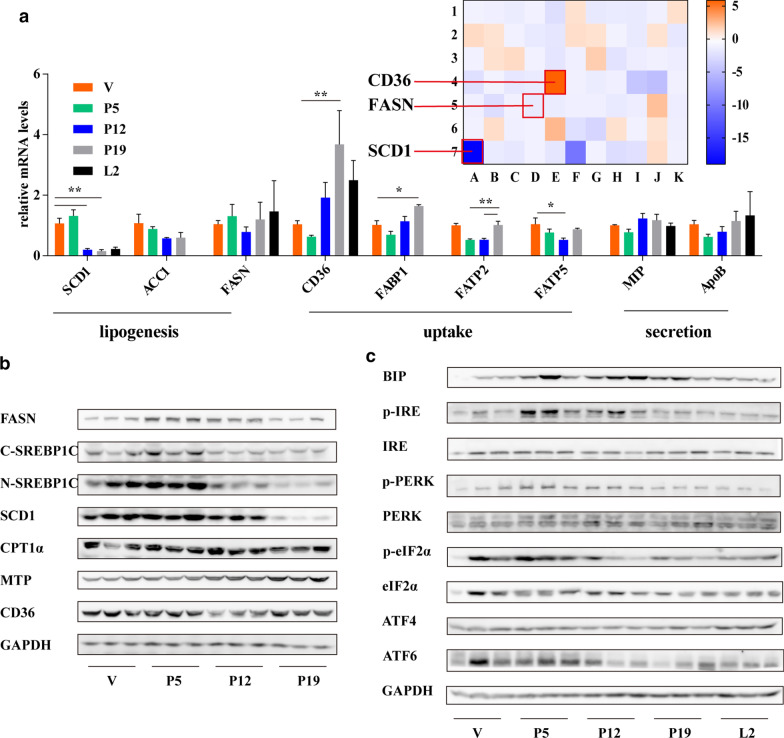
Pregnant mice were euthanized in the virgin (V) state, on day 5 of pregnancy (P5), on day 12 of pregnancy (P12), on day 19 of pregnancy (P19) and on lactation day 2 (L2). Body weight and energy expenditure were assessed to evaluate the general condition of the mice. Triglyceride (TG) levels, the cholesterol content in the liver, liver histopathology, serum lipid profiles, serum β-hydroxybutyrate levels, fibroblast growth factor-21 (FGF21) levels and the levels of relevant target genes were analysed.
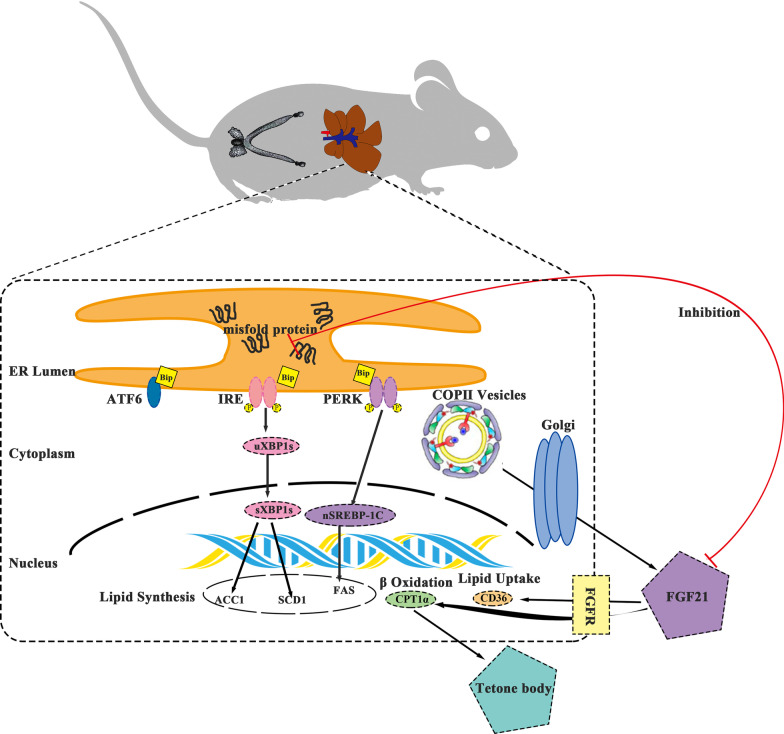
During early pregnancy, anabolism was found to play a major role in liver lipid deposition. In contrast, advanced pregnancy is an overall catabolic condition associated with both increased energy expenditure and reduced lipogenesis. Moreover, the accumulation of hepatic TG did not appear until P12, after the onset of endoplasmic reticulum (ER) stress on P5. Then, catabolism was enhanced, and FGF21 secretion was increased in the livers of female mice in late pregnancy. We further found that the expression of sec23a, which as the coat protein complex II (COPII) vesicle coat proteins regulates the secretion of FGF21, in the liver was decreased on P19.
With the activation of ER stress and increased FGF21 secretion during pregnancy, the hepatic TG content changes, suggesting that ER stress and FGF21 may play an important role in balancing lipid homeostasis and meeting maternal and infant energy requirements in late pregnancy.
为满足胎儿生长发育的需求,孕期脂质谱会发生显著变化。脂质代谢异常常伴有不良妊娠结局,严重影响母婴健康。进一步了解孕期脂质代谢机制有助于降低不良妊娠结局的发生率。
将处于未孕(V)状态、妊娠第5天(P5)、妊娠第12天(P12)、妊娠第19天(P19)和哺乳第2天(L2)的孕鼠安乐死。评估体重和能量消耗以评价小鼠的一般状况。分析甘油三酯(TG)水平、肝脏中的胆固醇含量、肝脏组织病理学、血清脂质谱、血清β-羟基丁酸水平、成纤维细胞生长因子-21(FGF21)水平及相关靶基因的水平。
在妊娠早期,合成代谢在肝脏脂质沉积中起主要作用。相反,妊娠晚期是一种总体分解代谢状态,与能量消耗增加和脂肪生成减少相关。此外,肝脏TG的积累直到P12才出现,此前在P5内质网(ER)应激已开始。然后,分解代谢增强,妊娠晚期雌性小鼠肝脏中FGF21分泌增加。我们进一步发现,作为II型被膜小泡蛋白复合物(COPII)囊泡被膜蛋白调节FGF21分泌的sec23a在肝脏中的表达在P19时降低。
随着孕期ER应激的激活和FGF21分泌增加,肝脏TG含量发生变化,提示ER应激和FGF21可能在妊娠晚期平衡脂质稳态及满足母婴能量需求方面发挥重要作用。