Yuen Wallace, Golin Andrew P, Flannigan Ryan, Schlegel Peter N
Department of Urologic Sciences, University of British Columbia, Vancouver, BC, Canada.
Department of Urology, Weill Cornell Medicine, New York, NY, USA.
Transl Androl Urol. 2021 Mar;10(3):1442-1456. doi: 10.21037/tau.2020.03.35.
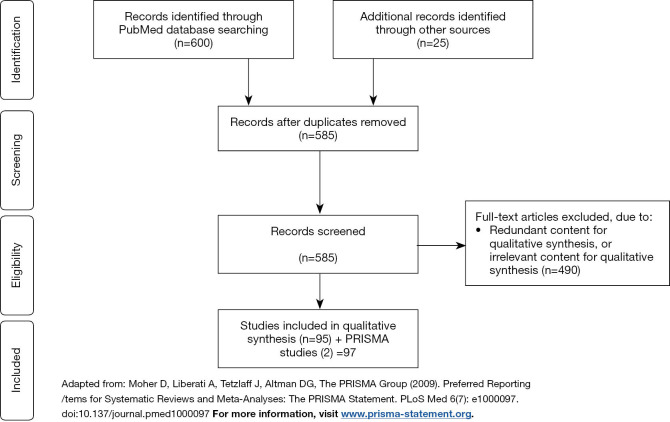
In this review of Y chromosome microdeletions, azoospermia factor (AZF) deletion subtypes, histological features and microTESE sperm retrieval rates are summarized after a systematic literature review. PubMed was searched and papers were identified using Preferred Reporting Items for Systematic Reviews and Meta-Analyses (PRISMA) guidelines. Approximately half of infertile couples have a male factor contributing to their infertility. One of the most common genetic etiologies are Y chromosome microdeletions. Men with Y chromosome microdeletions may have rare sperm available in the ejaculate or undergo surgical sperm retrieval and subsequent intracytoplasmic sperm injection to produce offspring. Azoospermia or severe oligozoospermia are the most common semen analysis findings found in men with Y chromosome microdeletions, associated with impaired spermatogenesis. Men with complete deletions of azoospermia factor a, b, or a combination of any loci have severely impaired spermatogenesis and are nearly always azoospermic with no sperm retrievable from the testis. Deletions of the azoospermia factor c or d often have sperm production and the highest likelihood of a successful sperm retrieval. In men with AZFc deletions, histologically, 46% of men demonstrate Sertoli cell only syndrome on biopsy, whereas 38.2% have maturation arrest and 15.7% have hypospermatogenesis. The microTESE sperm retrieval rates in AZFc-deleted men range from 13-100% based on the 32 studies analyzed, with a mean sperm retrieval rate of 47%.
在对Y染色体微缺失的这篇综述中,我们在系统的文献综述后总结了无精子症因子(AZF)缺失亚型、组织学特征和显微睾丸精子提取率。检索了PubMed,并使用系统评价和Meta分析的首选报告项目(PRISMA)指南来识别论文。大约一半的不孕夫妇存在男性因素导致不孕。最常见的遗传病因之一是Y染色体微缺失。患有Y染色体微缺失的男性可能在射精中存在罕见精子,或者接受手术取精并随后进行胞浆内单精子注射以生育后代。无精子症或严重少精子症是Y染色体微缺失男性最常见的精液分析结果,与精子发生受损有关。完全缺失无精子症因子a、b或任何位点组合的男性,其精子发生严重受损,几乎总是无精子症,无法从睾丸中获取精子。无精子症因子c或d的缺失通常有精子产生,并且成功取精的可能性最高。在患有AZFc缺失的男性中,从组织学上看,46%的男性活检显示为唯支持细胞综合征,而38.2%有成熟停滞,15.7%有精子发生低下。根据分析的32项研究,AZFc缺失男性的显微睾丸精子提取率在13%-100%之间,平均取精率为47%。