Department of Genetics, Faculty of Biological Sciences, North Tehran Branch, Islamic Azad University, Tehran, Iran.
Department of Biology, Faculty of Biological Sciences, North Tehran Branch, Islamic Azad University, Tehran, Iran.
Mol Genet Genomic Med. 2024 Feb;12(2):e2392. doi: 10.1002/mgg3.2392.
Recent studies have linked recurrent pregnancy loss (RPL) to abnormalities in the sperm genome, specifically microdeletions in the azoospermia factor (AZF) region. This study investigated the potential association between Y chromosome microdeletions in the AZF region and RPL in Iranian couples.
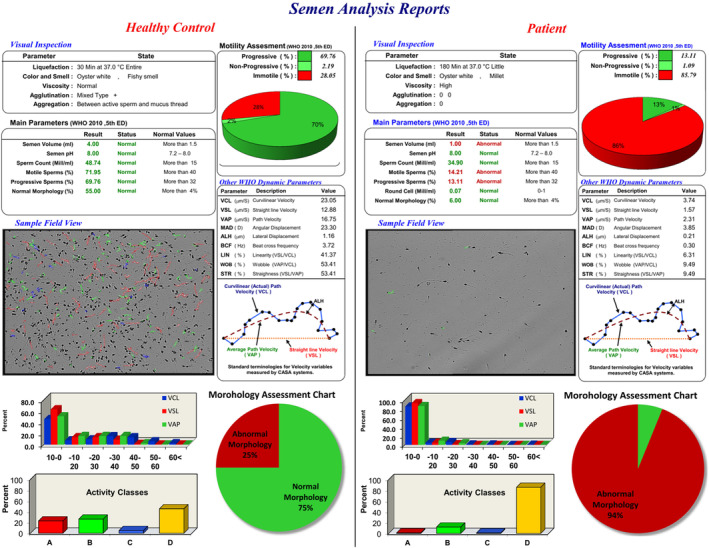
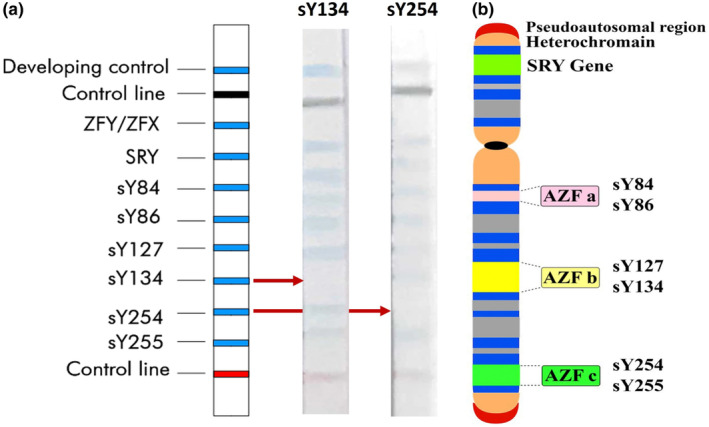
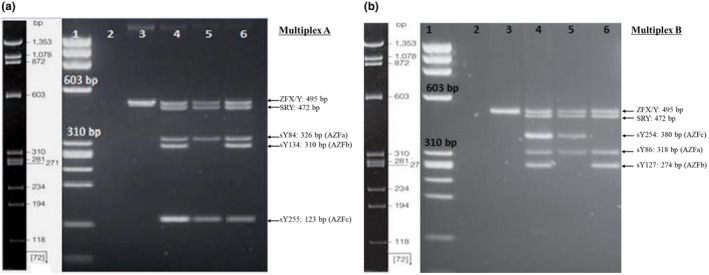
The research presents a case-control study of 240 men: 120 whose partners experienced recurrent miscarriage, and 120 who had successful pregnancies without history of miscarriage. The study used semen parameters, hormone analyses, and microdeletion analysis via multiplex PCR and the YChromStrip kit. Thus, the sequence-tagged site (STS) markers of AZFa (sY84, sY86), AZFb (sY127, sY134), and AZFc (sY254, sY255) regions were examined.
The variations in semen parameters and sex hormone levels between cases and controls are suggest impaired testicular function in men whose partners had recurrent miscarriages (p < 0.05). Furthermore, the study revealed a negative correlation between sperm count and follicle-stimulating hormone (FSH) level, and a positive one between sperm motility and testosterone concentration. There were no microdeletions in the control group, while the RPL group showed 20 deletions in AZFb (sY134) (16.66%) and 10 deletions each in AZFb (sY127) (8.33%) and AZFc (sY254) (8.33%).
Microdeletions in sY134 (AZFb) were significantly associated with RPL in Iranian men (p = 0.03). AZF microdeletion screening in couples with RPL can provide valuable information for ethnical genetic counseling and management of recurrent miscarriage. Further studies on larger populations or across various ethnic groups, conclusions and the inclusion of other factors like epigenetic changes explain the role of AZF microdeletions in RPL.
最近的研究将复发性妊娠丢失(RPL)与精子基因组的异常联系起来,特别是在无精子症因子(AZF)区域的微缺失。本研究调查了伊朗夫妇中 Y 染色体 AZF 区域微缺失与 RPL 之间的潜在关联。
本研究采用病例对照研究,共纳入 240 名男性:120 名其伴侣经历过复发性流产,120 名有成功妊娠且无流产史。研究使用精液参数、激素分析以及通过多重 PCR 和 YChromStrip 试剂盒进行微缺失分析。因此,检查了 AZFa(sY84、sY86)、AZFb(sY127、sY134)和 AZFc(sY254、sY255)区域的序列标记位点(STS)标记。
病例组和对照组之间精液参数和性激素水平的变化表明,其伴侣有复发性流产的男性睾丸功能受损(p<0.05)。此外,研究还发现精子计数与促卵泡激素(FSH)水平呈负相关,与精子活力呈正相关,与睾丸酮浓度呈正相关。对照组无微缺失,而 RPL 组在 AZFb(sY134)中发现 20 个缺失(16.66%),在 AZFb(sY127)和 AZFc(sY254)中各有 10 个缺失(8.33%)。
伊朗男性 sY134(AZFb)的微缺失与 RPL 显著相关(p=0.03)。在 RPL 夫妇中进行 AZF 微缺失筛查可为种族遗传咨询和复发性流产的管理提供有价值的信息。进一步的研究需要在更大的人群或不同的种族群体中进行,以得出结论,并纳入其他因素,如表观遗传变化,以解释 AZF 微缺失在 RPL 中的作用。