Universidade de São Paulo, Escola de Enfermagem de Ribeirão Preto, PAHO/WHO Collaborating Centre for Nursing Research Development, Ribeirão Preto, SP, Brazil.
Scholarship holder at the Coordenação de Aperfeiçoamento de Pessoal de Nível Superior (CAPES), Brazil.
Rev Lat Am Enfermagem. 2021 Apr 1;29:e3416. doi: 10.1590/1518-8345.4668.3416. eCollection 2021.
to analyze evidence concerning the feasibility of antimicrobial-impregnated fabrics in preventing and controlling microbial transmission in health services.
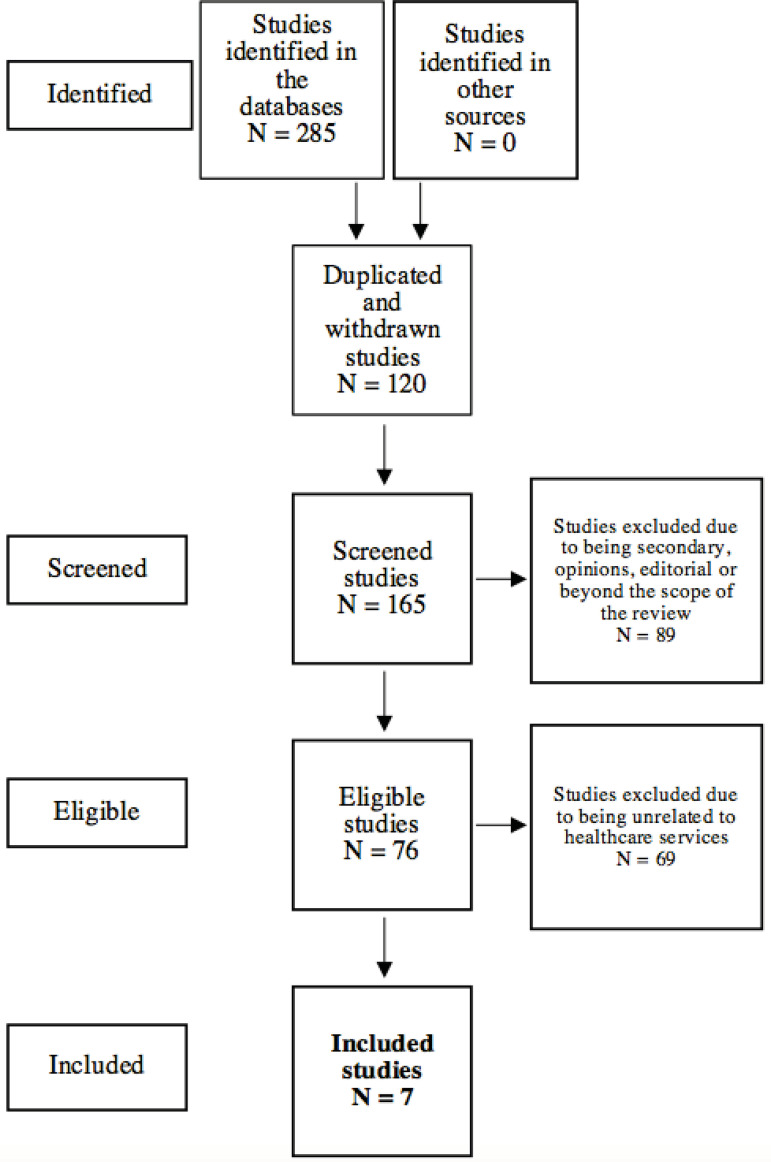
an integrative review using the following databases: MEDLINE (via PubMed), Web of Science, Cumulative Index to Nursing and Allied Health Literature (CINAHL), Scopus, and Latin American and Caribbean Health Sciences Literature (LILACS), regardless of language and date of publication. Seven studies were included in the analysis to verify the types of fabrics and substances used to impregnate the fabrics, applicability in health services, and decrease in microbial load.
silver nanoparticles and copper oxide are the main antimicrobial substances used to impregnate the fabrics. The patients' use of these fabrics, such as in bed and bath linens and clothing, was more effective in reducing antimicrobial load than in health workers' uniforms.
the use of these antimicrobial-impregnated textiles, especially by patients, is a viable alternative to prevent and control microbial transmission in health services. Implementing these fabrics in health workers' uniforms requires further studies, however, to verify its effectiveness in decreasing microbial load in clinical practice.
分析抗菌织物在预防和控制卫生服务中微生物传播的可行性的证据。
使用以下数据库进行综合评价:MEDLINE(通过 PubMed)、Web of Science、护理与健康相关文献累积索引(CINAHL)、Scopus 和拉丁美洲和加勒比健康科学文献(LILACS),无论语言和出版日期如何。分析中纳入了 7 项研究,以验证用于浸渍织物的织物类型和物质、在卫生服务中的适用性以及微生物负荷的降低情况。
纳米银和氧化铜是用于浸渍织物的主要抗菌物质。与卫生工作者制服相比,患者使用这些织物(如床上用品和浴帘以及衣物)在降低抗菌负荷方面更有效。
使用这些抗菌浸渍纺织品,特别是患者使用,是预防和控制卫生服务中微生物传播的可行替代方法。然而,在卫生工作者制服中实施这些织物需要进一步的研究,以验证其在减少临床实践中微生物负荷方面的有效性。