National Jewish Health, Denver, CO, USA.
University of Minnesota, Minneapolis, MN, USA.
Sleep. 2021 Jul 9;44(7). doi: 10.1093/sleep/zsab048.
To examine the impact of changing school start times on sleep for primary (elementary school: ES) and secondary (middle and high school: MS/HS) students.
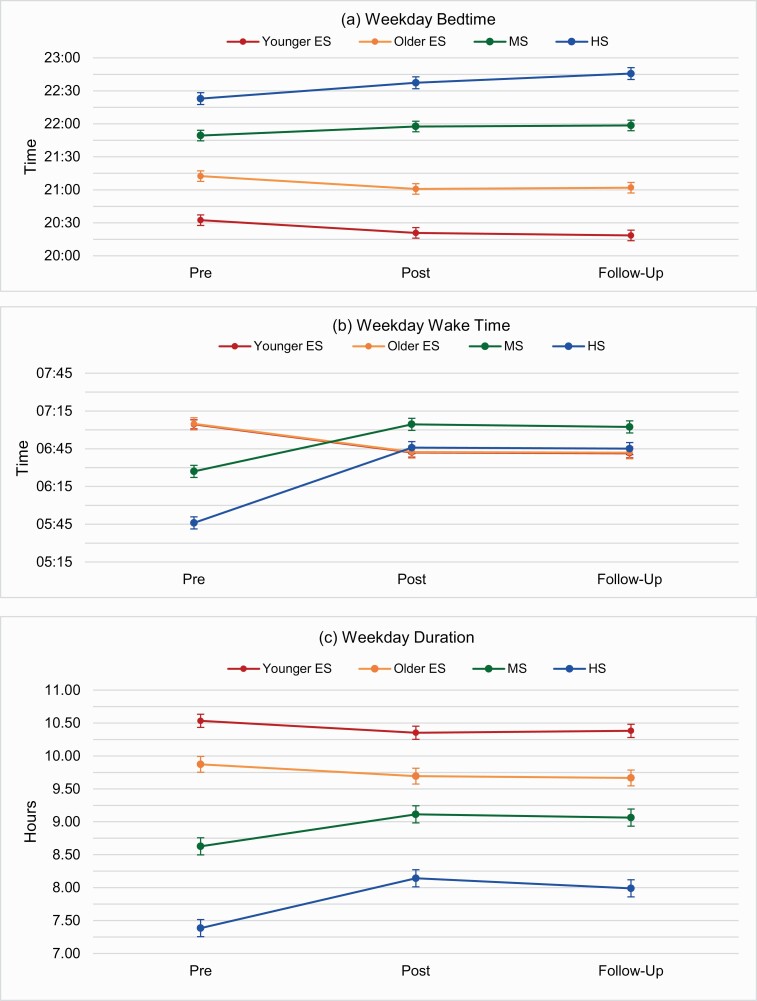
Students (grades 3-12) and parents (grades K-12) were surveyed annually, before and for 2 years after school start time changes (ES: 60 min earlier, MS: 40-60 min later; HS: 70 min later). Student sleep and daytime sleepiness were measured with school-administered student surveys and parent-proxy online surveys.
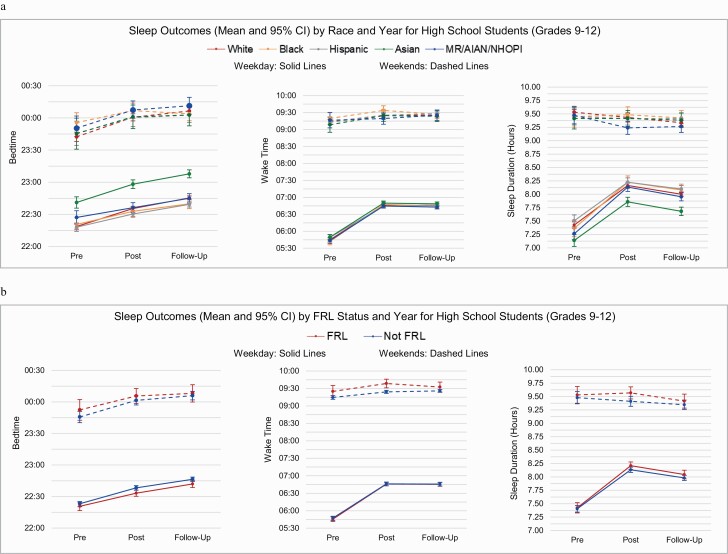
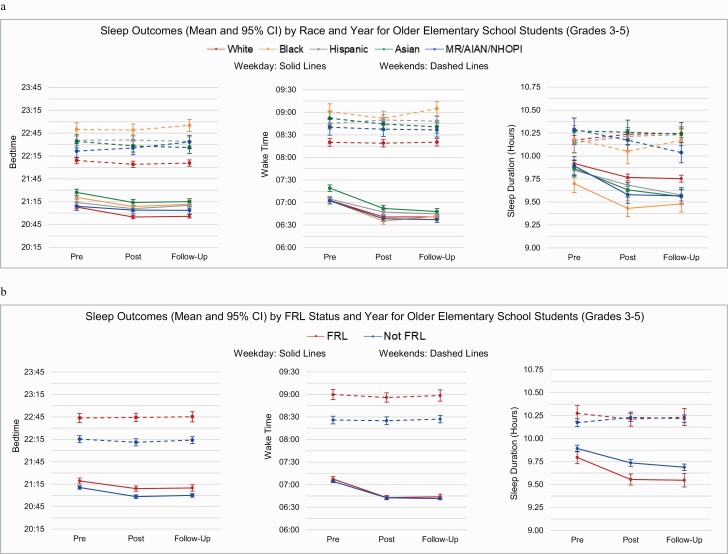
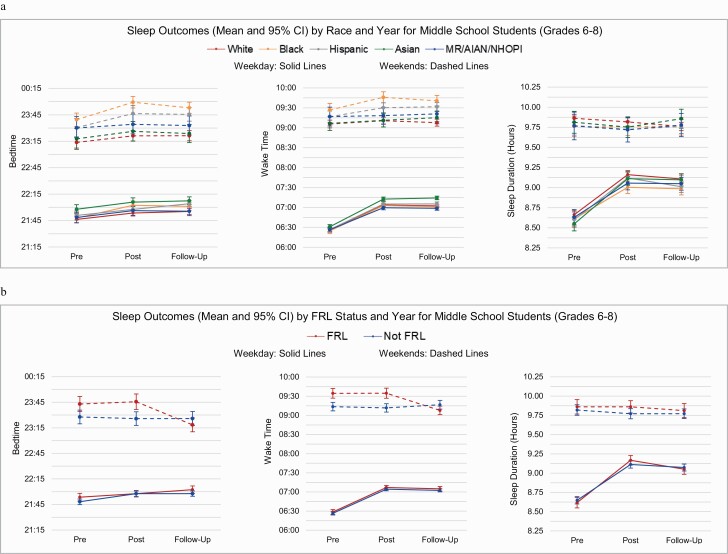
Approximately 28,000 students annually completed surveys (~55% White, ~21% free/reduced lunch [FRL]). One-year post-change, weekday bedtimes and wake times were slightly earlier for ES students, with an 11-min decrease in sleep duration. MS and HS students reported slightly later weekday bedtimes, significantly later wake times, and significantly longer sleep duration (MS: 29 min; HS: 45 min). The percent of ES students reporting sufficient sleep duration, poor sleep quality, or daytime sleepiness did not change, but the percent of MS and HS students reporting sufficient sleep duration significantly increased and clinically significant daytime sleepiness decreased. All results were maintained at the 2-year follow-up. Benefits of later start times were similar across racial and free/reduced lunch groups.
This is the first large scale, longitudinal, and representative study to concurrently examine the impact of changing school start times across students in primary/secondary school. Findings suggest a minimal impact of earlier start times on ES students' sleep or daytime sleepiness, while further supporting the significant benefits of delaying MS and HS start times on student sleep and daytime sleepiness.
研究改变上学时间对小学生(小学:ES)和中学生(初中和高中:MS/HS)睡眠的影响。
学生(3-12 年级)和家长(K-12 年级)在上学时间改变前一年和改变后两年每年进行一次调查(ES:提前 60 分钟,MS:推迟 40-60 分钟;HS:推迟 70 分钟)。学生的睡眠和白天困倦度通过学校管理的学生调查和家长代理在线调查进行测量。
每年约有 28000 名学生完成了调查(约 55%为白人,约 21%享受免费/减价午餐[FRL])。改变后的一年,ES 学生的工作日就寝时间和起床时间略有提前,睡眠时间减少了 11 分钟。MS 和 HS 学生报告工作日就寝时间略晚,起床时间明显晚,睡眠时间明显延长(MS:29 分钟;HS:45 分钟)。报告睡眠时间充足、睡眠质量差或白天困倦的 ES 学生比例没有变化,但报告睡眠时间充足的 MS 和 HS 学生比例显著增加,白天困倦程度显著降低。所有结果在两年后的随访中都得到了维持。较晚的开始时间对不同种族和享受免费/减价午餐的学生群体都有类似的益处。
这是第一项大规模、纵向和具有代表性的研究,同时研究了改变小学/中学学生上学时间对其睡眠或白天困倦的影响。研究结果表明,较早的开始时间对 ES 学生的睡眠或白天困倦几乎没有影响,同时进一步支持了推迟 MS 和 HS 开始时间对学生睡眠和白天困倦的显著益处。