Department of Neurology, Vagelos College of Physicians and Surgeons, Columbia University Irving Medical Center, and the New York Presbyterian Hospital, New York, NY 10032, USA.
Department of Medicine, Division of Infectious Diseases, Vagelos College of Physicians and Surgeons, Columbia University Irving Medical Center, and the NewYork Presbyterian Hospital, New York, NY 10032, USA.
Brain. 2021 Oct 22;144(9):2696-2708. doi: 10.1093/brain/awab148.
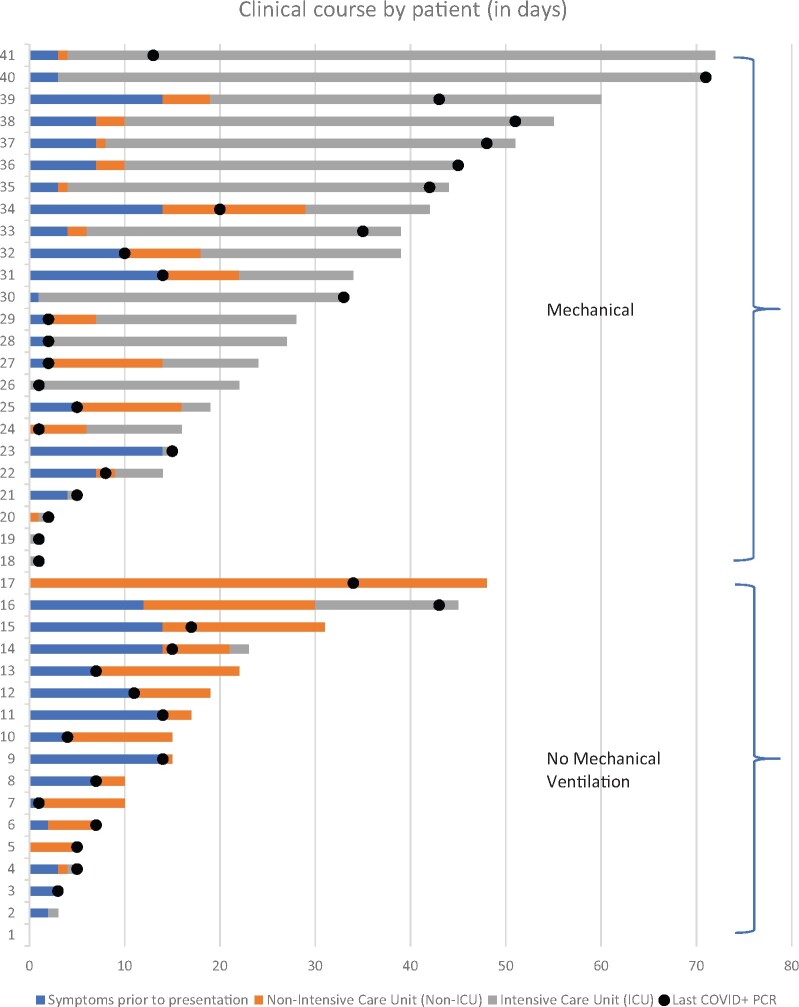
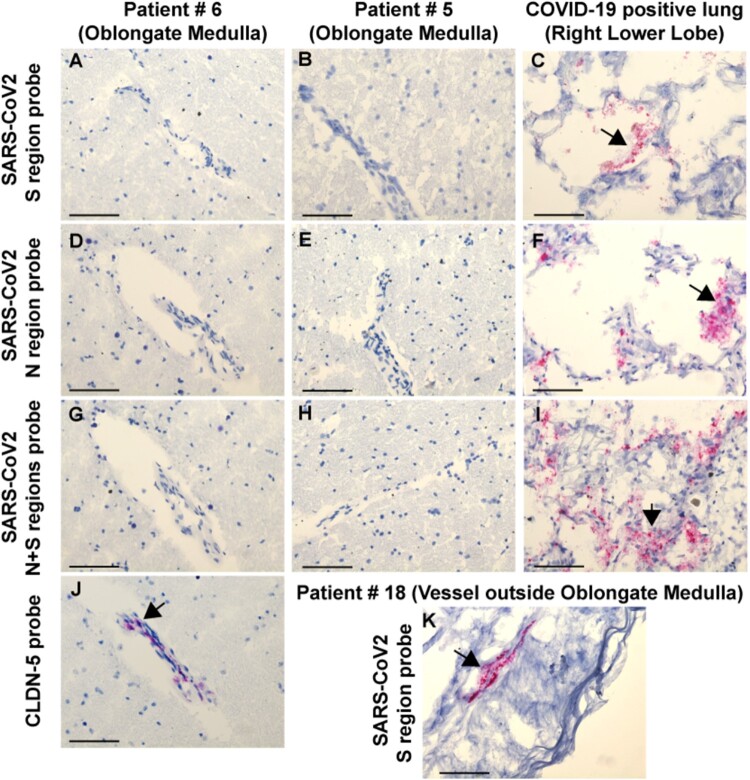
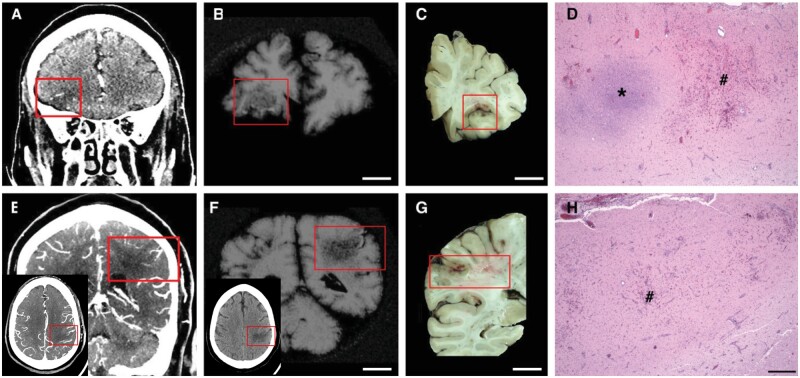
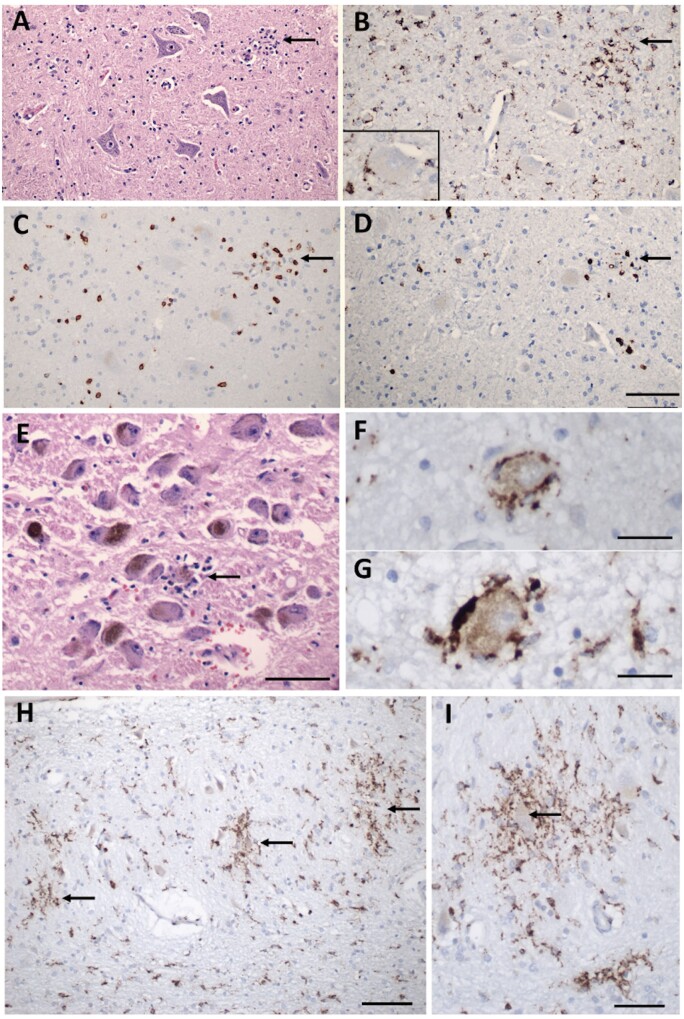
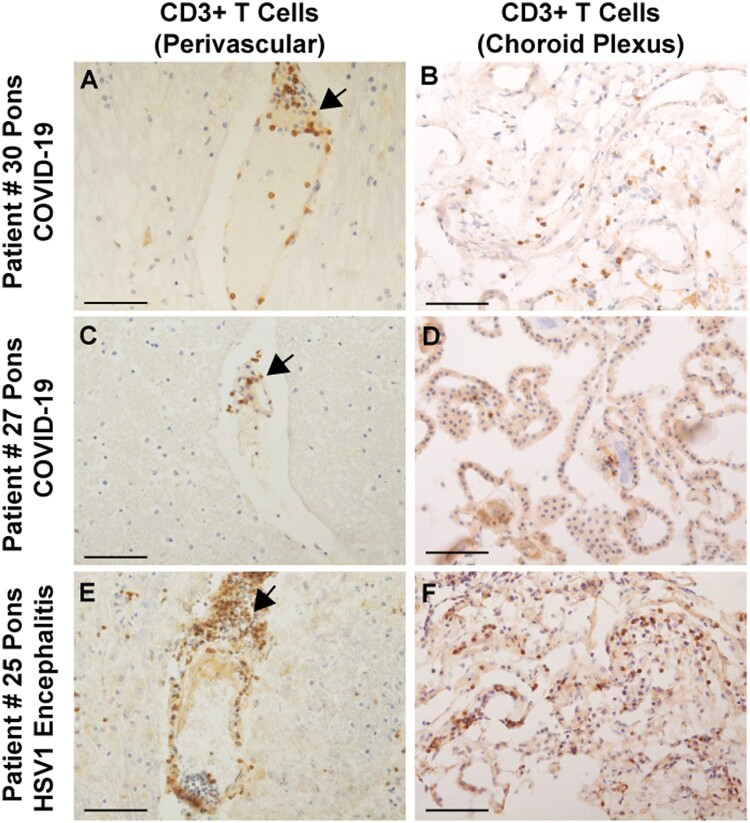
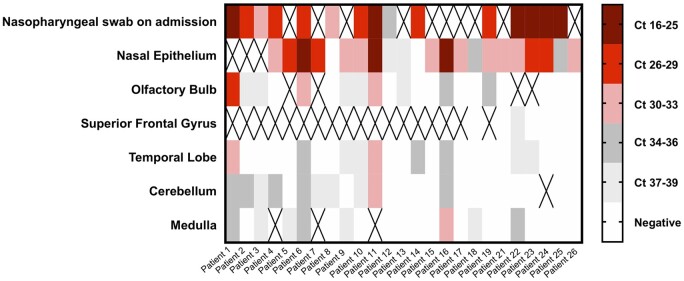
Many patients with SARS-CoV-2 infection develop neurological signs and symptoms; although, to date, little evidence exists that primary infection of the brain is a significant contributing factor. We present the clinical, neuropathological and molecular findings of 41 consecutive patients with SARS-CoV-2 infections who died and underwent autopsy in our medical centre. The mean age was 74 years (38-97 years), 27 patients (66%) were male and 34 (83%) were of Hispanic/Latinx ethnicity. Twenty-four patients (59%) were admitted to the intensive care unit. Hospital-associated complications were common, including eight patients (20%) with deep vein thrombosis/pulmonary embolism, seven (17%) with acute kidney injury requiring dialysis and 10 (24%) with positive blood cultures during admission. Eight (20%) patients died within 24 h of hospital admission, while 11 (27%) died more than 4 weeks after hospital admission. Neuropathological examination of 20-30 areas from each brain revealed hypoxic/ischaemic changes in all brains, both global and focal; large and small infarcts, many of which appeared haemorrhagic; and microglial activation with microglial nodules accompanied by neuronophagia, most prominently in the brainstem. We observed sparse T lymphocyte accumulation in either perivascular regions or in the brain parenchyma. Many brains contained atherosclerosis of large arteries and arteriolosclerosis, although none showed evidence of vasculitis. Eighteen patients (44%) exhibited pathologies of neurodegenerative diseases, which was not unexpected given the age range of our patients. We examined multiple fresh frozen and fixed tissues from 28 brains for the presence of viral RNA and protein, using quantitative reverse-transcriptase PCR, RNAscope® and immunocytochemistry with primers, probes and antibodies directed against the spike and nucleocapsid regions. The PCR analysis revealed low to very low, but detectable, viral RNA levels in the majority of brains, although they were far lower than those in the nasal epithelia. RNAscope® and immunocytochemistry failed to detect viral RNA or protein in brains. Our findings indicate that the levels of detectable virus in coronavirus disease 2019 brains are very low and do not correlate with the histopathological alterations. These findings suggest that microglial activation, microglial nodules and neuronophagia, observed in the majority of brains, do not result from direct viral infection of brain parenchyma, but more likely from systemic inflammation, perhaps with synergistic contribution from hypoxia/ischaemia. Further studies are needed to define whether these pathologies, if present in patients who survive coronavirus disease 2019, might contribute to chronic neurological problems.
许多感染 SARS-CoV-2 的患者出现神经系统体征和症状;尽管迄今为止,几乎没有证据表明大脑的原发性感染是一个重要的致病因素。我们介绍了在我们的医疗中心去世并接受尸检的 41 名连续 SARS-CoV-2 感染患者的临床、神经病理学和分子研究结果。平均年龄为 74 岁(38-97 岁),27 名患者(66%)为男性,34 名(83%)为西班牙裔/拉丁裔。24 名患者(59%)入住重症监护病房。医院相关并发症很常见,包括 8 名(20%)深静脉血栓形成/肺栓塞、7 名(17%)急性肾损伤需要透析和 10 名(24%)入院期间血培养阳性。8 名(20%)患者在入院后 24 小时内死亡,而 11 名(27%)患者在入院后 4 周以上死亡。对每个大脑的 20-30 个区域进行神经病理学检查显示,所有大脑均存在缺氧/缺血性改变,既有全身性也有局灶性;大梗死和小梗死,其中许多是出血性的;小胶质细胞激活伴有噬神经元现象,在脑干中最为明显。我们观察到稀疏的 T 淋巴细胞在血管周围区域或脑实质中聚集。许多大脑存在大动脉粥样硬化和小动脉硬化,但没有证据表明血管炎。18 名(44%)患者表现出神经退行性疾病的病理学改变,考虑到我们患者的年龄范围,这并不意外。我们使用定量逆转录酶聚合酶链反应(RT-PCR)、RNAscope®和针对刺突和核衣壳区域的免疫细胞化学,检查了 28 个大脑的多个新鲜冷冻和固定组织中病毒 RNA 和蛋白质的存在情况,使用了针对刺突和核衣壳区域的引物、探针和抗体。PCR 分析显示,大多数大脑中可检测到的病毒 RNA 水平较低,但可检测到,尽管它们远低于鼻上皮中的水平。RNAscope®和免疫细胞化学未能在大脑中检测到病毒 RNA 或蛋白。我们的研究结果表明,2019 年冠状病毒病大脑中可检测到的病毒水平非常低,与组织病理学改变无关。这些发现表明,在大多数大脑中观察到的小胶质细胞激活、小胶质细胞结节和噬神经元现象,并非源自大脑实质的直接病毒感染,而是可能源自全身炎症,可能与缺氧/缺血协同作用。需要进一步研究来确定,如果这些病变存在于 2019 年冠状病毒病幸存者中,是否会导致慢性神经问题。