• 文献检索
  • 文档翻译
  • 深度研究
  • 学术资讯
  • Suppr Zotero 插件Zotero 插件
  • 邀请有礼
  • 套餐&价格
  • 历史记录
应用&插件
Suppr Zotero 插件Zotero 插件浏览器插件Mac 客户端Windows 客户端微信小程序
定价
高级版会员购买积分包购买API积分包
服务
文献检索文档翻译深度研究API 文档MCP 服务
关于我们
关于 Suppr公司介绍联系我们用户协议隐私条款
关注我们

Suppr 超能文献

核心技术专利:CN118964589B侵权必究
粤ICP备2023148730 号-1Suppr @ 2026

文献检索

告别复杂PubMed语法,用中文像聊天一样搜索,搜遍4000万医学文献。AI智能推荐,让科研检索更轻松。

立即免费搜索

文件翻译

保留排版,准确专业,支持PDF/Word/PPT等文件格式,支持 12+语言互译。

免费翻译文档

深度研究

AI帮你快速写综述,25分钟生成高质量综述,智能提取关键信息,辅助科研写作。

立即免费体验

社会资本在社交距离与日本 COVID-19 发病率之间起中介作用。

Social Capital Mediates the Relationship between Social Distancing and COVID-19 Prevalence in Japan.

机构信息

Japan Society for the Promotion of Machine Industry, Tokyo, Japan.

Tohoku University, Sendai, Japan.

出版信息

Inquiry. 2021 Jan-Dec;58:469580211005189. doi: 10.1177/00469580211005189.

DOI:10.1177/00469580211005189
PMID:33858247
原文链接:https://pmc.ncbi.nlm.nih.gov/articles/PMC8053753/
Abstract

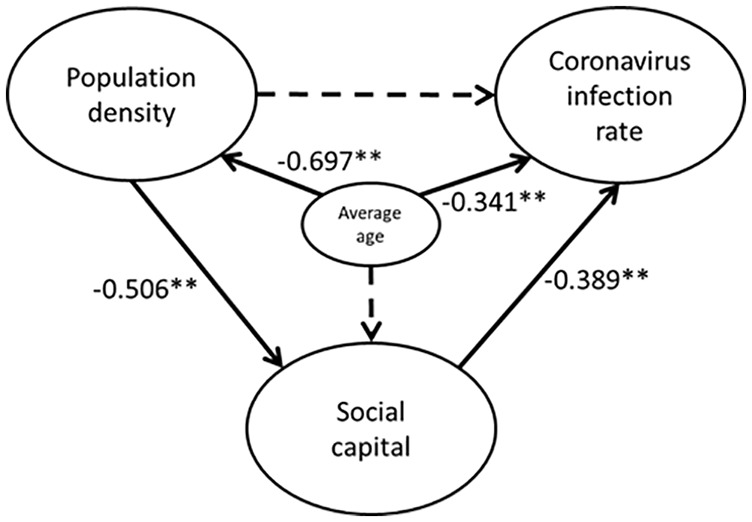
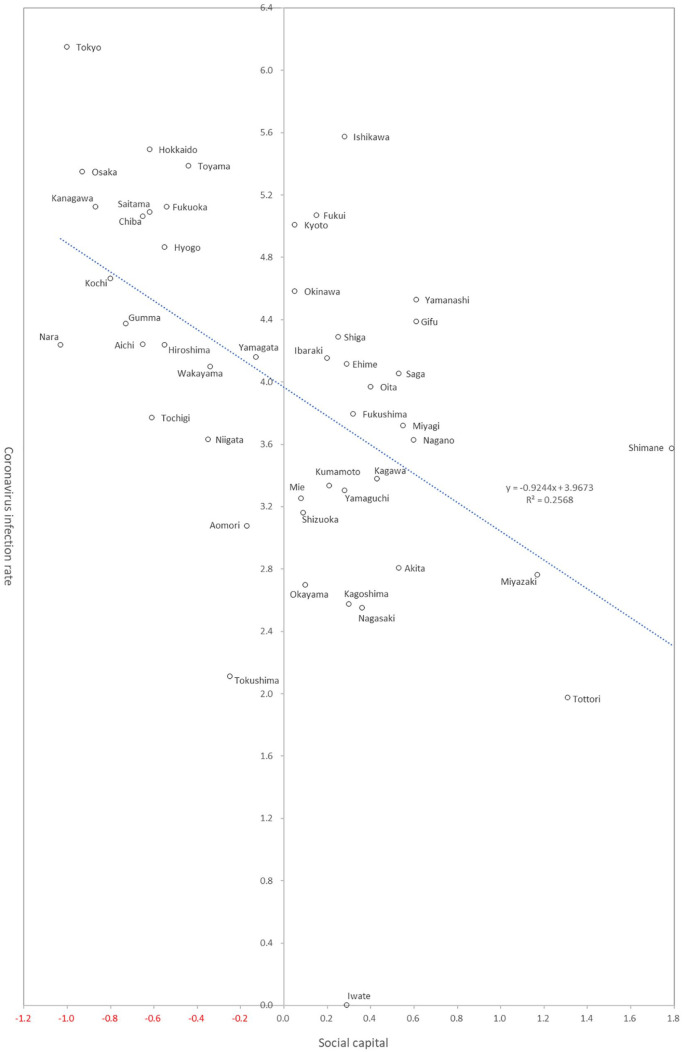
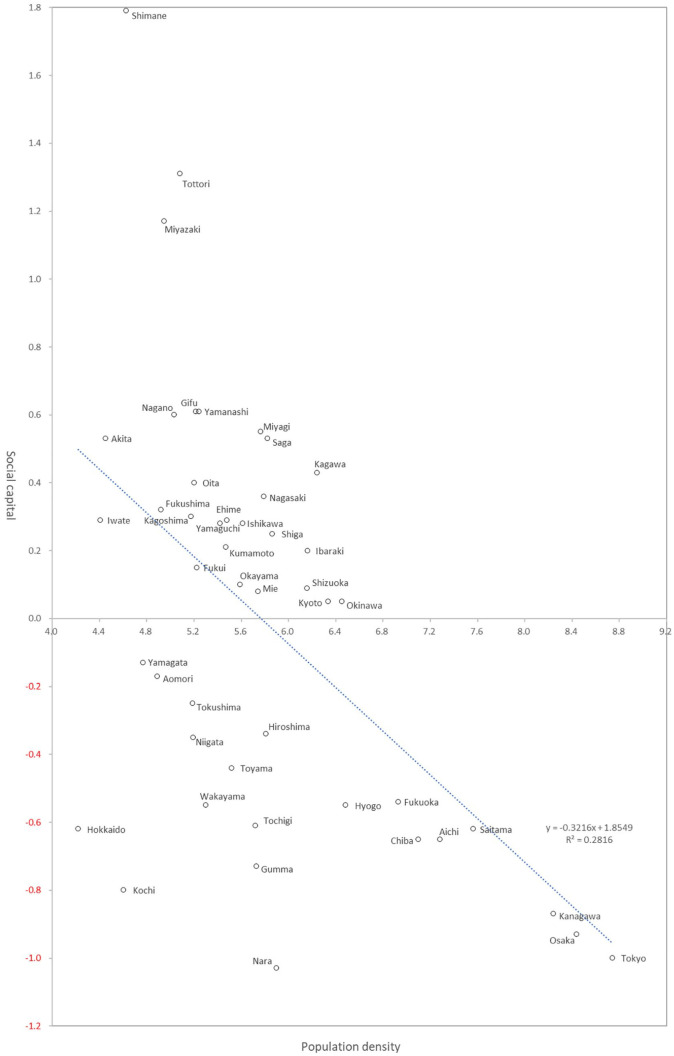
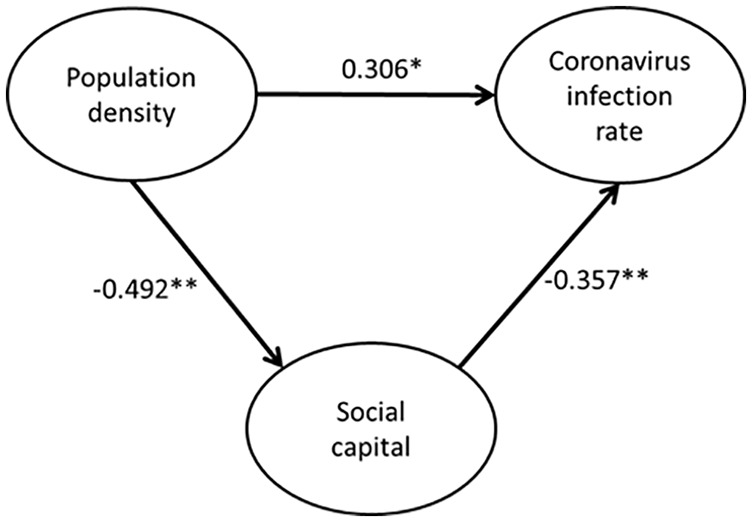
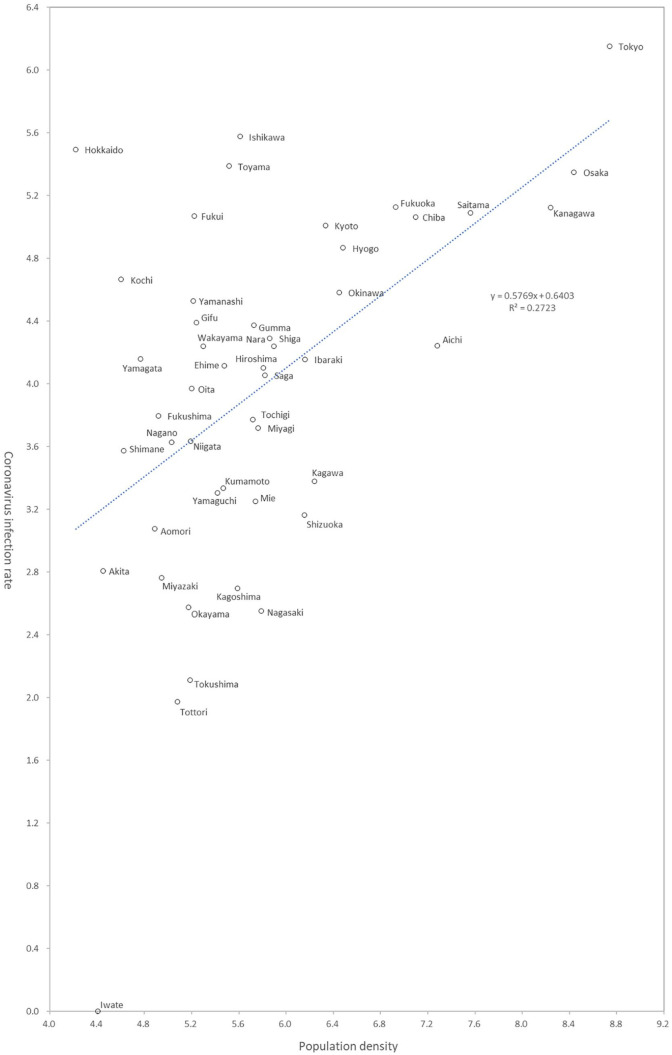
The threat of coronavirus disease (COVID-19) is increasing. Regarding the differences in the infection rate observed in each region, additionally to studies investigating the causes of differences in population density as a proxy for social distancing, an increasing trend of studies investigating the causes of differences in social capital has also been seen (ie, value sharing, acceptance of norms, unity, and trust through reciprocity). However, studies investigating whether social capital that controls the effects of population density also influences the infection rate are limited. Therefore, in this study, we analyzed the relationship between infection rate, population density, and social capital using statistical data of Japan's every prefecture. Statistical analysis showed that social capital not only negatively correlates with infection rates and population densities, but also negatively correlates with infection rates controlling for the effects of population density. Additionally, controlling the relationship between the variables by mean age showed that social capital had a greater correlation with infection rate than population density. In other words, social capital mediates the relationship between population density and infection rates, indicating that social distancing alone is not enough to deter coronavirus disease; social capital needs to be recharged.

摘要

冠状病毒病(COVID-19)的威胁正在增加。关于每个地区观察到的感染率差异,除了研究人口密度差异作为社交距离的替代指标的原因外,研究社会资本差异原因的趋势也在增加(即通过互惠共享价值观、接受规范、团结和信任)。然而,研究控制人口密度影响的社会资本是否也会影响感染率的研究有限。因此,在这项研究中,我们使用日本每个县的统计数据分析了感染率、人口密度和社会资本之间的关系。统计分析表明,社会资本不仅与感染率和人口密度呈负相关,而且在控制人口密度影响的情况下,与感染率也呈负相关。此外,通过平均年龄控制变量之间的关系表明,社会资本与感染率的相关性大于人口密度。换句话说,社会资本调节了人口密度和感染率之间的关系,这表明仅仅保持社交距离不足以阻止冠状病毒病;需要重新建立社会资本。
https://cdn.ncbi.nlm.nih.gov/pmc/blobs/f273/8053753/2dbe4ad7fc2b/10.1177_00469580211005189-fig5.jpg
https://cdn.ncbi.nlm.nih.gov/pmc/blobs/f273/8053753/b0de0bab245c/10.1177_00469580211005189-fig1.jpg
https://cdn.ncbi.nlm.nih.gov/pmc/blobs/f273/8053753/55e3327fb37e/10.1177_00469580211005189-fig2.jpg
https://cdn.ncbi.nlm.nih.gov/pmc/blobs/f273/8053753/6055f734aaa4/10.1177_00469580211005189-fig3.jpg
https://cdn.ncbi.nlm.nih.gov/pmc/blobs/f273/8053753/d3285fcca8b6/10.1177_00469580211005189-fig4.jpg
https://cdn.ncbi.nlm.nih.gov/pmc/blobs/f273/8053753/2dbe4ad7fc2b/10.1177_00469580211005189-fig5.jpg
https://cdn.ncbi.nlm.nih.gov/pmc/blobs/f273/8053753/b0de0bab245c/10.1177_00469580211005189-fig1.jpg
https://cdn.ncbi.nlm.nih.gov/pmc/blobs/f273/8053753/55e3327fb37e/10.1177_00469580211005189-fig2.jpg
https://cdn.ncbi.nlm.nih.gov/pmc/blobs/f273/8053753/6055f734aaa4/10.1177_00469580211005189-fig3.jpg
https://cdn.ncbi.nlm.nih.gov/pmc/blobs/f273/8053753/d3285fcca8b6/10.1177_00469580211005189-fig4.jpg
https://cdn.ncbi.nlm.nih.gov/pmc/blobs/f273/8053753/2dbe4ad7fc2b/10.1177_00469580211005189-fig5.jpg

相似文献

1
Social Capital Mediates the Relationship between Social Distancing and COVID-19 Prevalence in Japan.社会资本在社交距离与日本 COVID-19 发病率之间起中介作用。
Inquiry. 2021 Jan-Dec;58:469580211005189. doi: 10.1177/00469580211005189.
2
Social capital dimensions are differentially associated with COVID-19 vaccinations, masks, and physical distancing.社会资本维度与 COVID-19 疫苗接种、口罩和保持身体距离呈不同关联。
PLoS One. 2021 Dec 9;16(12):e0260818. doi: 10.1371/journal.pone.0260818. eCollection 2021.
3
Social Capital and COVID-19 Deaths: An Ecological Analysis in Japan.社会资本与新冠疫情死亡人数:日本的一项生态分析
Int J Environ Res Public Health. 2021 Oct 19;18(20):10982. doi: 10.3390/ijerph182010982.
4
The Influence of Social Capital on Youths' Anti-Epidemic Action in the Field of Epidemic-Preventative Social Distancing in China.社会资本对中国青少年在防疫社交距离领域的抗疫行动的影响
Int J Environ Res Public Health. 2021 Oct 24;18(21):11155. doi: 10.3390/ijerph182111155.
5
Bowling together by bowling alone: Social capital and COVID-19.一起打保龄,还是独自打保龄:社会资本与新冠疫情。
Soc Sci Med. 2020 Nov;265:113501. doi: 10.1016/j.socscimed.2020.113501. Epub 2020 Nov 4.
6
The role of social capital in COVID-19 deaths.社会资本在 COVID-19 死亡中的作用。
BMC Public Health. 2021 Mar 3;21(1):434. doi: 10.1186/s12889-021-10475-8.
7
The relationship between fever rate and telework implementation as a social distancing measure against the COVID-19 pandemic in Japan.日本在新冠疫情期间,作为社交隔离措施的发热率与远程办公实施之间的关系。
Public Health. 2021 Mar;192:12-14. doi: 10.1016/j.puhe.2020.05.018. Epub 2020 May 22.
8
Individual-level social capital and COVID-19 vaccine hesitancy in Japan: a cross-sectional study.个体层面的社会资本与日本民众对 COVID-19 疫苗的犹豫态度:一项横断面研究。
Hum Vaccin Immunother. 2022 Nov 30;18(5):2086773. doi: 10.1080/21645515.2022.2086773. Epub 2022 Jun 16.
9
Association between Social Engagements and Stigmatization of COVID-19 Infection among Community Population in Japan.日本社区人群中社会交往与 COVID-19 感染污名化之间的关联。
Int J Environ Res Public Health. 2022 Jul 25;19(15):9050. doi: 10.3390/ijerph19159050.
10
Shelter in place? Depends on the place: Corruption and social distancing in American states.就地避难?这取决于地点:美国各州的腐败与社交距离。
Soc Sci Med. 2021 Jan;269:113569. doi: 10.1016/j.socscimed.2020.113569. Epub 2020 Dec 3.

引用本文的文献

1
"Hell is other people". Schizophrenia and urbanicity in the light of predictive coding theory.“他人即地狱”。基于预测编码理论的精神分裂症与城市化
Front Psychiatry. 2025 Aug 28;16:1574944. doi: 10.3389/fpsyt.2025.1574944. eCollection 2025.
2
Bridging social capital among Facebook users and COVID-19 cases growth in Arizona.脸书用户间社会资本的衔接与亚利桑那州新冠病例增长的关系
Soc Sci Med. 2024 Nov;360:117313. doi: 10.1016/j.socscimed.2024.117313. Epub 2024 Sep 12.
3
Covid-19: did higher trust societies fare better?新冠疫情:信任度较高的社会表现更好吗?

本文引用的文献

1
Social capital and the spread of covid-19: Insights from european countries.社会资本与新冠病毒传播:来自欧洲国家的见解。
J Health Econ. 2021 Dec;80:102531. doi: 10.1016/j.jhealeco.2021.102531. Epub 2021 Sep 15.
2
Bowling together by bowling alone: Social capital and COVID-19.一起打保龄,还是独自打保龄:社会资本与新冠疫情。
Soc Sci Med. 2020 Nov;265:113501. doi: 10.1016/j.socscimed.2020.113501. Epub 2020 Nov 4.
3
Effect of meteorological factors on COVID-19 cases in Bangladesh.气象因素对孟加拉国新冠肺炎病例的影响。
Discov Soc Sci Health. 2023;3(1):6. doi: 10.1007/s44155-023-00035-3. Epub 2023 Mar 20.
4
Social capital in a time of uncertainty: A case study of COVID-19 in Maharashtra state, India.不确定时期的社会资本:以印度马哈拉施特拉邦的新冠疫情为例
Soc Sci Humanit Open. 2023;7(1):100405. doi: 10.1016/j.ssaho.2023.100405. Epub 2023 Jan 20.
5
Self-imposed social isolation among clients of social care organisations in the COVID-19 pandemic.在新冠疫情期间,社会护理组织的服务对象自行实施的社会隔离。
Int J Disaster Risk Reduct. 2022 Nov;82:103360. doi: 10.1016/j.ijdrr.2022.103360. Epub 2022 Oct 11.
6
Modeling Adoption, Security, and Privacy of COVID-19 Apps: Findings and Recommendations From an Empirical Study Using the Unified Theory of Acceptance and Use of Technology.新冠疫情应用程序的采用、安全性及隐私建模:基于技术接受与使用统一理论的实证研究结果与建议
JMIR Hum Factors. 2022 Sep 14;9(3):e35434. doi: 10.2196/35434.
7
Social Capital, Technological Empowerment, and Resilience in Rural China.社会资本、技术赋权与中国农村韧性
Int J Environ Res Public Health. 2021 Nov 12;18(22):11883. doi: 10.3390/ijerph182211883.
8
The Societal Influences and Quality of Life Among Healthcare Team Members During the COVID-19 Pandemic.新冠疫情期间医疗团队成员的社会影响与生活质量
Front Psychiatry. 2021 Oct 11;12:706443. doi: 10.3389/fpsyt.2021.706443. eCollection 2021.
Environ Dev Sustain. 2021;23(6):9139-9162. doi: 10.1007/s10668-020-01016-1. Epub 2020 Oct 8.
4
The spread of COVID-19 virus through population density and wind in Turkey cities.新冠病毒在土耳其城市中通过人口密度和风向的传播。
Sci Total Environ. 2021 Jan 10;751:141663. doi: 10.1016/j.scitotenv.2020.141663. Epub 2020 Aug 11.
5
Air Pollution Exposure and Covid-19 in Dutch Municipalities.荷兰各市镇的空气污染暴露与新冠疫情
Environ Resour Econ (Dordr). 2020;76(4):581-610. doi: 10.1007/s10640-020-00491-4. Epub 2020 Aug 4.
6
Impact of meteorological factors on COVID-19 pandemic: Evidence from top 20 countries with confirmed cases.气象因素对 COVID-19 大流行的影响:来自确诊病例最多的 20 个国家的证据。
Environ Res. 2020 Dec;191:110101. doi: 10.1016/j.envres.2020.110101. Epub 2020 Aug 22.
7
Impact of climate and ambient air pollution on the epidemic growth during COVID-19 outbreak in Japan.气候和环境空气污染对日本 COVID-19 疫情爆发期间疫情增长的影响。
Environ Res. 2020 Nov;190:110042. doi: 10.1016/j.envres.2020.110042. Epub 2020 Aug 12.
8
Correlation between COVID-19 Morbidity and Mortality Rates in Japan and Local Population Density, Temperature, and Absolute Humidity.日本 COVID-19 发病率和死亡率与当地人口密度、温度和绝对湿度的相关性。
Int J Environ Res Public Health. 2020 Jul 29;17(15):5477. doi: 10.3390/ijerph17155477.
9
Influence of Absolute Humidity, Temperature and Population Density on COVID-19 Spread and Decay Durations: Multi-Prefecture Study in Japan.绝对湿度、温度和人口密度对 COVID-19 传播和衰减持续时间的影响:日本多地区研究。
Int J Environ Res Public Health. 2020 Jul 24;17(15):5354. doi: 10.3390/ijerph17155354.
10
Effects of meteorological conditions and air pollution on COVID-19 transmission: Evidence from 219 Chinese cities.气象条件和空气污染对新冠病毒传播的影响:来自 219 个中国城市的证据。
Sci Total Environ. 2020 Nov 1;741:140244. doi: 10.1016/j.scitotenv.2020.140244. Epub 2020 Jun 15.