J Acad Nutr Diet. 2021 Sep;121(9):1785-1792. doi: 10.1016/j.jand.2021.02.025. Epub 2021 Apr 13.
Poor mental health may hinder diet quality in pregnancy.
This study 1) examined whether stress and depressive symptoms are associated with diet quality (via Healthy Eating Index [HEI] 2015 total scores and dietary intake of food groups/nutrients that align with HEI-2015 components) and 2) tested race as a moderator in the relationship between mental health and diet quality.
This was a cross-sectional analysis of baseline data from a randomized controlled trial collected January 2015 through January 2019 in Columbia, South Carolina. Trained staff administered demographic and psychosocial questionnaires and conducted anthropometric measures. Participants completed two 24-hour dietary recalls, which were self-administered (one on-site, one at home).
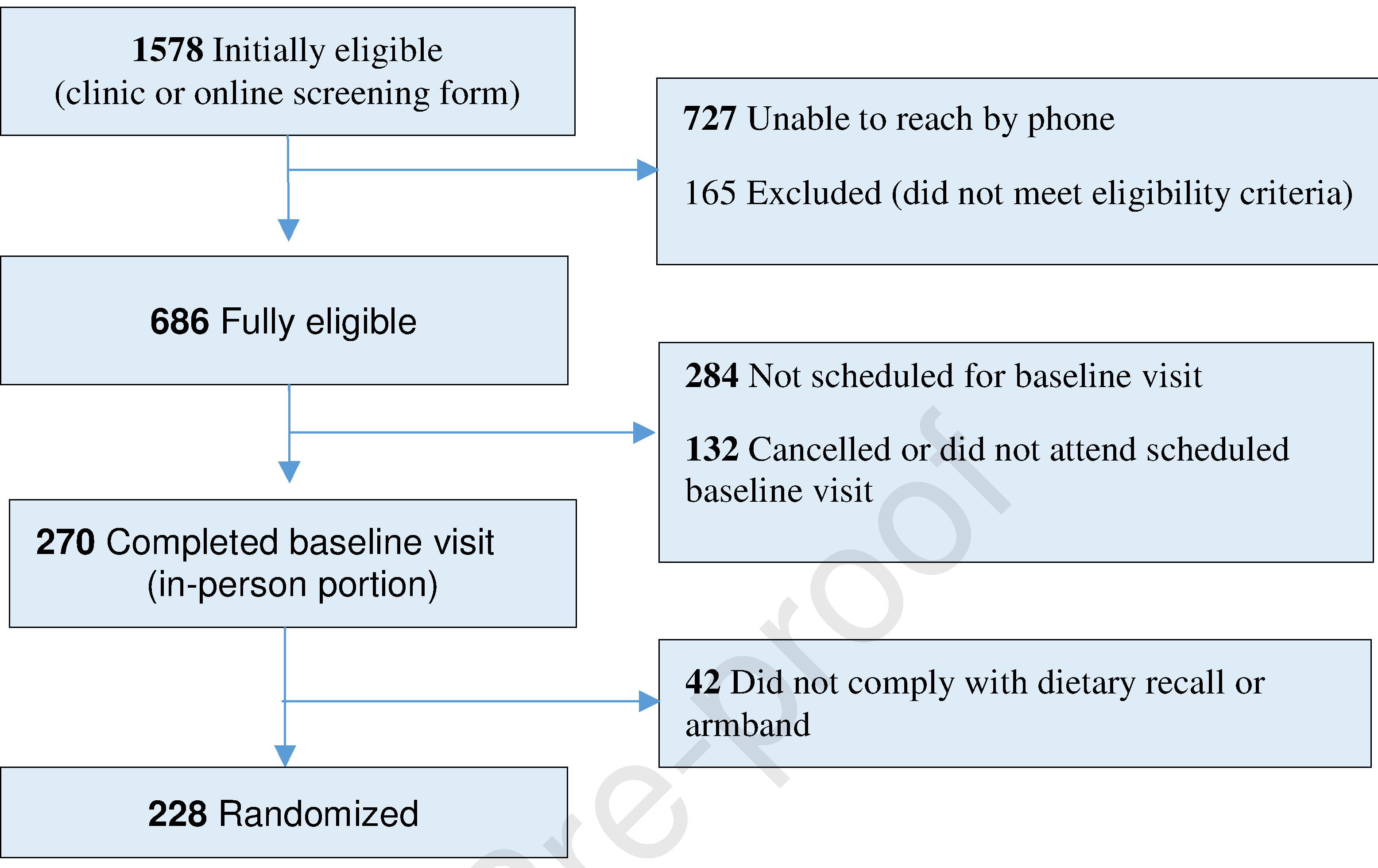
The Health in Pregnancy and Postpartum study was a randomized controlled trial targeting excessive gestational weight gain among pregnant women with overweight/obesity (N = 228).
The HEI-2015 total scores and food groups/nutrients that align with HEI-2015 were calculated.
Multiple linear regression models were used to estimate the relationship between mental health and HEI-2015 total scores and dietary intake of food groups or nutrients that align with HEI-2015 components. Multiplicative interaction terms of stress or depressive symptoms with race were used to determine moderation.
Participants' diet quality was suboptimal (M = 52.0 ± 11.7; range, 27-85). Stress was negatively associated with HEI-2015 total scores (crude but not adjusted model). Stress scores were positively associated with consumption of dairy, refined grains, and added sugars and negatively associated with total protein foods. Depressive symptoms were positively associated with consumption of dairy, refined grains, and saturated fats. Race was not a moderator.
Diet quality was poor overall, but stress and depressive symptoms were not associated with HEI-2015 total scores in adjusted models. Excluding dairy, stress and depressive symptoms were associated with the consumption of food groups or nutrients related to worse diet quality. These relationships should be examined longitudinally to help establish causality and inform future interventions.
心理健康状况不佳可能会影响孕期的饮食质量。
本研究 1)检测压力和抑郁症状是否与饮食质量有关(通过健康饮食指数[HEI]2015 总分以及与 HEI-2015 成分一致的食物组/营养素的饮食摄入),2)检测种族在心理健康和饮食质量之间的关系中的调节作用。
这是一项横断面分析,数据来自于 2015 年 1 月至 2019 年 1 月在南卡罗来纳州哥伦比亚市进行的一项随机对照试验的基线数据。经过培训的工作人员管理人口统计学和心理社会问卷,并进行人体测量学测量。参与者完成了两次 24 小时膳食回忆,均为自我管理(一次现场,一次在家)。
健康妊娠和产后研究是一项针对超重/肥胖孕妇的随机对照试验,旨在针对妊娠期体重过度增加(N=228)。
计算 HEI-2015 总分以及与 HEI-2015 一致的食物组/营养素。
使用多元线性回归模型估计心理健康与 HEI-2015 总分以及与 HEI-2015 成分一致的食物组或营养素的饮食摄入之间的关系。使用压力或抑郁症状与种族的乘法交互项来确定调节作用。
参与者的饮食质量不理想(M=52.0±11.7;范围,27-85)。压力与 HEI-2015 总分呈负相关(未经调整的模型,但未调整)。压力评分与乳制品、精制谷物和添加糖的摄入量呈正相关,与总蛋白质食品的摄入量呈负相关。抑郁症状与乳制品、精制谷物和饱和脂肪的摄入量呈正相关。种族不是一个调节因素。
总体而言,饮食质量较差,但调整模型中压力和抑郁症状与 HEI-2015 总分无关。不包括乳制品,压力和抑郁症状与与较差饮食质量相关的食物组或营养素的摄入有关。这些关系应进行纵向研究,以帮助确定因果关系并为未来的干预措施提供信息。