Wang Qian-Chen, Wang Zhen-Yu, Xu Qian, Li Ruo-Bing, Zhang Guo-Gang, Shi Rui-Zheng
Department of Cardiovascular Medicine, Xiangya Hospital, Central South University, Changsha, China.
Department of Cardiovascular Medicine, The Second Xiangya Hospital, Central South University, Changsha, China.
Front Physiol. 2021 Mar 30;12:605811. doi: 10.3389/fphys.2021.605811. eCollection 2021.
Epicardial adipose tissue (EAT) is closely adjacent to the coronary arteries and myocardium, its role as an endocrine organ to affect the pathophysiological processes of the coronary arteries and myocardium has been increasingly recognized. However, the specific gene expression profiles of EAT in coronary artery disease (CAD) has not been well characterized. Our aim was to investigate the role of EAT in CAD at the gene level.
Here, we compared the histological and gene expression difference of EAT between CAD and non-CAD. We investigated the gene expression profiles in the EAT of patients with CAD through the high-throughput RNA sequencing. We performed bioinformatics analysis such as functional enrichment analysis and protein-protein interaction network construction to obtain and verify the hub differentially expressed genes (DEGs) in the EAT of CAD.
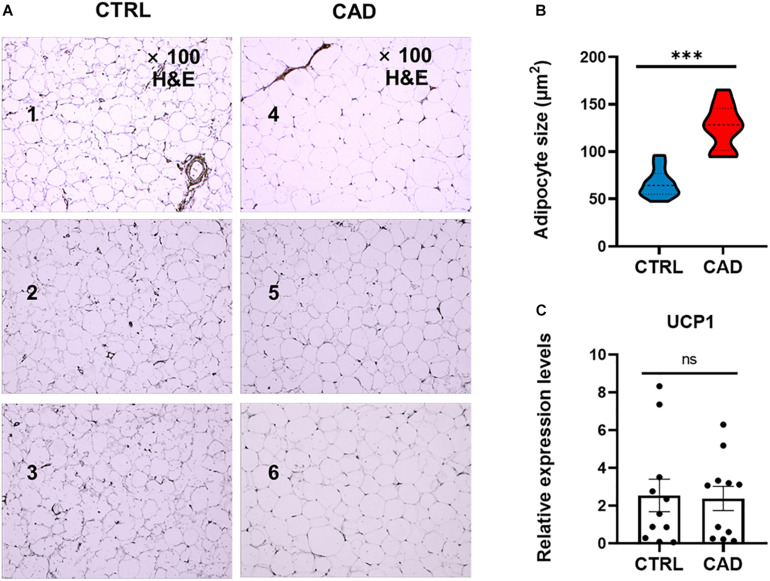
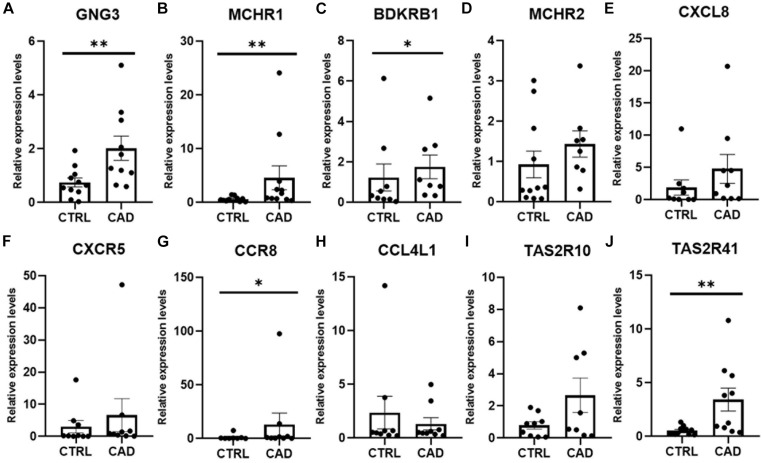
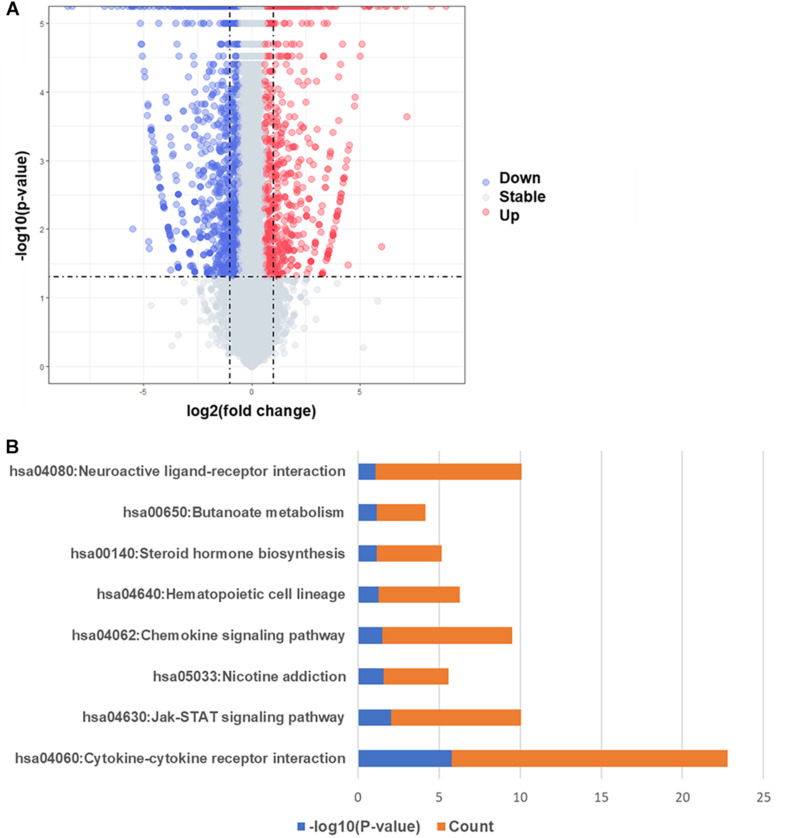
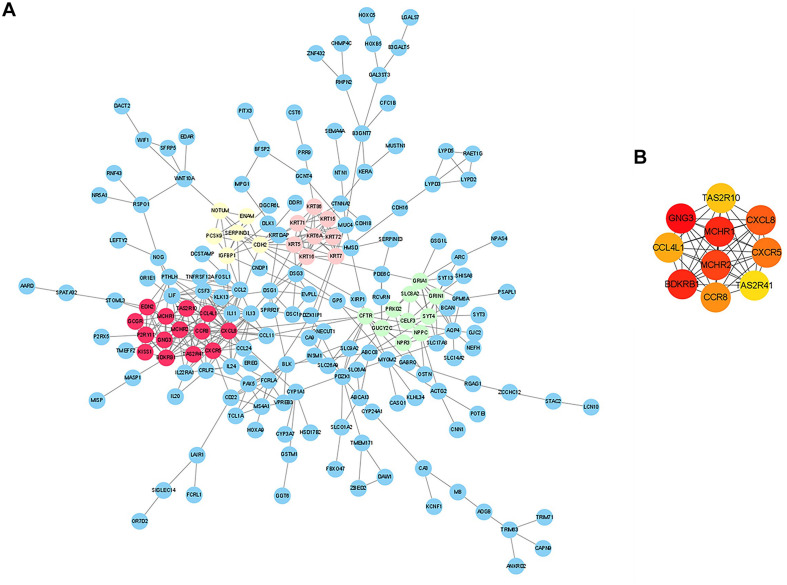
Our results showed that the size of epicardial adipocytes in the CAD group was larger than in the control group. Our findings on the EAT gene expression profiles of CAD showed a total of 747 DEGs (fold change >2, value <0.05). The enrichment analysis of DEGs showed that more pro-inflammatory and immunological genes and pathways were involved in CAD. Ten hub DEGs (, , , , , , , , , and ) were identified.
Epicardial adipose tissue in CAD shows unique gene expression profiles and may act as key regulators in the CAD pathological process.
心外膜脂肪组织(EAT)紧邻冠状动脉和心肌,其作为内分泌器官影响冠状动脉和心肌病理生理过程的作用已日益得到认可。然而,冠状动脉疾病(CAD)中EAT的特定基因表达谱尚未得到充分表征。我们的目的是在基因水平上研究EAT在CAD中的作用。
在此,我们比较了CAD患者与非CAD患者EAT的组织学和基因表达差异。我们通过高通量RNA测序研究了CAD患者EAT中的基因表达谱。我们进行了功能富集分析和蛋白质-蛋白质相互作用网络构建等生物信息学分析,以获取并验证CAD患者EAT中的核心差异表达基因(DEG)。
我们的结果表明,CAD组的心外膜脂肪细胞大小大于对照组。我们对CAD患者EAT基因表达谱的研究结果显示共有747个DEG(倍数变化>2,P值<0.05)。DEG的富集分析表明,CAD涉及更多的促炎和免疫基因及通路。确定了10个核心DEG([此处原文缺失具体基因名称])。
CAD中的心外膜脂肪组织表现出独特的基因表达谱,可能在CAD病理过程中充当关键调节因子。