Federal State Budgetary Institution, Research Institute for Complex Issues of Cardiovascular Diseases, Kemerovo, Russia.
Federal State Budget Educational Institution of Higher Education, Kemerovo State Medical University of the Ministry of Healthcare of the Russian Federation, Kemerovo, Russia.
Front Immunol. 2019 Sep 19;10:2163. doi: 10.3389/fimmu.2019.02163. eCollection 2019.
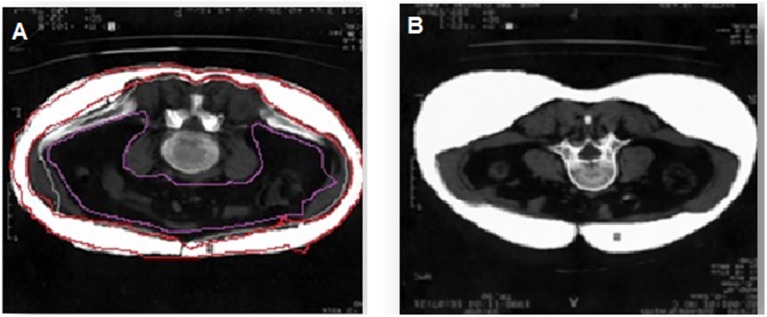
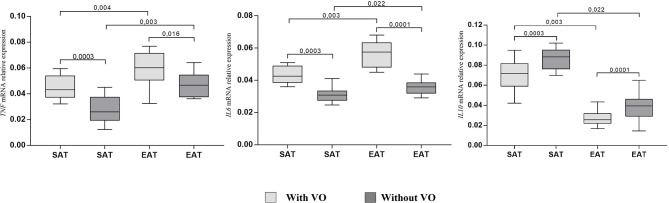
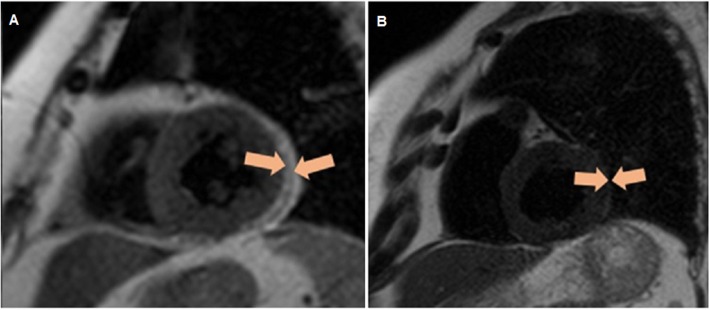
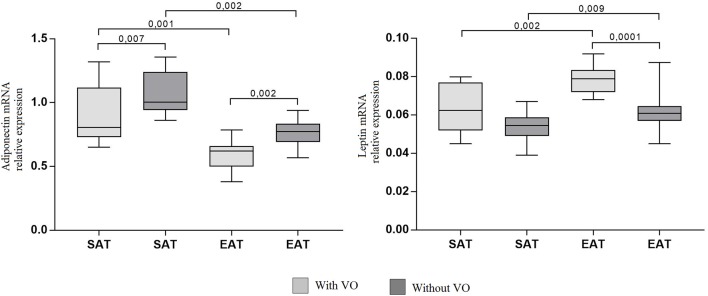
This study aimed to investigate the adipokine and cytokine profiles of adipocytes from epicardial and subcutaneous adipose tissues in interconnection with the visceral adipose tissue area and the biochemical and clinical characteristics of patients with coronary artery disease. We assessed 84 patients with coronary artery disease (65 men, 19 women) and divided them into two groups based on the presence of visceral obesity. We sampled epicardial and subcutaneous adipose tissues from the patients with visceral obesity. We then cultured the adipocytes and evaluated their adipokine profiles and pro-inflammatory activity. Results show that the mRNA expression of adiponectin in cultures of epicardial adipocytes from patients with and without visceral obesity was lower than that in subcutaneous adipocytes. Moreover, adiponectin mRNA expression in cultures of subcutaneous and epicardial adipocytes from patients with visceral obesity was lower than that in patients without obesity. For leptin, the reverse pattern was observed, with expression higher in cultures of epicardial adipocytes than in subcutaneous adipocytes and higher in epicardial adipocytes from patients with visceral obesity than in those from subjects without visceral obesity. In addition, in epicardial adipocytes, increased expression of proinflammatory cytokine genes () was observed compared with that in subcutaneous adipocytes. In contrast, expression of was higher in cultures of subcutaneous adipocytes than in epicardial adipocytes. The epicardial adipose tissue area was associated with the presence of higher levels of leptin and TNF-α within adipocytes and serum, increased lipid and carbohydrate metabolism. Coronary artery disease, in the context of the status of epicardial adipocytes, can be characterized as "metabolic inflammation," suggesting the direct involvement of adipocytes in pathogenesis through the development of adipokine imbalances and activation of proinflammatory processes.
本研究旨在探讨冠状动脉疾病患者内脏脂肪组织面积与内脏肥胖患者心外膜和皮下脂肪组织中脂肪细胞的脂肪因子和细胞因子谱以及生化和临床特征之间的关系。我们评估了 84 例冠状动脉疾病患者(65 名男性,19 名女性),并根据是否存在内脏肥胖将其分为两组。我们从内脏肥胖患者中取样心外膜和皮下脂肪组织,然后培养脂肪细胞并评估其脂肪因子谱和促炎活性。结果表明,存在和不存在内脏肥胖的患者心外膜脂肪细胞培养物中的脂联素 mRNA 表达均低于皮下脂肪细胞。此外,内脏肥胖患者的皮下和心外膜脂肪细胞培养物中的脂联素 mRNA 表达均低于非肥胖患者。对于瘦素,观察到相反的模式,即心外膜脂肪细胞培养物中的表达高于皮下脂肪细胞,且内脏肥胖患者的表达高于非内脏肥胖患者。此外,在心外膜脂肪细胞中,与皮下脂肪细胞相比,促炎细胞因子基因的表达增加。相反,与心外膜脂肪细胞相比,培养物中的表达更高。心外膜脂肪组织面积与脂肪细胞和血清中更高水平的瘦素和 TNF-α、脂质和碳水化合物代谢增加有关。在冠状动脉疾病中,在心外膜脂肪细胞状态下,可以将其描述为“代谢性炎症”,这表明通过脂肪因子失衡和促炎过程的激活,脂肪细胞直接参与发病机制。