Zhao Jiawei, Li Yue, Jia Rongrong, Wang Jinghui, Shi Min, Wang Yugang
Department of Gastroenterology, Tongren Hospital, Shanghai Jiao Tong University School of Medicine, Shanghai, China.
School of Medicine, Jiangsu University, Zhenjiang, China.
Front Bioeng Biotechnol. 2021 Mar 30;9:650376. doi: 10.3389/fbioe.2021.650376. eCollection 2021.
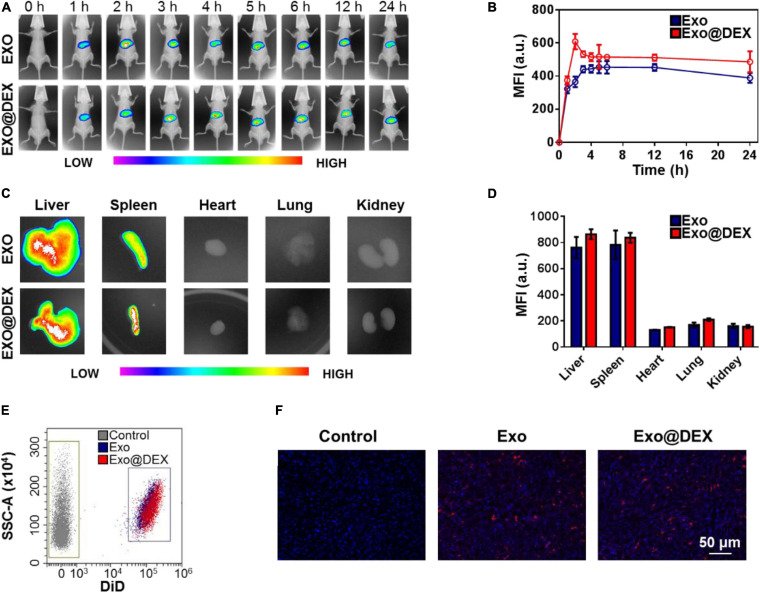
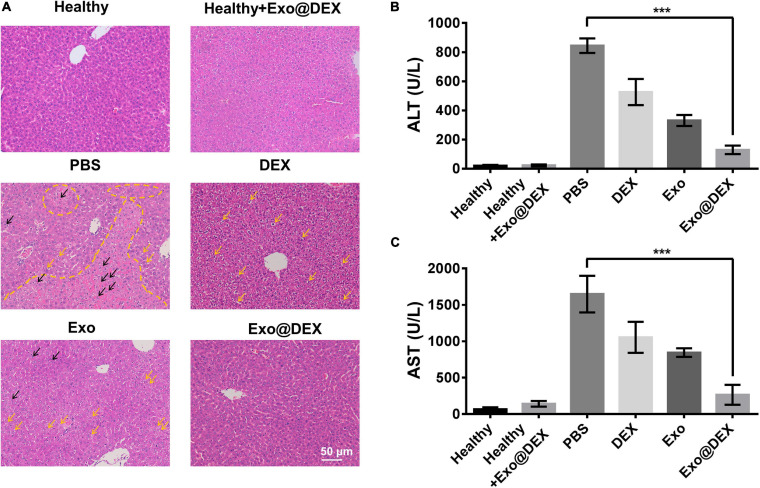
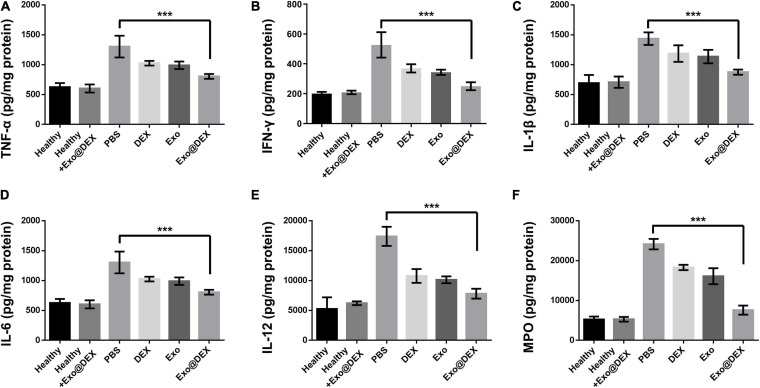
Exosomes (Exos) are nanosized vesicles (around 100 nm) that recently serve as a promising drug carrier with high biocompatibility and low immunogenicity. Previous studies showed that Exos secreted from mesenchymal stem cells (MSCs) provide protection for concanavalin A (Con A)-induced liver injury. In this study, the protective effect of Exos is confirmed, and dexamethasone (DEX)-incorporated Exos named Exo@DEX are prepared. It is then investigated whether Exo@DEX can function more efficiently compared to free drugs and naive Exos in a Con A-induced autoimmune hepatitis (AIH) mouse model. The results show that Exo@DEX efficiently improves the accumulation of DEX in AIH in the liver. These data suggest that Exo@DEX is a promising drug carrier for AIH and could have applications in other diseases.
外泌体(Exos)是纳米级囊泡(约100纳米),最近作为一种具有高生物相容性和低免疫原性的有前景的药物载体。先前的研究表明,间充质干细胞(MSCs)分泌的外泌体对伴刀豆球蛋白A(Con A)诱导的肝损伤具有保护作用。在本研究中,证实了外泌体的保护作用,并制备了载有地塞米松(DEX)的外泌体,命名为Exo@DEX。然后研究了在Con A诱导的自身免疫性肝炎(AIH)小鼠模型中,Exo@DEX与游离药物和天然外泌体相比是否能更有效地发挥作用。结果表明,Exo@DEX有效地提高了DEX在AIH小鼠肝脏中的蓄积。这些数据表明,Exo@DEX是一种有前景的AIH药物载体,可能在其他疾病中也有应用。