Genomic Medicine Institute, Lerner Research Institute, Cleveland Clinic, Cleveland, OH, 44195, USA.
Cleveland Clinic Lerner College of Medicine of Case Western Reserve University, Cleveland, OH, 44195, USA.
Genome Med. 2021 Apr 16;13(1):60. doi: 10.1186/s13073-021-00874-2.
Currently, over half of breast cancer cases are unrelated to known risk factors, highlighting the importance of discovering other cancer-promoting factors. Since crosstalk between gut microbes and host immunity contributes to many diseases, we hypothesized that similar interactions could occur between the recently described breast microbiome and local immune responses to influence breast cancer pathogenesis.
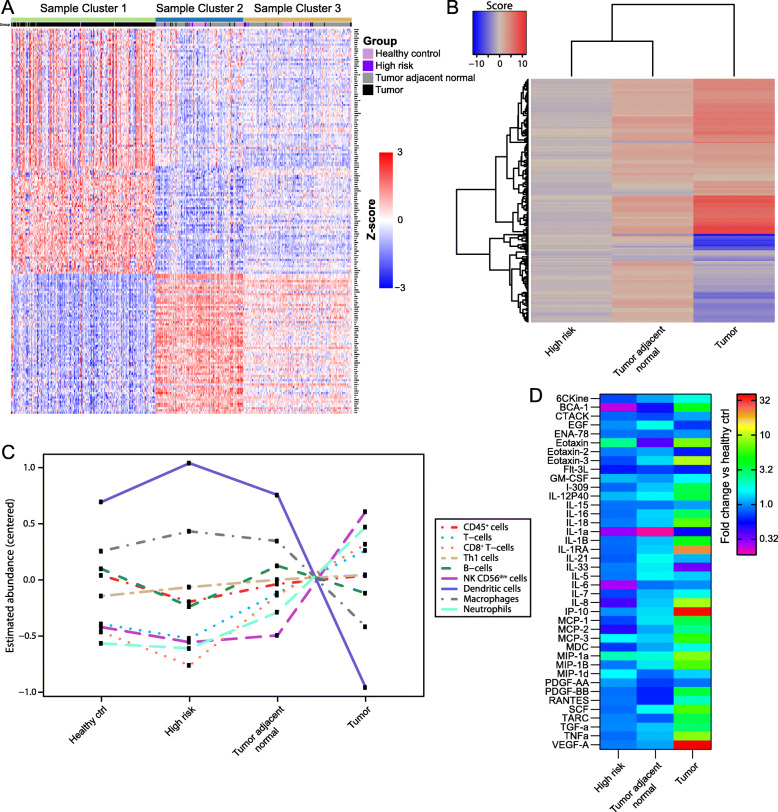
Using 16S rRNA gene sequencing, we characterized the microbiome of human breast tissue in a total of 221 patients with breast cancer, 18 individuals predisposed to breast cancer, and 69 controls. We performed bioinformatic analyses using a DADA2-based pipeline and applied linear models with White's t or Kruskal-Wallis H-tests with Benjamini-Hochberg multiple testing correction to identify taxonomic groups associated with prognostic clinicopathologic features. We then used network analysis based on Spearman coefficients to correlate specific bacterial taxa with immunological data from NanoString gene expression and 65-plex cytokine assays.
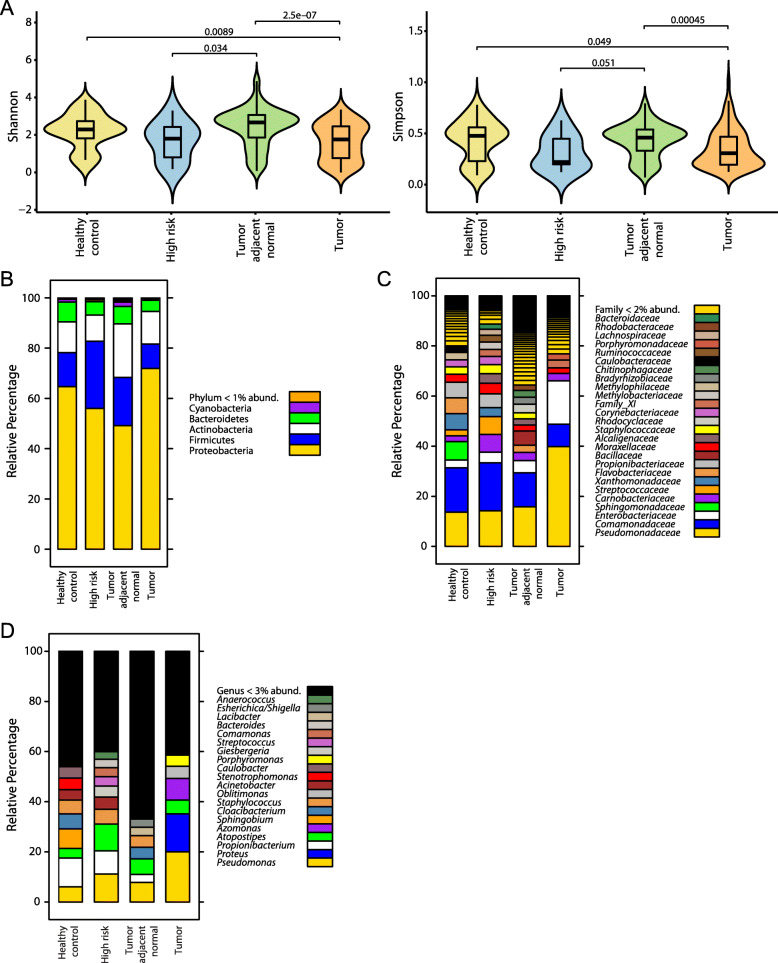
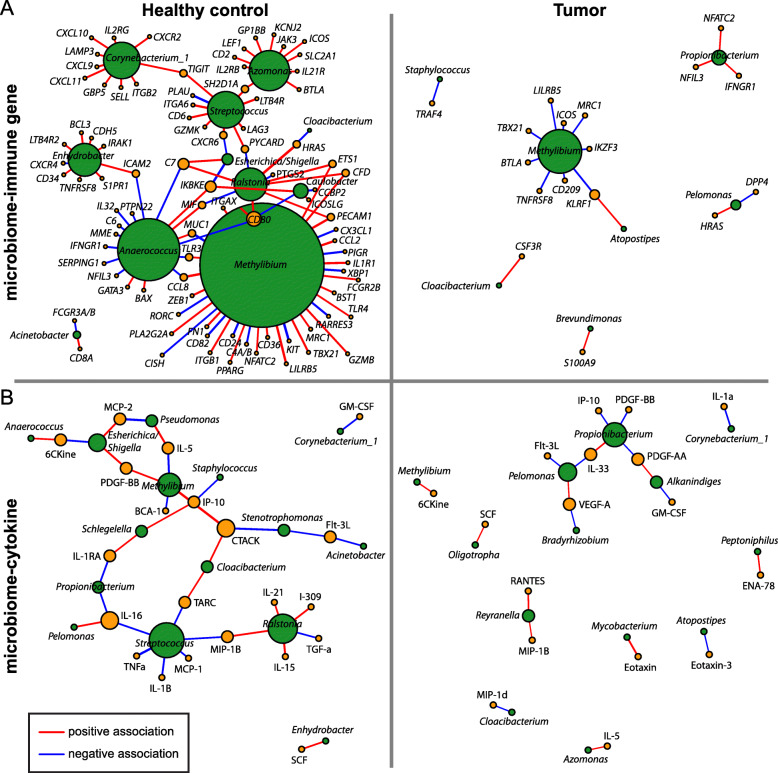
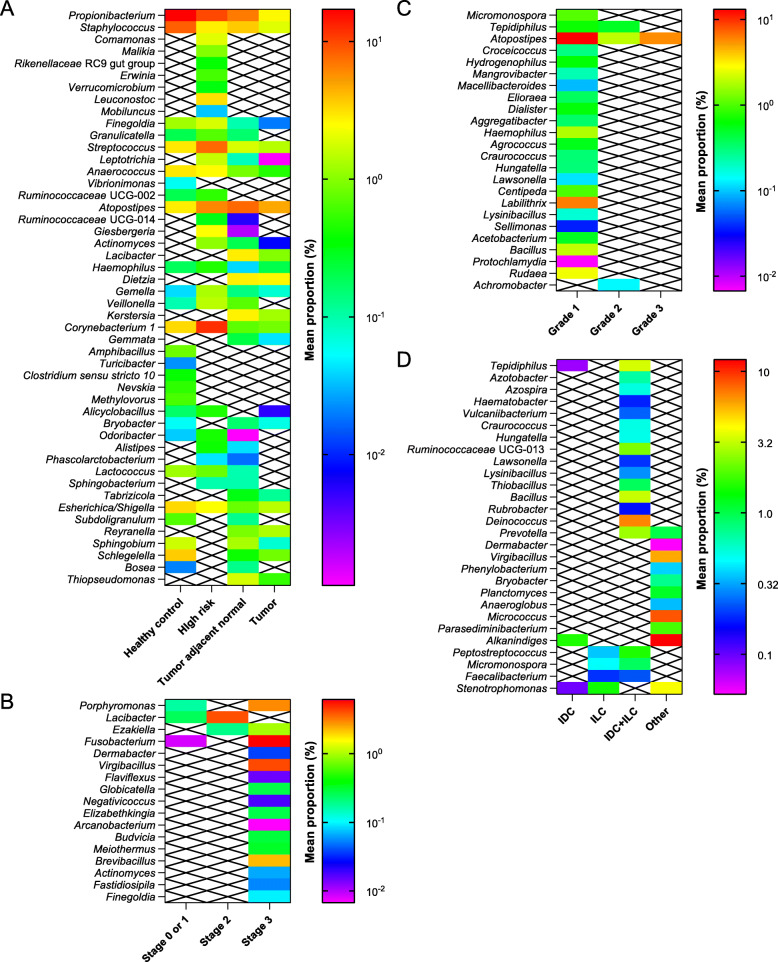
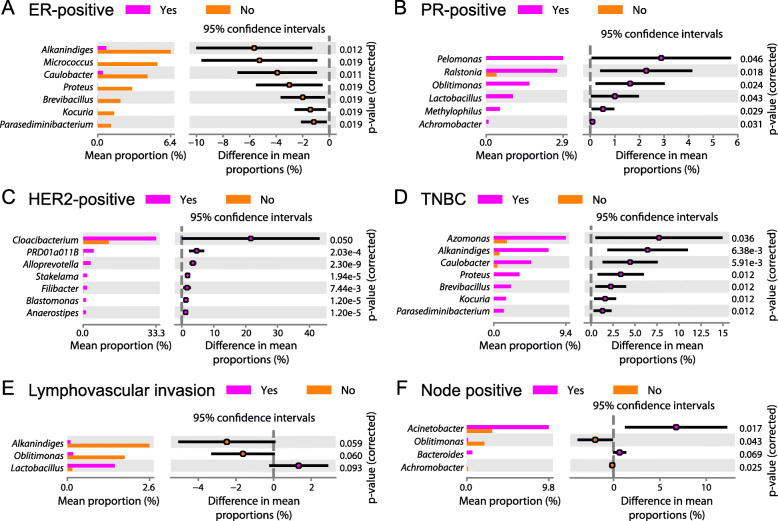
Multiple bacterial genera exhibited significant differences in relative abundance when stratifying by breast tissue type (tumor, tumor adjacent normal, high-risk, healthy control), cancer stage, grade, histologic subtype, receptor status, lymphovascular invasion, or node-positive status, even after adjusting for confounding variables. Microbiome-immune networks within the breast tended to be bacteria-centric, with sparse structure in tumors and more interconnected structure in benign tissues. Notably, Anaerococcus, Caulobacter, and Streptococcus, which were major bacterial hubs in benign tissue networks, were absent from cancer-associated tissue networks. In addition, Propionibacterium and Staphylococcus, which were depleted in tumors, showed negative associations with oncogenic immune features; Streptococcus and Propionibacterium also correlated positively with T-cell activation-related genes.
This study, the largest to date comparing healthy versus cancer-associated breast microbiomes using fresh-frozen surgical specimens and immune correlates, provides insight into microbial profiles that correspond with prognostic clinicopathologic features in breast cancer. It additionally presents evidence for local microbial-immune interplay in breast cancer that merits further investigation and has preventative, diagnostic, and therapeutic potential.
目前,超过一半的乳腺癌病例与已知的风险因素无关,这凸显了发现其他促进癌症发生的因素的重要性。由于肠道微生物与宿主免疫之间的相互作用会导致许多疾病,因此我们假设,最近描述的乳腺微生物组与局部免疫反应之间也可能发生类似的相互作用,从而影响乳腺癌的发病机制。
我们使用 16S rRNA 基因测序技术,对 221 例乳腺癌患者、18 例乳腺癌高危人群和 69 例对照者的乳腺组织微生物组进行了特征分析。我们使用基于 DADA2 的管道进行生物信息学分析,并应用带有 White t 检验或 Kruskal-Wallis H 检验的线性模型,以及 Benjamini-Hochberg 多重检验校正,以确定与预后临床病理特征相关的分类群。然后,我们使用基于 Spearman 系数的网络分析,将特定细菌分类群与 NanoString 基因表达和 65 元细胞因子测定的免疫数据相关联。
在按乳腺组织类型(肿瘤、肿瘤旁正常组织、高危、健康对照)、癌症分期、分级、组织学亚型、受体状态、淋巴血管浸润或淋巴结阳性状态进行分层时,多个细菌属的相对丰度存在显著差异,即使在调整了混杂变量后也是如此。乳腺内的微生物组-免疫网络往往以细菌为中心,良性组织的结构较为稀疏,而癌症相关组织的结构则较为复杂。值得注意的是,Anaerococcus、Caulobacter 和 Streptococcus 是良性组织网络中的主要细菌枢纽,但不存在于癌症相关组织网络中。此外,在肿瘤中被消耗的 Propionibacterium 和 Staphylococcus 与致癌免疫特征呈负相关;Streptococcus 和 Propionibacterium 也与 T 细胞激活相关基因呈正相关。
本研究是迄今为止使用新鲜冷冻手术标本和免疫相关性比较健康与癌症相关乳腺微生物组的最大规模研究,为乳腺癌中与预后临床病理特征相对应的微生物特征提供了新的见解。此外,本研究还提供了乳腺癌中局部微生物-免疫相互作用的证据,值得进一步研究,具有预防、诊断和治疗潜力。