Department of Biochemistry, All India Institute of Medical Sciences, Deoghar, India.
Department of Health Education, Telangana State Residential School & College, Choutuppal, India.
An Bras Dermatol. 2021 May-Jun;96(3):284-294. doi: 10.1016/j.abd.2020.10.002. Epub 2021 Mar 24.
The serum Vitamin D status in patients with vitiligo is ambiguous when compared to controls. A systematic review and updated meta-analysis were conducted to evaluate the association between Vitamin D and vitiligo.
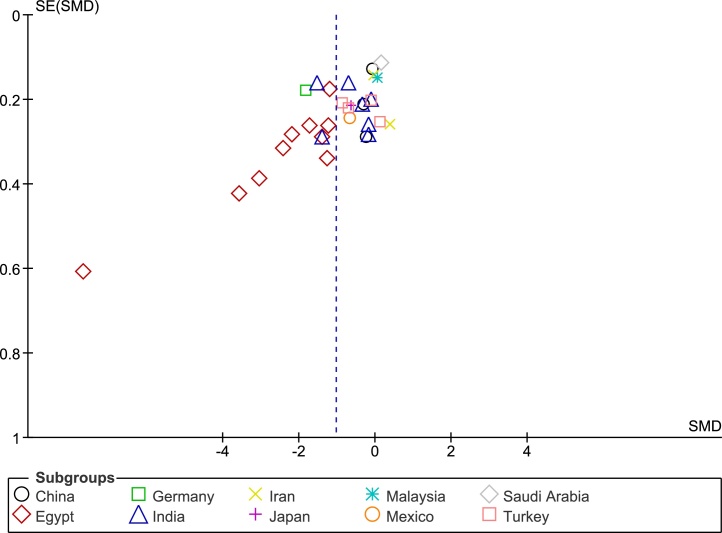
Relevant studies were identified by searching PubMed and other databases. The random effects model was used to obtain standardized mean differences and pooled correlation coefficients. Meta-regression and sub-group analyses were conducted to explore heterogeneity. The presence of publication bias and the study robustness were tested using funnel plot and sensitivity analyses, respectively.
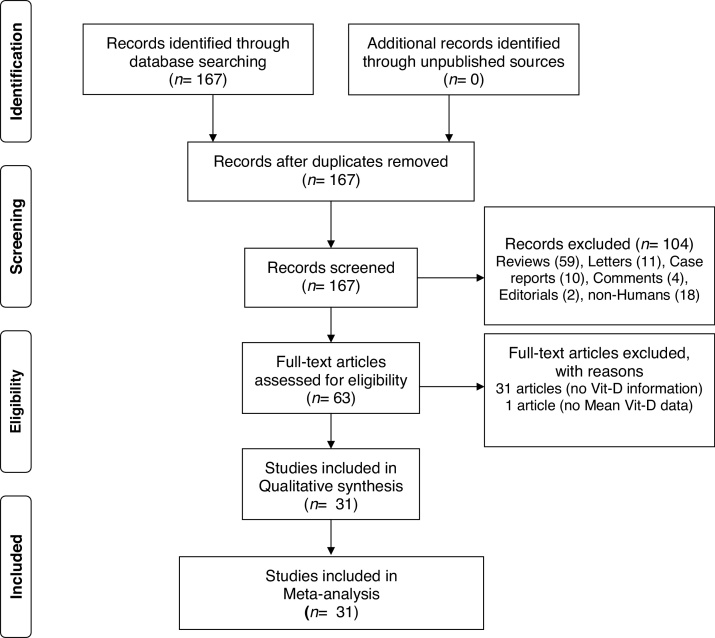
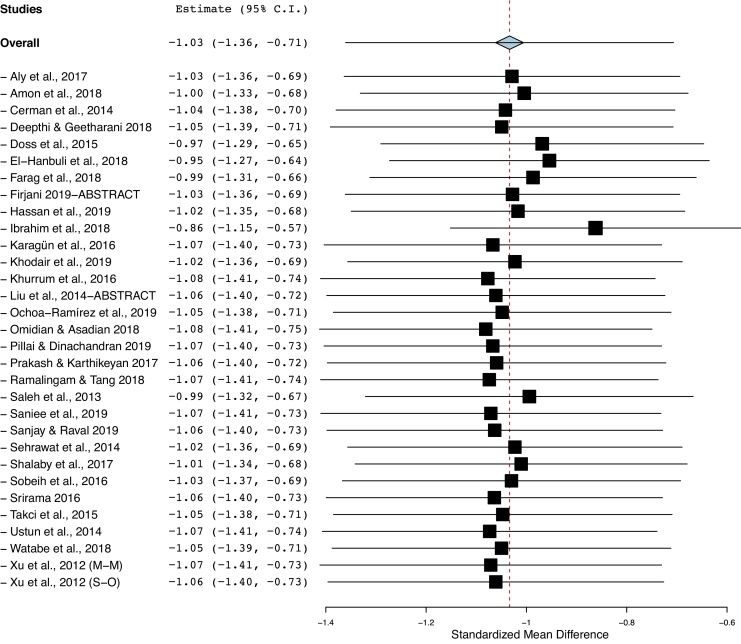
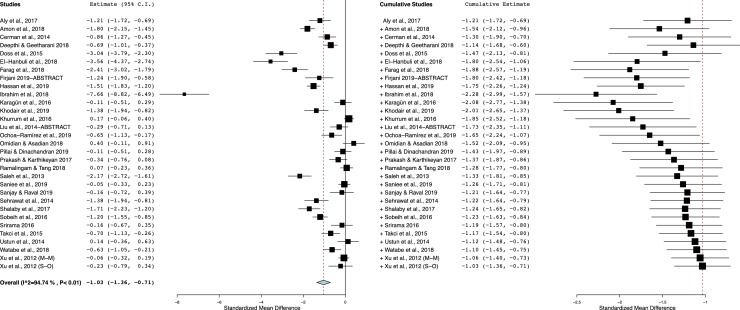
This meta-analysis finally included 31 studies. Compared with controls, vitiligo patients showed significantly decreased serum Vitamin D levels (standardized mean difference = -1.03; p < 0.0001). The sub-group analysis showed that vitiligo patients with indoor/urban work had a significantly lower Vitamin D level when compared to their outdoor/rural counterparts (standardized mean differences = -0.45; p = 0.03). The sensitivity analysis indicated that no single study had a significant influence on the overall outcome, suggesting the robustness of this meta-analysis.
Varied sample sizes and heterogeneous study populations from different countries are the limitations of this study. However, the between-study heterogeneity has been addressed by the random-effects model with meta-regression and sensitivity analyses.
This meta-analysis showed significantly decreased Vitamin D level in vitiligo, and its association with indoor/outdoor type of work of vitiligo patients. This study highlights the need to assess Vitamin D status for improving its level in vitiligo.
与对照组相比,白癜风患者的血清维生素 D 状况并不明确。本研究进行了系统评价和更新的荟萃分析,以评估维生素 D 与白癜风之间的关系。
通过搜索 PubMed 和其他数据库,确定相关研究。使用随机效应模型获得标准化均数差和合并相关系数。进行元回归和亚组分析以探索异质性。使用漏斗图和敏感性分析分别测试发表偏倚和研究稳健性。
本荟萃分析最终纳入 31 项研究。与对照组相比,白癜风患者的血清维生素 D 水平明显降低(标准化均数差=−1.03;p<0.0001)。亚组分析显示,与户外/农村工作的白癜风患者相比,室内/城市工作的白癜风患者维生素 D 水平显著降低(标准化均数差=−0.45;p=0.03)。敏感性分析表明,没有单个研究对总体结果有显著影响,表明本荟萃分析稳健。
本研究的局限性在于来自不同国家的样本量不同且研究人群异质性较大。然而,已通过具有元回归和敏感性分析的随机效应模型解决了组间异质性问题。
本荟萃分析表明白癜风患者的维生素 D 水平明显降低,且与白癜风患者的室内/室外工作类型有关。这项研究强调了评估维生素 D 状态以改善白癜风患者维生素 D 水平的必要性。