Mah Jasmine, Pitre Tyler
Department of Medicine, Dalhousie University, Halifax, NS, Canada.
Division of Internal Medicine, McMaster University, Hamilton, ON, Canada.
BMC Complement Med Ther. 2021 Apr 17;21(1):125. doi: 10.1186/s12906-021-03297-z.
Magnesium supplementation is often purported to improve sleep; however, as both an over-the-counter sleep aid and a complementary and alternative medicine, there is limited evidence to support this assertion. The aim was to assess the effectiveness and safety of magnesium supplementation for older adults with insomnia.
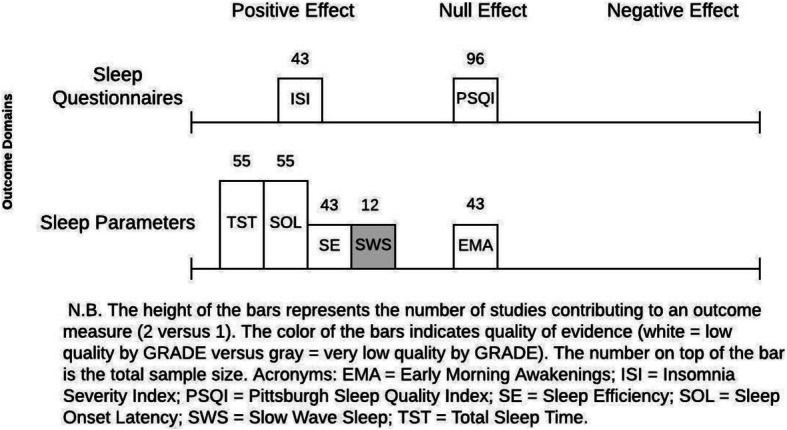
A search was conducted in MEDLINE, EMBASE, Allied and Complementary Medicine, clinicaltrials.gov and two grey literature databases comparing magnesium supplementation to placebo or no treatment. Outcomes were sleep quality, quantity, and adverse events. Risk of bias and quality of evidence assessments were carried out using the RoB 2.0 and Grading of Recommendations Assessment, Development and Evaluation (GRADE) approaches. Data was pooled and treatment effects were quantified using mean differences. For remaining outcomes, a modified effects direction plot was used for data synthesis.
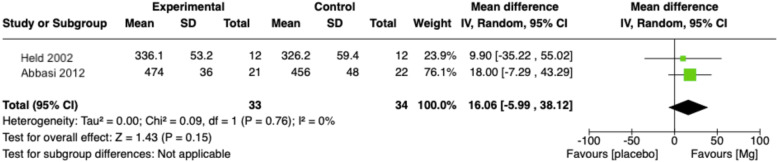
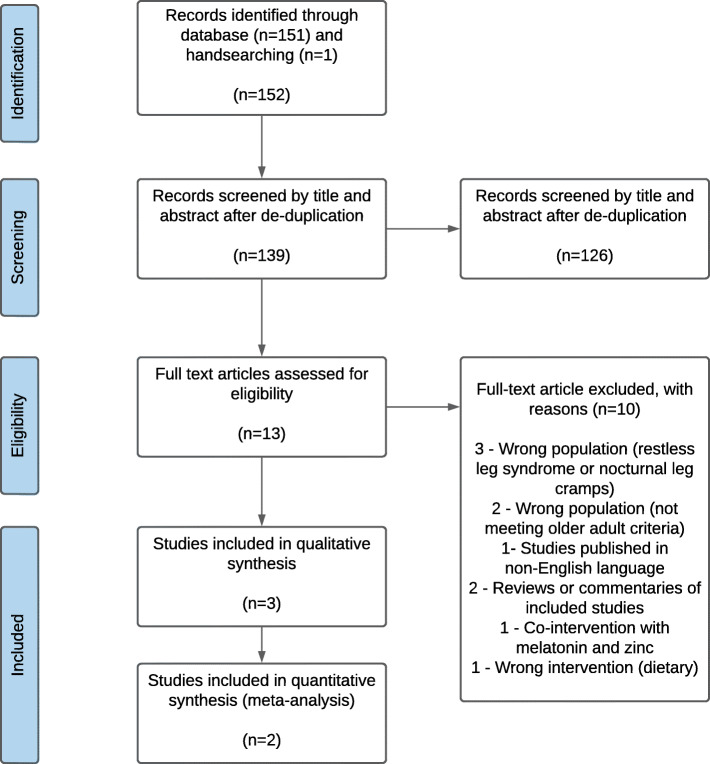
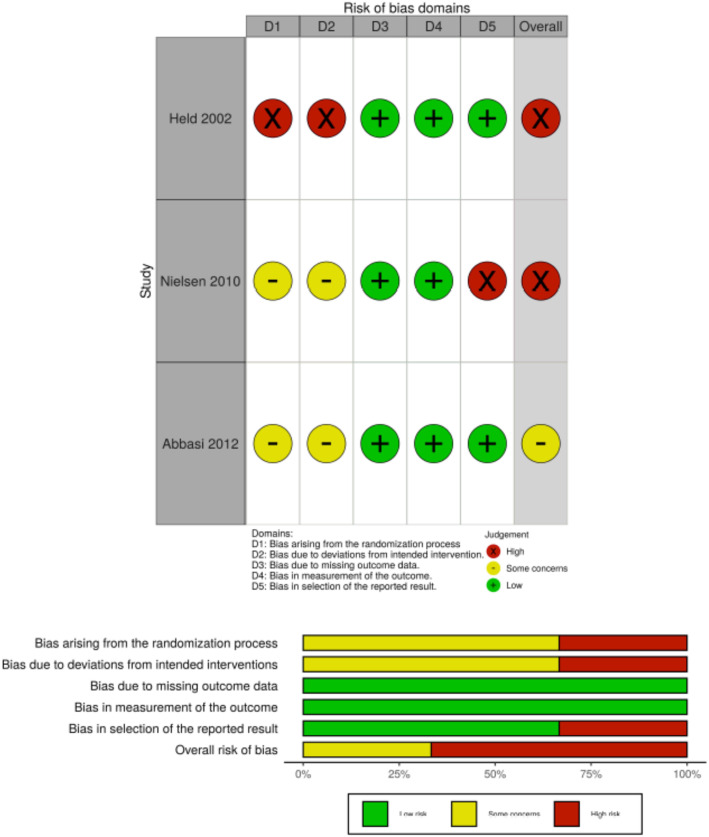
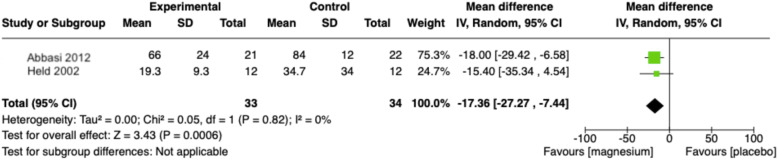
Three randomized control trials (RCT) were identified comparing oral magnesium to placebo in 151 older adults in three countries. Pooled analysis showed that post-intervention sleep onset latency time was 17.36 min less after magnesium supplementation compared to placebo (95% CI - 27.27 to - 7.44, p = 0.0006). Total sleep time improved by 16.06 min in the magnesium supplementation group but was statistically insignificant. All trials were at moderate-to-high risk of bias and outcomes were supported by low to very low quality of evidence.
This review confirms that the quality of literature is substandard for physicians to make well-informed recommendations on usage of oral magnesium for older adults with insomnia. However, given that oral magnesium is very cheap and widely available, RCT evidence may support oral magnesium supplements (less than 1 g quantities given up to three times a day) for insomnia symptoms.
补充镁常被认为有助于改善睡眠;然而,作为一种非处方睡眠辅助药物和补充与替代医学,支持这一说法的证据有限。本研究旨在评估补充镁对老年失眠患者的有效性和安全性。
检索了MEDLINE、EMBASE、补充与替代医学数据库、clinicaltrials.gov以及两个灰色文献数据库,比较补充镁与安慰剂或不治疗的效果。观察指标为睡眠质量、睡眠时间和不良事件。采用RoB 2.0和推荐分级评估、制定与评价(GRADE)方法进行偏倚风险和证据质量评估。汇总数据并使用平均差对治疗效果进行量化。对于其余结果,使用改良的效应方向图进行数据合成。
在三个国家的151名老年人中,共确定了三项将口服镁与安慰剂进行比较的随机对照试验(RCT)。汇总分析显示,与安慰剂相比,补充镁后干预后的入睡潜伏期缩短了17.36分钟(95%可信区间-27.27至-7.44,p = 0.0006)。补充镁组的总睡眠时间增加了16.06分钟,但无统计学意义。所有试验的偏倚风险为中到高,结果得到的证据质量为低到极低。
本综述证实,对于医生就老年失眠患者使用口服镁做出明智的推荐而言,文献质量不合格。然而,鉴于口服镁非常便宜且广泛可得,RCT证据可能支持使用口服镁补充剂(每天服用量少于1克,最多服用三次)来治疗失眠症状。