Department of Blood Transfusion, Shaoxing People's Hospital (Shaoxing Hospital, Zhejiang University School of Medicine), Shaoxing, China.
Department of Laboratory Medicine, The Affiliated People's Hospital, Jiangsu University, Zhenjiang, China.
Front Immunol. 2021 Apr 1;12:626193. doi: 10.3389/fimmu.2021.626193. eCollection 2021.
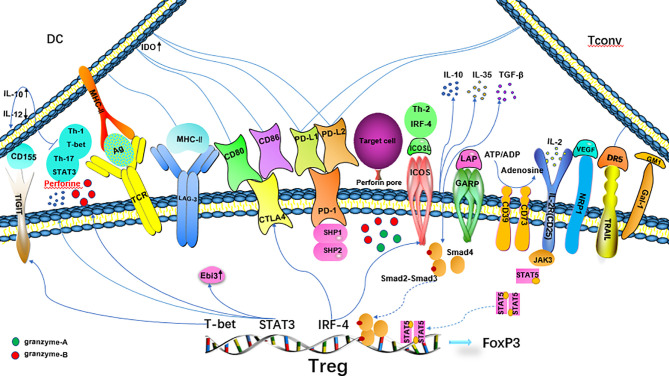
Rheumatoid arthritis (RA) is a systemic and heterogeneous autoimmune disease with symmetrical polyarthritis as its critical clinical manifestation. The basic cause of autoimmune diseases is the loss of tolerance to self or harmless antigens. The loss or functional deficiency of key immune cells, regulatory T (Treg) cells, has been confirmed in human autoimmune diseases. The pathogenesis of RA is complex, and the dysfunction of Tregs is one of the proposed mechanisms underlying the breakdown of self-tolerance leading to the progression of RA. Treg cells are a vital component of peripheral immune tolerance, and the transcription factor Foxp3 plays a major immunosuppressive role. Clinical treatment for RA mainly utilizes drugs to alleviate the progression of disease and relieve disease activity, and the ideal treatment strategy should be to re-induce self-tolerance before obvious tissue injury. Treg cells are one of the ideal options. This review will introduce the classification, mechanism of action, and characteristics of Treg cells in RA, which provides insights into clinical RA treatment.
类风湿关节炎(RA)是一种系统性和异质性自身免疫性疾病,以对称性多关节炎为其重要临床表现。自身免疫性疾病的基本原因是对自身或无害抗原的耐受性丧失。在人类自身免疫性疾病中已经证实关键免疫细胞,调节性 T(Treg)细胞的缺失或功能缺陷。RA 的发病机制复杂,Tregs 的功能障碍是导致 RA 进展的自身耐受破坏的潜在机制之一。Treg 细胞是外周免疫耐受的重要组成部分,转录因子 Foxp3 发挥主要的免疫抑制作用。RA 的临床治疗主要利用药物来缓解疾病进展和减轻疾病活动,理想的治疗策略应该是在明显的组织损伤之前重新诱导自身耐受。Treg 细胞是理想选择之一。本综述将介绍 RA 中 Treg 细胞的分类、作用机制和特征,为临床 RA 治疗提供思路。