Wallace Michael J, El Refaey Mona, Mesirca Pietro, Hund Thomas J, Mangoni Matteo E, Mohler Peter J
Frick Center for Heart Failure and Arrhythmia Research, The Ohio State University Wexner Medical Center, Columbus, OH, United States.
Dorothy M. Davis Heart and Lung Research Institute, The Ohio State University Wexner Medical Center, Columbus, OH, United States.
Front Genet. 2021 Apr 1;12:654925. doi: 10.3389/fgene.2021.654925. eCollection 2021.
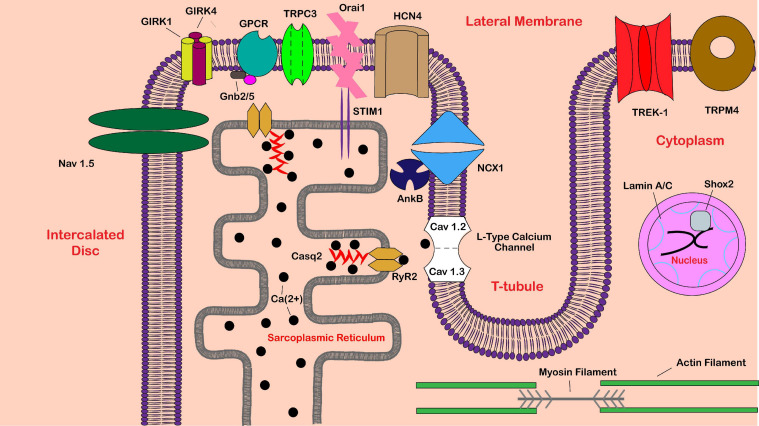
The pacemaker cells of the cardiac sinoatrial node (SAN) are essential for normal cardiac automaticity. Dysfunction in cardiac pacemaking results in human sinoatrial node dysfunction (SND). SND more generally occurs in the elderly population and is associated with impaired pacemaker function causing abnormal heart rhythm. Individuals with SND have a variety of symptoms including sinus bradycardia, sinus arrest, SAN block, bradycardia/tachycardia syndrome, and syncope. Importantly, individuals with SND report chronotropic incompetence in response to stress and/or exercise. SND may be genetic or secondary to systemic or cardiovascular conditions. Current management of patients with SND is limited to the relief of arrhythmia symptoms and pacemaker implantation if indicated. Lack of effective therapeutic measures that target the underlying causes of SND renders management of these patients challenging due to its progressive nature and has highlighted a critical need to improve our understanding of its underlying mechanistic basis of SND. This review focuses on current information on the genetics underlying SND, followed by future implications of this knowledge in the management of individuals with SND.
心脏窦房结(SAN)的起搏细胞对正常心脏自律性至关重要。心脏起搏功能障碍会导致人类窦房结功能障碍(SND)。SND更普遍地发生在老年人群中,并且与起搏功能受损导致心律失常有关。患有SND的个体有多种症状,包括窦性心动过缓、窦性停搏、窦房阻滞、心动过缓/心动过速综合征和晕厥。重要的是,患有SND的个体在应对压力和/或运动时表现出变时性功能不全。SND可能是遗传性的,也可能继发于全身性或心血管疾病。目前对SND患者的治疗仅限于缓解心律失常症状,并在必要时植入起搏器。由于缺乏针对SND根本原因的有效治疗措施,这些患者的治疗具有挑战性,因为其具有进行性,这凸显了迫切需要加深我们对SND潜在机制基础的理解。本综述重点关注SND潜在遗传学的当前信息,以及这些知识对SND患者管理的未来影响。