Pfeifer Danijela, Rešetar Josip, Gajdoš Kljusurić Jasenka, Panjkota Krbavčić Ines, Vranešić Bender Darija, Rodríguez-Pérez Celia, Ruíz-López María Dolores, Šatalić Zvonimir
Faculty of Food Technology and Biotechnology, University of Zagreb, Zagreb, Croatia.
Faculty of Pharmacy and Biochemistry, University of Zagreb, Zagreb, Croatia.
Front Nutr. 2021 Mar 31;8:617721. doi: 10.3389/fnut.2021.617721. eCollection 2021.
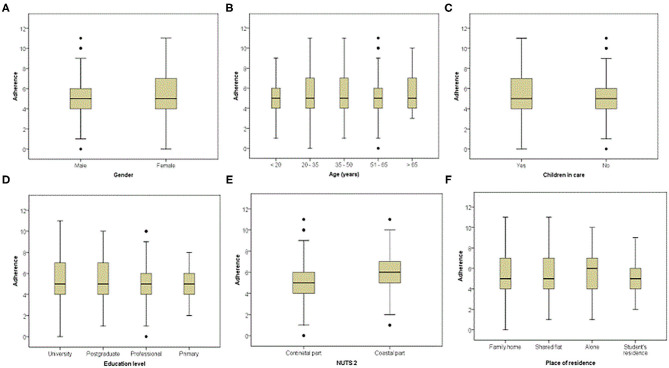
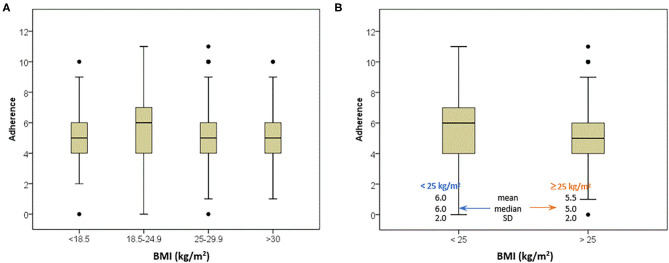
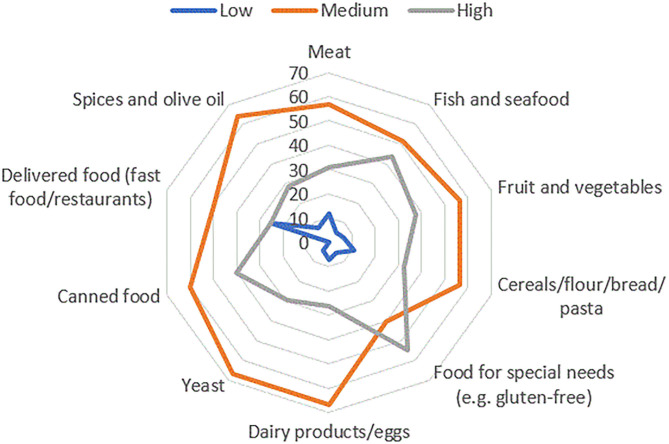
The primary aims of this study were to evaluate the changes in dietary behavior among the Croatian adult population during the COVID-19 outbreak and to explore the impact of confinement on cooking habits. The study was based on results from COVIDiet_Int cross-sectional study-a part of COVIDiet project (NCT04449731). A self-administered online questionnaire was used to assess the frequency of food consumption, eating habits, and sociodemographic information. A total number of 4,281 participants (80.5% females and 19.4% males) completed the questionnaire. The Mediterranean Diet Adherence Screener (MEDAS) score before the confinement was 5.02 ± 1.97, while during the confinement, the MEDAS score increased to 5.85 ± 2.04. Participants who had higher adherence to the Mediterranean diet (MedDiet) during the confinement were mostly females (88.8%), aged between 20 and 50 years, with the highest level of education (66.3%) and normal BMI (70.6%). The majority of participants maintained their dietary behavior as it was before COVID-19 confinement, while 36.9% decreased their physical activity. Participants with higher MEDAS score were more eager to increase their physical activity. Additionally, higher median values of MEDAS score were noted for participants with body mass index values below 24.9 kg/m (6.0 vs. 5.0 for participants with BMI above 25 kg/m). Participants in all residence places increased their cooking frequency during the confinement (53.8%), which was associated with an increase in vegetables, legumes, as well as fish and seafood consumption. According to our findings, Croatian adults exhibited medium adherence to the MedDiet during the COVID-19 confinement. The results suggest that cooking frequency could be positively associated with overall dietary quality, which is of utmost importance in these demanding times.
本研究的主要目的是评估克罗地亚成年人群在新冠疫情爆发期间的饮食行为变化,并探讨居家隔离对烹饪习惯的影响。该研究基于COVIDiet_Int横断面研究的结果,该研究是COVIDiet项目(NCT04449731)的一部分。使用一份自行填写的在线问卷来评估食物消费频率、饮食习惯和社会人口学信息。共有4281名参与者(80.5%为女性,19.4%为男性)完成了问卷。隔离前地中海饮食依从性筛查器(MEDAS)得分是5.02±1.97,而在隔离期间,MEDAS得分升至5.85±2.04。在隔离期间对地中海饮食(MedDiet)依从性较高的参与者大多为女性(88.8%),年龄在20至50岁之间,受教育程度最高(66.3%)且BMI正常(70.6%)。大多数参与者保持了新冠疫情隔离前的饮食行为,而36.9%的人减少了身体活动。MEDAS得分较高的参与者更渴望增加身体活动。此外,体重指数值低于24.9kg/m的参与者的MEDAS得分中位数更高(BMI高于25kg/m的参与者为5.0,而低于25kg/m的参与者为6.0)。所有居住场所的参与者在隔离期间烹饪频率都有所增加(53.8%),这与蔬菜、豆类以及鱼类和海鲜消费的增加有关。根据我们的研究结果,克罗地亚成年人在新冠疫情隔离期间对MedDiet的依从性中等。结果表明,烹饪频率可能与整体饮食质量呈正相关,这在当前充满挑战的时期至关重要。