Duan Kuaikuai, Premi Enrico, Pilotto Andrea, Cristillo Viviana, Benussi Alberto, Libri Ilenia, Giunta Marcello, Bockholt H Jeremy, Liu Jingyu, Campora Riccardo, Pezzini Alessandro, Gasparotti Roberto, Magoni Mauro, Padovani Alessandro, Calhoun Vince D
Department of Electrical and Computer Engineering, Georgia Institute of Technology, Atlanta, USA.
Tri-Institutional Center for Translational Research in Neuroimaging and Data Science (TReNDS), Georgia Institute of Technology, Georgia State University, Emory University, Atlanta, USA.
Neurobiol Stress. 2021 May;14:100326. doi: 10.1016/j.ynstr.2021.100326. Epub 2021 Apr 13.
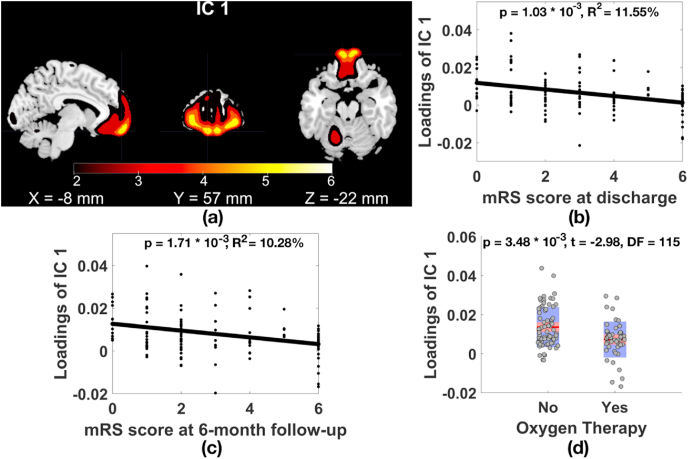
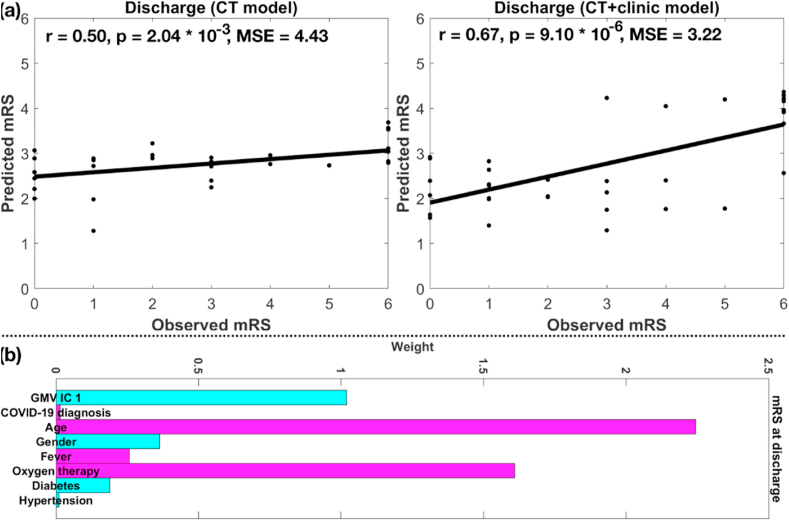
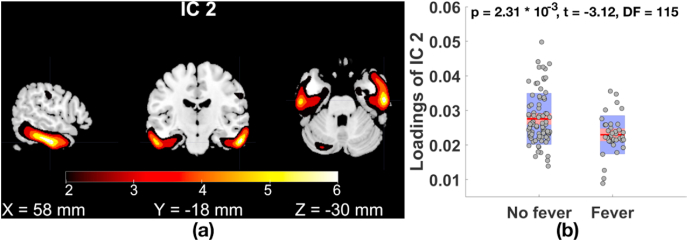
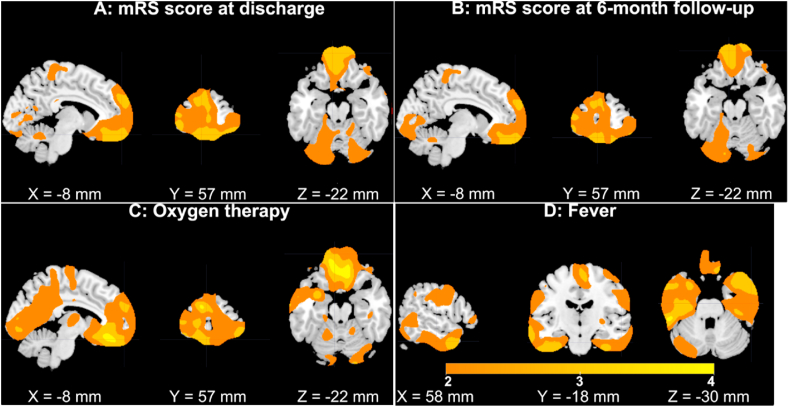
COVID-19, the infectious disease caused by the most recently discovered severe acute respiratory syndrome coronavirus-2 (SARS-CoV-2), has become a global pandemic. It dramatically affects people's health and daily life. Neurological complications are increasingly documented for patients with COVID-19. However, the effect of COVID-19 on the brain is less studied, and existing quantitative neuroimaging analyses of COVID-19 were mainly based on the univariate voxel-based morphometry analysis (VBM) that requires corrections for a large number of tests for statistical significance, multivariate approaches that can reduce the number of tests to be corrected have not been applied to study COVID-19 effect on the brain yet. In this study, we leveraged source-based morphometry (SBM) analysis, a multivariate extension of VBM, to identify changes derived from computed tomography scans in covarying gray matter volume patterns underlying COVID-19 in 120 neurological patients (including 58 cases with COVID-19 and 62 patients without COVID-19 matched for age, gender and diseases). SBM identified that lower gray matter volume (GMV) in superior/medial/middle frontal gyri was significantly associated with a higher level of disability (modified Rankin Scale) at both discharge and six months follow-up phases even when controlling for cerebrovascular diseases. GMV in superior/medial/middle frontal gyri was also significantly reduced in patients receiving oxygen therapy compared to patients not receiving oxygen therapy. Patients with fever presented significant GMV reduction in inferior/middle temporal gyri and fusiform gyrus compared to patients without fever. Patients with agitation showed GMV reduction in superior/medial/middle frontal gyri compared to patients without agitation. Patients with COVID-19 showed no significant GMV differences from patients without COVID-19 in any brain region. Results suggest that COVID-19 may affect the frontal-temporal network in a secondary manner through fever or lack of oxygen.
新型冠状病毒肺炎(COVID-19)是由最近发现的严重急性呼吸综合征冠状病毒2(SARS-CoV-2)引起的传染病,已成为全球大流行疾病。它极大地影响了人们的健康和日常生活。越来越多的文献记录了COVID-19患者的神经并发症。然而,COVID-19对大脑的影响研究较少,现有的COVID-19定量神经影像学分析主要基于单变量体素形态学分析(VBM),该分析需要对大量测试进行统计显著性校正,而能够减少校正测试数量的多变量方法尚未应用于研究COVID-19对大脑的影响。在本研究中,我们利用基于源的形态学(SBM)分析(VBM的多变量扩展),在120名神经科患者(包括58例COVID-19患者和62例年龄、性别和疾病相匹配的非COVID-19患者)中,识别出COVID-19潜在的共变灰质体积模式中计算机断层扫描产生的变化。SBM发现,即使在控制脑血管疾病的情况下,上/中/额内侧回灰质体积(GMV)较低与出院时和六个月随访期较高的残疾水平(改良Rankin量表)显著相关。与未接受氧疗的患者相比,接受氧疗的患者上/中/额内侧回GMV也显著降低。与无发热患者相比,发热患者颞中/下回和梭状回GMV显著降低。与无躁动患者相比,躁动患者上/中/额内侧回GMV降低。COVID-19患者与非COVID-19患者在任何脑区均未显示出显著的GMV差异。结果表明,COVID-19可能通过发热或缺氧以继发性方式影响额颞叶网络。