Jeffery-Smith Anna, Dun-Campbell Kate, Janarthanan Roshni, Fok Jonathan, Crawley-Boevey Emma, Vusirikala Amoolya, Fernandez Ruiz De Olano Elena, Sanchez Perez Marina, Tang Suzanne, Rowland Thomas Aj, Wynne-Evans Edward, Bell Anita, Patel Bharat, Amin-Chowdhury Zahin, Aiano Felicity, Paranthaman Karthik, Ma Thomas, Saavedra-Campos Maria, Ellis Joanna, Lackenby Angie, Whitaker Heather, Myers Richard, Höschler Katja, Brown Kevin, Ramsay Mary E, Shetty Nandini, Chow J Yimmy, Ladhani Shamez, Zambon Maria
Virus Reference department, Public Health England, 61 Colindale Avenue, London NW9 5EQ, UK.
London Health Protection team, National Infection Service, Public Health England, London, UK.
Lancet Reg Health Eur. 2021 Apr;3:100038. doi: 10.1016/j.lanepe.2021.100038. Epub 2021 Jan 22.
Care homes have been disproportionately affected by the COVID-19 pandemic. We investigated the potential role of asymptomatic infection and silent transmission in London care homes that reported no cases of COVID-19 during the first wave of the pandemic.
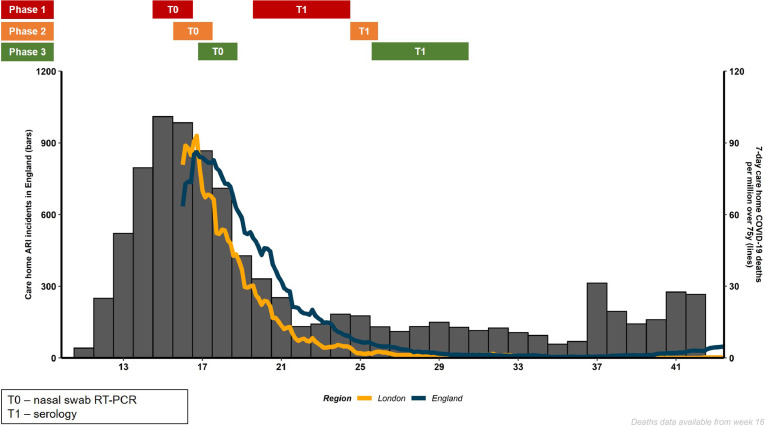
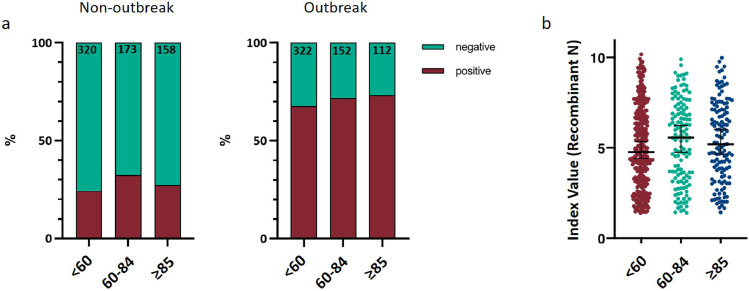
Five care homes with no cases and two care homes reporting a single case of COVID-19 (non-outbreak homes) were investigated with nasal swabbing for SARS-CoV-2 RT-PCR and serology for SARS-CoV-2 antibodies five weeks later. Whole genome sequencing (WGS) was performed on RT-PCR positive samples. Serology results were compared with those of six care homes with recognised outbreaks.
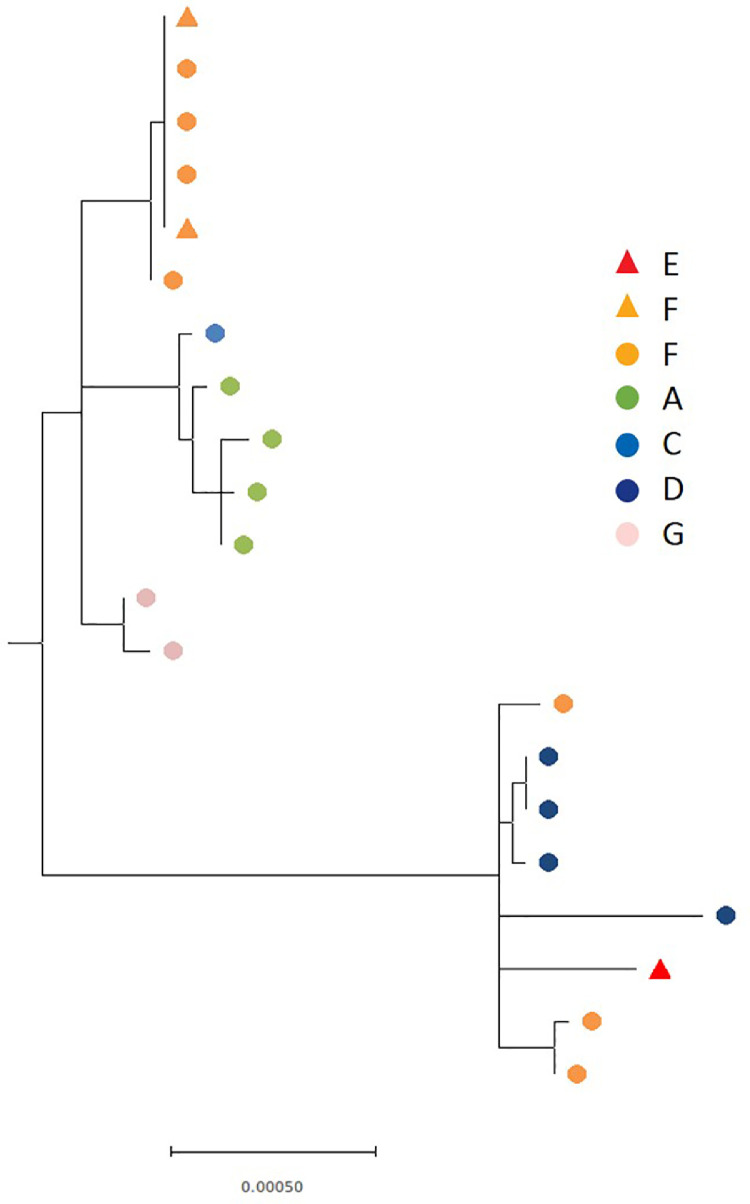
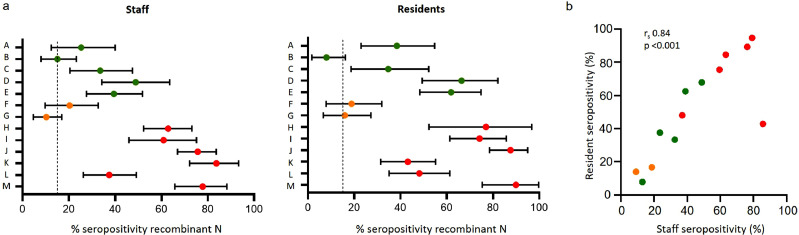
Across seven non-outbreak homes, 718 (387 staff, 331 residents) individuals had a nasal swab and 651 (386 staff, 265 residents) had follow-up serology. Sixteen individuals (13 residents, 3 staff) in five care homes with no reported cases were RT-PCR positive (care home positivity rates, 0 to 7.6%) compared to 13 individuals (3.0 and 10.8% positivity) in two homes reporting a single case.Seropositivity across these seven homes varied between 10.7-56.5%, with four exceeding community seroprevalence in London (14.8%). Seropositivity rates for staff and residents correlated significantly (r 0.84, [95% CI 0.51-0.95] p <0.001) across the 13 homes. WGS identified multiple introductions into some homes and silent transmission of a single lineage between staff and residents in one home.
We found high rates of asymptomatic infection and transmission even in care homes with no COVID-19 cases. The higher seropositivity rates compared to RT-PCR positivity highlights the true extent of the silent outbreak.
PHE.
新冠疫情对养老院的影响尤为严重。我们调查了在疫情第一波期间报告无新冠病例的伦敦养老院中无症状感染和隐性传播的潜在作用。
对五家无病例的养老院和两家报告有一例新冠病例的养老院(非暴发养老院)进行调查,在五周后采集鼻拭子进行新冠病毒逆转录聚合酶链反应(RT-PCR)检测,并检测新冠病毒抗体血清学。对RT-PCR阳性样本进行全基因组测序(WGS)。将血清学结果与六家有确诊疫情的养老院的结果进行比较。
在七家非暴发养老院中,718人(387名工作人员、331名居民)接受了鼻拭子检测,651人(386名工作人员、265名居民)接受了后续血清学检测。在五家报告无病例的养老院中,16人(13名居民、3名工作人员)RT-PCR呈阳性(养老院阳性率为0至7.6%),而在两家报告有一例病例的养老院中,13人呈阳性(阳性率分别为3.0%和10.8%)。这七家养老院的血清阳性率在10.7%至56.5%之间,其中四家超过了伦敦的社区血清阳性率(14.8%)。在这13家养老院中工作人员和居民血清阳性率显著相关(r = 0.84, [95%置信区间0.51 - 0.95] p < 0.001)。全基因组测序发现一些养老院存在多次病毒引入,且在一家养老院中一个病毒谱系在工作人员和居民之间隐性传播
我们发现即使在无新冠病例的养老院中,无症状感染和传播率也很高。与RT-PCR阳性率相比,较高的血清阳性率凸显了隐性暴发的真实程度。
英国公共卫生部