Department of Gastroenterology, Renmin Hospital of Wuhan University, Wuhan, Hubei, China.
Department of Gastroenterology, The Third XiangYa Hospital Central South University, Changsha, Hunan, China.
Virulence. 2021 Dec;12(1):1199-1208. doi: 10.1080/21505594.2021.1909894.
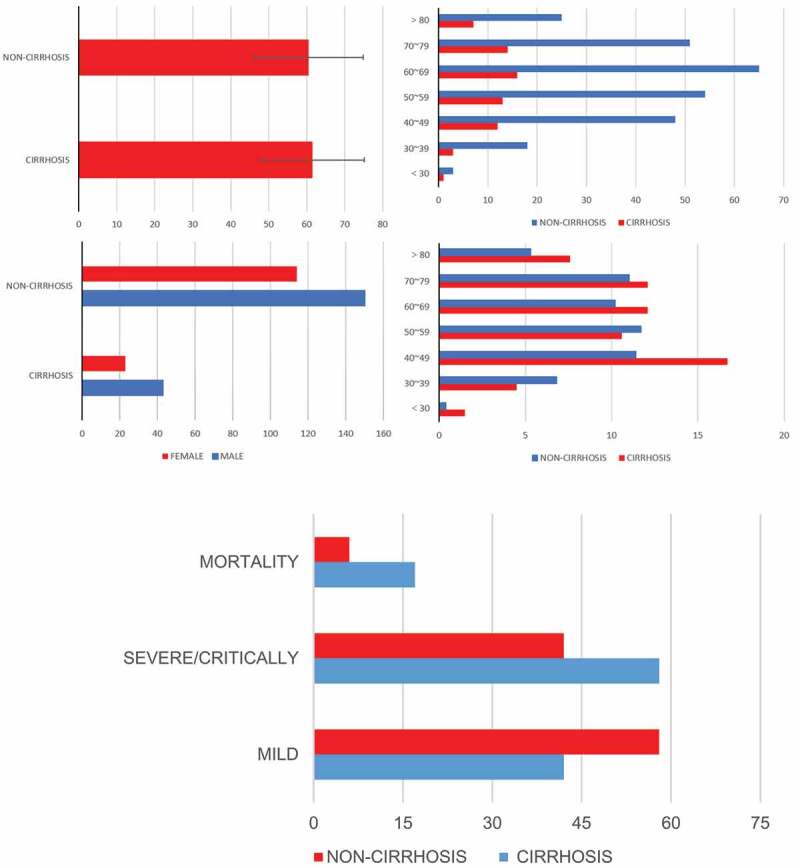
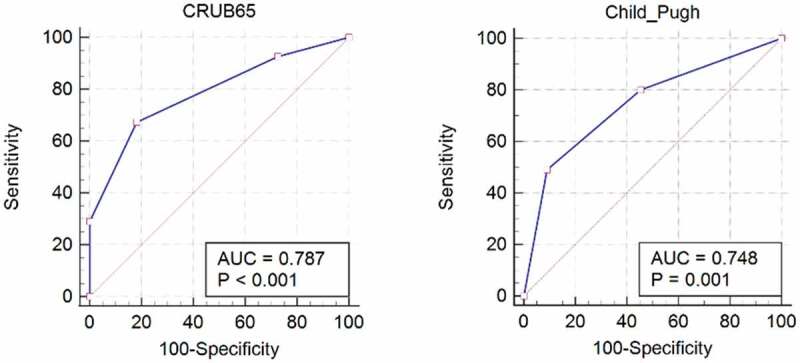
: COVID-19 has rapidly become a major health emergency worldwide. The characteristic, outcome, and risk factor of COVID-19 in patients with decompensated cirrhosis remain unclear.: Medical records were collected from 23 Chinese hospitals. Patients with decompensated cirrhosis and age- and sex-matched non-liver disease patients were enrolled with 1:4 ratio using stratified sampling.: There were more comorbidities with higher Chalson Complication Index (p < 0.001), higher proportion of patients having gastrointestinal bleeding, jaundice, ascites, and diarrhea among those patients (p < 0.05) and in decompensated cirrhosis patients. Mortality (p < 0.05) and the proportion of severe ill (p < 0.001) were significantly high among those patients. Patients in severe ill subgroup had higher mortality (p < 0.001), MELD, and CRUB65 score but lower lymphocytes count. Besides, this subgroup had larger proportion of patients with abnormal (PT), activated partial thromboplatin time (APTT), D-Dimer, alanine aminotransferase (ALT), aspartate aminotransferase (AST), total bilirubin (TBL) and Creatinine (Cr) (p < 0.05). Multivariate logistic regression for severity shown that MELD and CRUB65 score reached significance. Higher Child-Pugh and CRUB65 scores were found among non-survival cases and multivariate logistic regression further inferred risk factors for adverse outcome. Receiver Operating Characteristic (ROC) curves also provided remarkable demonstrations for the predictive ability of Child-Pugh and CRUB65 scores.: COVID-19 patients with cirrhosis had larger proportion of more severely disease and higher mortality. MELD and CRUB65 score at hospital admission may predict COVID-19 severity while Child-Pugh and CRUB65 score were highly associated with non-survival among those patients.
: COVID-19 已迅速成为全球范围内的重大卫生紧急事件。失代偿期肝硬化患者 COVID-19 的特征、结局和危险因素仍不清楚。: 从 23 家中国医院收集病历。采用分层抽样,按 1:4 的比例纳入失代偿期肝硬化患者和年龄、性别匹配的非肝脏疾病患者。: 与非肝脏疾病患者相比,失代偿期肝硬化患者合并症更多,Chalson 并发症指数更高(p < 0.001),胃肠道出血、黄疸、腹水和腹泻的患者比例更高(p < 0.05)。失代偿期肝硬化患者的死亡率(p < 0.05)和重症患者比例(p < 0.001)显著较高。重症患者亚组死亡率更高(p < 0.001)、MELD 和 CRUB65 评分更高,但淋巴细胞计数更低。此外,该亚组患者中 PT、活化部分凝血活酶时间(APTT)、D-二聚体、丙氨酸氨基转移酶(ALT)、天冬氨酸氨基转移酶(AST)、总胆红素(TBL)和肌酐(Cr)异常的患者比例更高(p < 0.05)。严重程度的多变量逻辑回归显示 MELD 和 CRUB65 评分有统计学意义。非存活病例的 Child-Pugh 和 CRUB65 评分更高,多变量逻辑回归进一步推断出不良结局的危险因素。受试者工作特征(ROC)曲线也为 Child-Pugh 和 CRUB65 评分的预测能力提供了显著证据。: COVID-19 合并肝硬化患者疾病更严重、死亡率更高。入院时的 MELD 和 CRUB65 评分可能预测 COVID-19 的严重程度,而 Child-Pugh 和 CRUB65 评分与这些患者的非存活高度相关。