Geography Department, Campus Box 260, University of Colorado Boulder, Boulder, CO, 80309, USA.
Earth Lab, 4001 Discovery Drive Suite S348 - UCB 611, University of Colorado Boulder, Boulder, CO, 80309, USA.
Sci Data. 2021 Apr 19;8(1):112. doi: 10.1038/s41597-021-00891-1.
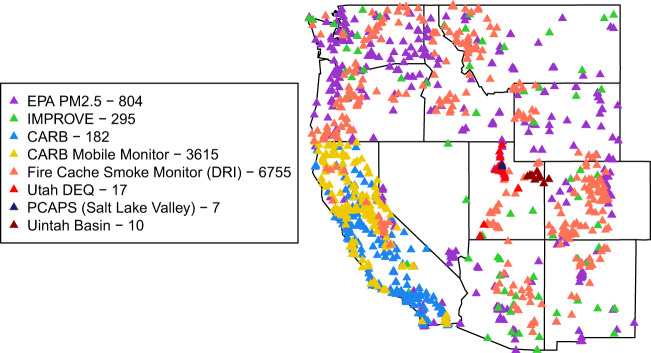
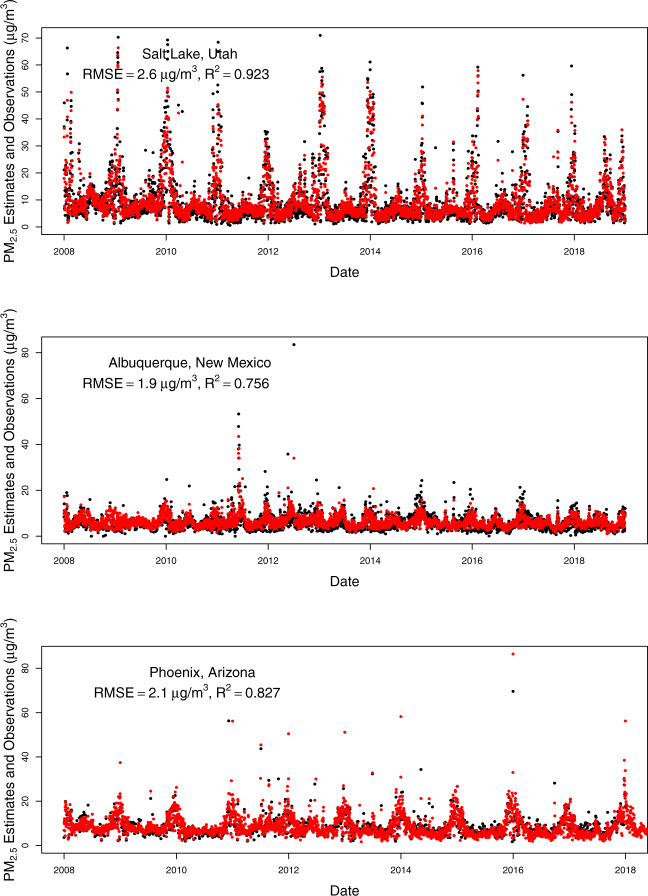
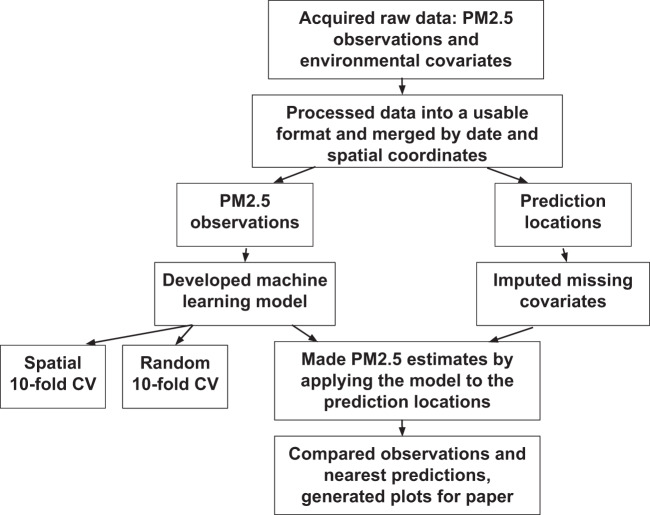
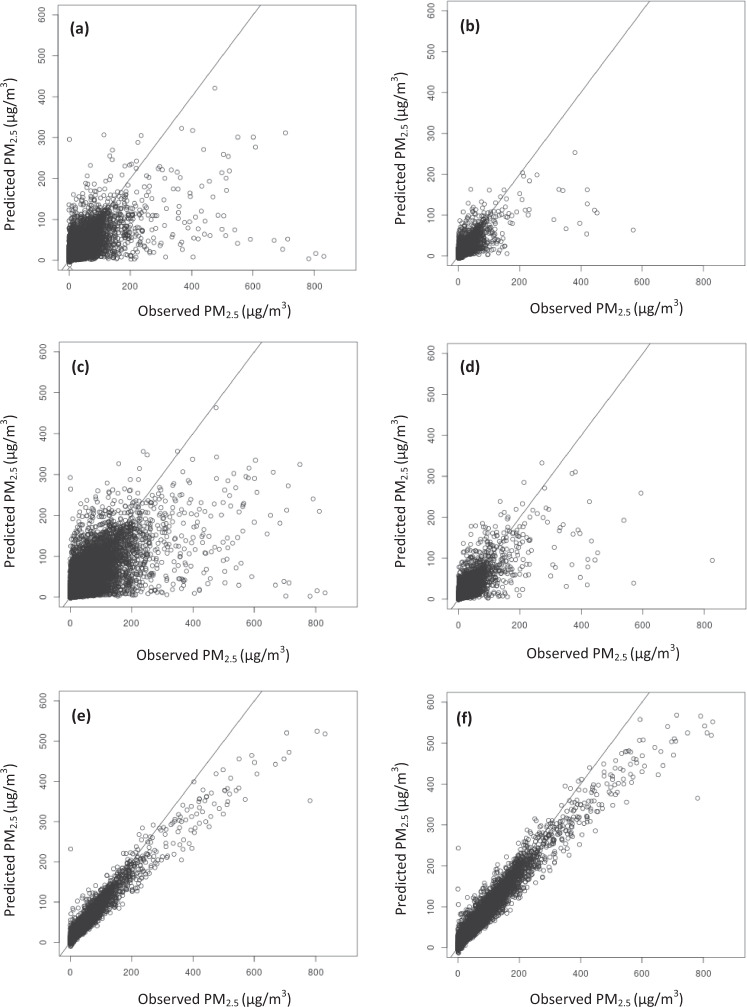
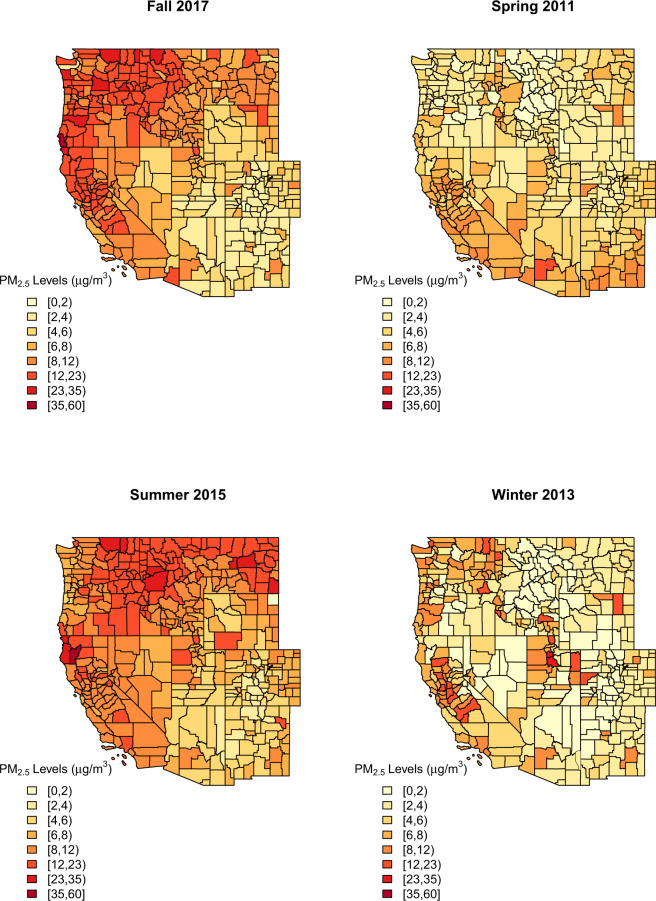
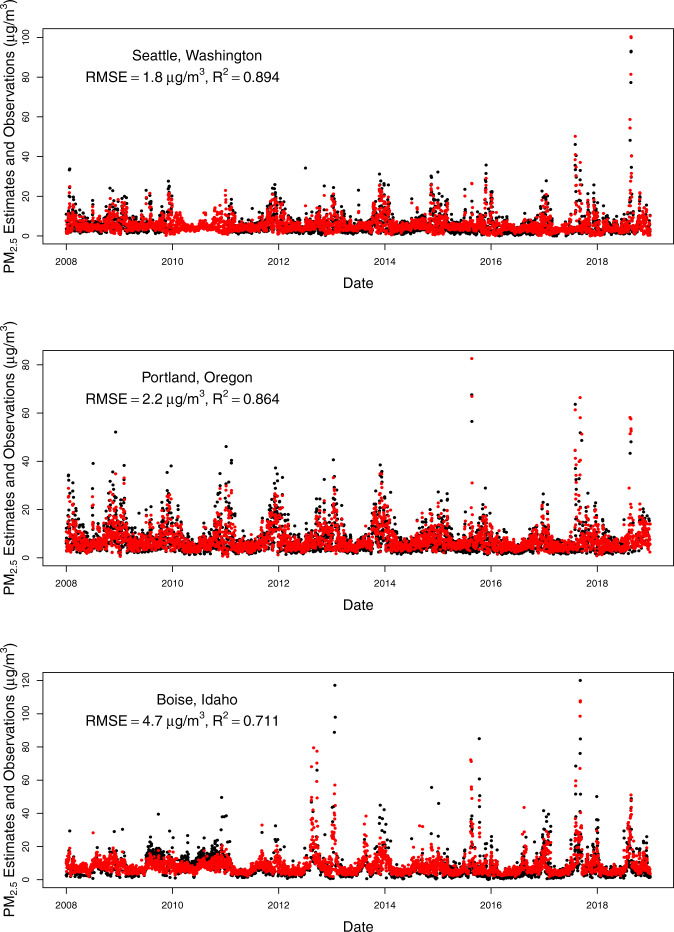
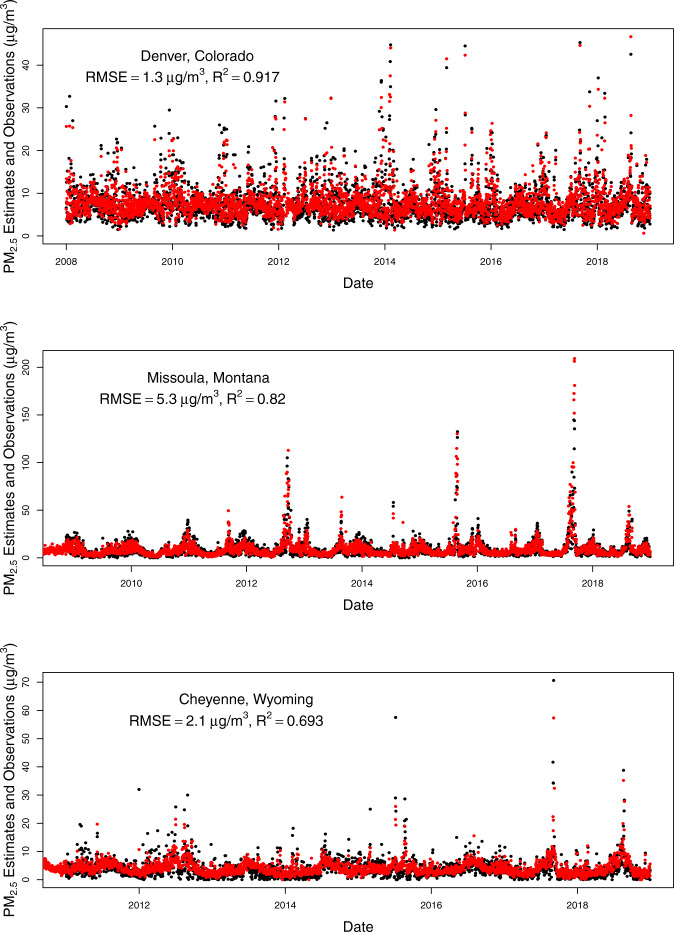
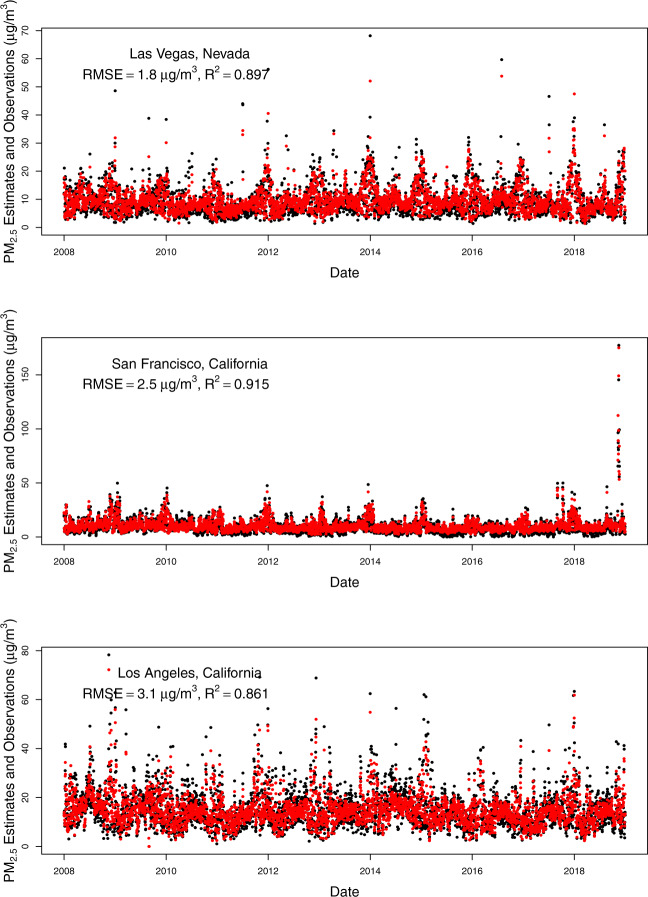
We created daily concentration estimates for fine particulate matter (PM) at the centroids of each county, ZIP code, and census tract across the western US, from 2008-2018. These estimates are predictions from ensemble machine learning models trained on 24-hour PM measurements from monitoring station data across 11 states in the western US. Predictor variables were derived from satellite, land cover, chemical transport model (just for the 2008-2016 model), and meteorological data. Ten-fold spatial and random CV R were 0.66 and 0.73, respectively, for the 2008-2016 model and 0.58 and 0.72, respectively for the 2008-2018 model. Comparing areal predictions to nearby monitored observations demonstrated overall R of 0.70 for the 2008-2016 model and 0.58 for the 2008-2018 model, but we observed higher R (>0.80) in many urban areas. These data can be used to understand spatiotemporal patterns of, exposures to, and health impacts of PM in the western US, where PM levels have been heavily impacted by wildfire smoke over this time period.
我们在美国西部创建了 2008-2018 年每日细颗粒物(PM)浓度的估计值,这些浓度以每个县、ZIP 编码和普查区的中心点为中心。这些估计值是基于美国西部 11 个州的监测站数据中 24 小时 PM 测量值,通过集合机器学习模型预测得出的。预测变量来自卫星、土地覆盖、化学传输模型(仅适用于 2008-2016 年模型)和气象数据。对于 2008-2016 年模型,空间和随机 CV R 值分别为 0.66 和 0.73,对于 2008-2018 年模型,空间和随机 CV R 值分别为 0.58 和 0.72。将面积预测与附近监测的观测值进行比较,结果表明,2008-2016 年模型的整体 R 值为 0.70,2008-2018 年模型的 R 值为 0.58,但我们观察到许多城市地区的 R 值更高(>0.80)。这些数据可用于了解美国西部 PM 的时空分布、暴露程度和对健康的影响,在此期间,PM 水平受到野火烟雾的严重影响。