Department of Physiology and Biophysics, State University of New York at Buffalo, Jacobs School of Medicine and Biomedical Sciences, Buffalo, NY, USA.
Mol Psychiatry. 2022 Jan;27(1):445-465. doi: 10.1038/s41380-021-01092-3. Epub 2021 Apr 19.
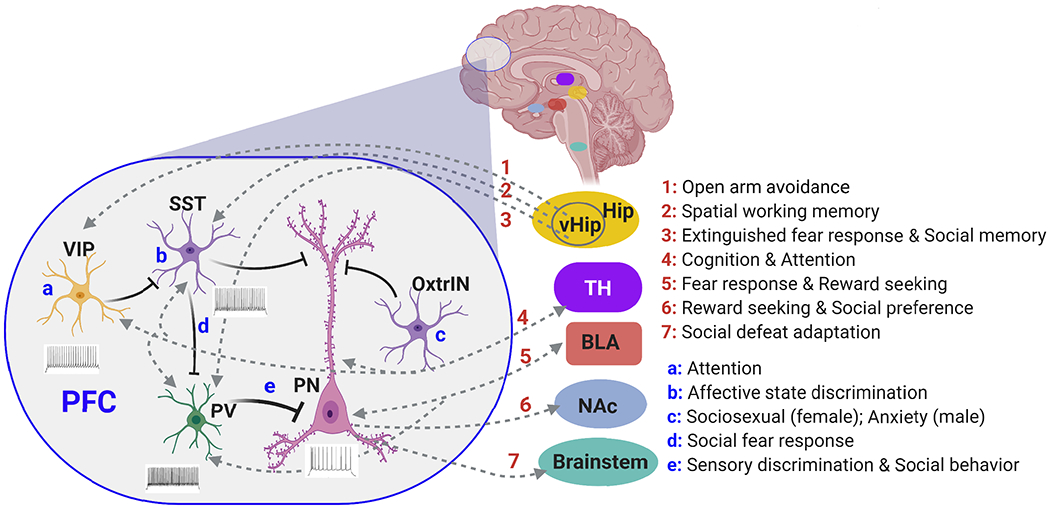
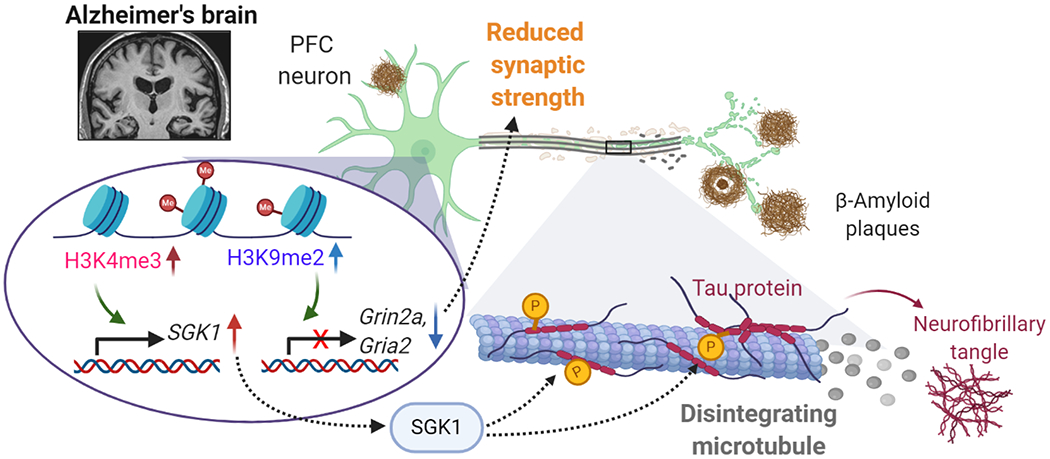
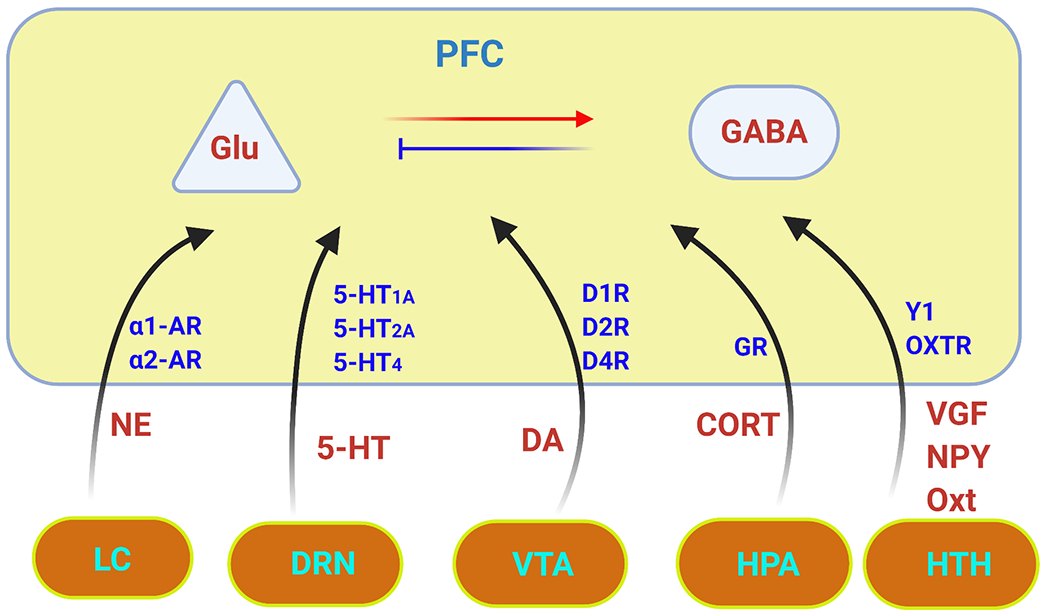
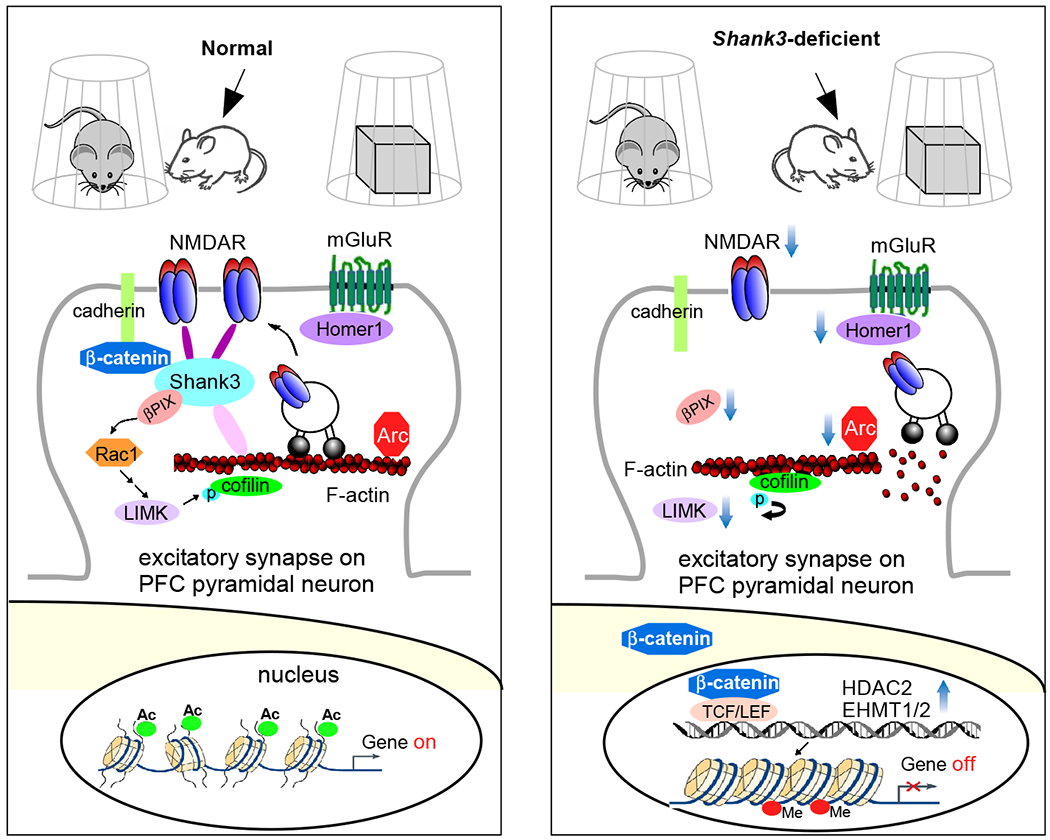
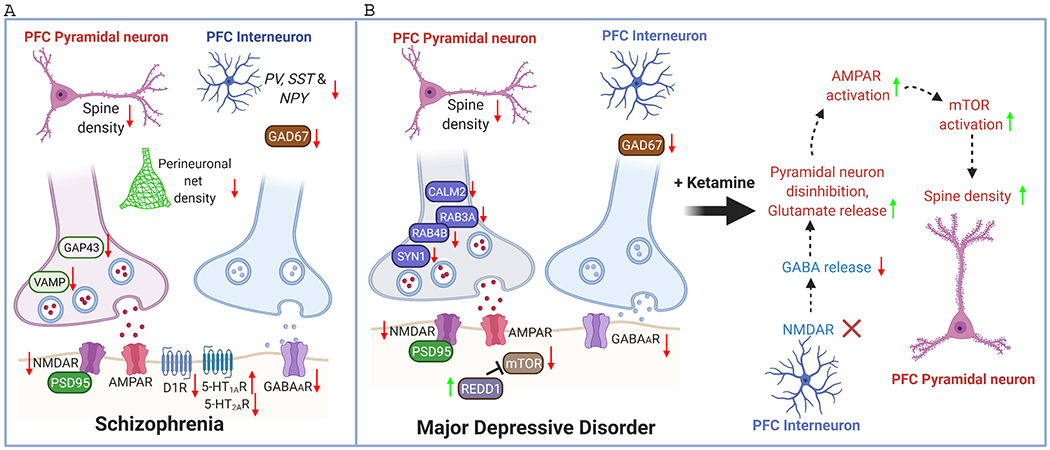
The prefrontal cortex (PFC) serves as the chief executive officer of the brain, controlling the highest level cognitive and emotional processes. Its local circuits among glutamatergic principal neurons and GABAergic interneurons, as well as its long-range connections with other brain regions, have been functionally linked to specific behaviors, ranging from working memory to reward seeking. The efficacy of synaptic signaling in the PFC network is profundedly influenced by monoaminergic inputs via the activation of dopamine, adrenergic, or serotonin receptors. Stress hormones and neuropeptides also exert complex effects on the synaptic structure and function of PFC neurons. Dysregulation of PFC synaptic transmission is strongly linked to social deficits, affective disturbance, and memory loss in brain disorders, including autism, schizophrenia, depression, and Alzheimer's disease. Critical neural circuits, biological pathways, and molecular players that go awry in these mental illnesses have been revealed by integrated electrophysiological, optogenetic, biochemical, and transcriptomic studies of PFC. Novel epigenetic mechanism-based strategies are proposed as potential avenues of therapeutic intervention for PFC-involved diseases. This review provides an overview of PFC network organization and synaptic modulation, as well as the mechanisms linking PFC dysfunction to the pathophysiology of neurodevelopmental, neuropsychiatric, and neurodegenerative diseases. Insights from the preclinical studies offer the potential for discovering new medical treatments for human patients with these brain disorders.
前额叶皮层(PFC)作为大脑的首席执行官,控制着最高级别的认知和情绪过程。其谷氨酸能主神经元和 GABA 能中间神经元之间的局部回路,以及与其他大脑区域的长程连接,与从工作记忆到奖励寻求等特定行为功能相关。单胺能输入通过激活多巴胺、肾上腺素能或 5-羟色胺受体,深刻影响 PFC 网络中的突触信号传递。应激激素和神经肽也对 PFC 神经元的突触结构和功能产生复杂影响。PFC 突触传递的失调与大脑疾病中的社交缺陷、情感障碍和记忆丧失密切相关,包括自闭症、精神分裂症、抑郁症和阿尔茨海默病。通过对 PFC 的综合电生理学、光遗传学、生物化学和转录组学研究,揭示了这些精神疾病中出错的关键神经回路、生物途径和分子参与者。基于新的表观遗传机制的策略被提出作为治疗 PFC 相关疾病的潜在途径。本综述提供了 PFC 网络组织和突触调节的概述,以及将 PFC 功能障碍与神经发育、神经精神和神经退行性疾病的病理生理学联系起来的机制。临床前研究的见解为发现治疗这些大脑疾病的人类患者的新疗法提供了潜力。