Department of Clinical and Health Psychology, Leeds Teaching Hospitals National Health Service Trust, Leeds, UK.
Health and Social Care Research Centre, College of Health, Psychology and Social Care, University of Derby, Derby, UK.
Mult Scler. 2021 Oct;27(11):1657-1678. doi: 10.1177/1352458521996002. Epub 2021 Apr 20.
Fatigue is a common, debilitating symptom of multiple sclerosis (MS) without a current standardised treatment.
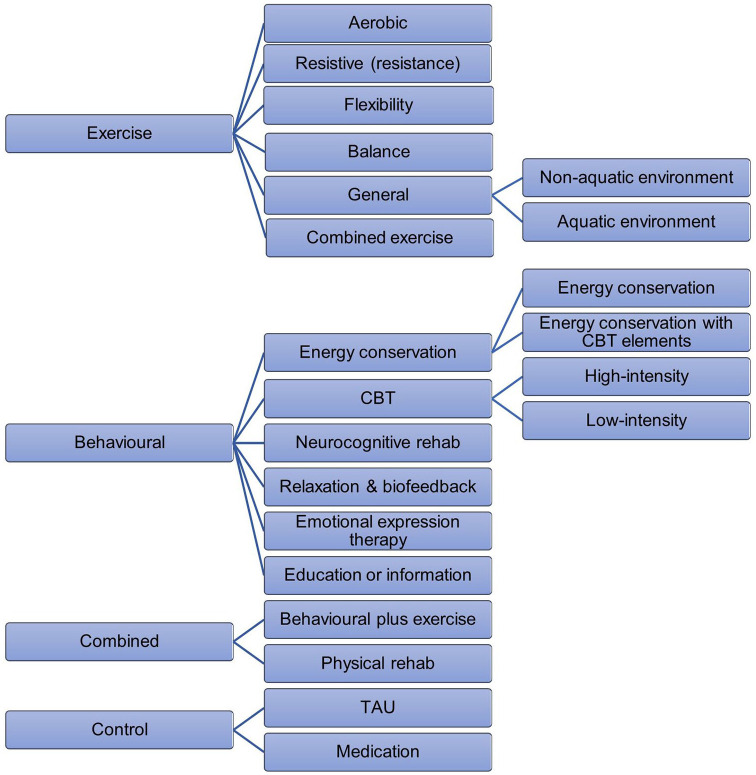
The aim of this systematic review with network meta-analyses was to estimate the relative effectiveness of both fatigue-targeted and non-targeted exercise, behavioural and combined (behavioural and exercise) interventions.
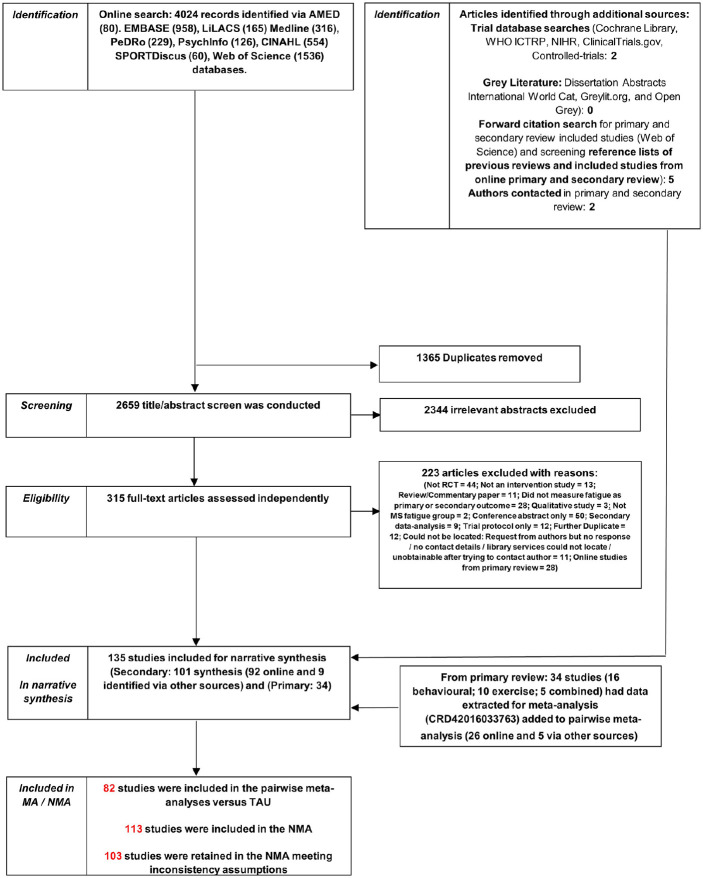
Nine electronic databases up to August 2018 were searched, and 113 trials ( = 6909) were included: 34 were fatigue-targeted and 79 non-fatigue-targeted trials. Intervention characteristics were extracted using the Template for Intervention Description and Replication guidelines. Certainty of evidence was assessed using GRADE.
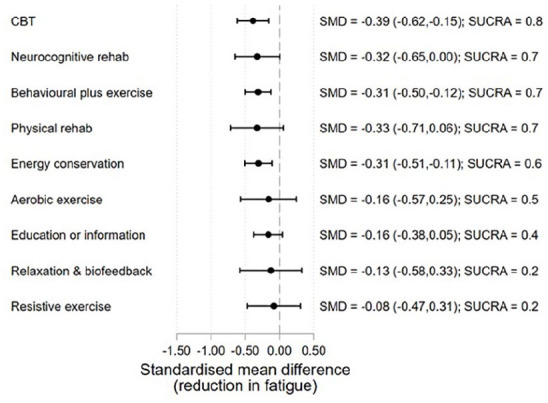
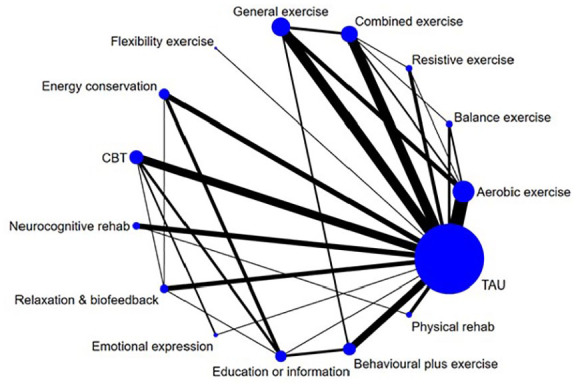
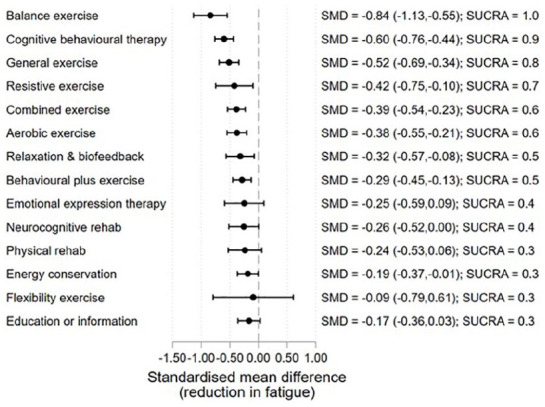
Pairwise meta-analyses showed that exercise interventions demonstrated moderate to large effects across subtypes regardless of treatment target, with the largest effect for balance exercise (SMD = 0.84). Cognitive behavioural therapies (CBTs) showed moderate to large effects (SMD = 0.60), with fatigue-targeted treatments showing larger effects than those targeting distress. Network meta-analysis showed that balance exercise performed significantly better compared to other exercise and behavioural intervention subtypes, except CBT. CBT was estimated to be superior to energy conservation and other behavioural interventions. Combined exercise also had a moderate to large effect.
Treatment recommendations for balance and combined exercise are tentative as the certainty of the evidence was moderate. The certainty of the evidence for CBT was high.
疲劳是多发性硬化症(MS)的一种常见且使人虚弱的症状,但目前尚无标准化的治疗方法。
本系统评价的目的是通过网络荟萃分析来评估针对疲劳和非针对疲劳的运动、行为以及联合(行为与运动)干预措施的相对有效性。
检索了截至 2018 年 8 月的 9 个电子数据库,共纳入 113 项试验(共 6909 例患者):34 项是针对疲劳的,79 项不是针对疲劳的。使用干预描述和复制模板提取干预特征。使用 GRADE 评估证据的确定性。
两两荟萃分析显示,无论治疗目标如何,运动干预在所有亚型中均显示出中等至较大的效果,其中平衡运动的效果最大(SMD=0.84)。认知行为疗法(CBT)显示出中等至较大的效果(SMD=0.60),针对痛苦的治疗效果比针对疲劳的治疗效果更大。网络荟萃分析显示,与其他运动和行为干预类型相比,平衡运动的效果显著更好,除了 CBT。CBT 估计优于能量保存和其他行为干预。联合运动也具有中等至较大的效果。
由于证据的确定性为中等,因此平衡和联合运动治疗的推荐意见是暂定的。CBT 的证据确定性很高。