F.M. Kirby Research Center for Functional Brain Imaging, Kennedy Krieger Research Institute, Baltimore, MD, USA; Russell H. Morgan Department of Radiology and Radiological Science, The Johns Hopkins University School of Medicine, Baltimore, MD, USA; Department of Electronic Science, Fujian Provincial Key Laboratory of Plasma and Magnetic Resonance, School of Electronic Science and Engineering, National Model Microelectronics College, Xiamen University, Xiamen, China.
F.M. Kirby Research Center for Functional Brain Imaging, Kennedy Krieger Research Institute, Baltimore, MD, USA; Russell H. Morgan Department of Radiology and Radiological Science, The Johns Hopkins University School of Medicine, Baltimore, MD, USA.
Neuroimage. 2021 Aug 1;236:118071. doi: 10.1016/j.neuroimage.2021.118071. Epub 2021 Apr 18.
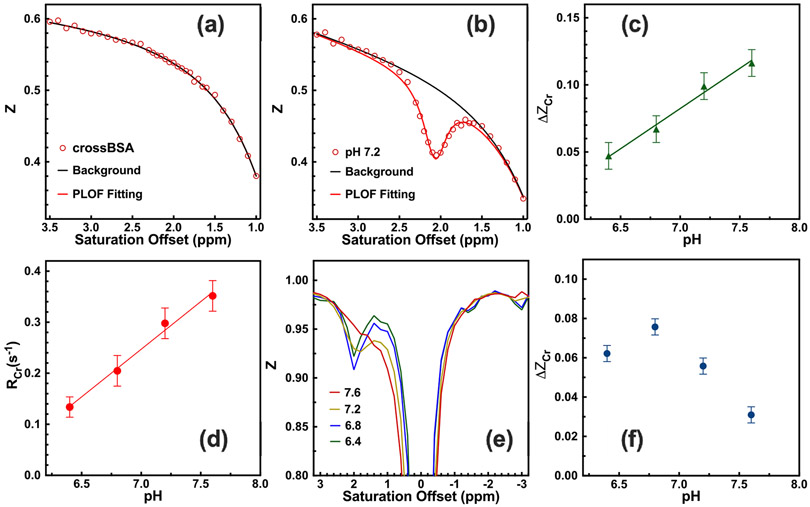
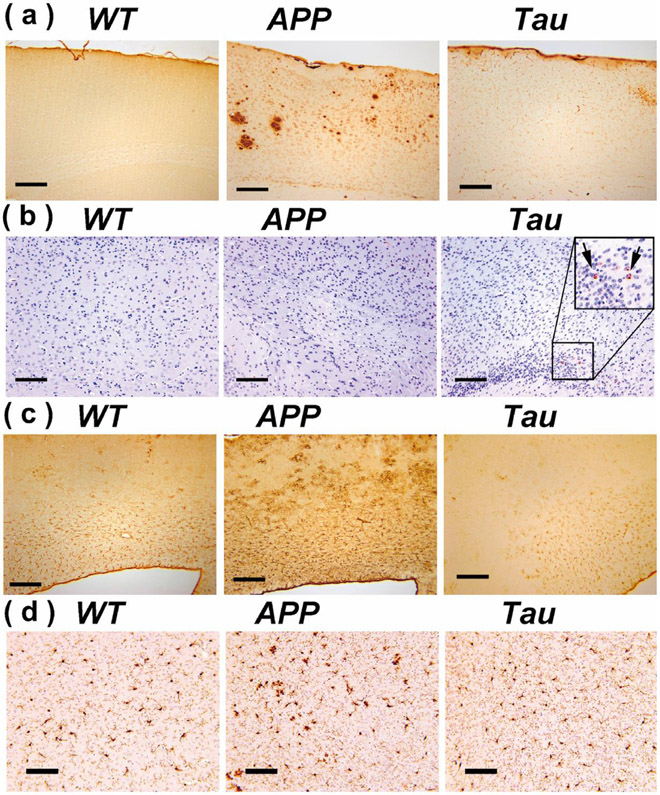
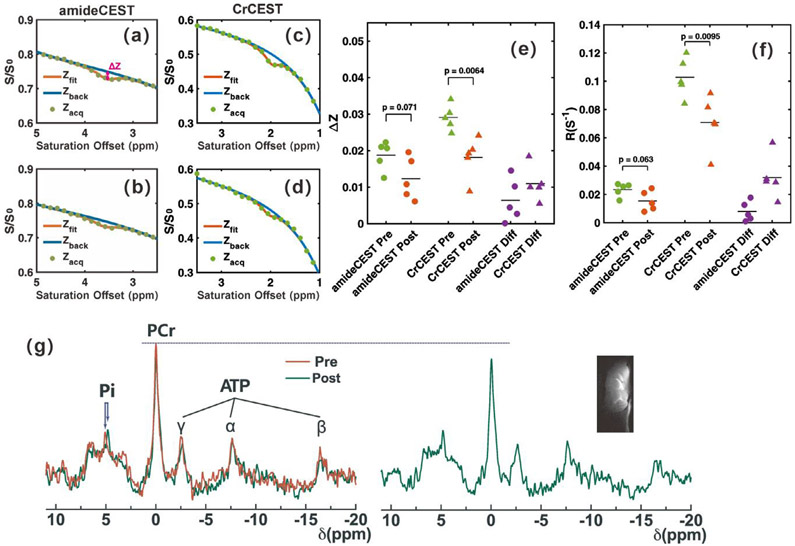
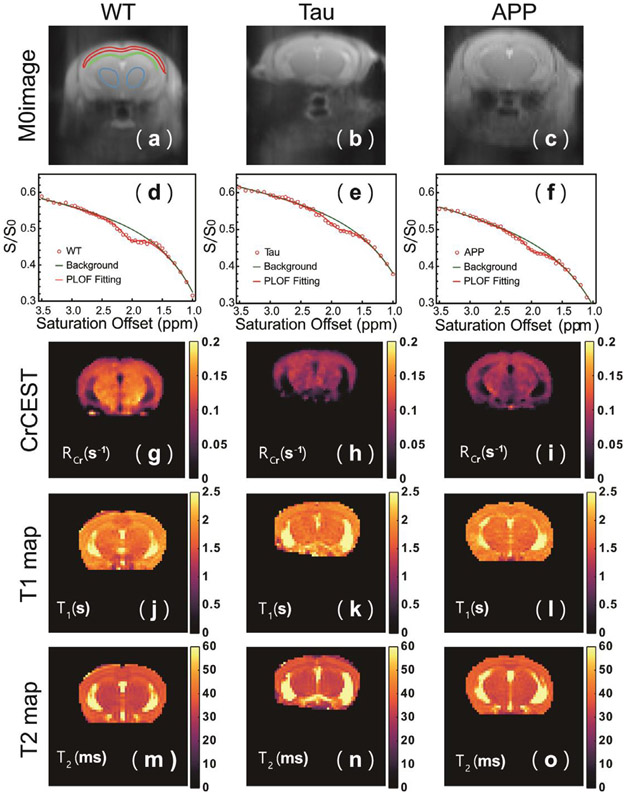
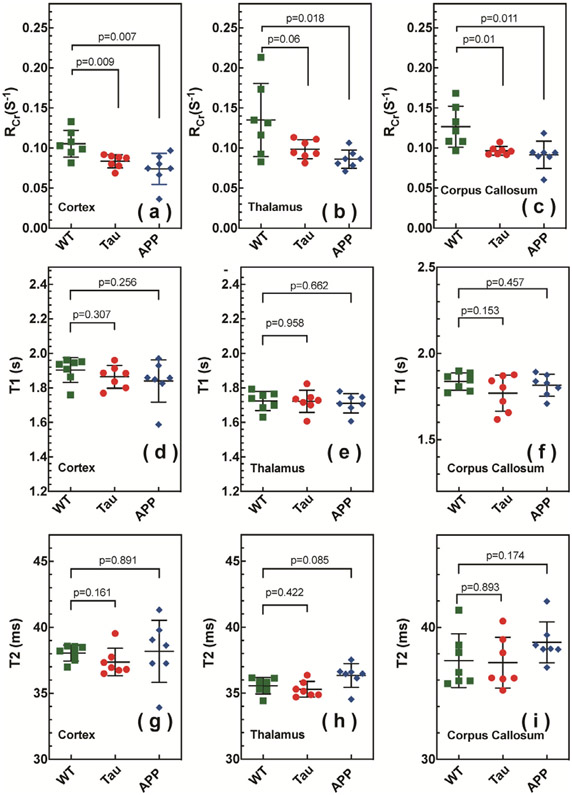
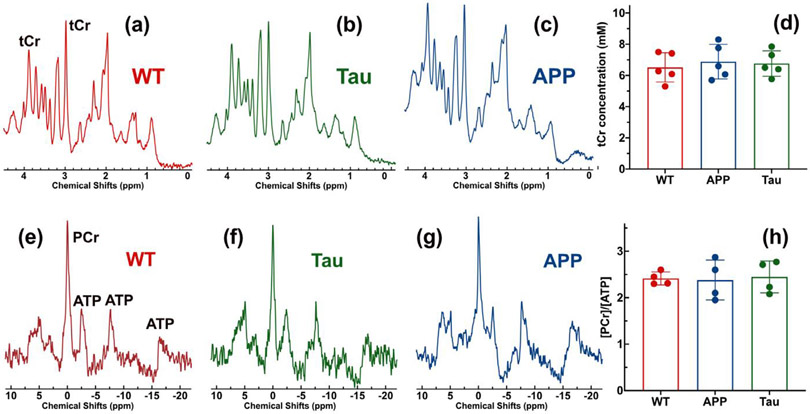
Detecting Alzheimer's disease (AD) at an early stage brings a lot of benefits including disease management and actions to slow the progression of the disease. Here, we demonstrate that reduced creatine chemical exchange saturation transfer (CrCEST) contrast has the potential to serve as a new biomarker for early detection of AD. The results on wild type (WT) mice and two age-matched AD models, namely tauopathy (Tau) and Aβ amyloidosis (APP), indicated that CrCEST contrasts of the cortex and corpus callosum in the APP and Tau mice were significantly reduced compared to WT counterpart at an early stage (6-7 months) (p < 0.011). Two main causes of the reduced CrCEST contrast, i.e. cerebral pH and creatine concentration, were investigated. From phantom and hypercapnia experiments, CrCEST showed excellent sensitivity to pH variations. From MRS results, the creatine concentration in WT and AD mouse brain was equivalent, which suggests that the reduced CrCEST contrast was dominated by cerebral pH change involved in the progression of AD. Immunohistochemical analysis revealed that the abnormal cerebral pH in AD mice may relate to neuroinflammation, a known factor that can cause pH reduction.
早期发现阿尔茨海默病(AD)有很多好处,包括疾病管理和减缓疾病进展的措施。在这里,我们证明了减少肌酸化学交换饱和转移(CrCEST)对比有可能成为 AD 早期检测的新生物标志物。在野生型(WT)小鼠和两种年龄匹配的 AD 模型(即tau 病(Tau)和 Aβ淀粉样变性(APP))的结果表明,与 WT 相比,APP 和 Tau 小鼠的皮质和胼胝体的 CrCEST 对比在早期(6-7 个月)明显降低(p < 0.011)。研究了导致 CrCEST 对比减少的两个主要原因,即大脑 pH 值和肌酸浓度。从幻影和高碳酸血症实验中可以看出,CrCEST 对 pH 值变化具有出色的敏感性。从 MRS 结果来看,WT 和 AD 小鼠大脑中的肌酸浓度相当,这表明 AD 进展过程中涉及的大脑 pH 值变化主导了 CrCEST 对比的降低。免疫组织化学分析表明,AD 小鼠大脑中的异常 pH 值可能与神经炎症有关,这是已知可导致 pH 值降低的因素。