Department of Immunology, Tufts University School of Medicine , Boston, MA, USA.
Department of Internal Medicine, University of Crete Medical School , Crete, Greece.
Gut Microbes. 2020 Nov 9;12(1):1-20. doi: 10.1080/19490976.2020.1823801.
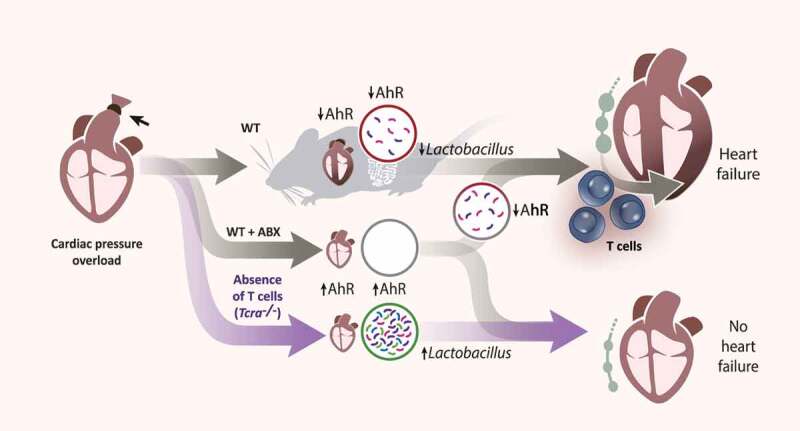
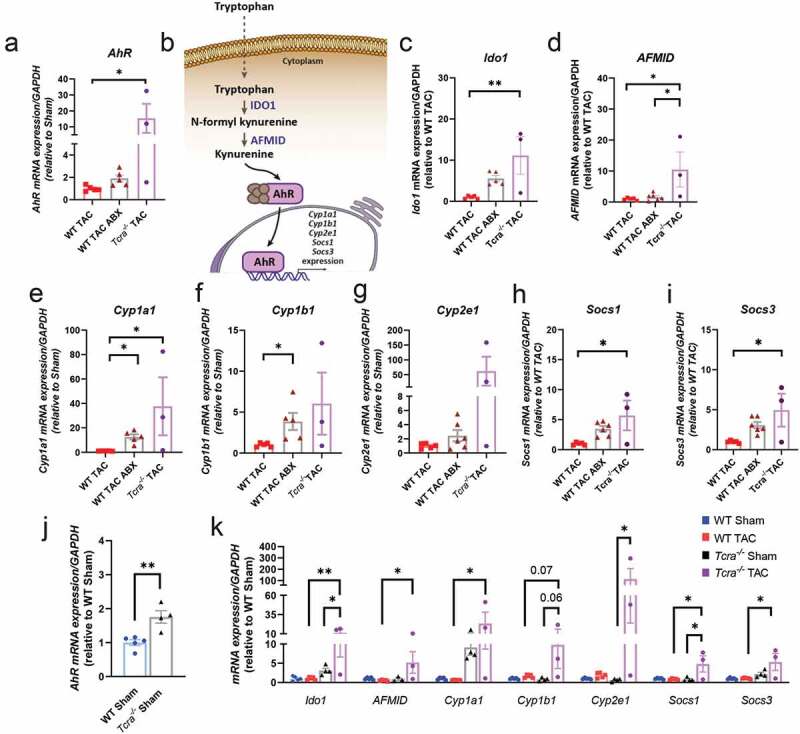
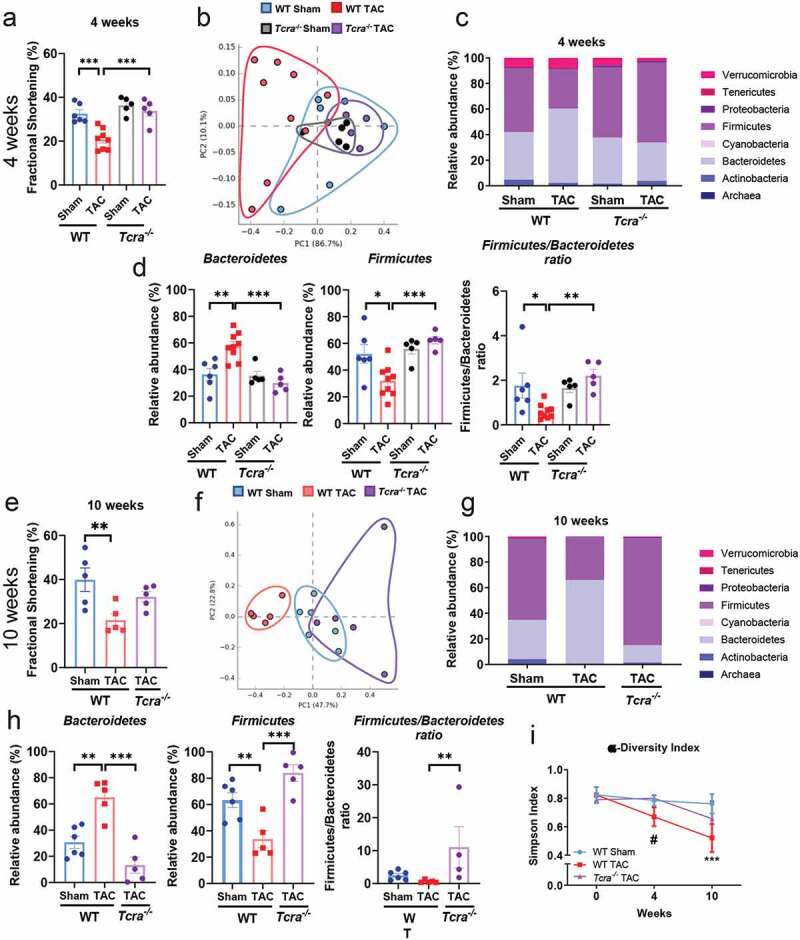
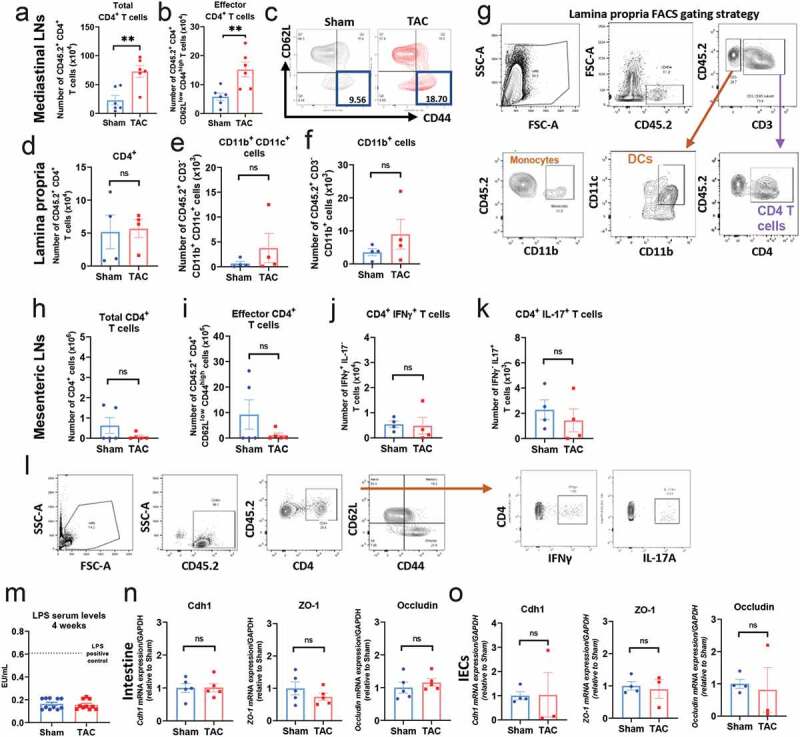
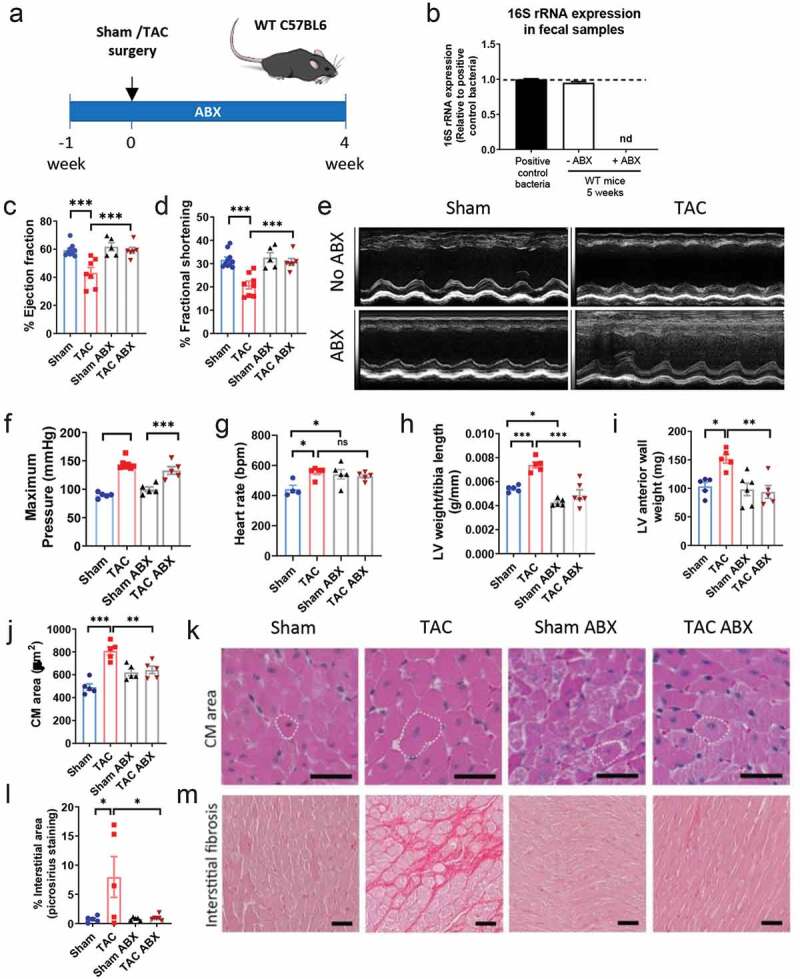
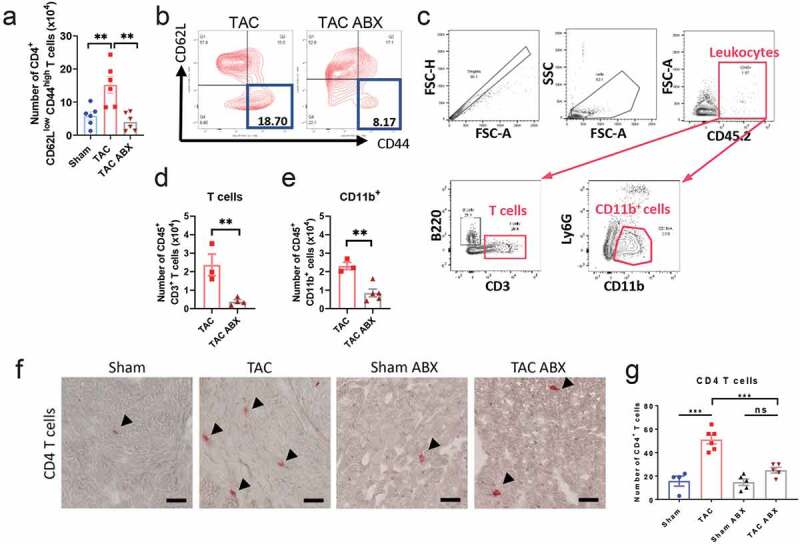
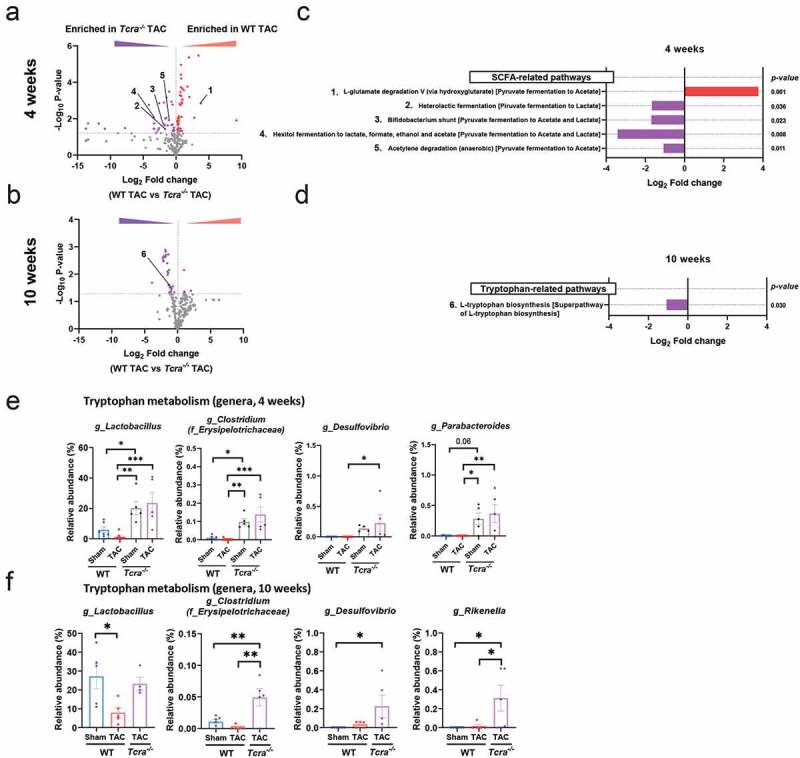
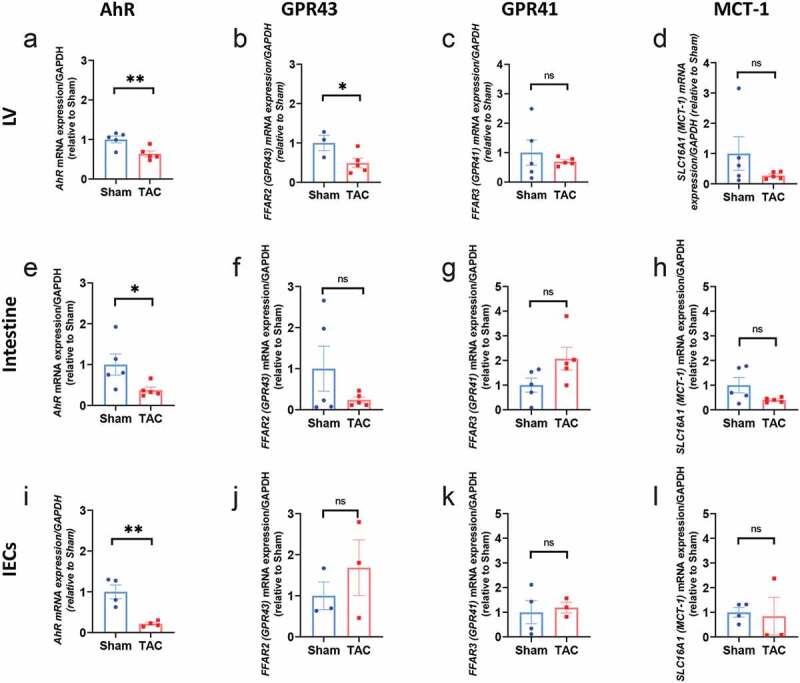
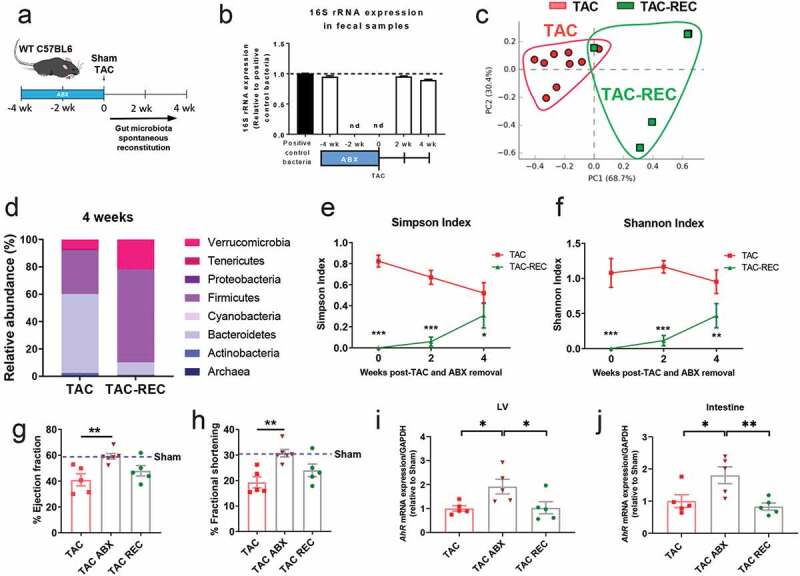
Despite the existing association of gut dysbiosis and T cell inflammation in heart failure (HF), whether and how gut microbes contribute to T cell immune responses, cardiac fibrosis and dysfunction in HF remains largely unexplored. Our objective was to investigate whether gut dysbiosis is induced by cardiac pressure overload, and its effect in T cell activation, adverse cardiac remodeling, and cardiac dysfunction. We used 16S rRNA sequencing of fecal samples and discovered that cardiac pressure overload-induced by transverse aortic constriction (TAC) results in gut dysbiosis, characterized by a reduction of tryptophan and short-chain fatty acids producing bacteria in WT mice, but not in T cell-deficient mice ( ) mice. These changes did not result in T cell activation in the gut or gut barrier disruption. Strikingly, microbiota depletion in WT mice resulted in decreased heart T cell infiltration, decreased cardiac fibrosis, and protection from systolic dysfunction in response to TAC. Spontaneous reconstitution of the microbiota partially reversed these effects. We observed decreased cardiac expression of the Aryl hydrocarbon receptor (AhR) and enzymes associated with tryptophan metabolism in WT mice, but not in mice, or in mice depleted of the microbiota. These findings demonstrate that cardiac pressure overload induced gut dysbiosis and T cell immune responses contribute to adverse cardiac remodeling, and identify the potential contribution of tryptophan metabolites and the AhR to protection from adverse cardiac remodeling and systolic dysfunction in HF.
尽管肠道菌群失调与心力衰竭(HF)中的 T 细胞炎症之间存在关联,但肠道微生物是否以及如何影响 T 细胞免疫反应、心脏纤维化和 HF 中的功能障碍仍在很大程度上尚未得到探索。我们的目的是研究心脏压力超负荷是否会引起肠道菌群失调,以及其对 T 细胞激活、不良心脏重构和心功能障碍的影响。我们使用粪便样本的 16S rRNA 测序发现,由升主动脉缩窄(TAC)引起的心脏压力超负荷会导致肠道菌群失调,其特征是 WT 小鼠中色氨酸和产生短链脂肪酸的细菌减少,但 T 细胞缺陷型()小鼠中没有这种变化。这些变化不会导致肠道或肠道屏障破坏的 T 细胞激活。引人注目的是,WT 小鼠的微生物群耗竭会导致心脏 T 细胞浸润减少、心脏纤维化减少,并能防止 TAC 引起的收缩功能障碍。微生物群的自发重建部分逆转了这些效果。我们观察到 WT 小鼠心脏中芳香烃受体(AhR)和与色氨酸代谢相关的酶的表达降低,但在 小鼠或微生物群耗竭的小鼠中没有观察到这种情况。这些发现表明,心脏压力超负荷诱导的肠道菌群失调和 T 细胞免疫反应导致不良的心脏重构,并确定了色氨酸代谢物和 AhR 对 HF 中不良心脏重构和收缩功能障碍的保护作用的潜在贡献。